






9 min read

How to Build a Scalable HubSpot Renewal Pipeline for SaaS Companies

How to Build a Scalable HubSpot Renewal Pipeline for SaaS Companies

Software companies spend significant resources acquiring customers, but sustainable growth depends on keeping those customers and expanding their value over time. Every renewal protects recurring revenue, and every expansion creates additional growth without the cost of acquiring a new customer.

The challenge is that many SaaS companies still manage renewals through spreadsheets, reminders, or disconnected systems. As customer volumes grow, it becomes harder to track upcoming renewals, identify churn risks, and forecast recurring revenue accurately.

To build a HubSpot renewal pipeline for SaaS companies, you need to create renewal-specific deal stages, organize contract and customer health data, automate renewal workflows, and build reporting that tracks retention and expansion revenue. This guide explains how to structure each part of the process inside HubSpot to create a scalable system for managing recurring revenue.

Key Takeaways

  • A dedicated renewal pipeline helps you manage renewals, reduce churn, and improve revenue visibility.
  • Renewal stages should follow the customer lifecycle, not the sales process.
  • Automation can create renewal deals, assign tasks, and notify teams before contracts expire.
  • Customer health scores and renewal reporting help you identify risks and forecast recurring revenue more accurately.

Why SaaS Companies Use a Dedicated Renewal Pipeline

a SaaS operations team gathered around a large dashboard showing upcoming contract renewals, show pop-up icons of customer health scores, churn risk alerts, and forecasted recurring revenue. The dashboard is clean and easy to read, hubspot interface with renewal opportunities organized into pipeline stages.

A dedicated renewal pipeline helps SaaS companies manage existing revenue with the same level of discipline applied to new revenue opportunities.

Many CRM implementations focus primarily on customer acquisition. Opportunities move through qualification, proposal, negotiation, and eventually Closed Won. Revenue management often becomes less structured after that point, even though the customer relationship continues through onboarding, adoption, renewal, and expansion.

For software companies, the period following the initial sale frequently determines long-term business performance. Growth depends on retaining customers, maintaining product adoption, and increasing account value throughout the customer lifecycle. A dedicated renewal pipeline creates a framework that supports those objectives in a consistent and measurable way.

The benefits become more apparent as subscription volume grows. A company managing 20 annual contracts can often track renewals manually. A company managing hundreds or thousands of subscriptions faces a different challenge. Customer Success teams need visibility into upcoming renewals. RevOps teams need accurate forecasts. Finance teams need insight into future recurring revenue. A dedicated renewal pipeline centralizes this information inside HubSpot.

This structure also improves revenue forecasting. A traditional sales pipeline answers questions about future customer acquisition. A renewal pipeline answers questions about future customer retention. Combining both revenue motions inside a single process often creates reporting challenges because acquisition opportunities and renewal opportunities follow different timelines, risks, and success indicators.

The financial impact is significant. Recent SaaS benchmark studies place median Net Revenue Retention (NRR) between approximately 103% and 105%, while many top-performing SaaS companies exceed 120%. These companies generate growth through a combination of customer retention and account expansion rather than relying solely on new customer acquisition.

Consider a software company with 500 customers on annual contracts worth $10,000 each. If only 5% of those customers fail to renew, the business loses $250,000 in recurring revenue. A structured renewal process helps identify potential risks earlier and creates more opportunities to protect revenue before renewal decisions occur.

How to Design a Renewal Pipeline That Matches the Customer Lifecycle

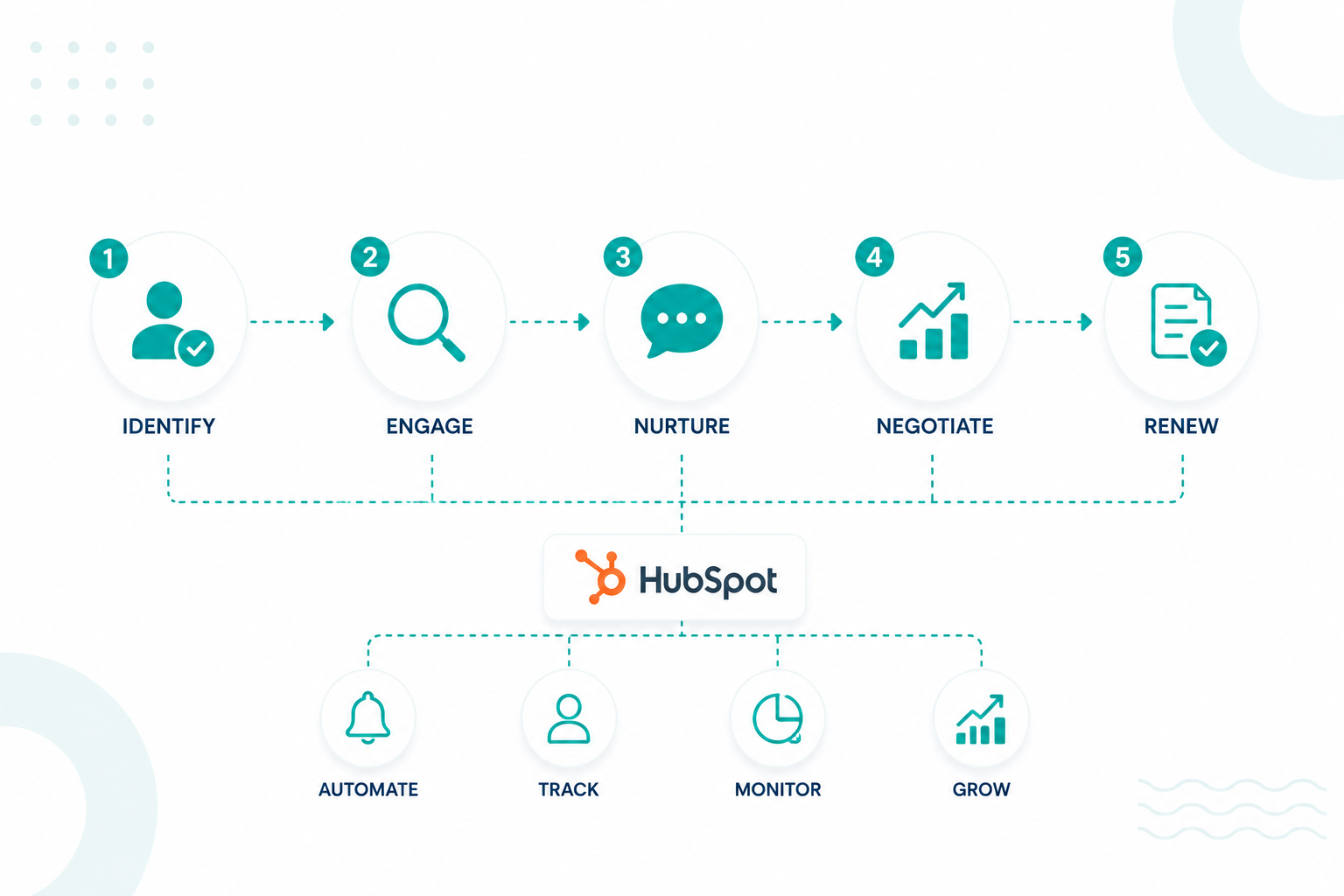
The purpose of the pipeline is to track renewal progress from the moment an account enters the renewal window until the customer either renews or churns. Each stage should represent a meaningful milestone that helps teams understand where an account sits within the renewal journey.

A practical renewal pipeline structure looks like this:


Renewal Stage

Purpose

Renewal Scheduled

Account enters the renewal process

Renewal Preparation

Internal renewal planning begins

Renewal Discussion

Renewal conversations begin

Proposal Sent

Pricing and contract terms are presented

Negotiation

Commercial discussions take place

Renewed

Contract is successfully renewed

Churned

Customer does not renew

Delayed

Renewal timeline extends beyond the expected date

Each stage should have clearly defined entry and exit criteria. For example, an account may enter Renewal Scheduled once it reaches a predefined renewal window. It transitions to Renewal Preparation once internal planning begins. It progresses into Renewal Discussion after customer conversations start. This approach creates consistency across the customer base and makes reporting more reliable.

The stages should also reflect actions that teams can measure and manage. A stage such as Renewal Discussion indicates active engagement with the customer. A stage such as Proposal Sent indicates that commercial terms have been presented. These milestones provide a clearer picture of renewal progress than broad status labels that reveal little about the actual state of the opportunity.

A renewal pipeline that mirrors the customer journey, creates consistency across teams, and provides a stronger operational foundation for managing recurring revenue.

Continue reading here: How HubSpot Lifecycle Stages Guide Lead Nurturing

What HubSpot Properties, Objects, and Associations Need to Be Set Up First

Many organizations begin with HubSpot's standard objects and later discover they lack the information needed to manage renewals effectively. Contract dates may live in one system, customer health data in another, and subscription details somewhere else. This fragmentation makes it difficult to understand account status and creates unnecessary work for Customer Success and RevOps teams.

The first step is creating the properties needed to manage renewals throughout the customer lifecycle.


Property

Purpose

Contract Start Date

Tracks subscription start

Contract End Date

Identifies contract expiration

Renewal Date

Supports renewal planning

ARR

Measures annual recurring revenue

MRR

Measures monthly recurring revenue

Renewal Readiness

Tracks renewal status

Health Score

Measures account health

Churn Risk Level

Highlights at-risk accounts

Product Adoption Status

Tracks platform engagement

Expansion Opportunity

Identifies account growth potential

These properties create a standardized framework for renewal management. Every account follows the same structure, making reporting, automation, and forecasting more reliable.

How SaaS Companies Should Structure Renewal Data in HubSpot

a clean HubSpot-style CRM interface showing a company record connected to multiple contact records, renewal deals, subscriptions, and customer success activities. Lines connect each object to create a complete customer view.

SaaS companies typically manage several layers of customer information at the same time. The challenge is creating a structure that keeps those layers connected without making account management unnecessarily complex.

A practical approach separates information according to its purpose.

  • The company records account-level information such as customer tier, industry, account owner, and Customer Success ownership.
  • The contact record stores information about stakeholders, champions, decision-makers, procurement contacts, and finance approvers.
  • The renewal deal stores information related to the upcoming renewal, including renewal value, renewal stage, expected close date, and contract status.

This structure creates clear ownership of information and makes account reviews more efficient. For additional context, check out this article.

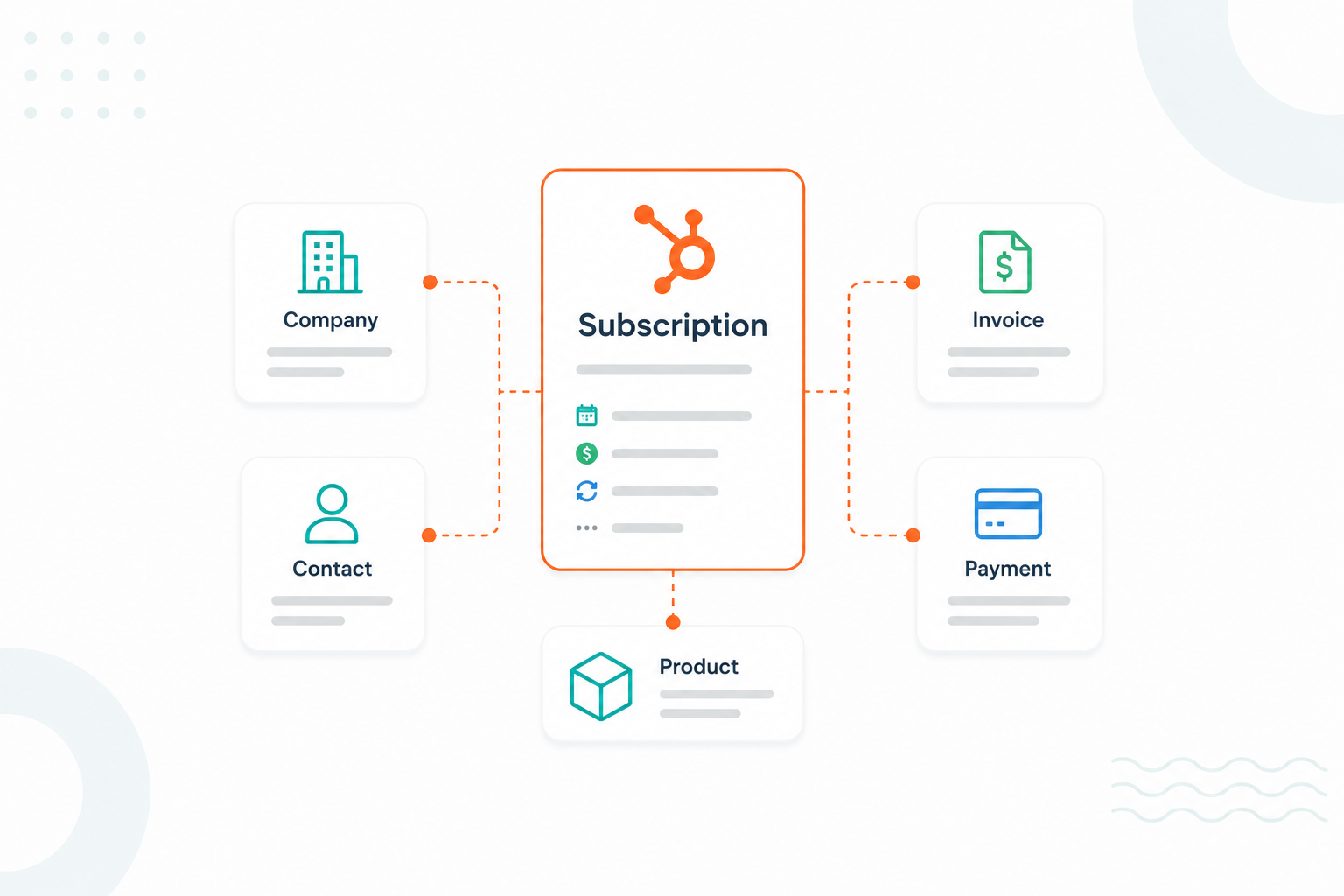
Associations are equally important because they connect those records. Every renewal deal should connect to:

  • Company records
  • Relevant contacts
  • Original sales opportunities
  • Customer Success owners
  • Active subscriptions
  • Support history

These associations create a complete customer timeline inside HubSpot. Team members can understand the full account context without moving between multiple systems.

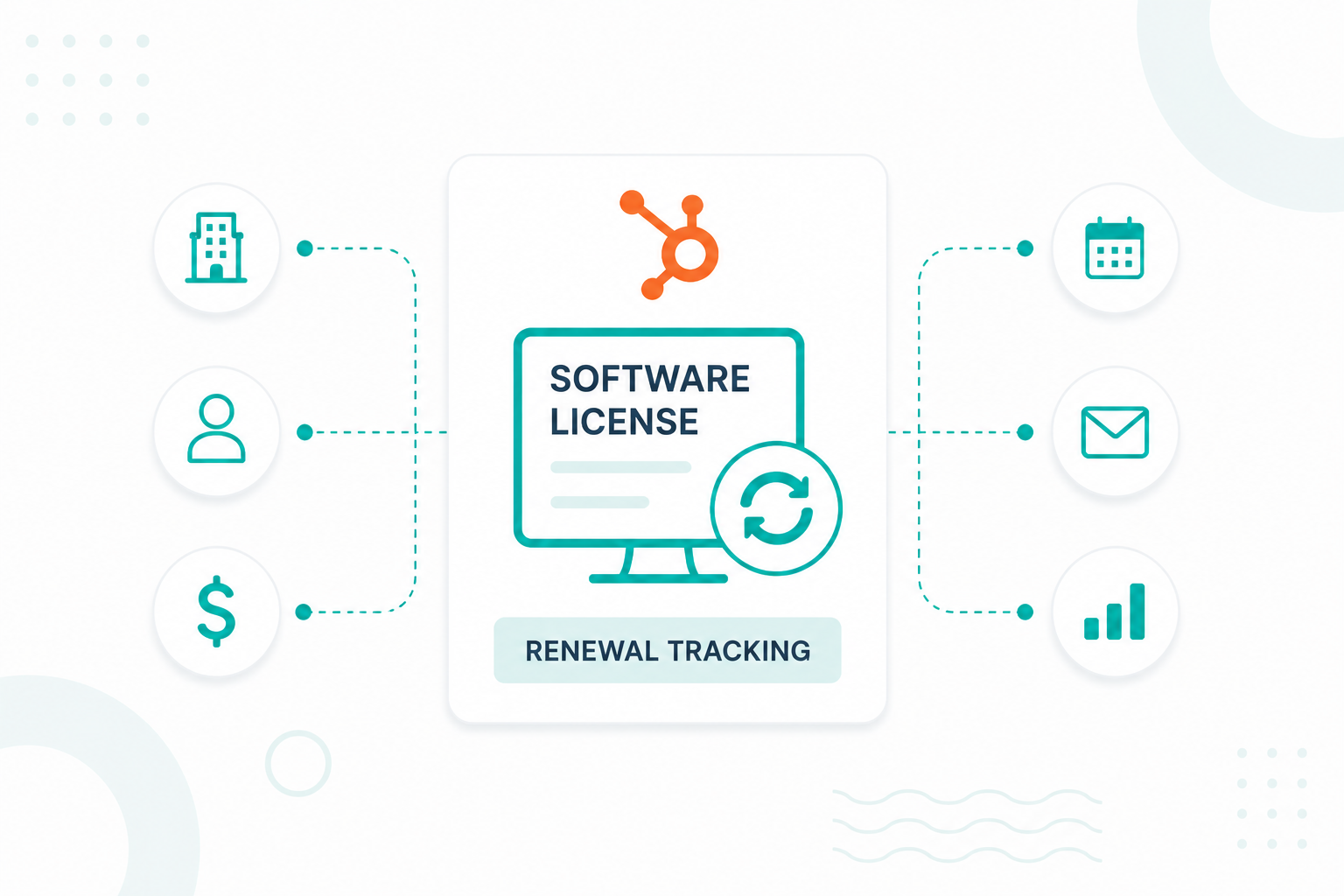
Many SaaS companies also create custom objects for subscriptions, licenses, contracts, or products. This becomes particularly valuable for organizations with multiple products, usage-based pricing, or customers managing several active subscriptions at the same time.

How to Automate Renewal Deal Creation, Tasks, and Notifications

Automation starts with contract timing. Most SaaS organizations begin renewal planning several months before contract expiration. This creates enough time for account reviews, stakeholder discussions, procurement processes, budget approvals, and contract negotiations.

A common automation framework looks like this:


Trigger

Automated Action

120 days before renewal

Create a renewal deal

120 days before renewal

Assign Customer Success review task

90 days before renewal

Notify account owner

60 days before renewal

Schedule renewal outreach

30 days before renewal

Escalate inactive accounts

Renewal completed

Update lifecycle reporting

What Does Renewal Automation Look Like Inside HubSpot

Suppose a software company wants renewal conversations to begin 120 days before contract expiration. HubSpot automatically creates a renewal deal inside the renewal pipeline and copies key information from the original opportunity.

This information typically includes:

  • Contract value
  • Subscription details
  • Customer information
  • Account ownership
  • Renewal dates

The workflow then creates a task for the Customer Success manager and sends notifications to the appropriate stakeholders. Additional workflows can support later stages of the process.

At the 90-day mark, HubSpot can trigger outreach activities and remind account teams to begin renewal conversations. At the 60-day mark, the platform can initiate proposal preparation activities and update renewal pipeline reporting. At the 30-day mark, workflows can identify stalled accounts and notify leadership teams if additional support is needed.

Automation can also standardize recurring activities such as:

  • Renewal reviews
  • Executive business reviews
  • Stakeholder outreach
  • Proposal preparation
  • Internal approvals
  • Renewal follow-ups

A well-designed automation framework reduces administrative work, improves operational consistency, and helps teams focus on customer outcomes rather than manual task management.

Continue reading here: Automated Lead Nurturing Strategies Using HubSpot Lifecycle Automation

What Customer Health Signals Trigger Renewal and Churn Workflows

The most common health indicators include:

Health Signal

What It Indicates

Product Usage

Overall engagement level

Feature Adoption

Customer value realization

Login Frequency

Active participation

Support Ticket Trends

Potential friction

Onboarding Completion

Early customer success

Stakeholder Engagement

Relationship strength

NPS or CSAT Scores

Customer sentiment

Training Participation

Product investment

Expansion Interest

Growth potential

These indicators help Customer Success teams understand how customers interact with the platform throughout the subscription lifecycle.

Product adoption often becomes one of the strongest renewal indicators because customers tend to renew software that is integrated into daily workflows. Declining adoption patterns frequently signal that customers are receiving less value from the platform, creating a higher likelihood of churn if issues remain unresolved.

How Customer Health Scores Support Renewal Forecasting

Customer health scores convert multiple customer signals into a single measure of renewal readiness. Most SaaS organizations evaluate several indicators simultaneously. Product usage, feature adoption, onboarding progress, support activity, stakeholder engagement, and customer satisfaction all contribute to the overall health assessment.

For example, consider two customers approaching renewal.

  • Customer A logs into the platform regularly, uses core features extensively, participates in quarterly reviews, and maintains active communication with the Customer Success team.
  • Customer B has declining usage patterns, unresolved support concerns, and limited stakeholder engagement.

Both contracts may expire on the same date, but the health score provides a clearer picture of renewal likelihood.

Many SaaS companies use a scoring framework similar to this:


Score Range

Status

Recommended Action

80-100

Healthy

Explore growth opportunities

60-79

Moderate Risk

Increase engagement efforts

Below 60

High Risk

Launch retention plan

Health scores become even more valuable when connected to automation.

A high-risk score can trigger:

  • Customer Success follow-up tasks
  • Leadership notifications
  • Additional training initiatives
  • Executive account reviews

A healthy score can trigger:

  • Growth conversations
  • Contract extension discussions
  • Customer advocacy programs
  • Expansion evaluations

The purpose of health scoring is not simply to classify accounts, but to create a consistent framework that helps teams prioritize effort, improve forecasting confidence, and address potential problems before renewal decisions are made.

How to Measure Renewal Performance, Expansion Revenue, and Forecasted ARR

The most important renewal metrics focus on revenue outcomes.

Metric

Purpose

Gross Revenue Retention (GRR)

Measures retained revenue

Net Revenue Retention (NRR)

Measures retained and expanded revenue

Renewal Rate

Measures successful renewals

Churn Rate

Measures revenue loss

Expansion Revenue

Measures account growth

Forecasted ARR

Projects future recurring revenue

Renewal Pipeline Value

Measures upcoming renewal opportunities

Net Revenue Retention remains one of the most closely watched SaaS metrics because it reflects both retention and customer growth.

A company with strong NRR retains existing customers while increasing revenue through expanded usage, additional seats, upgraded plans, or new products. This creates a more complete picture of recurring revenue performance than renewal rates alone.

Which Renewal Dashboards Should SaaS Companies Build?

The first dashboard should focus on upcoming renewals. This report highlights contracts scheduled for renewal during the next 30, 60, 90, and 120 days, helping teams prioritize accounts requiring immediate attention.

The second dashboard should focus on at-risk revenue. This report surfaces accounts with low health scores, declining product adoption, weak engagement patterns, or unresolved support concerns.

The third dashboard should focus on growth opportunities. This report identifies accounts demonstrating strong product adoption and engagement, helping teams identify customers that may be suitable candidates for account expansion.

The fourth dashboard should focus on forecasted ARR.

This report combines:

  • Active subscriptions
  • Renewal opportunities
  • Expected expansion revenue
  • Projected churn
  • Future recurring revenue

Together, these dashboards provide a complete view of renewal performance and recurring revenue health.

What a SaaS Renewal Pipeline Looks Like in Practice

For example, a software company that sells project management software through annual subscriptions worth $15,000 per customer. The company manages several hundred active customers and wants a consistent process for protecting recurring revenue while identifying growth opportunities.

The company begins by creating a dedicated renewal pipeline and defining renewal stages that align with the customer lifecycle. Contract dates, renewal readiness indicators, and customer health scores are stored within HubSpot, giving teams visibility into account status throughout the renewal process.

At 120 days before contract expiration, HubSpot automatically creates a renewal deal and assigns a review task to the Customer Success manager responsible for the account.

The Customer Success manager reviews:

  • Product adoption trends
  • Login activity
  • Feature utilization
  • Support history
  • Stakeholder engagement

The account receives a health score of 88, indicating strong renewal potential.

At 90 days before expiration, the account enters the Renewal Discussion stage. The Customer Success manager begins conversations with key stakeholders to understand future requirements, business objectives, and any concerns that need attention before renewal.

During these conversations, the customer expresses interest in providing platform access to additional departments.

At 60 days before expiration, the account team prepares a proposal that includes both the existing subscription and additional user licenses. Because all account information, contract data, and renewal history exist within HubSpot, the proposal process moves efficiently without requiring manual research across multiple systems.

At 30 days before expiration, procurement and legal reviews begin. Internal stakeholders receive automated notifications that help keep the process moving toward completion.

The customer signs the renewal agreement shortly afterward. Once the renewal is complete, HubSpot automatically updates renewal reporting, revenue forecasts, and customer lifecycle records. The account exits the renewal pipeline and returns to normal customer success management activities until the next renewal cycle begins.

This example demonstrates how data structure, automation, customer health monitoring, and renewal management work together within a single process.

Give Your Team a Better Way to Manage Renewals!

A HubSpot renewal pipeline gives SaaS companies a more structured way to manage recurring revenue throughout the customer lifecycle. By connecting renewal stages, customer data, and automation in one system, teams gain better visibility into upcoming renewals and create a more consistent experience for customers and internal stakeholders alike.

The real value comes from having the right information at the right time. Customer health data, renewal reporting, and automated workflows help teams identify risks earlier, spot growth opportunities, and make more informed decisions before renewal conversations begin.

If your organization needs help building a scalable renewal process in HubSpot, at Campaign Creators, we help SaaS companies create lifecycle-driven systems that connect customer success, revenue operations, and reporting.


Frequently Asked Questions

How Should You Handle Auto-Renewing SaaS Contracts in HubSpot?

Auto-renewing contracts should still enter a renewal pipeline before the renewal date. This gives Customer Success teams time to review account health, address risks, and identify expansion opportunities before the contract renews.

What Is the Difference Between a Renewal Pipeline and a Customer Success Pipeline?

A renewal pipeline focuses on revenue-related activities tied to contract renewals, retention, and expansion. A customer success pipeline focuses on customer outcomes such as onboarding, adoption, training, and engagement throughout the lifecycle.

How Do You Manage Mid-Contract Upgrades and Downgrades in HubSpot?

Mid-contract upgrades and downgrades should be tracked separately from renewal opportunities. This maintains accurate renewal forecasting and creates a clear record of contract value changes throughout the subscription period.

How Do You Handle Customers With Multiple Renewal Dates?

Customers with multiple renewal dates should have separate renewal records for each contract or subscription. This improves reporting accuracy and helps teams manage each renewal according to its own timeline and revenue impact.

How Should SaaS Companies Manage Co-Termed Contracts in HubSpot?

Co-termed contracts should be linked to a shared renewal date and managed through a consolidated renewal opportunity. This simplifies forecasting, reduces administrative complexity, and creates a smoother renewal experience for customers.

Which HubSpot Plans Support Renewal Automation and Advanced Workflows?

Renewal automation is available through HubSpot's Professional and Enterprise tiers, which support workflow automation, custom properties, advanced reporting, and process automation features needed for scalable renewal management.

How to Structure HubSpot for SaaS Products, Renewals, Partners, and Customer Success

How to Structure HubSpot for SaaS Products, Renewals, Partners, and Customer Success

SaaS companies often reach a point where subscriptions, renewals, onboarding, customer success, and partner relationships can no longer be managed...

Read More
HubSpot for Tech: How to Build a CRM Around Trials, Onboarding, Renewals, and Expansion

HubSpot for Tech: How to Build a CRM Around Trials, Onboarding, Renewals, and Expansion

SaaS companies do not operate on a one-time sales cycle. Revenue depends on converting trial users, onboarding customers successfully, retaining...

Read More
When Should Technology Companies Use HubSpot Custom Objects?

When Should Technology Companies Use HubSpot Custom Objects?

Technology companies can use HubSpot custom objects once standard CRM records can no longer support how the business operates. For SaaS companies,...

Read More