


9 min read
How Can AI and Predictive Analytics Improve Patient Acquisition and Conversion?
Campaign Creators
:
08/11/26
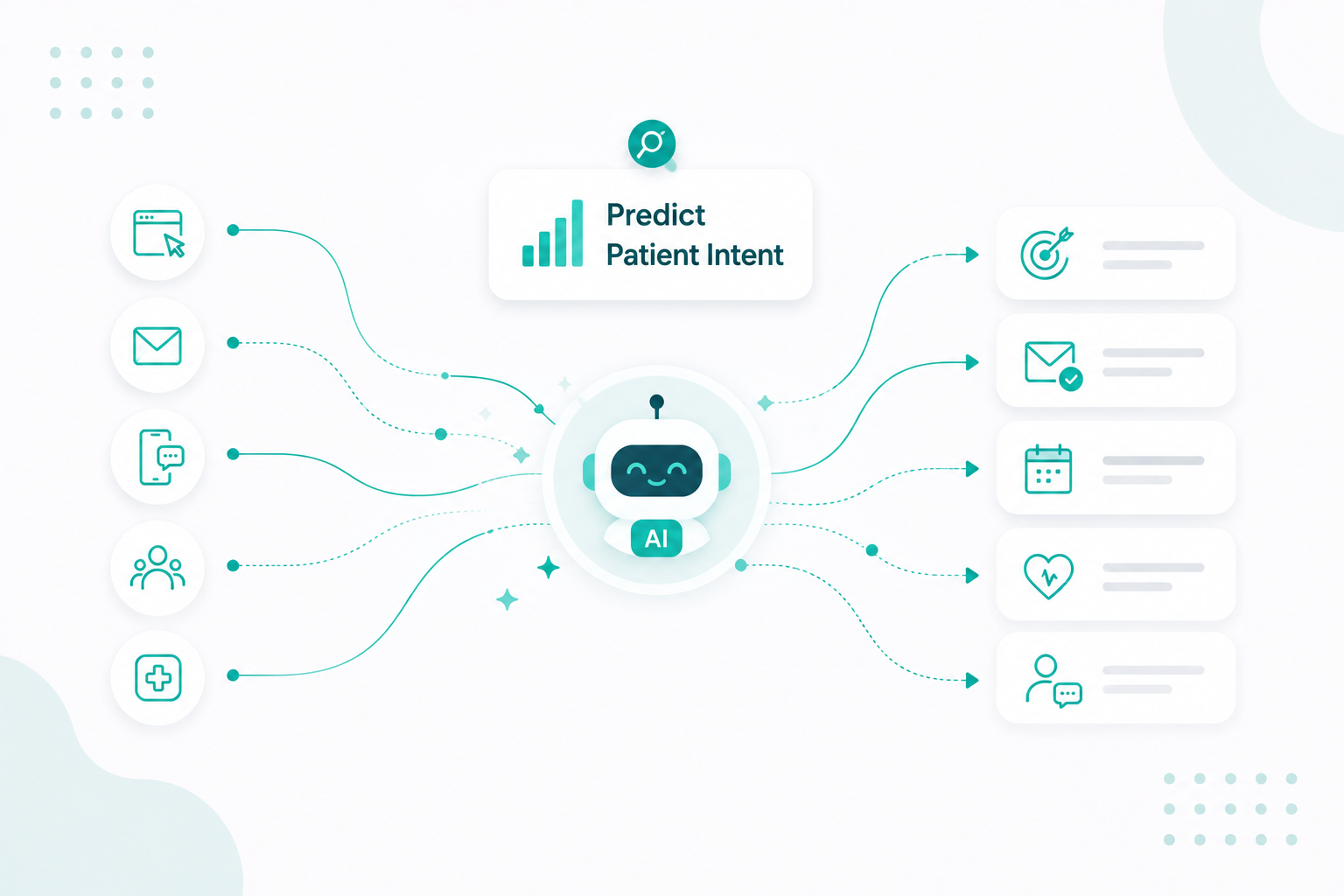
AI and predictive analytics give healthcare organizations a clearer view of what patients do before they convert. By reading signals such as website activity, content engagement, CRM data, and past interactions, AI can estimate patient intent and flag which prospects are most likely to take the next step. Predictive analytics moves the focus from what already happened to what is likely to happen next.
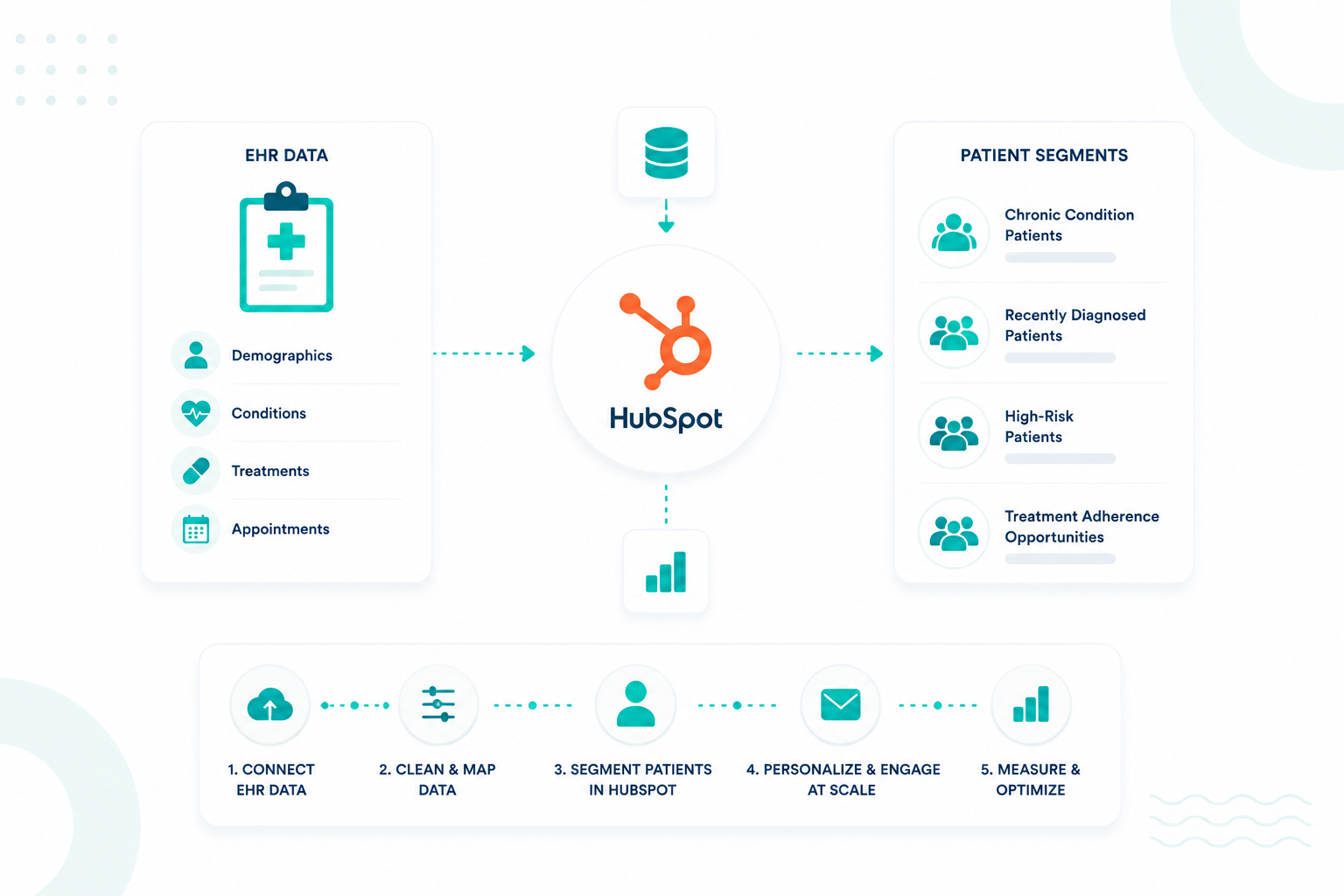
That shift helps acquisition teams prioritize high-intent prospects, personalize follow-up, and find the points where patients drop off before an appointment. For organizations running on HubSpot, those insights connect to the CRM, marketing campaigns, patient journeys, and acquisition reporting. HubSpot's healthcare platform supports condition-specific campaigns, referral tracking, AI-powered insights, and tools for understanding patient flow.
Key Takeaways
- AI can read patient intent from website behavior, content engagement, CRM activity, search behavior, and other signals.
- Predictive analytics identifies high-intent prospects by matching current behavior against patterns from past conversions.
- HubSpot connects AI, CRM data, marketing, and automation into a single patient acquisition system.
- AI predictions are probabilities, not guarantees. Their value depends on data quality, appropriate modeling, privacy controls, and human oversight.
What Is Predictive Analytics in Healthcare Marketing?

Predictive analytics in healthcare marketing uses historical data, current data, statistical models, and machine learning to estimate future patient behaviors, needs, and marketing outcomes. It surfaces patterns in patient and prospect data so teams can make better decisions about targeting, engagement, and acquisition.
Machine learning is what makes this practical at scale. AI can find patterns across large datasets, generate predictions from those patterns, and refine them as new data arrives, which is difficult to do manually across thousands of prospects.
The Data that Predictive Analytics Models Use
Predictive models pull from several categories at once:
- Patient Demographics: age, location, and other relevant characteristics
- Digital Behavior: website visits, page views, form submissions, content engagement
- Marketing Interactions: email opens, clicks, campaign responses, ad interactions
- Appointment Behavior: scheduling patterns, cancellations, no-shows
- Historical Patient Behavior: previous service interest, engagement, conversion patterns
- CRM Data: lead sources, lifecycle stages, referral information, interactions with staff
The model looks for patterns across these data points and uses them to estimate the likelihood of future outcomes.
How It Compares to Other Analytics
The main difference is the type of question each approach answers.
|
Analytics approach |
Primary question |
Example |
|
Descriptive |
What happened? |
500 people submitted a form |
|
Diagnostic |
Why did it happen? |
Paid search generated most form submissions |
|
Predictive |
What is likely to happen? |
These leads have a higher probability of booking |
|
Prescriptive |
What should we do? |
Prioritize follow-up with these leads |
Predictive analytics adds a forward-looking layer on top of standard campaign reporting. Teams can anticipate outcomes with the data they already have, then act before the opportunity cools.
What Signals Can AI Use to Identify Patient Intent?
AI identifies patient intent by analyzing behavioral, contextual, and engagement signals that show where a person sits in the healthcare decision-making process. These signals come from website activity, search behavior, CRM interactions, appointment activity, and other patient journey data.
1. Search Behavior
Search queries reveal what a person is researching and how specific their needs are. A search for a particular condition, treatment, provider, or procedure carries more weight than a broad health-related query. Research on healthcare search intent shows that both the query and the surrounding search session help determine what the user is actually looking for.
2. Website Behavior
AI can evaluate pages viewed, services researched, time on key pages, visit count, return visits, content downloaded, videos watched, appointment pages visited, and pricing or insurance pages viewed.
Someone who returns to a specific treatment page and then moves to the provider or appointment page is showing a very different pattern from someone who reads one general health article and leaves.
3. Appointment Activity
Scheduling behavior is one of the strongest indicators available because it marks the move from research toward action. Useful signals include starting an appointment request, selecting a provider, checking available times, abandoning a booking, rescheduling, canceling, and repeat scheduling attempts.
Historical appointment behavior matters too. Healthcare organizations can use AI models to predict appointment attendance from demographic and past behavioral data.
4. Content Engagement
The type of content someone consumes gives context about their stage:
- General educational content points to early research
- Condition-specific content points to focused interest
- Treatment comparison content points to evaluation
- Provider or service pages point to commercial intent
- Appointment or contact pages point to conversion intent
AI weighs these interactions against other behavioral signals so that not every page view counts the same.
5. CRM and Marketing Engagement
CRM records add the interaction history that digital behavior alone misses: email opens and clicks, form submissions, previous inquiries, lead source, campaign engagement, referral information, past conversations, and lifecycle stage. Pairing this with website data gives a fuller view of the journey.
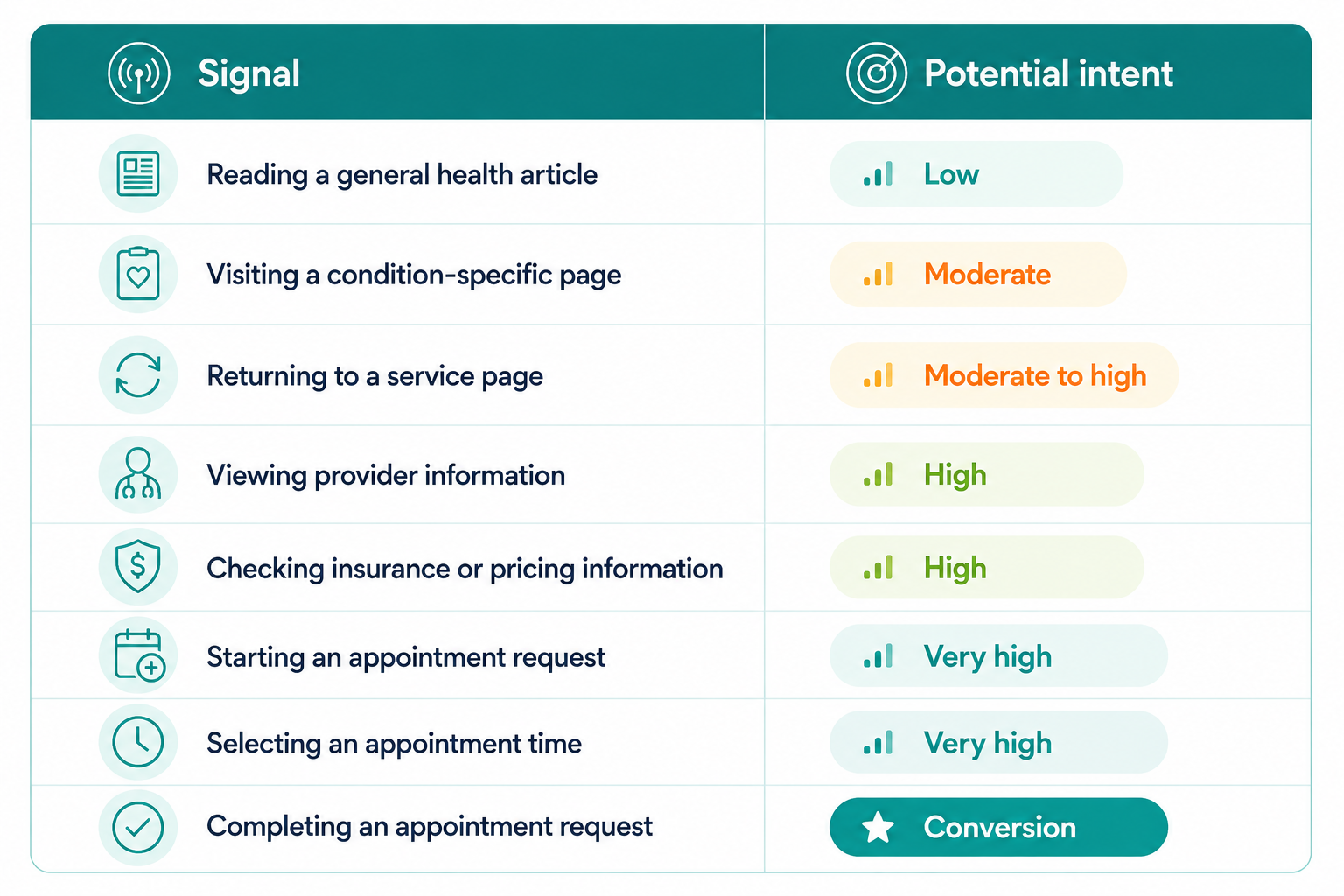
Which Signals Indicate Stronger Patient Intent?

Exact weighting depends on your organization, service line, patient journey, and available data.
How Does AI Combine These Signals?
AI can analyze patterns across multiple signals rather than assigning intent based on one behavior.
For example, a prospect might:
- Search for a specific treatment.
- Visit the organization's treatment page.
- Return several days later.
- Read insurance information.
- View provider profiles.
- Start an appointment request.
Individually, these actions provide limited information. Together, they form a stronger behavioral pattern suggesting that the person has moved from general research toward evaluating a specific healthcare option.
How Does AI Decide Which Prospects to Prioritize?
Predictive lead scoring compares a prospect's current behavior against historical conversion data and assigns a probability of taking the next step. The model does not decide that someone will convert. It ranks how closely their behavior resembles the people who already did.
Say your historical data shows that patients who arrived through a particular channel, viewed a specific service, returned to the site, viewed provider information, and submitted an inquiry were far more likely to schedule. The model recognizes that same shape in new prospects and scores them accordingly. Healthcare predictive lead-scoring systems can factor in source, behavior, engagement, and historical conversion patterns to estimate booking probability.
A 2025 study of online appointment behavior found a strong positive correlation between provider-detail page views and appointment conversion, one example of how a specific website action can carry real predictive weight.
Patients that AI would prioritize
Consider three website visitors:
|
Prospect |
Behavior |
Predicted intent |
|
A |
Reads one general health article |
Low |
|
B |
Visits a treatment page twice and reads related content |
Moderate |
|
C |
Returns to a treatment page, views a provider, checks insurance, starts booking |
High |
Prospect C scores highest because several behaviors point toward an immediate decision. What drives the score is the combination, frequency, recency, and sequence of actions, not any single click.
A high score signals a higher probability, not a booked appointment. Patient decisions still hinge on factors the model cannot observe: cost, insurance coverage, provider availability, location, timing, and personal preference.
The value here is prioritization, not certainty. Your team uses the score to decide who gets faster follow-up, more relevant content, and additional engagement, and who can stay in a lighter nurture track.
How Can Predictive Analytics Improve Patient Conversion Rates?
Predictive analytics improves conversion by pointing marketing and follow-up effort at the prospects most likely to act. One study found that targeting people with a high predicted probability of future healthcare utilization increased ad conversion rates by 3.96% in an online evaluation.
1. Sharper Audience Targeting
Predictive models surface the audience characteristics and behavioral patterns tied to past conversions. Marketers can apply those findings to advertising audiences, campaign targeting, retargeting, content distribution, email segmentation, and lead nurturing, which tightens spend around the segments with real conversion history.
2. Follow-up Timed to Engagement
Recency and behavioral patterns show when a prospect is most engaged. Someone who returned to a service page this week and started an appointment request is a more immediate opportunity than a contact who went quiet three months ago. That helps teams work by opportunity strength and not by chronological lead queue order.
3. Spend Measured Against Conversions
Predictive analytics connects patient behavior to conversion outcomes, which changes the reporting question from "which campaign generated the most leads" to "which leads became patients." Optimization then shifts from lead volume to lead quality, and budget follows the channels producing appointments.
Predictions Only Pay Off When They Trigger Action
The pattern that produces results looks like this: Data → Prediction → Action → Outcome
For example: website behavior → high-intent score → relevant follow-up → appointment. Or: appointment history → high no-show risk → targeted reminder → higher attendance.
A score sitting unused in a CRM property changes nothing, so map every prediction to a specific play before you build the model.
How Can AI Reduce Drop-Off in the Acquisition Funnel?
Patient acquisition does not end at the booking button. AI can compare behavior across each stage of the journey and pinpoint where prospects lose momentum.
Finding Where Prospects Stall
A typical funnel might look like this: 100 visitors → 30 service-page visitors → 12 inquiries → 5 appointment requests → 3 completed appointments
Analyzing the transitions between those stages often reveals specific problems: visitors reaching service pages without submitting an inquiry, inquiries that never progress to scheduling, appointment requests with high abandonment, certain appointment times producing more cancellations, or channels driving traffic that never books. This moves funnel work past traffic and lead-volume reporting and into diagnosis.
Scheduling and Capacity
AI can forecast demand, match patients to available capacity, and identify appointment patterns tied to attendance. Research on Artificial Intelligence for Patient Flow notes that AI-based scheduling tools can forecast patient volume, optimize scheduling, and use predicted attendance probabilities to improve resource utilization.
This matters for acquisition because a hard-won lead loses its value if the patient cannot find a workable appointment time.
Appointment No-Shows
A booked appointment can still end in a no-show or cancellation. Machine learning can predict non-adherence from patient and appointment characteristics, which opens the door to targeted reminders and outreach for the highest-risk bookings. (PubMed Central)
One study of an AI-based appointment system reported a 10% monthly increase in attendance after the system began predicting no-show behavior and adjusting appointment planning.
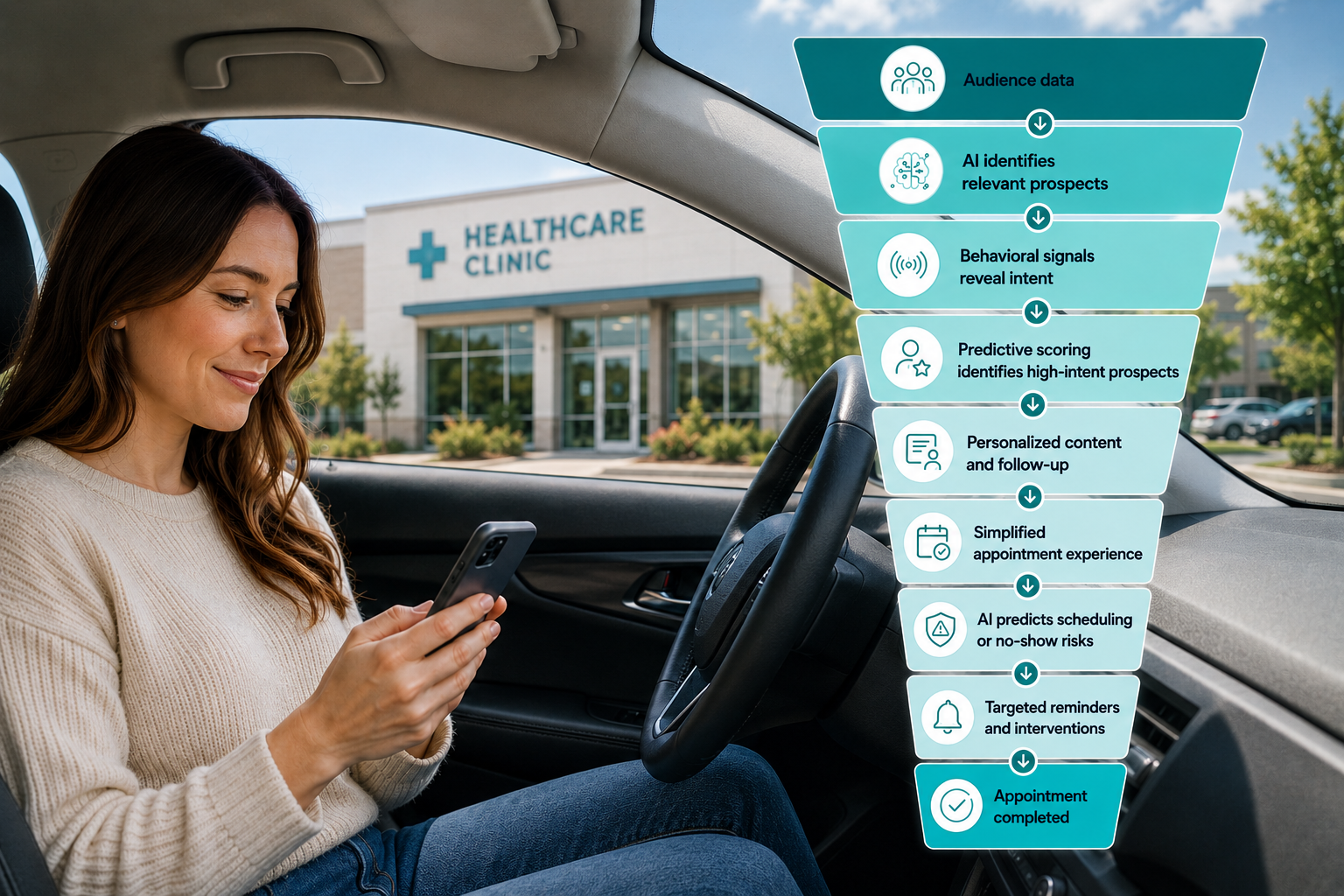
What a Connected Funnel Looks Like

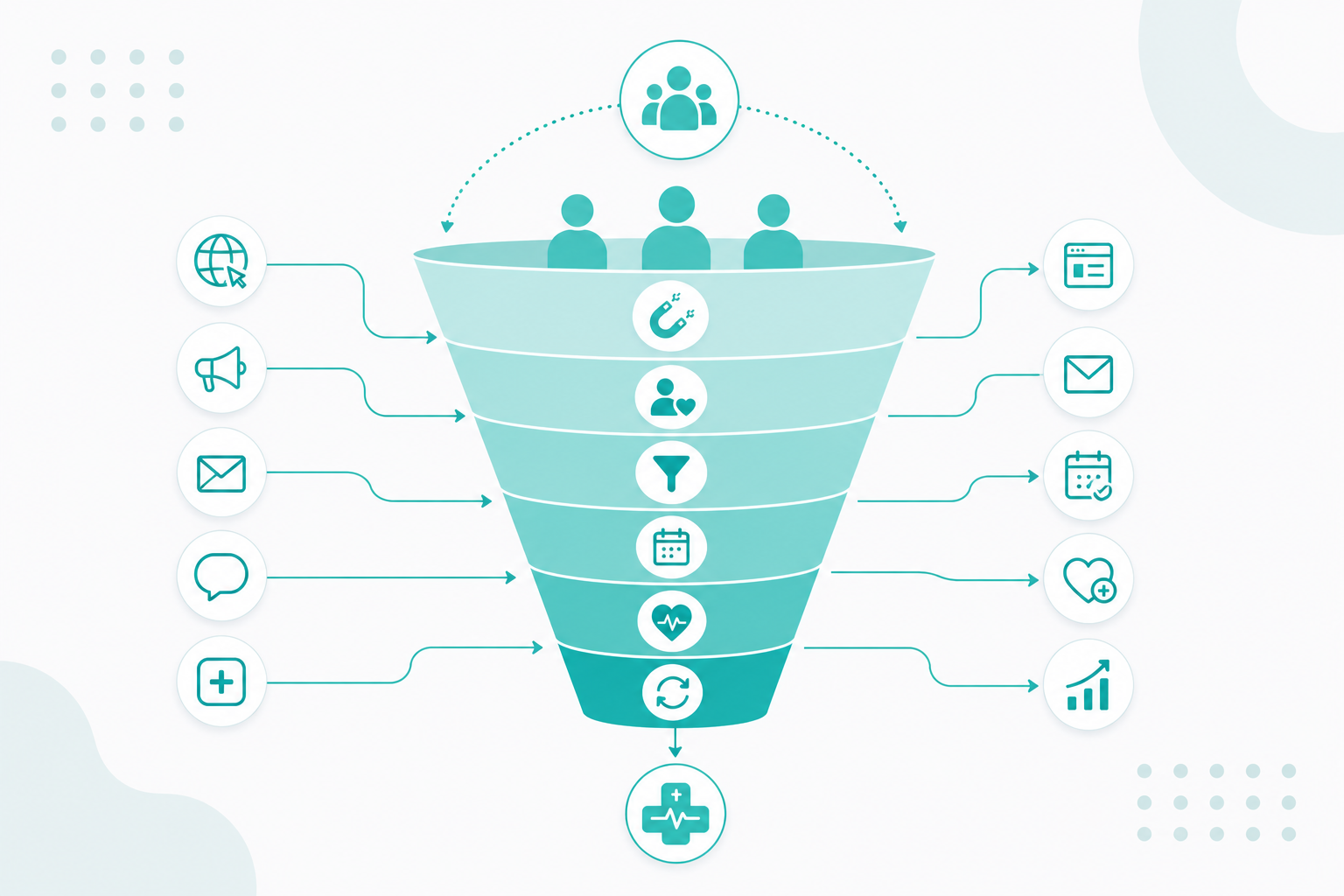
This creates a more connected acquisition process than treating advertising, website activity, CRM follow-up, and scheduling as separate systems.
What Should Healthcare Organizations Consider Before Using AI?
Predictive models touch sensitive information, so governance belongs in the plan from the start, not after launch.
- Data quality and completeness. Predictions are only as good as the records behind them. Fragmented CRM data, untracked channels, and inconsistent lead sources all degrade accuracy.
- Privacy, security, and consent. Patient behavior can reveal sensitive details, particularly around specific conditions or treatments. Access controls, data governance, and clear consent practices are prerequisites.
- Bias in training data. Biased or incomplete datasets produce unreliable predictions, and in healthcare those errors can compound across entire patient populations.
- Transparency and human oversight. Patients should understand how their information is used, and staff should be able to override a score.
Personalization has a ceiling too. Communications that feel surveilled do more damage than generic ones, so calibrate how much observed behavior you reflect to the patient.
Learn more from this guide: 10 PHI Mistakes Healthcare Organizations Should Avoid
Can HubSpot Help Healthcare Organizations Use AI for Patient Acquisition?
Yes. HubSpot supports AI-driven patient acquisition by combining Smart CRM, Marketing Hub, automation, analytics, and Breeze AI tools to capture prospects, read engagement, personalize outreach, and prioritize follow-up.
Smart CRM and Marketing Hub as the foundation
HubSpot positions its healthcare platform around managing relationships with prospective and existing patients, tracking interactions, automating communications, and tying marketing activity to the patient journey. Marketing Hub covers forms, landing pages, campaigns, tracking, segmentation, and automated engagement.
That creates a continuous flow: website visit → content engagement → lead capture → intent signals → segmentation → personalized follow-up → appointment.
The CRM holds the record of every interaction, giving teams the context they need to decide what happens next.
Breeze for Intent and Lead Prioritization
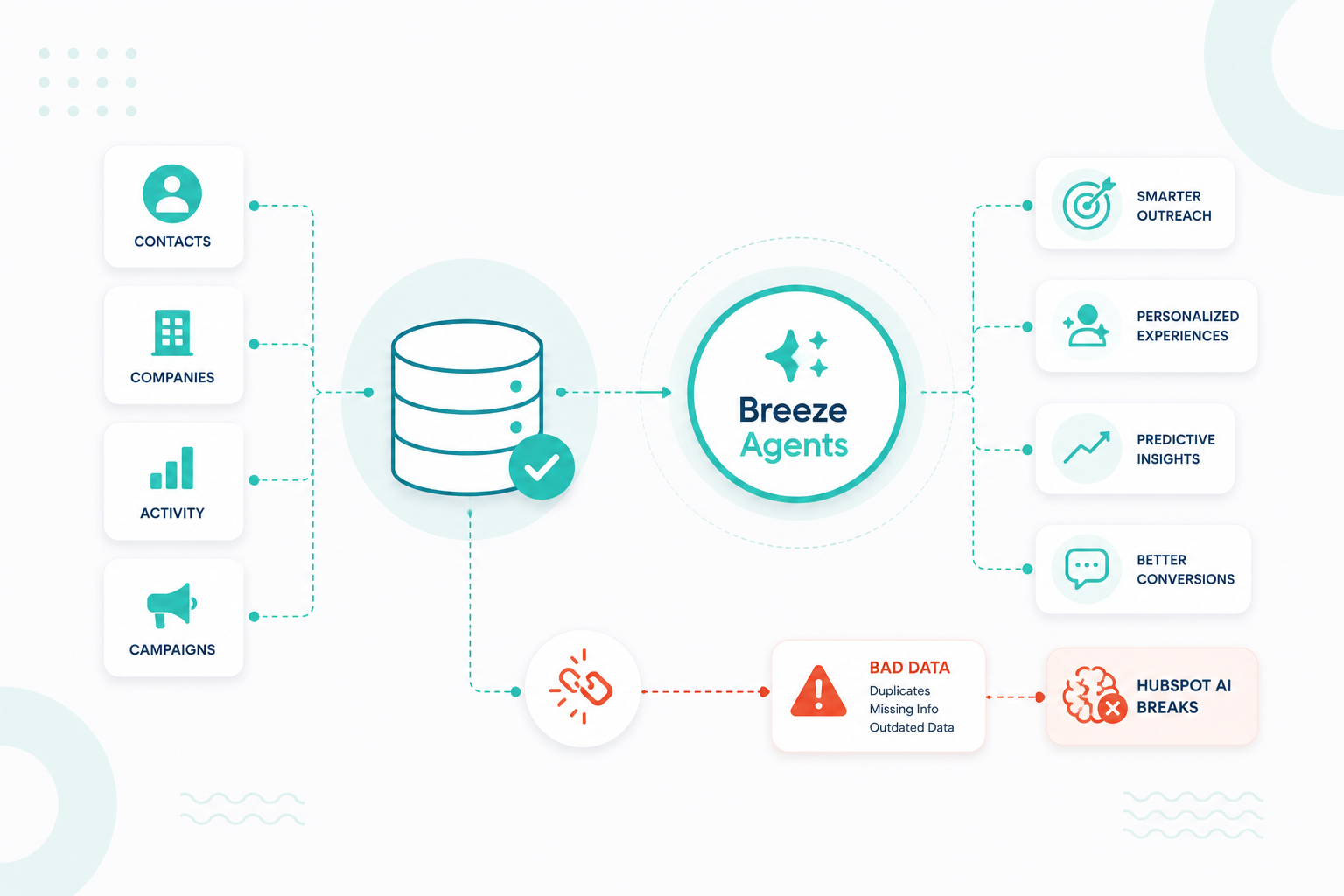
Breeze is HubSpot's AI layer across the customer platform, covering AI assistance, agents, data enrichment, lead scoring, and buyer-intent tools. Its current lead-scoring capabilities score contacts and companies using fit and engagement signals such as website visits and email interactions.
Breeze Intelligence handles the data side, enriching CRM records so segmentation, scoring, and personalization have more to work with. HubSpot says its enrichment capabilities can fill in contact and company information automatically. This helps teams keep records complete across multiple acquisition channels.
Lead Capture and Handoff

HubSpot's Customer Agent can engage website visitors, qualify leads against defined criteria, and route qualified opportunities. The Customer Handoff Agent gathers campaign touches, content consumed, and qualification details into a structured handoff for the team. For a healthcare organization, that narrows the gap between an initial inquiry and a human response.
To set up:
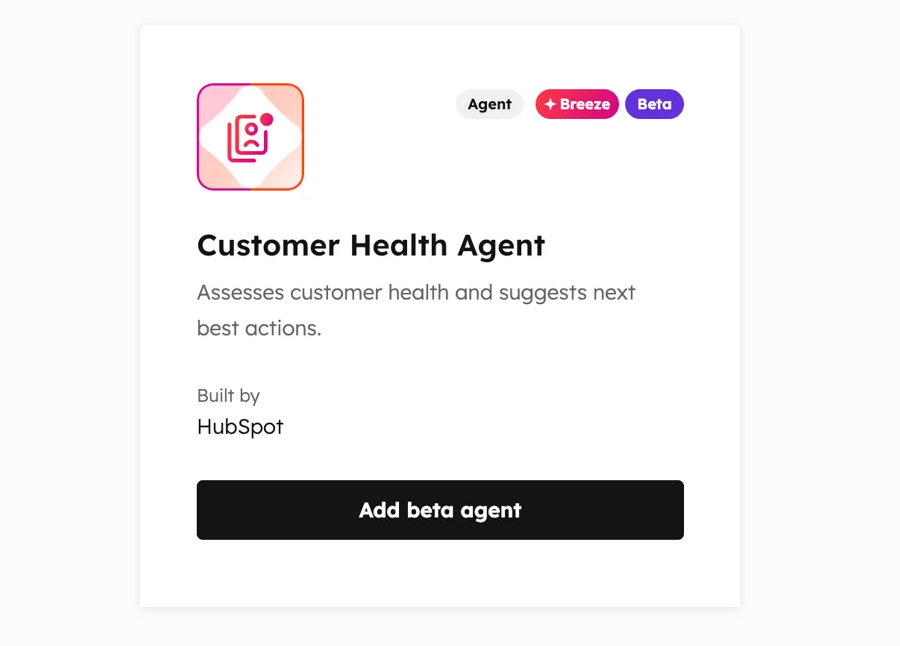
- In your HubSpot account, click More→ Agents → Agent Marketplace.
- Click Explore all.
- Select Customer Health Agent.
- Click Add beta agent.
- Click Open to launch the agent builder.
Sensitive Data Limits
HubSpot supports Sensitive Data functionality for health and medical information on eligible Enterprise subscriptions, and its documentation states that organizations storing HIPAA-covered data must enable the relevant health/medical and HIPAA settings.
Feature-specific restrictions apply. Sensitive Data is not supported in some tools, including personalization tokens and chatbots, and Highly Sensitive Data carries further limitations. Design your HubSpot architecture around the type of data you process, and confirm feature support before assuming any AI or personalization tool can touch PHI.
Practical HubSpot AI Patient Acquisition Model
- Attract. Marketing Hub brings prospects to healthcare content, service pages, landing pages, and campaigns.
- Capture. Forms and other conversion points collect prospect information and engagement context.
- Understand. Smart CRM and Breeze centralize interactions and relevant data.
- Identify intent. Lead scoring and intent signals flag prospects that warrant attention.
- Personalize. Segmentation and automation deliver relevant content and follow-up.
- Convert. Qualified prospects move toward an inquiry, consultation, or appointment.
- Measure. Reporting ties acquisition activity to conversion performance.
The advantage is not that HubSpot has AI. It is that the AI runs inside a platform where acquisition data, engagement, automation, and reporting already connect, which is what moves the conversation from "how many leads did the campaign generate" to "which journeys produce patients, and what should happen next."
Ready to Put Your HubSpot Data to Work for Patient Acquisition?
AI and predictive analytics help healthcare organizations read patient intent, find high-value opportunities, personalize the journey, and lift conversion across the funnel. Connected to CRM data, automation, and marketing activity, those insights show what actually moves patients from interest to action.
If your organization needs a more connected approach to patient acquisition, HubSpot can bring these capabilities together through its CRM, Marketing Hub, and Breeze AI tools. The right setup can help your team turn patient and prospect data into more relevant engagement, stronger follow-up, and a clearer path to conversion.
Campaign Creators helps healthcare organizations apply these capabilities in practice. We support HubSpot strategy, CRM setup, AI, automation, data management, and patient acquisition, helping connect the systems behind the patient journey so your organization can turn data into action.
Explore how we can help your team get more from HubSpot for patient acquisition.
Frequently Asked Questions
What Is the Difference Between AI and Predictive Analytics in Healthcare Marketing?
AI is the broader technology used to analyze data, automate tasks, and generate insights. Predictive analytics is one application of AI and statistical modeling that uses existing data to estimate future behavior or outcomes.
What Data Does AI Need to Predict Patient Behavior?
AI can use website activity, content engagement, CRM records, appointment history, campaign interactions, and other relevant behavioral data.
Can AI Predict When a Patient Will Book an Appointment?
AI can estimate the likelihood that a patient or prospect will book based on behavioral patterns associated with previous conversions. It cannot guarantee that a specific person will schedule an appointment.
Can AI Identify Patients Who Are Likely to Stop Engaging?
Yes. AI can analyze changes in engagement, communication activity, and other available signals to identify patients or contacts who may need additional outreach.
How Accurate Are AI Patient Predictions?
Accuracy varies based on the model, data quality, training data, and outcome being predicted. AI predictions should be treated as probabilities rather than guarantees.
Can AI Help Identify Which Marketing Channels Produce Better Patients?
Yes. Predictive and attribution models can connect acquisition sources with downstream engagement and conversion data. This can help organizations distinguish channels that generate traffic from those that produce stronger patient opportunities.
Can Predictive Analytics Improve Healthcare Marketing ROI?
It can help improve marketing efficiency by prioritizing higher-intent opportunities and identifying which campaigns or channels contribute to conversion.
.png?width=1920&height=553&name=cc-logo-color-horizontal%20(1).png)