







 Campaign Creators
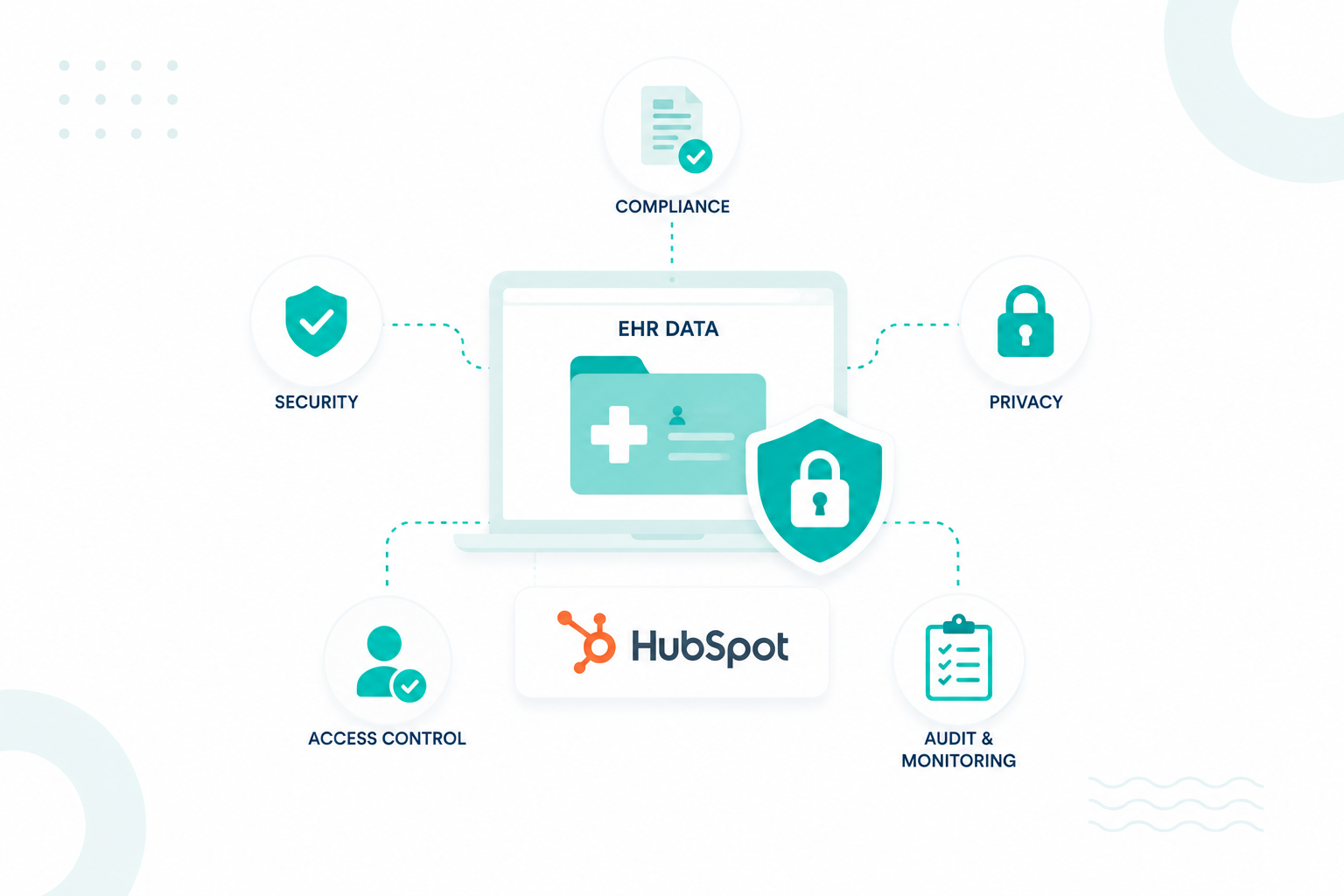
Is It Safe to Use EHR Data in HubSpot? It Depends
 Campaign Creators : 06/04/26
The answer is yes in some situations, but only if strict HIPAA requirements, security controls, and governance processes are in place. HubSpot...
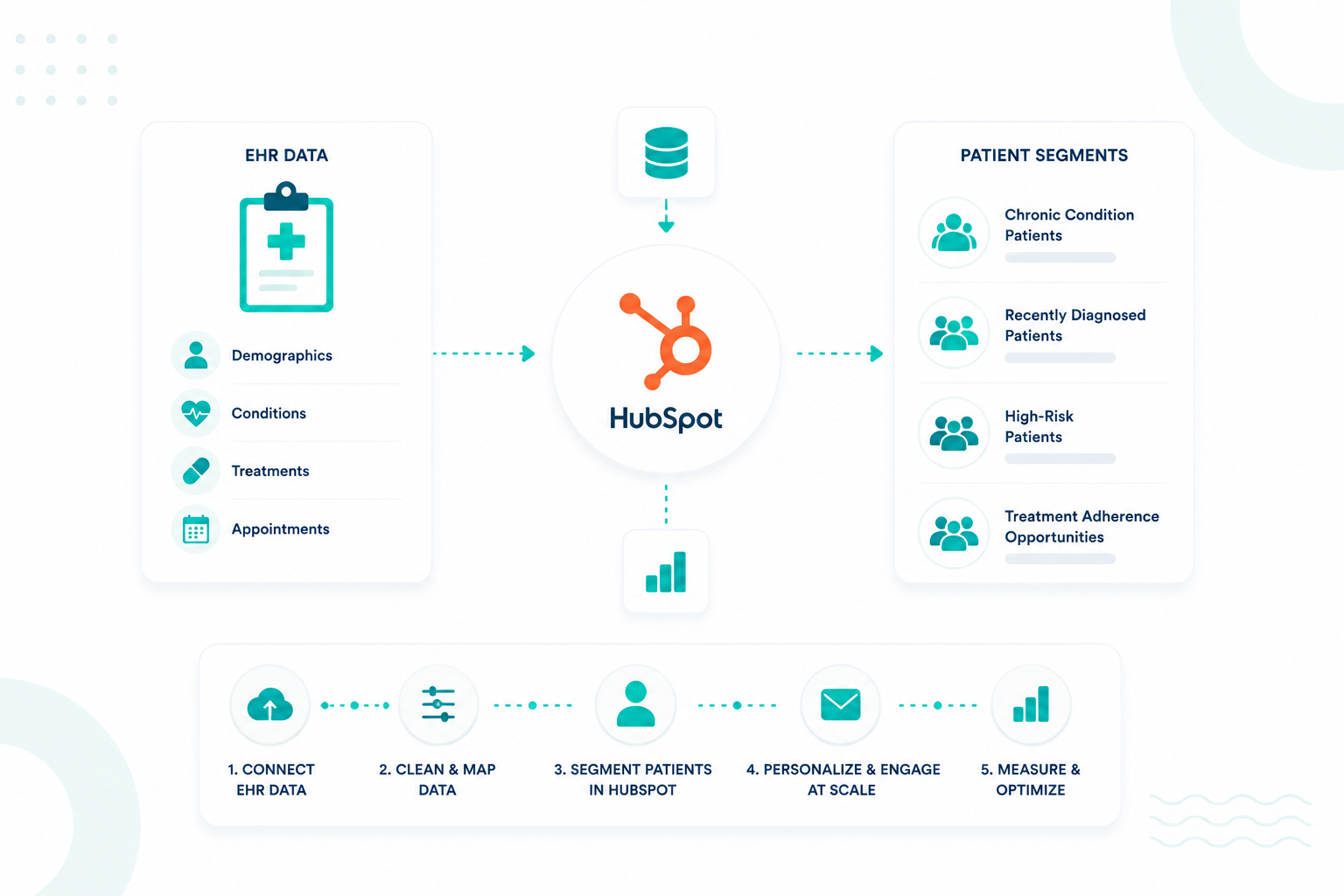
Healthcare organizations use patient segmentation to create more relevant communication, improve engagement, and support care coordination throughout the patient journey. When Electronic Health Record (EHR) data is connected to HubSpot, healthcare teams can use patient information to build automated outreach and personalize interactions at scale.
HubSpot provides tools that help organizations organize EHR data, create dynamic patient segments, automate workflows, and analyze engagement across different patient groups. These capabilities help deliver more personalized experiences while maintaining visibility across patient interactions.
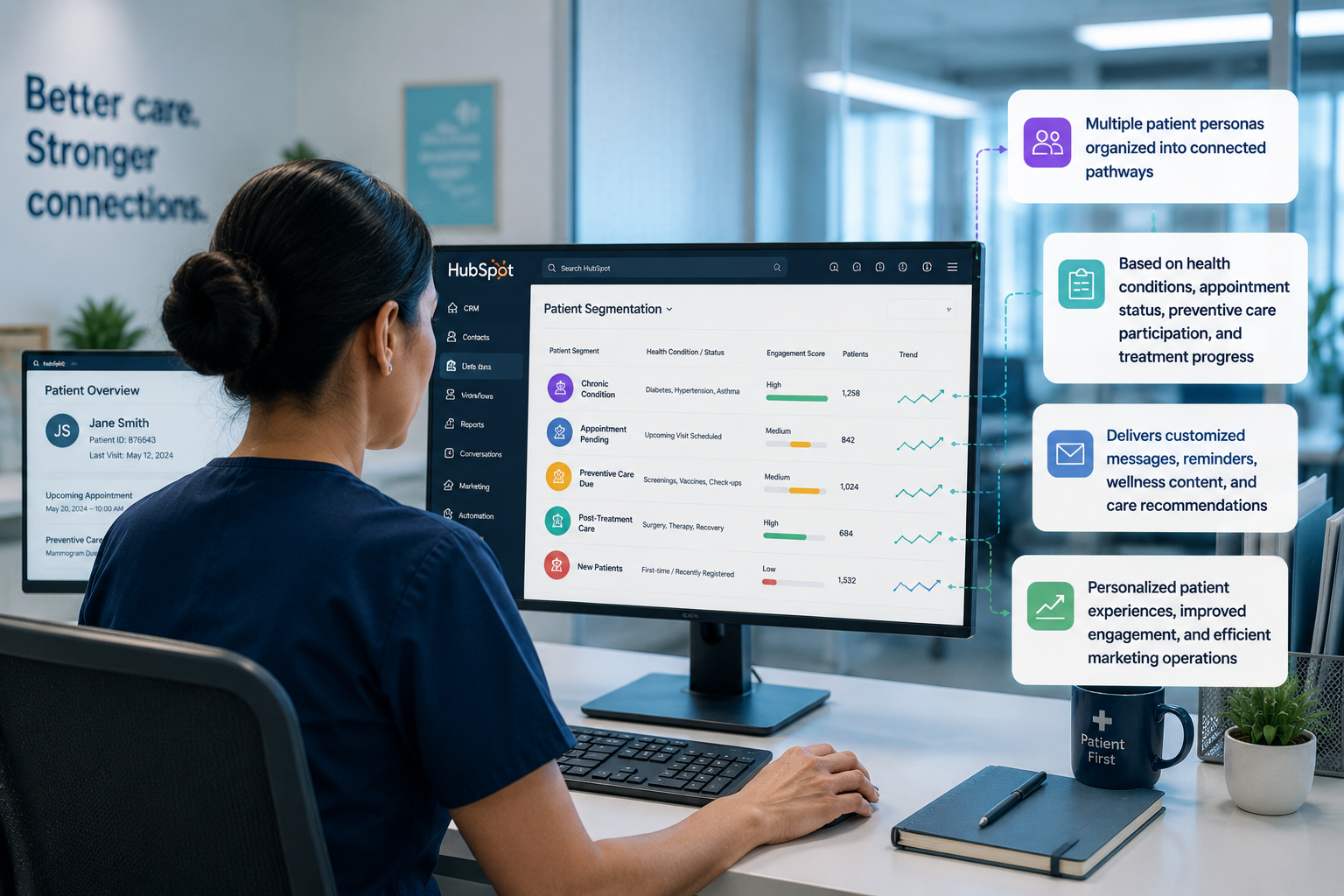
Patient segmentation helps healthcare organizations communicate with different groups of patients in a more relevant way. Rather than treating every patient as a single audience, healthcare teams can tailor communication based on individual needs, care journeys, and levels of engagement.
This supports more personalized patient experiences throughout the healthcare journey. Patients can receive information that is more relevant to their circumstances, whether they are scheduling appointments, managing ongoing treatment, completing follow-up care, or participating in preventive care programs.
Personalized communication also affects patient engagement. One survey by Accenture found that 88% of patients were more likely to follow medical advice when communication was personalized to their needs, and 83% preferred healthcare providers that offered digital communication options they liked.
For healthcare organizations, segmentation helps with overall care coordination. It also creates a stronger foundation for automation, reporting, and personalized outreach within healthcare CRM platforms such as HubSpot.
Healthcare organizations are connecting EHR systems with HubSpot to create a unified patient data environment that supports engagement, care coordination, and operational visibility across the patient journey.
Many healthcare teams manage patient information across disconnected systems such as EHR platforms, scheduling software, patient portals, contact centers, email platforms, and CRM tools. This creates fragmented records, inconsistent communication, and limited visibility into patient interactions.
The push toward connected healthcare data is becoming more urgent as organizations expand digital engagement programs. HubSpot research found that 34% of businesses experienced revenue loss due to fragmented customer data, and only 31% reported that most of their data was accessible to AI systems. Unified patient records help healthcare organizations reduce data silos, improve visibility across interactions, and create more accurate segmentation and engagement strategies.
A healthcare organization can automatically identify patients who missed appointments, patients due for preventive screenings, patients currently enrolled in care programs, or patients who have become inactive. HubSpot can use these data points to trigger workflows, update audience segments, assign follow-up tasks, and personalize communication based on current patient activity.
HIPAA compliance requires healthcare organizations to protect patient information through administrative, technical, and operational safeguards.
Any healthcare organization using EHR data inside HubSpot must carefully evaluate how protected health information (PHI) is collected, stored, processed, accessed, and shared throughout the CRM environment.
Several core requirements influence patient segmentation strategies:
HubSpot introduced healthcare-focused HIPAA support capabilities that include sensitive data settings, audit controls, security protections, and healthcare-oriented CRM functionality when configured appropriately. Healthcare organizations still maintain responsibility for internal governance, user access management, workflow configuration, and operational compliance.
Patient segmentation projects should begin with a compliance review that defines which data fields can be used, who can access patient information, and how healthcare communications will be managed throughout the organization.
Several categories of EHR data support patient segmentation strategies inside HubSpot.
|
EHR Data Category |
Segmentation Use Case |
|
Demographic Data |
Age groups, location, gender, and language preferences |
|
Appointment History |
Upcoming visits, missed appointments, follow-up schedules |
|
Treatment Information |
Care plans, treatment stages, specialty services |
|
Diagnosis Data |
Condition-specific patient communication |
|
Care Utilization Data |
Frequency of visits and patient activity |
|
Insurance Information |
Administrative communication workflows |
|
Communication Preferences |
Preferred outreach channels and engagement methods |
Demographic information often serves as the starting point for segmentation because it helps healthcare organizations create localized and population-specific communication campaigns.
Appointment and visit data support operational segments focused on reminders, scheduling follow-ups, preventive care outreach, and patient retention.
Diagnosis and treatment-related information help organizations create highly relevant educational content, care coordination programs, and condition-specific engagement campaigns when managed within HIPAA-compliant workflows.
Behavioral engagement data also adds valuable context. Email interactions, form submissions, portal activity, and communication responses provide insight into how patients engage throughout their healthcare journey.
Healthcare organizations typically connect EHR systems and HubSpot through APIs, middleware platforms, native integrations, or custom healthcare data integrations.
Most healthcare integrations follow a structured process:
Many organizations synchronize demographic records, appointment activity, care history, communication preferences, and engagement events directly into HubSpot properties and lists.
Data Hub also supports healthcare organizations through data synchronization, data quality management, duplicate prevention, and workflow automation features that help maintain accurate patient records across systems.
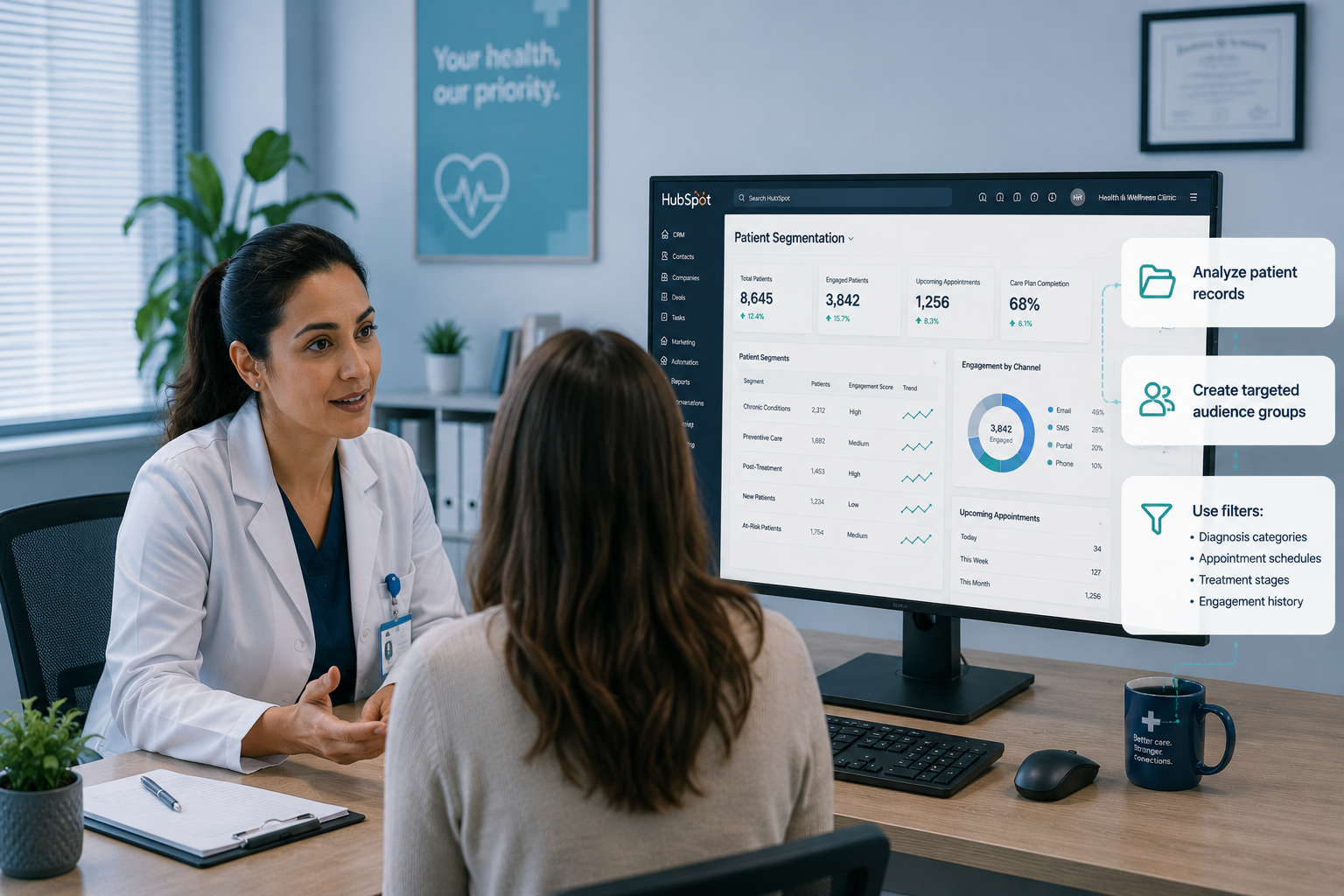
Once EHR data is available in HubSpot, healthcare organizations can use CRM properties, active lists, workflows, and automation tools to create patient segments.
The process typically starts with mapping EHR information into HubSpot properties. Common properties include diagnosis categories, appointment dates, treatment stages, care program enrollment, communication preferences, and patient status.
Healthcare teams can then create active lists based on specific criteria. For example, a segment may include patients with upcoming appointments, patients who missed recent visits, patients enrolled in a chronic care program, or patients who have not engaged with communication campaigns during a defined period.
HubSpot helps organizations to combine multiple filters to create more targeted audiences. A healthcare team could build a segment for patients diagnosed with diabetes who have an appointment scheduled within the next 30 days and have opened at least one educational email.
As EHR records update, HubSpot can automatically add or remove patients from segments through active lists and workflows. This keeps patient audiences accurate without requiring manual updates.
Healthcare organizations can also use HubSpot's AI-powered tools to identify audience patterns, generate segment recommendations, and analyze segment performance. These capabilities help teams create more relevant communication strategies and improve patient engagement over time.
Healthcare organizations commonly build segments based on demographics, treatment stages, appointment activity, engagement behavior, and care needs.
Examples include:
|
Patient Segment |
Purpose |
|
New Patients |
Onboarding and education workflows |
|
Active Care Patients |
Ongoing treatment communication |
|
Preventive Care Patients |
Wellness and screening reminders |
|
High-Risk Patients |
Additional support and engagement |
|
Missed Appointment Patients |
Re-engagement campaigns |
|
Chronic Condition Groups |
Condition-specific education |
|
Inactive Patients |
Retention and return-to-care campaigns |
These segments help healthcare teams create communication journeys that reflect where patients currently sit within the care lifecycle.
As patient records update through EHR integrations, HubSpot lists and workflows can automatically adjust segment membership according to predefined criteria. This creates more accurate and scalable patient engagement programs.
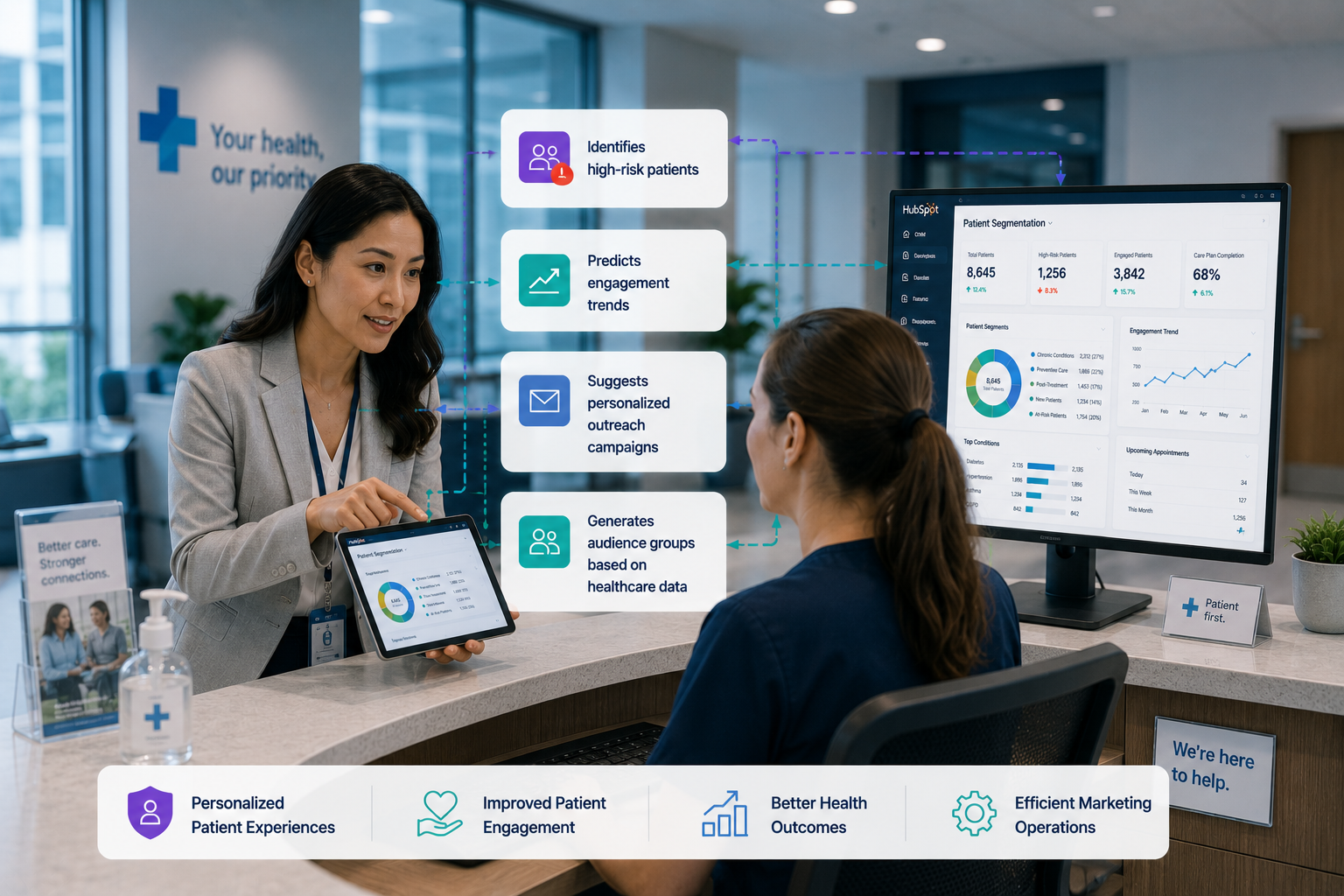
AI is improving patient segmentation through automated pattern recognition, predictive insights, audience discovery, and segment recommendations.
Healthcare organizations generate large amounts of patient data across clinical systems, communication channels, scheduling platforms, portals, and engagement tools. AI helps identify meaningful relationships within these datasets that may not be immediately visible through manual analysis.
HubSpot continues expanding AI-powered segmentation capabilities that help users generate audience segments, analyze segment performance, and identify opportunities for improved targeting. These help teams build more sophisticated segmentation frameworks with less manual effort.
AI-driven healthcare segmentation supports:
Healthcare organizations are also evaluating emerging AI governance frameworks that focus on HIPAA-compliant data handling, access controls, auditability, and patient privacy protections as AI becomes more integrated into healthcare workflows.
Healthcare organizations achieve stronger results when segmentation frameworks are built around clear patient engagement objectives and governed by structured data practices.
Best practices include:
Many healthcare teams sync large amounts of EHR data into HubSpot without first deciding how that data will support communication workflows. This often creates cluttered CRM records and overly broad patient lists. Before building segments, identify the outcome each audience supports.
Examples include:
|
Goal |
Segment Example |
|
Increase appointment attendance |
Patients with appointments scheduled within 14 days |
|
Improve preventive care engagement |
Patients are overdue for annual wellness visits |
|
Support chronic care management |
Patients diagnosed with diabetes within the past 12 months |
|
Increase patient retention |
Patients with no visits in the last 18 months |
|
Improve follow-up completion |
Patients discharged within the last 30 days |
HubSpot workflows become more targeted and easier to measure when segmentation starts with business and patient-care objectives.
Patient segmentation works best when EHR fields are mapped into organized HubSpot properties. Healthcare organizations often create custom properties for:
For example, a diabetes clinic may create a custom property called “Diabetes Care Stage” with values such as Newly Diagnosed, Active Treatment, Maintenance Phase, and Follow-Up Needed. This gives HubSpot clear segmentation criteria and supports more accurate workflow automation.
The strongest patient segmentation models combine EHR information with behavioral engagement data. EHR data reflect patient care activity, while behavioral data reflect patient communication activity. Healthcare organizations often build segments using both categories together. For example: Segment - Cardiology patients with low engagement.
Criteria:
This segment helps identify patients who may need additional communication outreach or engagement support.
Another example: Segment - Upcoming appointment patients who downloaded educational resources.
Criteria:
This creates a highly relevant audience for pre-visit communication workflows.
Dynamic lists help patient segments stay accurate as EHR data changes. Static lists require manual updates and quickly become outdated when appointment statuses, diagnoses, treatment stages, or care activities change.
For example, a preventive care segment may automatically include:
As new EHR information syncs into HubSpot, patients automatically enter or leave the segment based on updated criteria.
Many healthcare organizations organize patient segmentation according to the patient lifecycle. This creates more relevant communication experiences because messaging reflects where patients currently sit within the care journey.
Common lifecycle segments include:
|
Patient Stage |
Segmentation Criteria |
|
New Patient |
First appointment completed |
|
Active Care |
Ongoing treatment plan |
|
Follow-Up Needed |
No completed follow-up visit |
|
Preventive Care |
Eligible for screenings or wellness visits |
|
At-Risk Patient |
Missed appointments or reduced engagement |
|
Inactive Patient |
No visits within the defined period |
Each lifecycle stage can trigger different HubSpot workflows, educational content, appointment reminders, and patient engagement campaigns.
Not every HubSpot user should have access to all EHR-connected information. Healthcare organizations should create role-based permissions that define:
Sensitive diagnosis-related fields often require stricter visibility controls than general demographic information. This reduces unnecessary exposure of protected health information and supports stronger HIPAA governance practices.
Patient segmentation quality depends on data accuracy. Healthcare organizations should routinely review:
For example, a segment targeting recent surgery patients may become unreliable if procedure data stops syncing correctly from the EHR. Monthly audits help identify issues before they affect patient communication campaigns.
Many healthcare organizations create dashboard reports inside HubSpot to monitor list growth, workflow activity, enrollment rates, and engagement performance across major patient segments.
Email opens and click-through rates provide useful engagement signals, but healthcare organizations often track broader performance indicators such as:
For example, a preventive screening segment may show stronger performance through increased screening completion rather than higher email engagement.
This creates a clearer understanding of how segmentation contributes to patient engagement, operational performance, and care coordination goals.
Organizations that combine secure EHR integrations, HIPAA-compliant data governance, AI-powered insights, and well-structured segmentation frameworks can create more relevant patient experiences while improving communication efficiency and operational visibility across the patient journey.
If your organization needs help connecting EHR data with HubSpot, our team can help. We have worked with healthcare organizations that had large amounts of patient data but struggled to turn that information into actionable segments, automated outreach, and measurable engagement programs.
At Campaign Creators, we help healthcare organizations integrate patient data into HubSpot, build audience segmentation strategies, automate communication workflows, and create more personalized patient journeys that support both engagement and operational goals.

Campaign Creators : 06/04/26
The answer is yes in some situations, but only if strict HIPAA requirements, security controls, and governance processes are in place. HubSpot...
Campaign Creators : 04/22/26
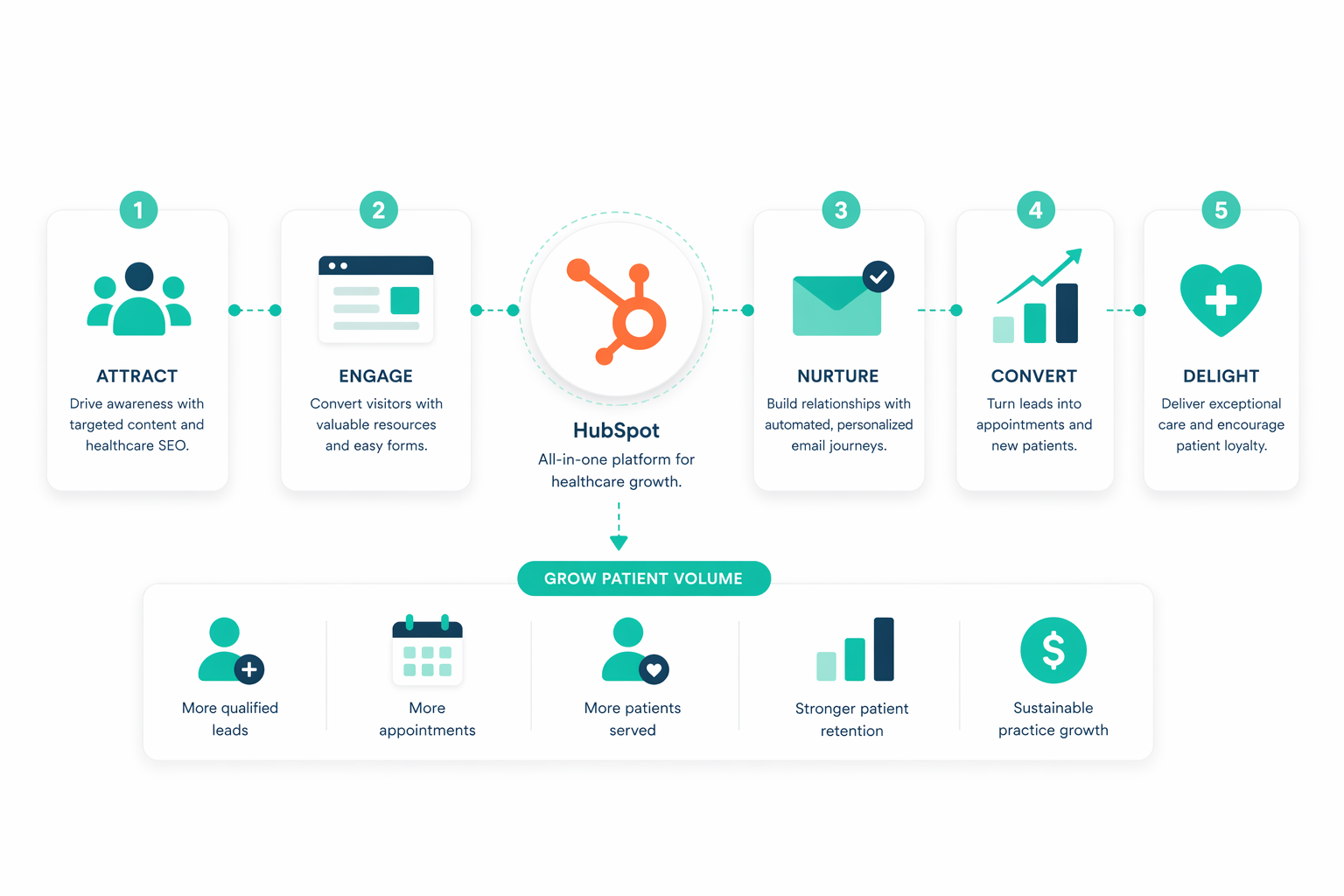
Healthcare has reached a point where strong clinical care is expected. Patients now expect the same digital convenience they get from banking or...
Campaign Creators : 07/02/26
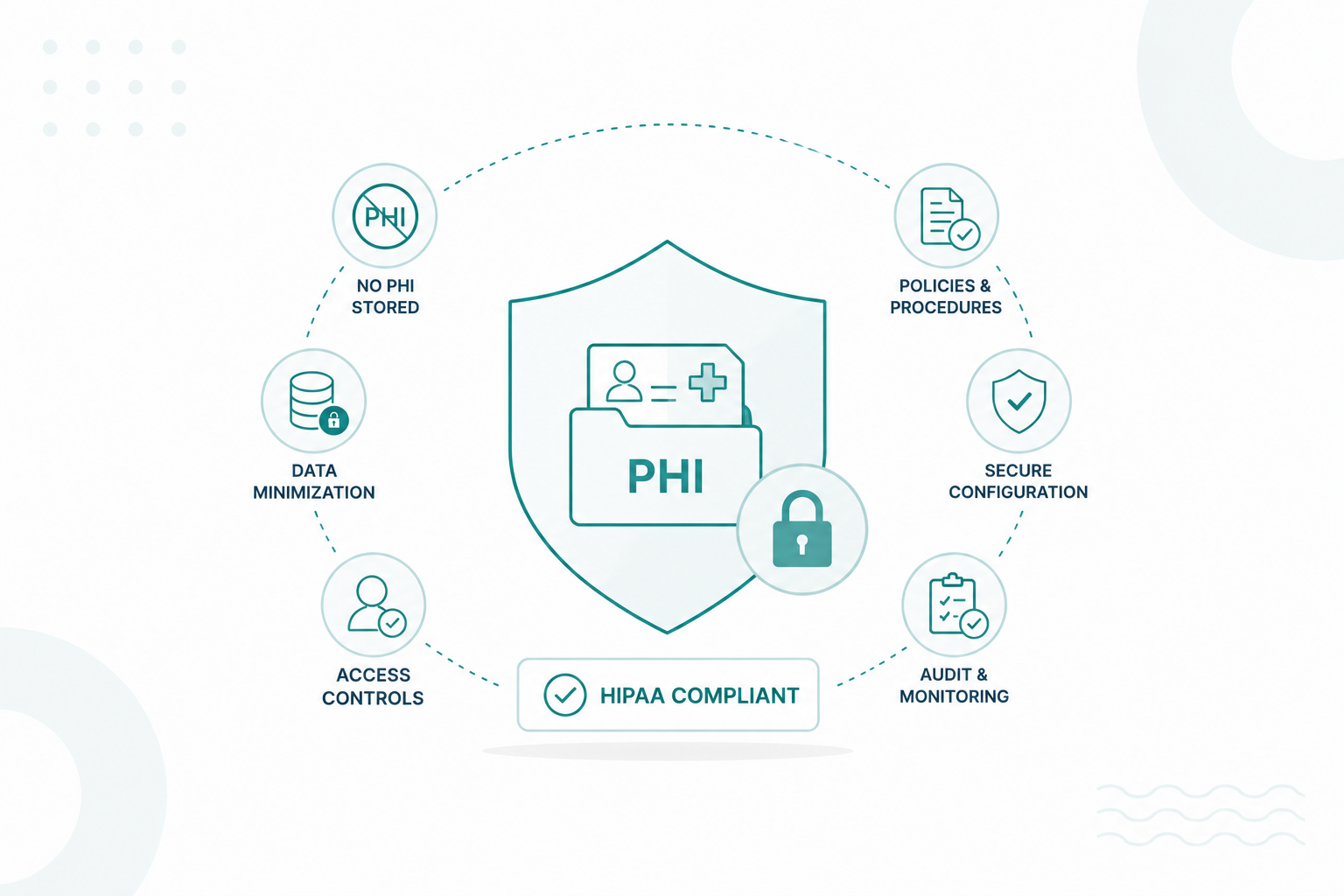
Healthcare organizations can use HubSpot while maintaining HIPAA compliance, but only if the platform is configured correctly and Protected Health...