




A HubSpot Elite Solutions Partner built to help organizations unify strategy, systems, and execution. We design HubSpot systems that scale.

See how we've solved complex HubSpot challenges across migrations, integrations, CMS, automation, and optimization.

Join a team building smarter HubSpot systems. We value strategic thinkers who move proactively, care about quality, and want to do meaningful work.

9 min read

What Is the Future of Social Media? 7 Trends Shaping 2026

What Is the Future of Social Media? 7 Trends Shaping 2026

People now search for answers, watch product demos, read comments for second opinions, ask questions in group chats, and complete purchases without leaving the feed. Social platforms have taken on roles once handled by search engines, review sites, storefronts, and customer support channels.

For businesses, this means social media requires more than a consistent publishing schedule. Brands need to be discoverable when people are looking for answers, credible enough to earn their trust, and useful enough to keep them engaged.

This guide explores what social media looks like in 2026, the seven trends driving its evolution, what marketers should do differently, and how to measure the results that matter.

Key Takeaways

  • Social media has evolved from a follower-based channel into a discovery, search, commerce, and community ecosystem.
  • Recommendation algorithms now prioritize relevance and behavior over follower count, making useful content more important than audience size.
  • AI can increase content volume, but human expertise, original insights, and authentic experiences are what build trust.
  • Social commerce is shortening the path from product discovery to purchase by keeping more of the buying journey inside social platforms.
  • A connected CRM like HubSpot helps businesses move beyond social metrics by linking engagement to leads, sales conversations, customers, and revenue.

What Is the Future of Social Media in 2026?

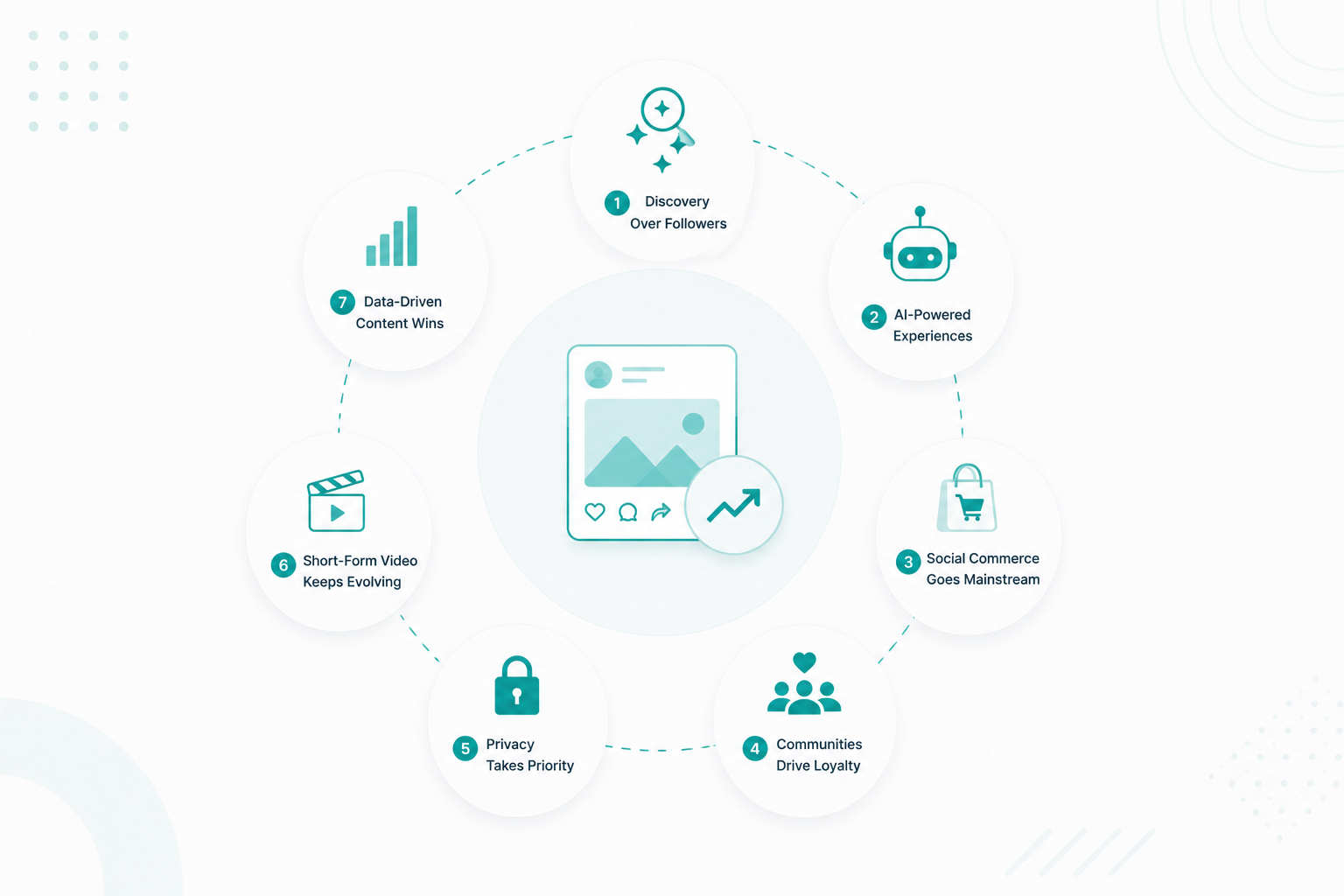
The future of social media is increasingly centered on discovery, creators, commerce, AI, and communities. Social platforms have expanded far beyond profiles and follower lists. People now use them to search for products and recommendations, evaluate brands, watch tutorials, connect with communities, and buy without leaving the app.

Research found that 37% of consumers use social media first when looking for product reviews and recommendations, while 76% say social content has influenced a purchase in the past six months. That shift is changing how people move through the buying journey. Social media can introduce someone to a brand, give them the reviews and opinions they need to evaluate it, and hand them a way to purchase on the spot. McKinsey found that social media has become the most important channel across the purchase journey for Gen Z, particularly for brand discovery and purchases.

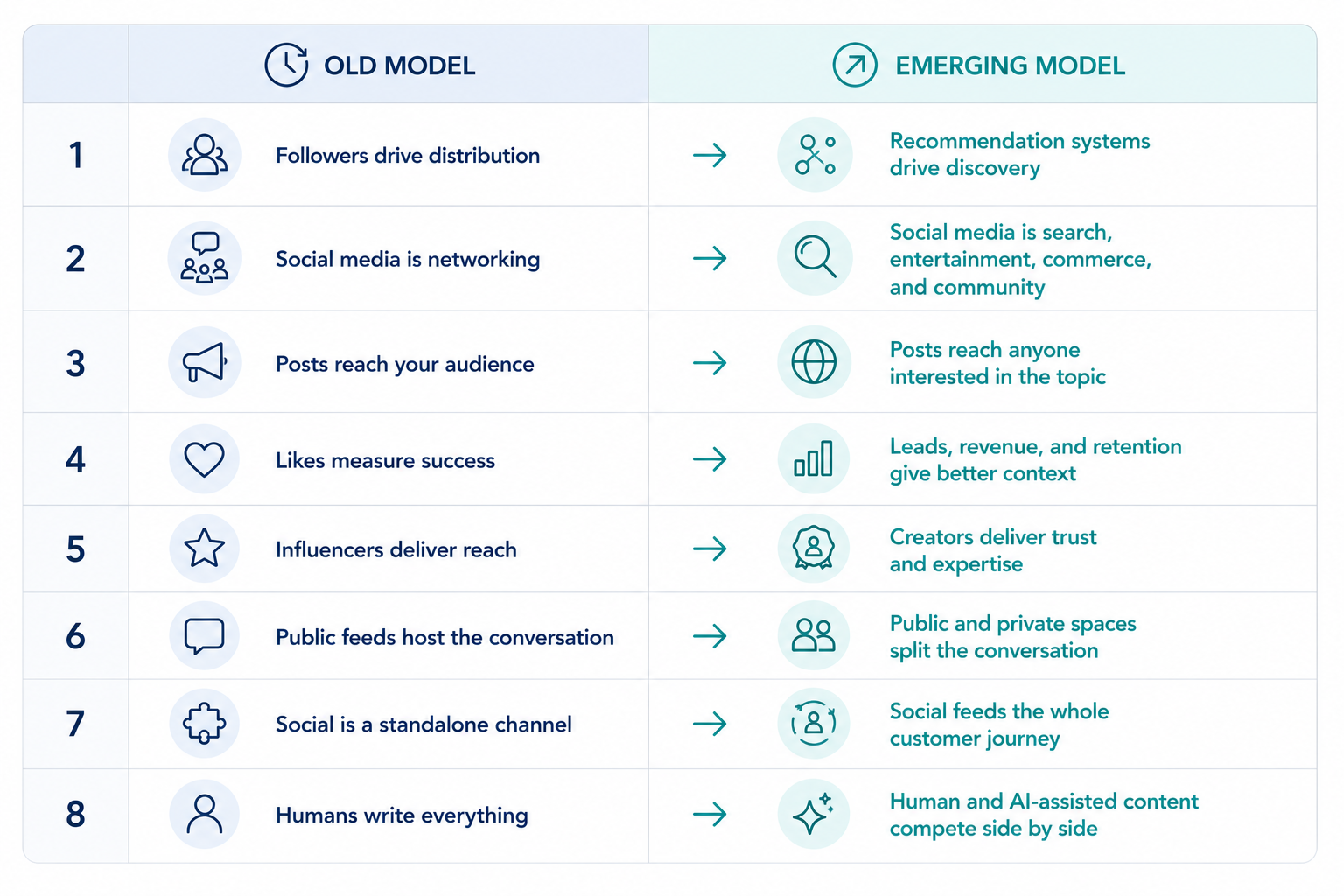
Underneath all of it sits a change in how content gets distributed. Social media used to be follower-first, so people saw mostly what they subscribed to. It is now interest-first. Recommendation systems build the feed from behavior, watch time, searches, saves, and interactions, which means content from accounts a person has never followed can land in front of them. That cuts both ways. Your existing audience no longer guarantees reach, and your reach no longer depends on your existing audience.

The path a person takes has stretched well past the original loop of post, like, scroll.

social-media-model-today-vs-old-model

None of the old behaviors vanished. Followers, brand pages, and organic posts still do useful work. They now sit inside a much larger system where audience size is only one part of the equation. Content that answers real questions and demonstrates expertise can influence decisions long before someone visits your website or talks to sales.

What Are the 7 Trends Shaping the Future of Social Media?

Seven shifts explain most of what changed, and each one has a practical consequence for how businesses show up.

1. Social Platforms Are Working As Search Engines

tiktok-as-a-search-platform

People search inside social apps for product reviews, restaurant picks, tutorials, salary benchmarks, and vendor opinions. That means posts need to stand on their own for people who discover them through a search, not just for existing followers.

Question-shaped content performs well here, along with comparisons, walkthroughs, teardowns, and honest explanations of what a product does not do. One customer question can become a TikTok video, YouTube Short, LinkedIn document post, Reddit answer, and blog section, each phrased around how people search on that platform.

Social SEO and traditional SEO are also becoming harder to separate. AI answer engines increasingly draw from community and social sources, so a useful Reddit reply or LinkedIn post can continue surfacing in AI-generated answers long after publication.

2. AI Pushed Content Volume Up And Trust Down

AI now sits in nearly every stage of social marketing, from topic research and drafting to repurposing, reporting, and customer replies. About 94% of marketers use AI in content creation this year, and the platforms themselves run on AI to rank, personalize, and recommend.

The catch is that audiences noticed. 50% of Gen Z have blocked, muted, or unfollowed a brand or creator because the content felt like AI slop, 88% say AI video tools have eroded their trust in social news, and two in three users are more selective about what they engage with than a year ago. The single behavior consumers most want brands to stop is posting AI-generated content without labeling it.

So the advantage no longer comes from producing more. It comes from having something to say that a model cannot generate on its own. First-hand experience, named humans on camera, original data from your own customers, and a clear point of view are the things that survive a feed full of synthetic content. Treat AI as leverage on research, repurposing, and analysis. Keep a human on the parts that carry your credibility.

3. Relevance Is Replacing Follower Count

linkedin-engagement-niche-vs-large-creators

Follower count used to be a decent proxy for influence. It has become one of the weakest signals on the dashboard.

Socialinsider's benchmark analysis of 70 million posts found engagement down roughly 24% year over year across platforms, with Facebook organic engagement sitting near 0.15%. The more interesting detail sits underneath the headline. Comments per post fell 24% on TikTok while shares per post rose 45%. People did not stop engaging. They moved the engagement into direct messages and group chats where your analytics cannot see it.

A brand with 8,000 people who care about a narrow topic can outperform one with 100,000 passive followers, because recommendation systems reward topical fit over audience size. Saves, shares, watch time, qualified traffic, leads, and retention give you a far clearer read than follower growth.

4. Creators And Employees Are Becoming The Front Door

Creators moved past the sponsored-post era. They now function as topic specialists, community leaders, and product educators, and brands increasingly work with them across quarters in place of single campaigns.

The trust gap explains why. According to the National Advertising Division of BBB National Programs, 58% of US adults have bought something because of an influencer endorsement. Sponsored content is projected to make up about 59% of creator revenue in 2026, well ahead of platform payouts and affiliate income.

The bigger change is internal. 40% of consumers frequently discover a product or service through employee-generated content, rising to 61% among Gen Z. Founders, engineers, support leads, and salespeople are becoming the recognizable faces of companies that used to speak only through a logo.

5. Social Commerce Is Closing The Gap Between Discovery And Purchase

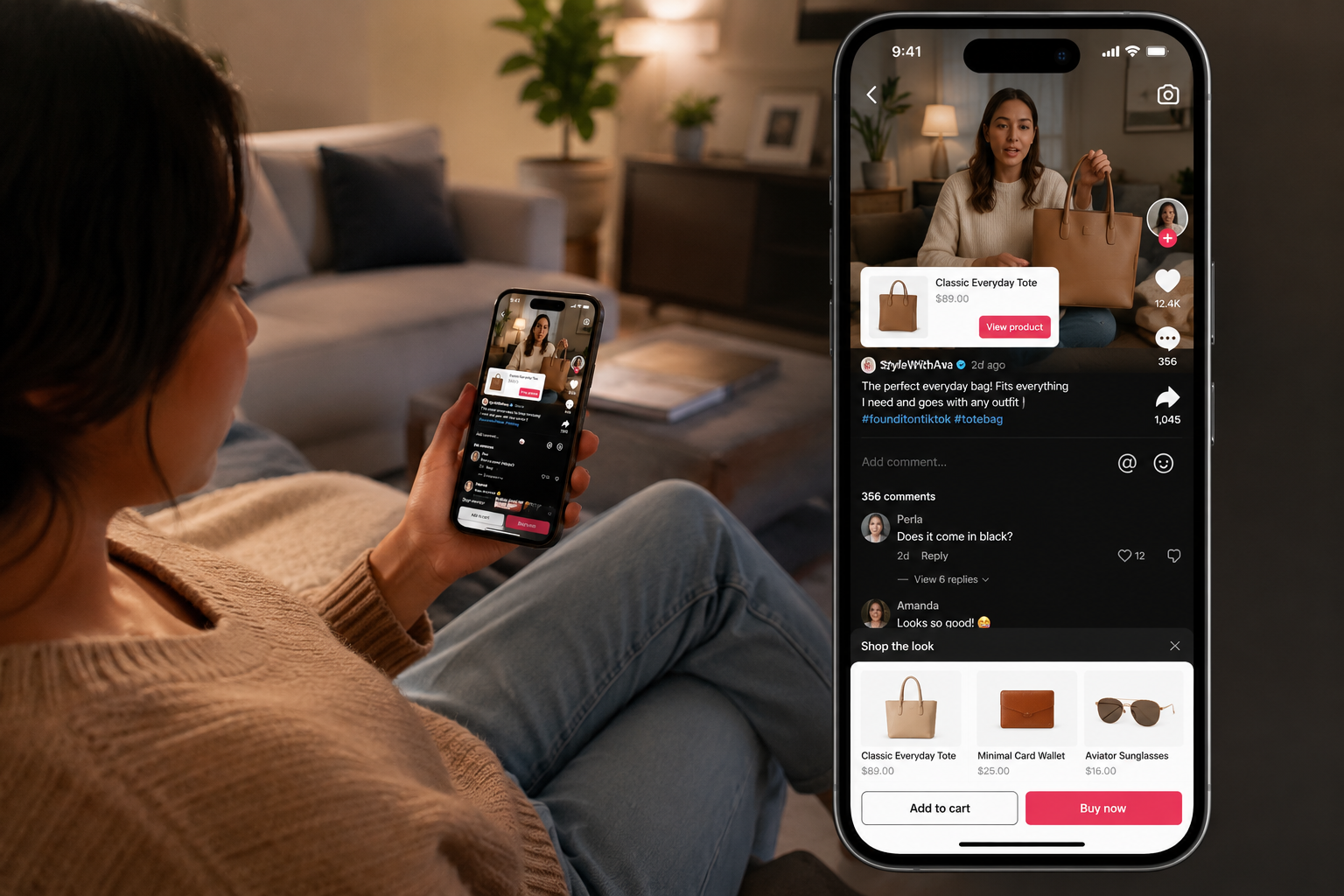
woman-watching-tiktok-product-selling

Buying has moved inside the apps. eMarketer projects US social commerce sales will pass $100 billion in 2026, a first for the channel, on its way to a steadily larger share of all ecommerce.

A shopper can now see a product in a video, watch it demonstrated, read the comments for objections, check a creator review, and check out without ever opening a browser tab.

Service businesses see the same compression even without a buy button. Someone might watch a founder explain an industry problem, read a case study, sit in on a webinar, and book a call weeks later. Social did not close that deal, but the deal does not happen without it. The content that converts here is seldom the most promotional. Demonstrations, comparisons, objection handling, and proof do more work than a product announcement.

6. Short-Form Video Is Becoming Purpose-Built

Short-form video is still the format marketers bet on. HubSpot puts it first for ROI at 49%, ahead of long-form video at 29% and live streaming at 25%.

What changed is the expectation. Chasing a viral hit has given way to building sequences where each video does a specific job. One introduces a problem. One demonstrates a fix. One answers the objection that kills half your deals. One shows a customer result.

Short-form earns attention, and long-form earns depth, so the two work better together than apart. A 40-second clip can pull someone in, and a 12-minute walkthrough can convince them. The most valuable video is often not the one with the most views. It is the one that reached the right person at the right point and moved them forward.

7. Small Communities Are Outperforming Big Audiences

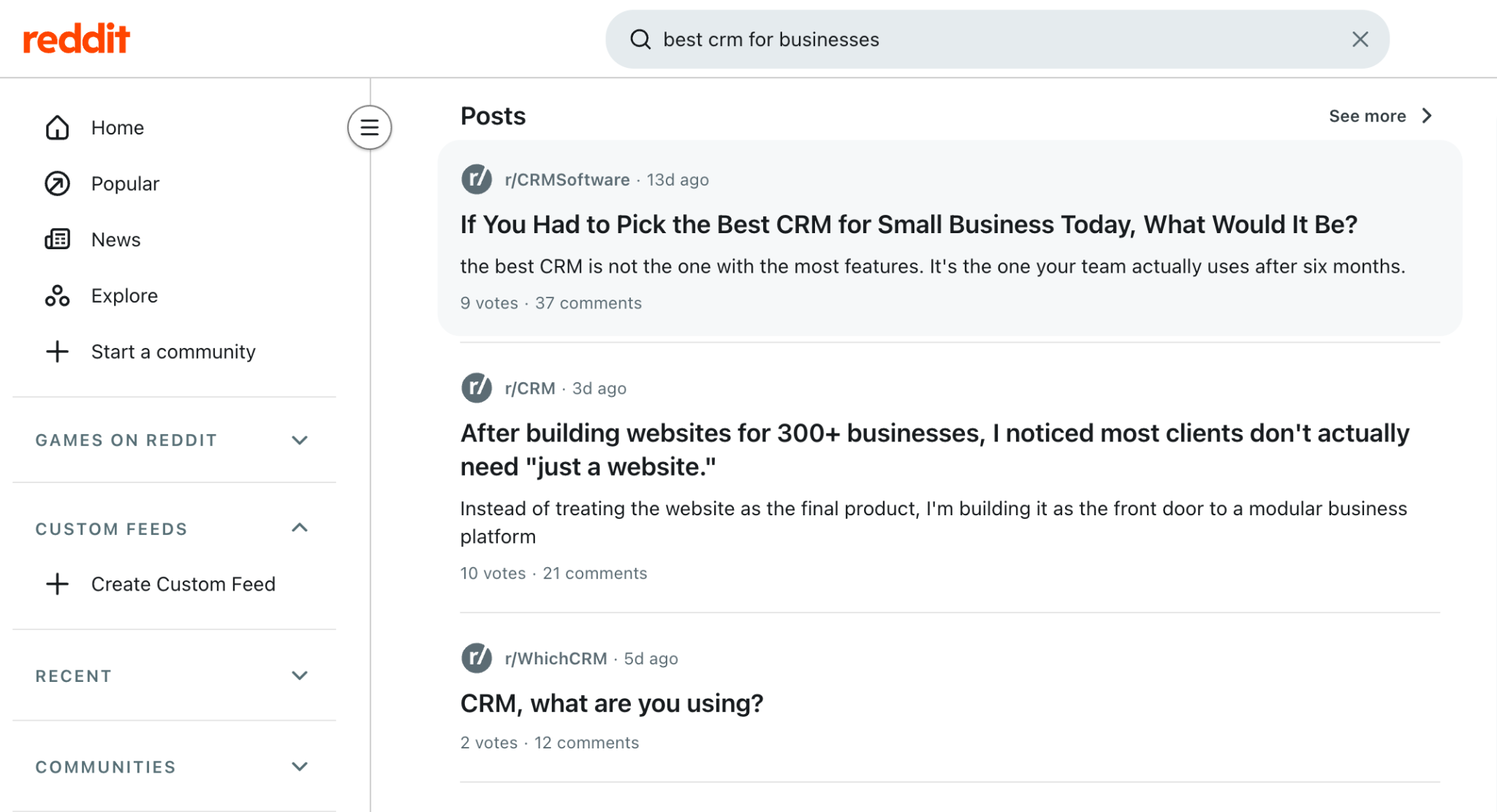
reddit-communities-outperforming-public-content-with-advice

Attention is fragmenting into smaller spaces. Private groups, Discord servers, Slack communities, subreddits, creator memberships, and group chats now host a large share of the conversations that shape buying decisions, and none of it shows up in a standard social listening tool. Analysts estimate that around 35% of creators now run private community spaces alongside their public channels.

These spaces produce deeper conversation because everyone in them already shares a problem, a profession, or an interest. The trade-off is reach. You will never get community-sized numbers, and you will never get feed-sized trust.

That is the practical split for brands. Public content creates discovery. Community creates the relationship. A company might use LinkedIn and YouTube to get found, then use a customer community, a newsletter, or a recurring event to turn that attention into something durable.

Is Social Media Dying?

No. People are using social media differently, not less. What is fading is a specific version of it. Public personal posting is down as conversations move into messages and groups. Organic reach tied purely to follower counts keeps shrinking on legacy platforms. Likes and comments have become weak signals now that so much sharing happens privately.

What is growing at the same time is video consumption, in-app search, private sharing, creator-led recommendations, and commerce. Someone can post nothing for a year and still spend two hours a day watching, searching, comparing, and buying on the same platforms.

Confusing the decline of public posting with the decline of social media leads to bad strategy. The behavior did not weaken, but it simply relocated.

What Will Social Media Look Like in the Next Five Years?

In the next five years, social media will likely specialize more on its purpose, feeds will become individually assembled, and AI assistants will join the discovery chain.

Platforms will specialize by purpose. People already sort their digital lives by job to be done, using one platform for professional information, another for product research, a third for entertainment, and a private group for honest conversation. Expect that to sharpen. Brands will manage a network of audiences across several environments in place of one central following.

Feeds will become individually assembled. Two people who follow the same account will see very different content because their behavior differs. Broad messages get diluted in that environment, so businesses will produce variations built around specific segments, use cases, and buying stages.

AI assistants will join the discovery chain. A customer will find an expert through a video, ask an assistant a follow-up question, read community threads for a second opinion, and buy through a channel that did not exist at the start of the journey. By 2030, the line between social, search, commerce, and support will be hard to draw from the customer's side.

The platforms will keep changing names and features. The behavior underneath stays steady. People want to find things, judge them, and talk to someone who has done it before.

Interesting read: Why Teams Are Adopting HubSpot AI Agents for 24/7 Support

What Should Marketers Change About Their Social Media Strategy?

  1. Write for strangers, not subscribers. Every post should make sense to someone who arrived from a recommendation and knows nothing about you.
  2. Build content around real customer questions. Pull them from sales calls, support tickets, and search data, then answer one per asset. This also makes it easier to see how AI platforms surface your organization for those questions through an AEO tool.
  3. Put humans in front. Employee and founder content outperforms brand-voice content on trust, and it is harder for competitors to copy.
  4. Use AI for capacity, not for judgment. Research, repurposing, and reporting are fair game. Your point of view is not.
  5. Pick fewer platforms and go deeper. Publishing everywhere at low quality costs more and returns less than doing two channels properly.
  6. Pair public reach with an owned space. A newsletter, community, or event series turns borrowed attention into a relationship you control.

These shifts make your social strategy easier to find, more useful, and better suited to how people and AI platforms discover information.

How Should Marketers Measure Social Media Success?

Marketers should measure social media by connecting platform activity to business outcomes. A strong measurement framework tracks the customer journey from reach and engagement to qualified traffic, leads, opportunities, customers, and retention

Different businesses will weigh those stages differently. An ecommerce brand may focus on product discovery, click-throughs, and purchases. A B2B company may focus on qualified traffic, pipeline, and influenced revenue. A customer-focused organization may track advocacy, community participation, and renewals.

A CRM adds the customer context behind those metrics. Platform analytics show engagement, while connected customer records can show if someone later downloaded a guide, entered a sales conversation, became a customer, and stayed.

HubSpot brings marketing, sales, and service activity together around the same contact and company records, making it possible to evaluate social as part of the customer lifecycle.

Also account for what you cannot see. With so much sharing happening in DMs and private groups, ask new leads how they found you. Self-reported attribution is imperfect, but it can capture signals that tracking pixels miss.

What’s Your Best Starting Point?

You do not need to predict the next big social media trend. Start with the questions your customers ask on sales calls. Turn those questions into three different content formats this month, then track which formats generate attention, conversations, and activity in your CRM.

That small experiment gives you real insight into what your audience cares about. Eventually, those signals can show you which topics create engagement, influence buying decisions, and connect social activity to business outcomes.

If you want help turning social activity into something your sales and marketing teams can see, measure, and connect to pipeline inside HubSpot, Campaign Creators can help you build that system.

Frequently Asked Questions

Which Social Media Platform Will Be The Biggest In 2026?

Meta's family of apps still holds the largest combined audience, but the more useful question is which platform your buyers use for the job you care about. LinkedIn dominates B2B research, YouTube and TikTok lead discovery and how-to content, Reddit shapes product opinions, and messaging apps host the private conversations that close deals.

How Often Should A Business Post On Social Media?

Consistency beats volume, though short-form video algorithms do reward recency. A realistic floor is two to three posts a week on your primary platform, with more on short-form video channels if you can sustain the quality.

Will AI Replace Social Media Managers?

No, though the role is changing. AI handles drafting, repurposing, scheduling, and first-pass analysis well. It cannot decide what your company believes, build a creator relationship, read a community's mood, or judge when a trend is a trap.

What Is Social SEO?

Social SEO is the practice of making social content findable through in-app search and recommendations. It covers keyword-aware captions and on-screen text, clear spoken hooks, descriptive file names and alt text, and topics phrased the way people search.

Are Followers Still Worth Growing?

Followers are still useful, but their value is no longer just about having a bigger number on your profile. A strong follower base gives you a group of people who are already familiar with your brand and more likely to recognize, engage with, share, or respond to your content over time.

How to Create Pillar Content for Your Business

How to Create Pillar Content for Your Business

A content pillar is a broad piece of website content that's comprised of and connected to a series of owned media topic clusters that cover a...

Read More
How to Leverage Social Media Video for B2B Lead Generation

How to Leverage Social Media Video for B2B Lead Generation

It's no secret that video content in the next big thing. It'sforecasted to account for 80% of all internet traffic by 2019. In November 2016,...
Read More
Let's GDD That Campaign Funnel

Let's GDD That Campaign Funnel

Luke Summerfield, Program Manager and GDD guru at HubSpot, shared with Campaign Creators how to apply Growth-Driven Design tactics to your campaign...

Read More