






8 min read
The CRO and UX Mistakes That Cost Revenue and the Questions Executives Should Ask
Campaign Creators
:
06/19/26
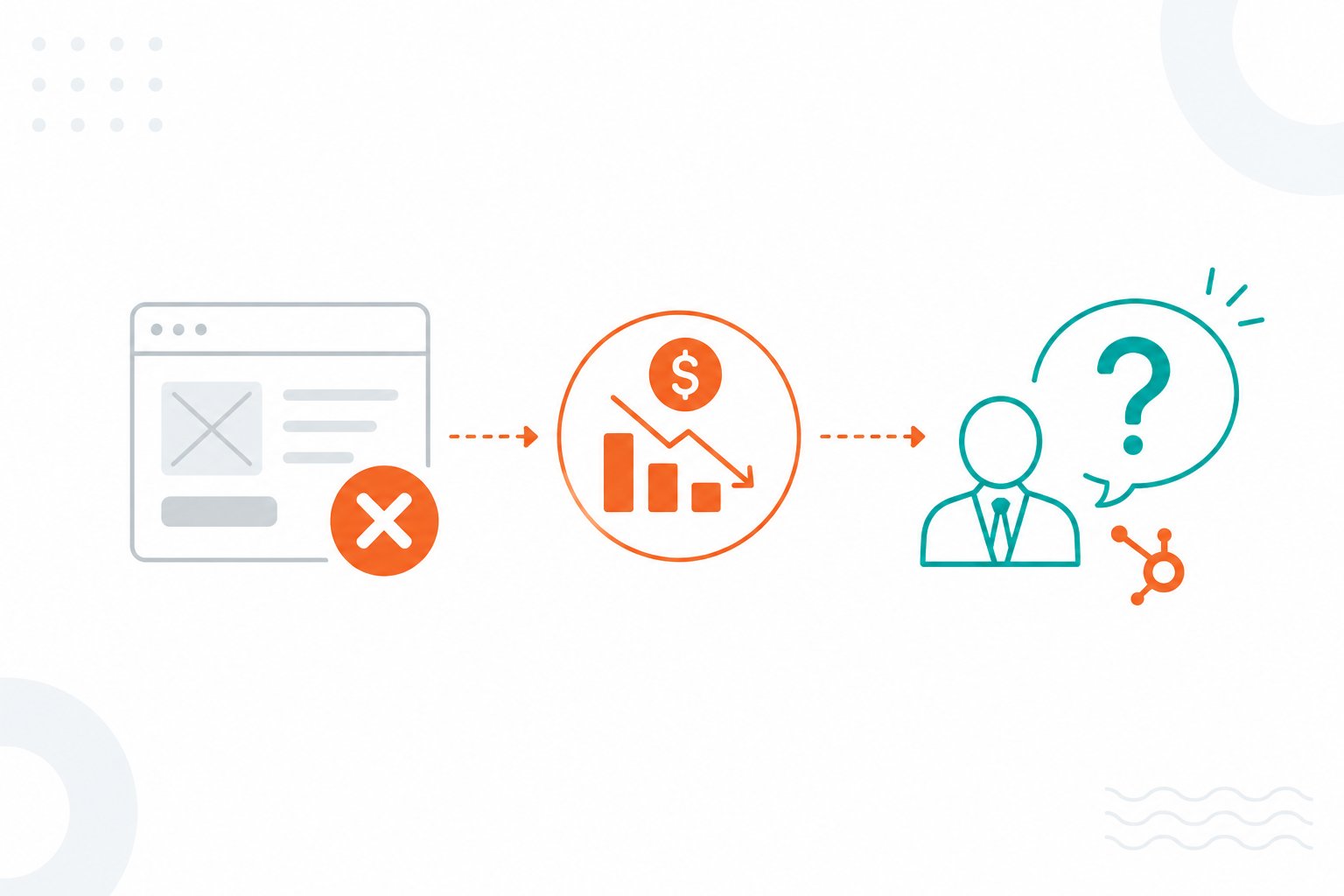
Many brands invest heavily in attracting website visitors, generating leads, and increasing brand awareness. However, while traffic may continue to grow, revenue often fails to keep pace because potential customers encounter obstacles that prevent them from taking the next step.
As visitors move through the customer journey, issues such as confusing navigation, missing information, weak trust signals, complicated forms, and poor mobile experiences can create friction that reduces conversions. This challenge is more significant than many organizations realize. Research from Baymard Institute found an average cart abandonment rate of 70.22%, highlighting how frequently purchase-ready visitors leave before completing a transaction.
This guide explores the CRO mistakes that commonly limit growth, the UX issues that quietly reduce conversions, the metrics that help uncover hidden revenue leaks, and the questions executives should ask before increasing customer acquisition spending.
Key Takeaways
- More traffic does not increase revenue when customers encounter friction before converting.
- CRO efforts produce better results when they address customer concerns and decision-making barriers.
- UX issues such as unclear navigation, weak trust signals, and complex forms can lower conversions.
- Conversion and abandonment data help identify where revenue opportunities are being lost.
Why More Businesses Are Losing Revenue Despite Growing Traffic
Many businesses are seeing traffic grow while revenue remains flat or declines. The reason is simple: more visitors do not automatically lead to more sales.
Traffic creates opportunities, but revenue depends on conversion. If visitors encounter friction during the buying process, many leave without taking action. Before becoming customers, visitors need clear information, confidence in the solution, and a straightforward path to make a decision. When websites create confusion or unnecessary obstacles, conversion rates decline.
This gap between visitor acquisition and revenue generation is becoming a common growth challenge. Marketing successfully increases website traffic, but revenue growth slows because the customer experience fails to convert visitors into customers. Research from Forrester shows that customer-obsessed organizations achieve 41% faster revenue growth than their peers, while studies on website usability and performance consistently find that better user experiences significantly improve conversion rates.
In other words, attracting more visitors is only half the equation. Growth depends on how effectively those visitors are converted into customers.
Consider two organizations receiving the same monthly traffic volume:
- Company A receives 100,000 monthly visitors and converts 2% of them into customers, resulting in 2,000 new customers each month.
- Company B also receives 100,000 monthly visitors, but its 4% conversion rate allows it to acquire 4,000 customers per month.
Both organizations attract the same number of visitors. One generates twice as many customers because its experience converts a larger percentage of existing demand.
This difference becomes increasingly important as customer acquisition costs continue to rise. Every visitor requires investment through advertising, content creation, partnerships, brand building, or other marketing efforts. Organizations that improve conversion efficiency generate more revenue from the same marketing spend, increasing return on investment without acquiring additional traffic.
6 CRO Mistakes That Prevent Growth From Translating Into Revenue
|
CRO Mistake |
Business Impact |
|
1. Prioritizing stakeholder opinions |
Resources focus on low-value changes |
|
2. Running tests without clear hypotheses |
Learning opportunities remain limited |
|
3. Ignoring customer research |
Root causes remain unidentified |
|
4. Optimizing isolated pages |
Friction persists throughout the journey |
|
5. Measuring engagement instead of revenue |
Success metrics become disconnected from business goals |
|
6. Prioritizing easy experiments |
Larger opportunities remain untouched |
Many optimization programs include redesigns, experiments, messaging updates, and website improvements. Revenue growth remains limited if those initiatives do not address the actual reasons customers hesitate or abandon the journey.
A successful CRO begins with understanding customer decision-making. Organizations need to understand what information customers need, which concerns remain unresolved, where confidence breaks down, and which obstacles prevent progress. Optimization efforts produce greater results once these insights guide prioritization.
Why Optimizing Individual Pages Produces Limited Results
Customers do not make decisions based on a single page. They experience a sequence of interactions that collectively influence their confidence and willingness to convert.
A visitor may discover a business through search, review educational content, compare solutions, evaluate pricing, read testimonials, and complete a form. Friction at any stage can affect the outcome.
Page-level improvements can create positive results. End-to-end journey optimization often creates a larger business impact because it addresses multiple decision points throughout the customer experience.
How UX Friction Points Quietly Kill Conversions
UX friction kills conversions by making it harder for customers to move from interest to action. Every extra step, unanswered question, confusing interaction, or moment of uncertainty increases the chances that visitors leave before converting.
When visitors encounter obstacles, they begin asking questions:
- Is this product right for me?
- Can I trust this company?
- Why is this process so complicated?
- Is there an easier alternative?
The more effort required to find answers, the more likely visitors are to abandon the process. Research from Forrester found that 53% of U.S. online adults are likely to abandon a purchase if they cannot quickly find an answer to their question. Even highly interested prospects may leave if the experience creates too much friction.
Complex Experiences Increase Abandonment
.png?width=1536&height=1024&name=ChatGPT%20Image%20Jun%2019%2c%202026%2c%2010_41_55%20PM%20(2).png)

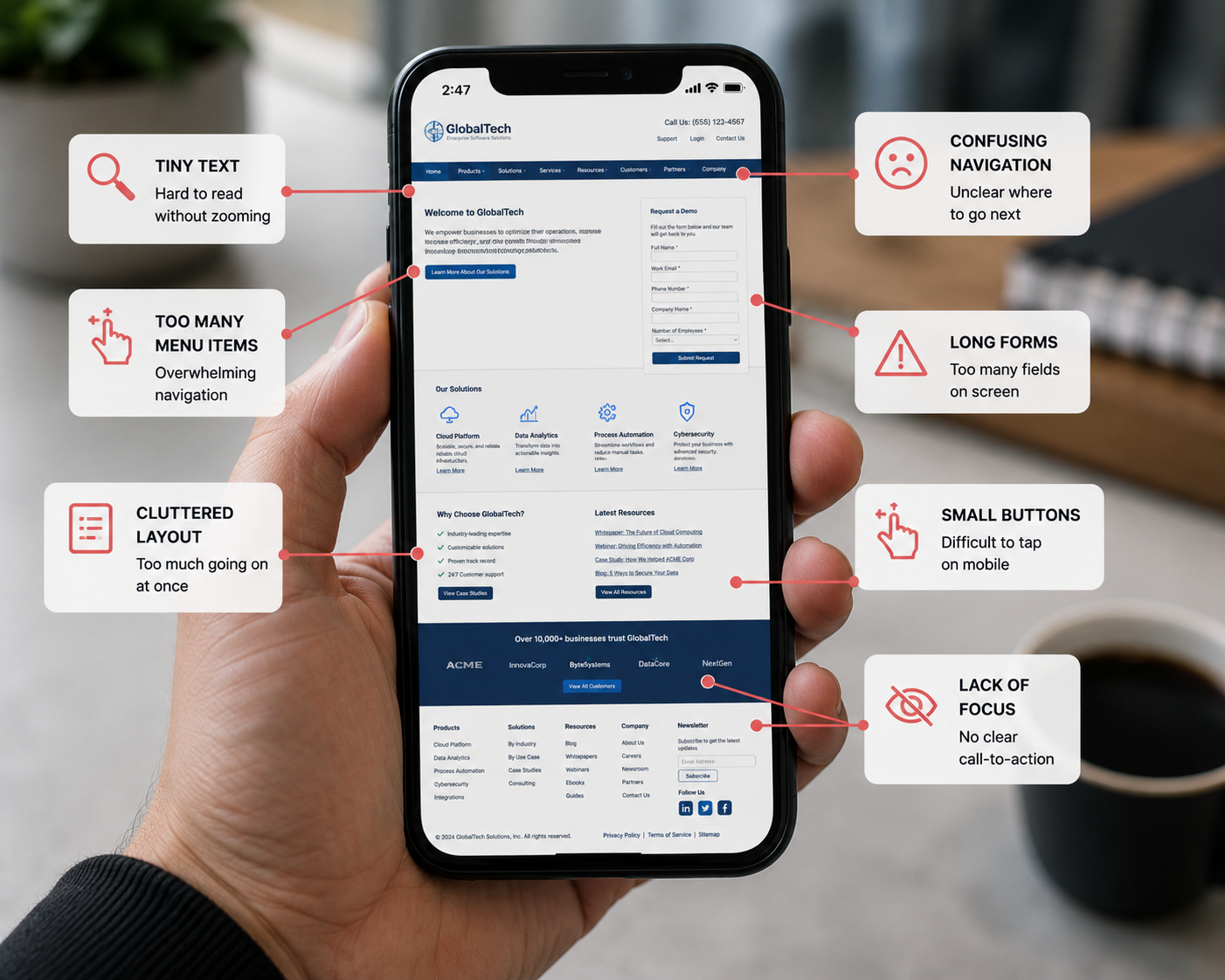
Every decision requires mental effort. Customers compare options, evaluate risks, and determine whether a solution meets their needs. Conversion rates often decline when websites introduce unnecessary complexity, such as:
- Overcrowded navigation menus
- Multiple competing calls-to-action
- Unclear pricing structures
- Excessive product variations
- Complicated filtering systems
- Long pages with poor content hierarchy
Having simpler experiences helps customers move forward with greater confidence.
Weak Trust Signals Create Uncertainty
Before taking action, many visitors look for evidence that supports their decision. Common trust signals include:
- Customer reviews
- Testimonials
- Case studies
- Certifications
- Guarantees
- Security indicators
- Industry recognition
Uncertainty increases, and conversion rates often decline when trust signals are missing or difficult to find.
Forms Often Create Friction at the Worst Possible Time

Forms usually appear near the end of the customer journey after visitors have already invested significant time evaluating a company and its offer. Unfortunately, many organizations introduce friction at this critical stage through:
- Unnecessary form fields
- Confusing instructions
- Poor mobile usability
- Weak error messages
- Lengthy completion processes
These issues affect visitors who already demonstrate strong purchase intent. As a result, even small improvements to forms can generate meaningful increases in conversions.
Poor Mobile Experiences Drive Customers Away
Mobile devices account for a large share of website traffic across most industries. Small usability problems become more noticeable on smaller screens because navigation, reading, comparison, and form completion require additional effort.
Mobile cart abandonment rates exceed 80%, significantly higher than desktop rates. Much of this difference can be attributed to mobile UX challenges.
Organizations that improve mobile usability often improve conversion performance across a large percentage of their audience because mobile visitors frequently represent the majority of total traffic.
Why Small UX Problems Have a Large Impact

The most damaging aspect of UX friction is that it compounds throughout the customer journey.
A visitor may encounter confusing navigation, struggle to find information, question the company's credibility, become frustrated by pricing, and then face a difficult form. Each friction point adds more effort and uncertainty. Individually, these issues may seem minor. Together, they can significantly reduce conversion rates.
Organizations that systematically remove friction across the entire customer journey may see stronger results because they improve every stage of the customer experience rather than focusing on a single problem.
Why Many Optimization Programs Fail to Deliver Business Impact
The programs fail because they measure activity instead of business outcomes. Running more tests, launching more experiments, and implementing more recommendations does not automatically increase revenue.
Organizations often define success by the number of experiments completed or recommendations deployed. While these metrics show productivity, they do not indicate whether optimization efforts improved revenue, conversions, or customer behavior.
A common reason for this disconnect is that teams focus on easy-to-execute tests rather than high-impact opportunities. Optimization roadmaps often prioritize:
- Button color changes
- Minor headline revisions
- Small design updates
- Cosmetic layout adjustments
Although these changes can produce incremental gains, larger revenue opportunities are usually found in areas that directly influence purchasing decisions, including pricing communication, trust-building, objection handling, checkout experiences, onboarding, and product understanding.
Another challenge is organizational siloing. Customer behavior is influenced by multiple departments, including marketing, product, sales, and customer support. When insights remain isolated within individual teams, optimization efforts become less effective.
For example, support teams may hear recurring complaints about pricing clarity, while sales teams regularly encounter implementation concerns. If these insights are not shared, optimization teams may continue focusing on low-impact changes while major conversion barriers remain unresolved.
Optimization programs generate stronger business results when they focus on solving the problems that most influence customer decisions and when teams collaborate to identify and remove those barriers.
4 Questions Executives Should Ask Before Increasing Marketing Spend
1. Where Do Customers Abandon the Journey Most Frequently?
Visitors leave websites for many reasons, including confusion, uncertainty, lack of trust, missing information, or excessive effort. Understanding where these exits occur helps organizations identify the stages creating the greatest friction.
Executives should examine:
- Pages with the highest exit rates
- Form abandonment points
- Checkout abandonment rates
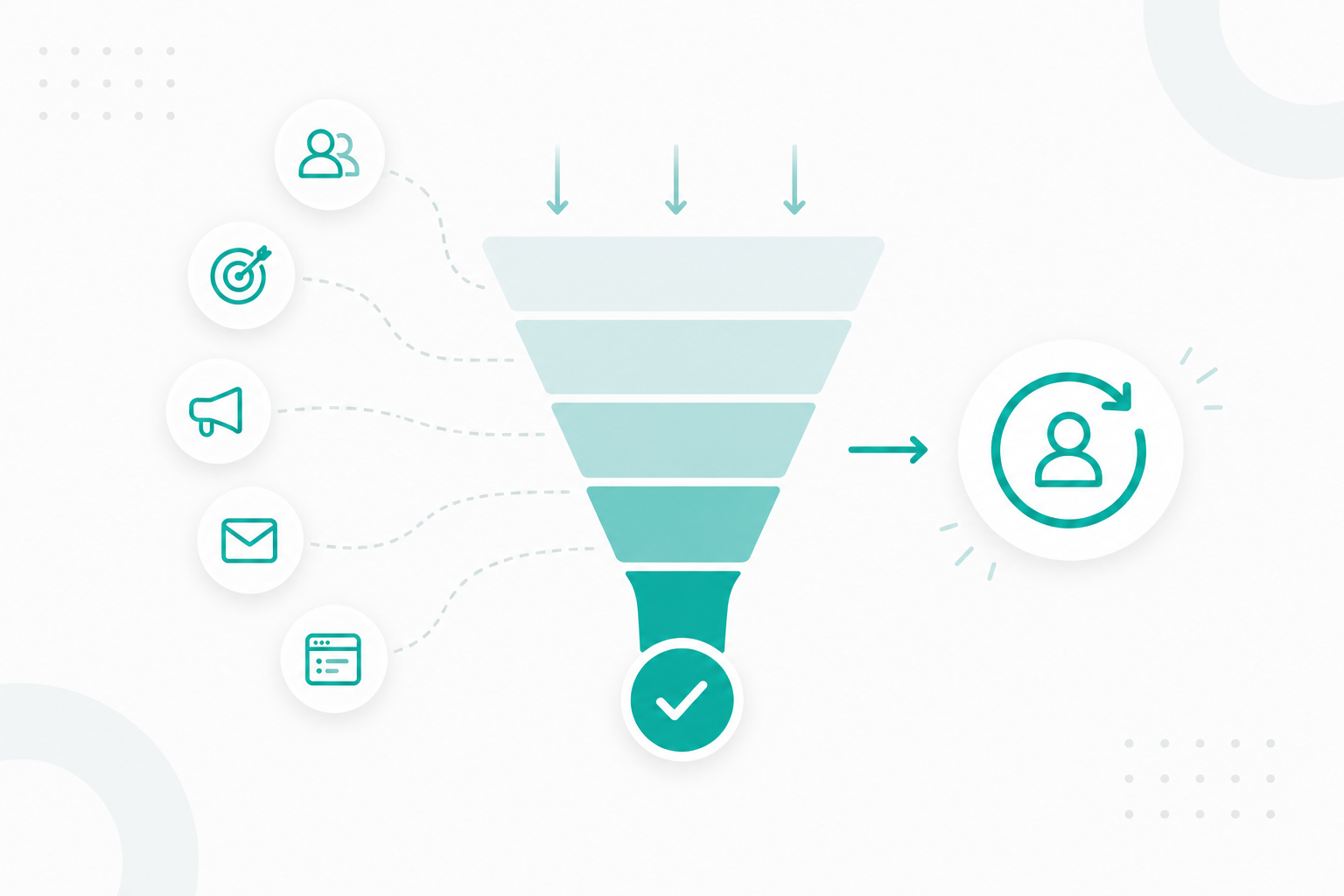
- Funnel drop-off patterns
- Device-specific abandonment trends
Knowing the location of abandonment helps focus optimization efforts on the areas influencing the most revenue.
2. What Information Do Customers Need Before Making Decisions?
Sales conversations, support interactions, customer interviews, and survey responses often reveal recurring information gaps that affect decision-making.
Executives should understand:
- Which questions appear most frequently during the buying process?
- Which concerns delay decisions?
- What information do prospects request before converting?
- Which objections appear repeatedly during evaluations?
These insights often uncover opportunities that analytics alone cannot reveal.
3. How Much Revenue Is Lost Through Customer Friction?
Organizations often recognize that friction exists but struggle to quantify its impact. Estimating the revenue associated with abandonment, failed submissions, customer churn, and usability problems helps leaders prioritize investments more effectively.
Areas worth evaluating include:
- Revenue lost through abandoned carts
- Revenue lost through incomplete forms
- Revenue lost through mobile usability issues
- Revenue lost through customer attrition
- Revenue lost through support-driven friction
Quantifying these losses transforms optimization discussions from subjective debates into business cases.
4. Are Current Priorities Aligned With Revenue Impact?
Organizations often maintain lengthy lists of optimization opportunities. Some initiatives affect a small number of visitors. Others influence significant portions of the customer journey. Prioritization becomes more effective when decisions are guided by revenue impact.
Executives should regularly evaluate:
- Which problem affects the largest number of customers?
- Which issue influences the most revenue?
- Which improvement offers the highest return on effort?
- Which opportunities support broader business objectives?
Strong prioritization ensures that resources remain focused on initiatives capable of generating meaningful business results.
Find everything you need to know in: Your Definitive Guide to CRO
Where CRO and UX Investments Should Be Prioritized for Maximum Revenue Impact
Organizations should prioritize the issues that affect the most customers, influence purchasing decisions, and create the largest revenue losses.
Focus on High-Revenue Opportunities
The most valuable optimization opportunities combine high customer exposure with significant revenue potential. Prioritization should consider:
- How many customers encounter the issue
- How often does it occur
- How much revenue is affected
- How close customers are to conversion
This helps teams focus resources where improvements can generate the greatest financial return.
Prioritize Stages Closest to Conversion
Pages and processes near the point of conversion often offer the fastest path to revenue growth because customers have already demonstrated purchase intent. High-impact areas include pricing pages, checkout experiences, registration flows, booking processes, application forms, and consultation request forms.
Reducing friction at these stages can produce meaningful revenue gains with relatively small improvements.
Balance Impact With Effort
Effective prioritization evaluates both potential returns and implementation requirements. Teams should assess:
- Revenue Impact: How much revenue could be improved?
- Customer Reach: How many customers are affected?
- Evidence Strength: How confident are we in the problem?
- Effort Required: How difficult is implementation?
This framework helps identify opportunities that can deliver measurable results without unnecessary complexity.
Use Research to Guide Investment Decisions
Optimization efforts are most effective when supported by evidence rather than assumptions. Before investing in major redesigns or large-scale changes, organizations should identify the actual causes of customer friction through:
- Customer interviews
- Usability testing
- Session recordings
- Funnel analysis
- Surveys
- Customer support feedback
Research reveals where customers struggle, why they hesitate, and which barriers prevent conversion. This helps teams invest in improvements that directly influence customer behavior and revenue.
Frequently Asked Questions
What is the difference between CRO and UX?
CRO focuses on increasing business outcomes such as purchases, leads, or sign-ups. UX focuses on making experiences easier, clearer, and more satisfying for users.
Can a website have good UX but poor conversion rates?
Yes. A website can be easy to use yet still fail to persuade visitors to take action due to weak messaging, poor offers, or unclear value propositions.
Can CRO improvements hurt user experience?
Yes. Aggressive tactics such as intrusive pop-ups, forced urgency, or misleading calls-to-action may increase short-term conversions but damage trust and long-term customer relationships.
How do CRO and UX contribute to customer retention?
Better experiences reduce frustration and help customers achieve their goals more easily, which can increase satisfaction, loyalty, and repeat business.
What is experimentation culture?
Experimentation culture refers to an organizational approach where decisions are validated through testing and evidence rather than opinions or assumptions.
How long does it take to see results from CRO efforts?
Results vary depending on traffic volume, testing velocity, and the issues being addressed, though meaningful insights can often emerge within a few testing cycles
.png?width=420&height=121&name=cc-logo-color%20(2024).png)