






9 min read
Marketing Technology Consulting: What It Is, What It Does & How to Choose a Consultant
Campaign Creators
:
09/16/26
Buying marketing software has never been easier. The current martech landscape holds more than 15,000 products, up from 150 in 2011. Picking tools is not the hard part. It’s making sure they work together as one system.
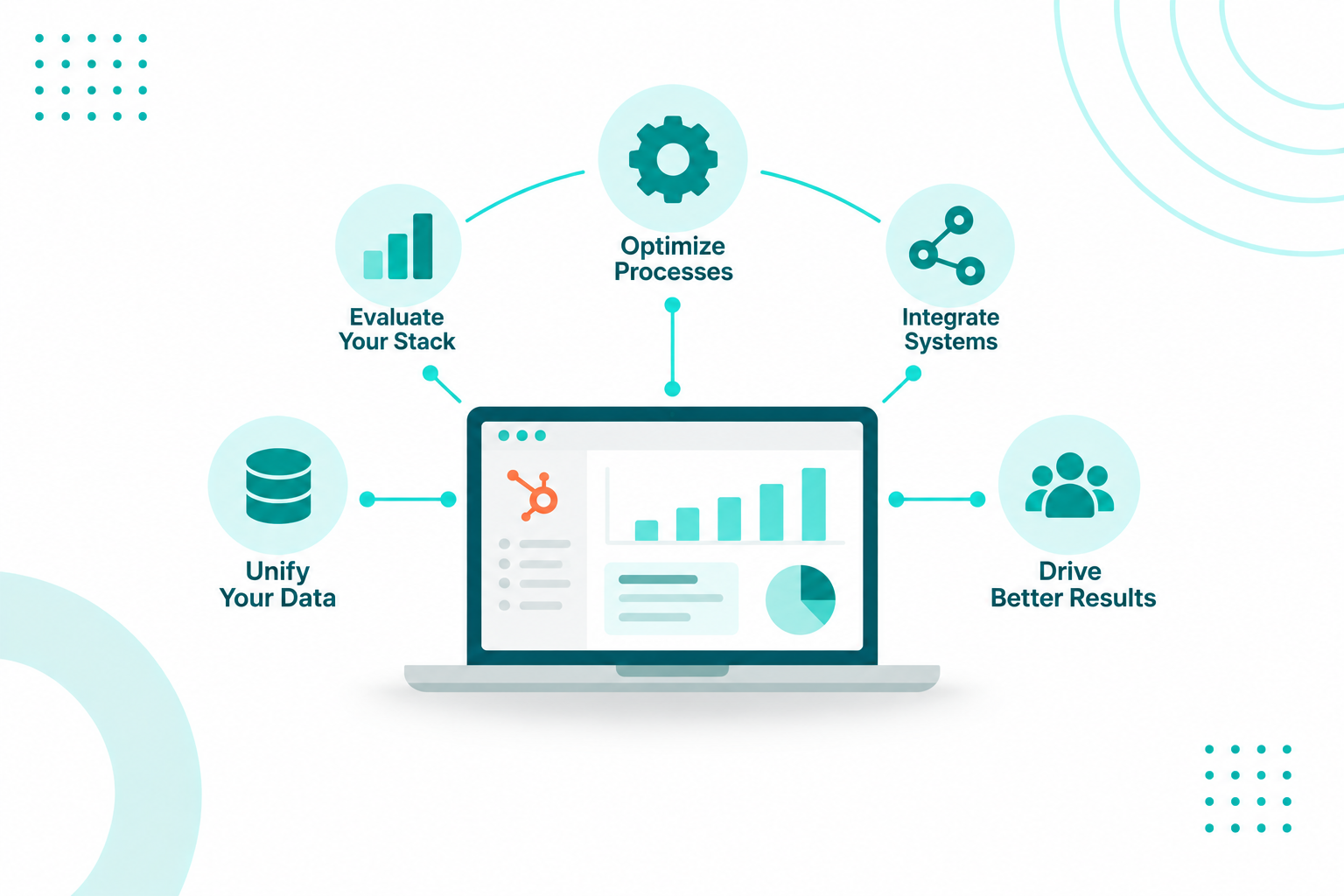
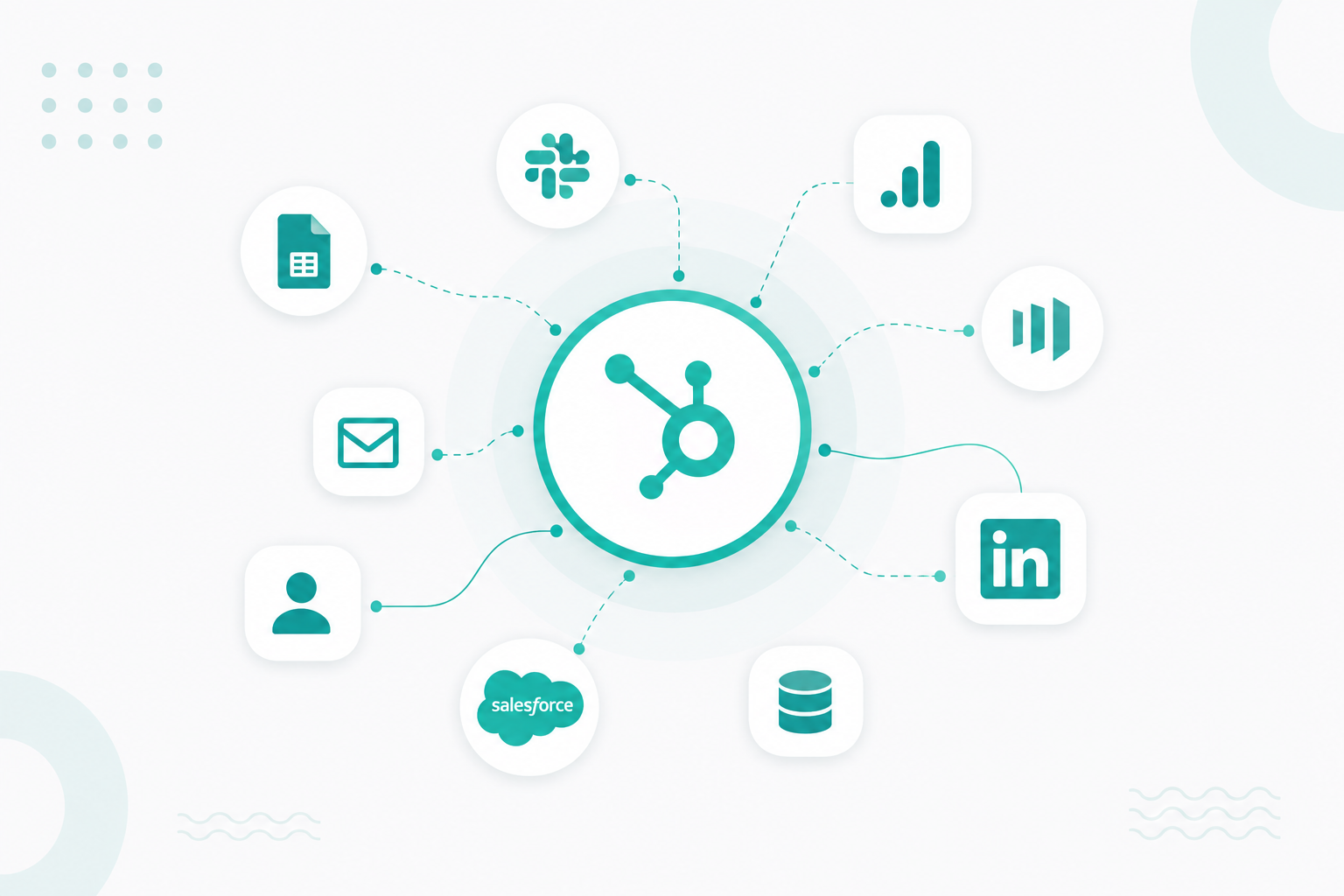
That gap is what marketing technology consulting closes. A consultant reviews the platforms you own, the data moving between them, and how your team actually works, then hands you a plan for what to fix, connect, replace, or retire.
That’s where Campaign Creators comes in. We help organizations turn a collection of marketing tools into a connected system that supports how their teams work and how their customers move through the buying journey. Sometimes that means adding new technology. Often, it means getting more value from what you already have.
Key Takeaways
- Marketing technology consulting evaluates your tools, data, and processes to create a prioritized improvement plan.
- Many companies use only a portion of the technology they already pay for, making optimization a smart first step before adding new tools.
- Common consulting services include technology stack audits, strategy, roadmapping, integration planning, automation design, vendor selection, and training.
- The best time to hire a consultant is before a major platform purchase, migration, or period of growth.
What Is Marketing Technology Consulting?

Marketing technology consulting is the process of evaluating, planning, and improving the technology a business uses to attract, engage, convert, and retain customers. A marketing technology consultant reviews whether your tools, data, and processes work together and support your business goals.
Marketing technology, often called MarTech, covers CRM platforms, marketing automation, customer data platforms, analytics tools, advertising platforms, content management systems, personalization software, and the integrations between them.
A consultant looks past individual products and works across four layers at once.
- Technology. The platforms you own, how much of each one you use, and where two tools do the same job.
- Data. How customer records are created, stored, synced, and trusted across systems.
- Process. The workflows your team runs every day and how well the software supports them.
- People and governance. Who owns what, who is trained on what, and what happens when something breaks.
A stack can look impressive in a demo and still fall short across these four areas. For businesses using a CRM such as HubSpot, consulting can help connect the CRM with the rest of the technology stack and identify where processes or integrations need attention.
Why Businesses Use Marketing Technology Consulting
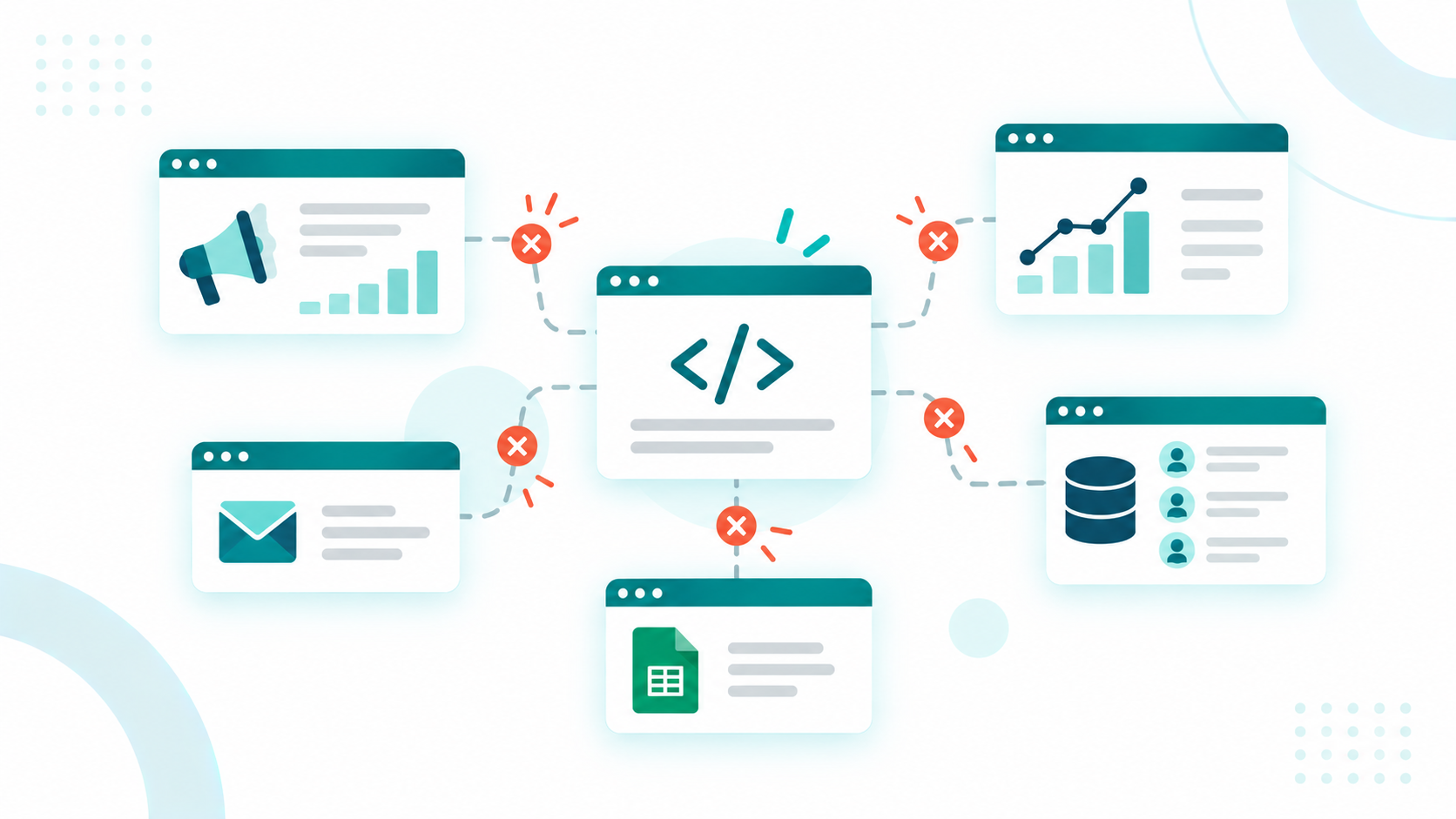
Businesses use marketing technology consulting because their tools are not working as a single system. Platforms get added one budget cycle at a time, bought by different teams for different reasons, and nobody ends up owning the seams between them. The result? Two tools do the same job, or customer data sits in three places with three different answers.
That pattern is common enough to show up clearly in the research. Gartner's Marketing Technology Survey found that only 49% of martech tools are actively used and just 15% of organizations qualify as high performers, meaning they meet their strategic goals and see a positive return on the stack. Gartner traces the shortfall to complexity, customer data problems, and weak governance, which are the same three issues sitting behind the symptoms above.
A consultant helps connect these issues and address them in the right order. They can identify what is not working, improve the underlying processes and data, and create a more connected technology system.
What Are the Benefits of Marketing Technology Consulting?
The main benefits are better technology decisions, a more connected stack, cleaner data and reporting, less manual work, higher team adoption, and room to grow. Each one comes from the same starting point, which is understanding the systems you already run before adding anything to them.
Better Technology Decisions
Consultants evaluate your existing stack before recommending anything new. That surfaces real gaps, duplicate functionality, and platforms you have outgrown, so you buy against a documented need.
A More Connected Stack
Consulting exposes where systems and data are disconnected and what it costs you. Connecting the right platforms cuts manual work and gives marketing, sales, and service the same view of the customer.
Cleaner Data and Clearer Reporting
Marketing decisions are only as reliable as the data behind them. Poor data quality costs organizations an average of $12.9 million per year. The problem often starts when customer data is spread across siloed systems with duplicate, missing, or conflicting records. A consultant identifies these issues and traces them back to the systems and processes causing them.
Less Manual Work
Technology should take work off your team. Consultants review lead routing, list building, campaign setup, and reporting to find the steps a person is doing that a system should be doing. This can also help you choose the right marketing automation system for your needs.
Higher Team Adoption
A well-designed stack still returns very little when people work around it. Aligning tools with real workflows, then backing that with documentation and role-based training, is what moves adoption.
Room to Grow Without More Complexity
New markets, products, teams, and channels often require new systems and processes. A well-designed technology stack can support that growth without requiring a major rebuild every few years.
Put together, these benefits build on each other. Better data improves reporting, better reporting supports better decisions, and cleaner processes make new technology easier to adopt.
What Services Does Marketing Technology Consulting Include?
Marketing technology consulting usually includes a stack audit, technology strategy and roadmapping, data and integration planning, automation and process design, vendor evaluation, implementation support, and training and governance.
How many of those you need depends on your goals, your current technology, and how complex your operation has become.
MarTech Stack Audit
A consultant documents what you own, who uses it, what it costs, and how it performs. The output is a clear read on what to keep, improve, replace, consolidate, or add.
Technology Strategy and Roadmap
Strategy defines what your technology needs to do based on business objectives, customer journeys, and how your teams operate. The roadmap turns that into a sequence, with priorities, dependencies, timelines, and budget attached.
Data and Integration Planning
This covers how customer and behavioral data moves between platforms. Work includes integration design, field mapping, sync rules, tracking requirements, and deduplication logic.
Automation and Process Design
Consultants map how work actually gets done before automating any of it. Lead routing, nurturing, segmentation, lifecycle stages, and reporting all get redesigned first, because automating a broken process just makes it fail faster.
Vendor Evaluation and Selection
When new technology is genuinely needed, consultants compare functionality options, integration fit, scalability, usability, and total cost. Vendor stability belongs on that list as well, because the market churns hard and the latest landscape count saw 1,488 products added and 1,367 removed in a single year.
Implementation and Optimization Support
Some engagements continue past strategy into requirements, configuration, QA, and post-launch tuning. This is also where a consultant helps you unlock features you already pay for.
Training, Adoption, and Governance
Documentation, role-based training, naming conventions, and clear system ownership keep the stack working after the consultant leaves. Without governance, a clean setup drifts back within a year.
These services turn a collection of tools into a connected environment your team can run, and your data can be trusted in.
When Should a Business Hire a Marketing Technology Consultant?

Your Stack Has Outgrown Your Processes
You have added platforms faster than you have added process. Tools overlap, licenses renew unchallenged, and no single person can draw the full system on a whiteboard.
Your Data Does Not Line Up
Duplicate records, missing tracking, and inconsistent fields can turn every performance conversation into an argument about the numbers. This is a common marketing challenge. In HubSpot’s marketing report, marketers identified difficulty sharing data across the organization and a lack of high-quality data as two of their top challenges.
You Are About to Buy, Replace, or Migrate a Platform
A CRM or marketing automation change touches data, workflows, integrations, reporting, and daily habits. Bringing in a consultant before the contract is signed is far cheaper than fixing the fit afterward.
Too Much of the Work Is Manual
Your team exports lists, maintains spreadsheets, routes leads by hand, and rebuilds the same report every month. At that point, the fix is usually structural and not just a single workflow.
You Pay for Capability You Do Not Use
You bought an enterprise tier and use the starter features. That gap normally traces back to configuration, training, or a process that was never aligned to the platform.
Growth Is Outpacing Your Systems
New products, regions, teams, or channels are exposing weak points in the foundation. Growth is also when marketing, sales, service, and IT start disagreeing about how customer data should work, and an outside view helps settle ownership before it turns political.
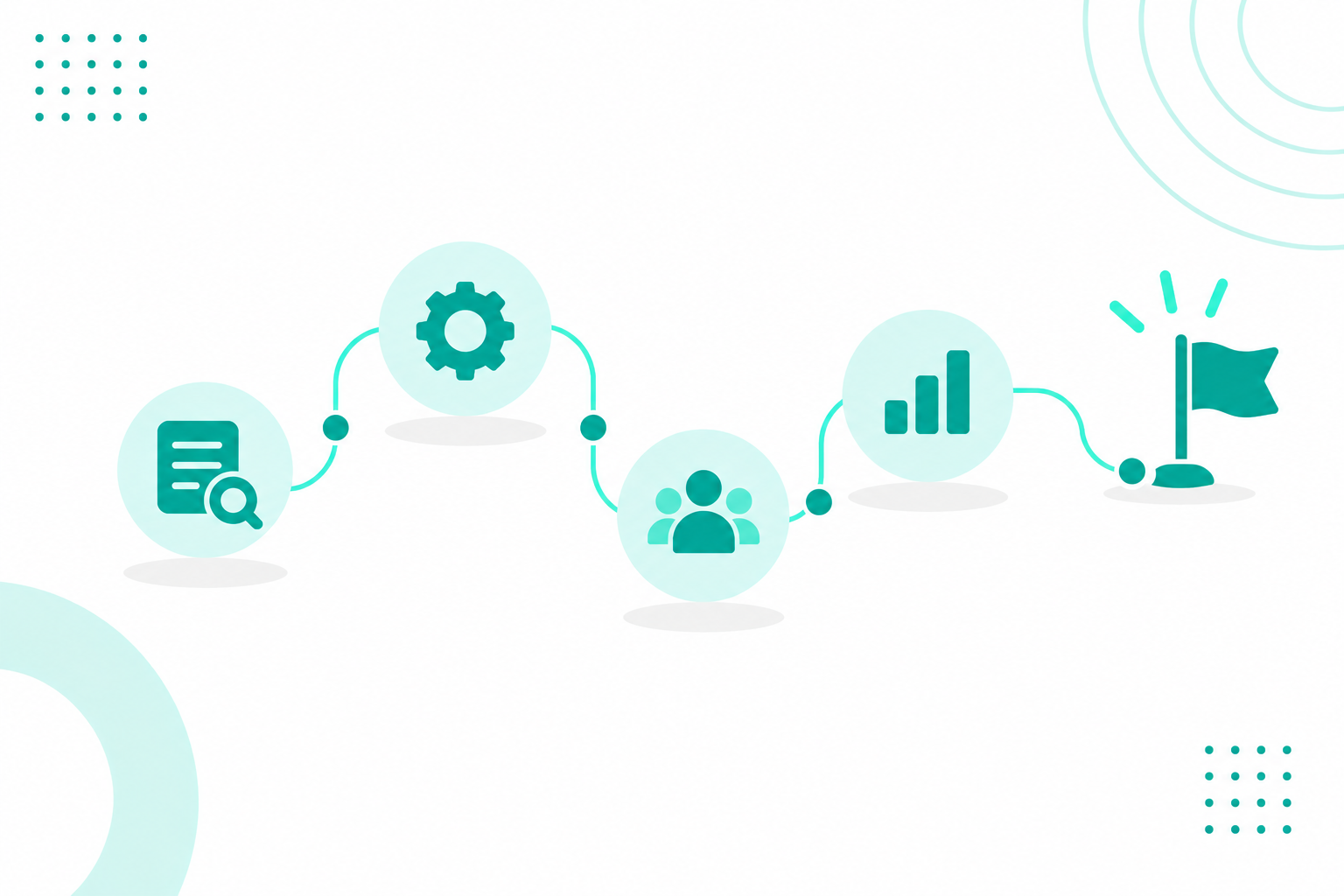
One more trigger is worth naming. Plenty of teams know their setup is wrong but cannot say what to fix first. A structured assessment helps turn a list of problems into a clear, prioritized plan for what to fix first. That clarity is often one of the most valuable parts of marketing technology consulting.
How to Assess Your Marketing Technology Stack
1. Inventory Every Tool
List every platform touching marketing, including the ones bought by other departments. For each one, record its purpose, users, annual cost, renewal date, integrations, and how critical it is to daily work.
2. Map How Data Moves
Draw where customer data is created, where it is updated, and where it ends up. This one exercise usually exposes duplicate entries, broken syncs, mismatched fields, and systems nobody realized were disconnected.
3. Check What Teams Actually Use
Pull login and feature usage data where you can get it, then ask the team. Low usage points to a training gap, a bad configuration, an unnecessary tool, or a platform heavier than your business needs.
4. Review the Processes Behind the Tools
Walk through lead capture, segmentation, nurturing, routing, campaign execution, and reporting end to end. Flag every manual handoff, duplicate step, and workaround someone invented because the system was awkward.
5. Test Your Data Quality
Sample your records for duplicates, blanks, outdated contacts, inconsistent naming, and tracking that stopped firing. Poor data limits automation, personalization, reporting, and any AI feature you plan to turn on later.
6. Tie Technology to Business Results
For each major platform, ask what changed after you bought it. Look at campaign performance, lead response time, conversion rates, reporting accuracy, and hours saved, not feature checklists.
7. Prioritize What Changes First
Score the issues you found by business impact, effort, cost, dependency, and risk. Separate the quick fixes from the projects that need budget and a timeline, then agree on the first three things you will do.
How to Choose the Right Marketing Technology Consultant
1. Relevant Experience With Your Platforms and Industry
Look for work with businesses close to yours in size, industry, and technical complexity, and for hands-on experience with the specific platforms in your stack. Ask for case studies with named outcomes and talk to at least one reference about communication and project management.
Campaign Creators, for example, works across marketing automation, sales technology, website platforms, project management, and data and analytics tools, with HubSpot as the system most of that work connects to. You can see the full scope on our technology consulting page.
2. A Discovery-First Approach
A good consultant asks about your business, your customers, and your current environment before naming a single product. Be cautious with anyone who recommends a platform in the first meeting, since that is usually a partnership talk and not an assessment.
3. Data and Integration Depth
Ask how they would audit the way your systems share data and what they would do about the problems they find. This gets more important as marketing technology connects to sales, service, finance, and operations systems.
4. Business Thinking, Not Just Configuration
The consultant should be able to explain how a technical recommendation changes a process, a customer experience, or a number your leadership tracks. Ask directly how they measure success and what they would report on at 30, 90, and 180 days.
5. Implementation and Change Management Support
Strategy documents do not configure themselves. Check if the consultant can support build, testing, migration, documentation, training, and adoption, and who on your team they expect to work alongside.
6. Clear Scope, Pricing, and Deliverables
Get specific about what you receive, what is excluded, how the work is structured, and how fees are calculated. Typical deliverables include a stack audit, architecture documentation, an integration plan, a phased roadmap, a governance framework, and a training plan.
Finally, think past the current project. Your needs will change as you add customers, channels, and teams, so favor a consultant who designs for where you are heading and can stay useful once the first phase is done.
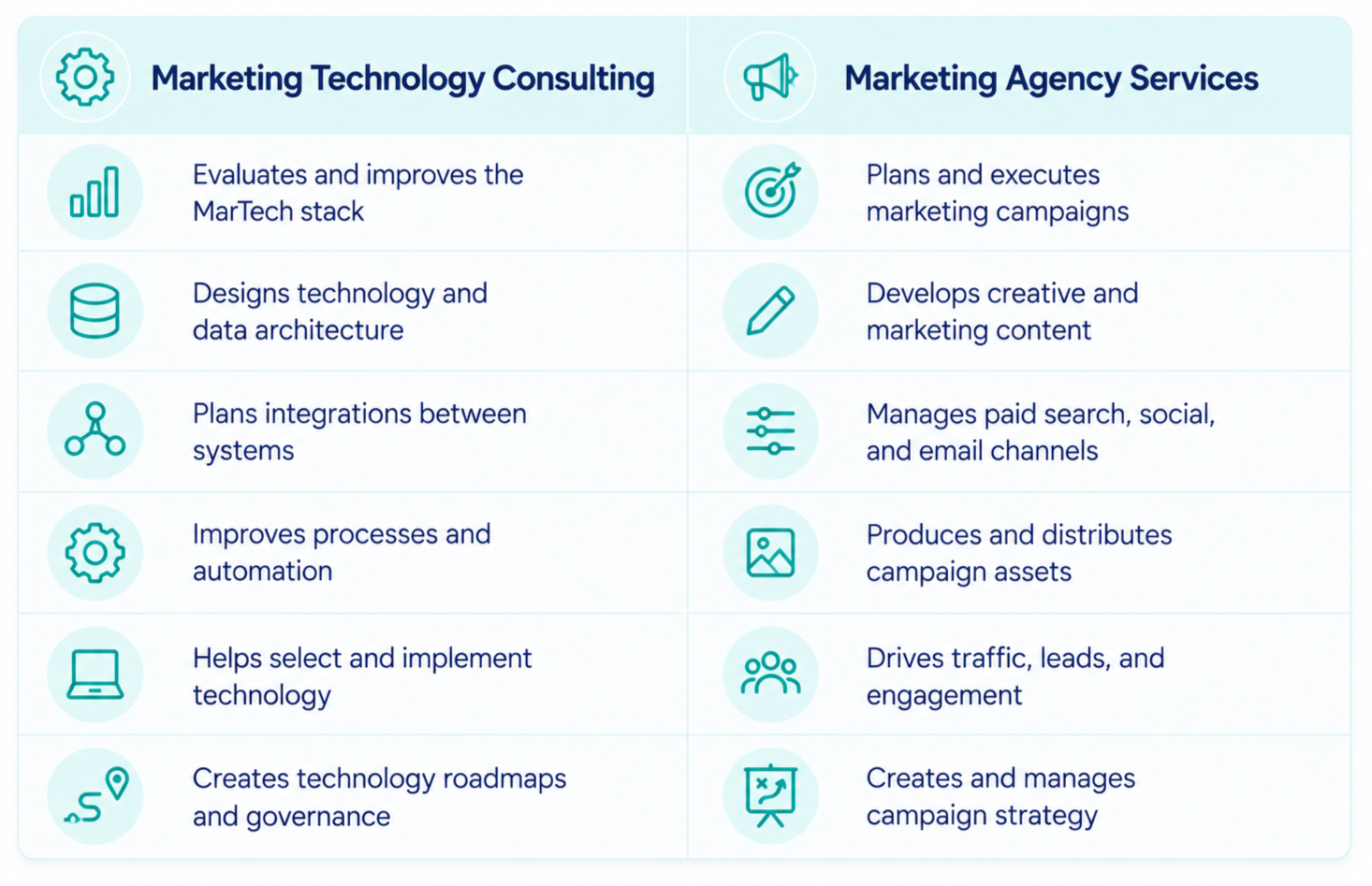
Marketing Technology Consulting vs. Marketing Agency Services
Both support marketing performance, but they solve different problems. Marketing technology consulting works on the systems, data, and processes behind marketing. A marketing agency works on the campaigns that run through them.
These are not competing options. A company can have a strong campaign strategy and still lose leads because of poor routing. It can also have a well-built MarTech stack but lack the team to run effective campaigns. Many businesses use both, starting with the technology foundation because campaign performance depends on the systems supporting it.
Which One Does Your Business Need?
Choose consulting when your main problems are your tools, data, systems, automation, or how your marketing team works. Choose agency services when you need help with campaigns, content, getting new customers, or managing marketing channels. When you need both, start by fixing the systems, so your campaigns have a solid foundation.
See What Your Stack Is Actually Doing
If you use HubSpot, you can start with our free HubSpot AI Readiness Scorecard to see how your setup, data, and processes are performing. You can also check your visibility in AI search with the AEO Auditor.
When you want a deeper look at your stack, our marketing technologists can audit your tools and create a plan for what to fix first. Talk to our team to see where your technology may be slowing you down.
Frequently Asked Questions
How Much Does Marketing Technology Consulting Cost?
Pricing depends on scope and is usually structured as a fixed-fee audit, a project fee for a defined roadmap or build, or a monthly retainer for ongoing optimization.
How Long Does a MarTech Engagement Take?
A focused stack audit commonly runs two to six weeks, while roadmapping and implementation work extends over several months depending on how many systems are involved.
Is Marketing Technology Consulting Only for Large Companies?
No, mid-sized and growing companies often benefit more, because they hit technology complexity before they have a dedicated marketing operations team to handle it.
Do I Need a Consultant if I Already Use HubSpot?
Many teams do, since a single platform still needs correct configuration, clean data, working integrations, and processes built around how your business operates.
Can a Consultant Help With Data Migration?
Yes, migration planning is a common part of the work and covers field mapping, deduplication, historical data decisions, integration rebuilds, and testing before cutover.