





A HubSpot Elite Solutions Partner built to help organizations unify strategy, systems, and execution. We design HubSpot systems that scale.

See how we've solved complex HubSpot challenges across migrations, integrations, CMS, automation, and optimization.

Join a team building smarter HubSpot systems. We value strategic thinkers who move proactively, care about quality, and want to do meaningful work.

9 min read

HubSpot Free CRM: What's Included and How to Use It

HubSpot Free CRM: What's Included and How to Use It

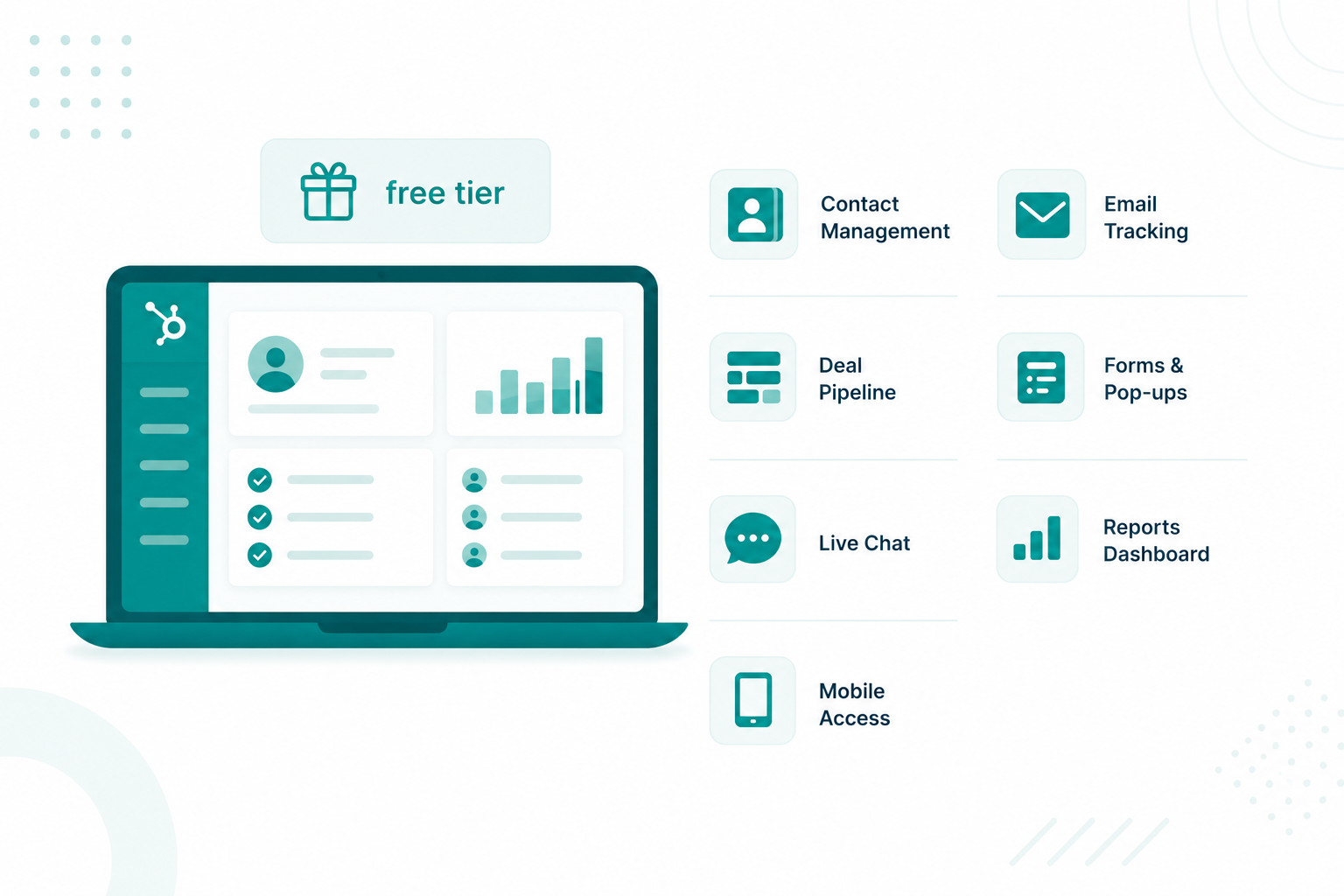
HubSpot Free CRM is a permanently free version of HubSpot's CRM, packaged with stripped-down editions of tools from Marketing Hub, Sales Hub, Service Hub, and Content Hub. You get contact and company records, a deal pipeline, forms, live chat, email tracking, meeting links, and reporting dashboards without paying anything and without entering a credit card.

The free tier has tightened over the past two years, though, and most guides online have not caught up. Plenty of them still describe a plan with a million contacts and unlimited users. New free accounts are capped at 1,000 contacts and two users, and several tools now sit behind lower ceilings.

This guide walks through what the free tools include, how to put them to work across sales and marketing, how to set up an account step by step, what you can automate, where the plan runs out, and which paid product to move to when it does.

Key Takeaways

  • The free tools cover contact and company records, one deal pipeline, tasks, forms, live chat, email tracking, templates, meeting links, and prebuilt reporting dashboards.
  • Free automation is limited to one simple action per form, such as a follow-up email or an internal notification.
  • The full workflows builder, sequences, the custom report builder, and branding removal all sit behind paid editions.
  • You can upgrade one area at a time, so hitting a wall on email volume does not force you into a full platform purchase.

What's Included in HubSpot Free CRM?

HubSpot Free CRM combines Smart CRM with limited features from HubSpot’s paid products. This provides enough functionality to run a small-scale sales and marketing system.

Here is what a free account covers.

  • Contact and company records. Store contacts and companies, organize customer data, and track website activity such as page views and form submissions.
  • Deals and tasks. Build one deal pipeline, move opportunities through stages, and keep follow-up tasks attached to the right record.
  • Sales email tools. Email tracking and notifications, email templates, snippets, document sharing, quotes, and a personal meeting link.
  • Lead capture. Build forms, embed them on your site or share them as standalone links, and route submissions straight into the CRM.
  • Customer conversations. Live chat, a shared inbox for one-to-one communication, and tickets for support requests.
  • Marketing basics. Marketing email, landing pages, website pages, a blog, and limited ad management across two ad networks.
  • Reporting dashboards. Prebuilt dashboards covering marketing, sales, and service activity.

HubSpot calls these free tools, not free Hubs, and that wording is deliberate. Most of them are simplified versions of paid functionality, with usage caps written into HubSpot's Product and Services Catalog. The set is broad enough to run a real process, and every tool in it has a ceiling worth checking before you commit to it.

How Can You Use HubSpot Free CRM for Sales and Marketing?

The free tools work best as one shared system for capturing leads, holding customer information, tracking opportunities, and running light marketing activity. Because all of it sits on the same CRM records, sales and marketing stop working from separate lead lists.

Capture New Leads

A form is the fastest way to start feeding the CRM. Say a consulting firm offers a downloadable guide. A visitor enters a name and email, and the submission creates or updates a contact record on the spot. Marketing manages that person in HubSpot from then on, with no copying between a form tool and a spreadsheet.

In HubSpot, go to Marketing > Forms > Create form. Add the fields you want, preview the form, then publish it by embedding it on a HubSpot page, dropping an embed code onto an external site, or sharing a standalone link.

Organize Contact Records

Once someone is in the CRM, the contact record becomes the home for that relationship. A salesperson can open it after a new inquiry, add company details, review site activity, create a follow-up task, and associate the contact with a deal.

Go to CRM > Contacts > Create contact. HubSpot recommends adding an email address when you create a contact, because it uses the address to deduplicate records and associate people with the right company automatically.

Track Opportunities in One Pipeline

When a lead turns into a real opportunity, a deal record tracks it through your sales process. A four-stage pipeline covers most small teams. New Opportunity → Discovery Call → Proposal Sent → Closed Won.

Go to CRM > Deals > Create new. Enter the deal name, amount, pipeline, stage, and associated records. Each deal stays linked to its contact and company, so the sales activity and the customer history live together.

Connect Marketing Activity With Sales

The real payoff is a single handoff point. Someone downloads an ebook, marketing captures the lead through a form, and later a salesperson opens that same record, reviews what the person has looked at, and creates a deal once they qualify. Nothing gets forwarded, exported, or re-keyed.

For a small business, that produces a clean path from first touch to customer. Visitor → Form Submission → Contact → Follow-Up → Deal → Customer.

Free HubSpot will not give you every advanced capability in the platform. What it does give you is a foundation solid enough that your first hundred deals live somewhere sensible.

Worth a read: Essential Data To Migrate For A Successful HubSpot CRM Implementation

How Do You Set Up HubSpot Free CRM?

1. Create Your Account

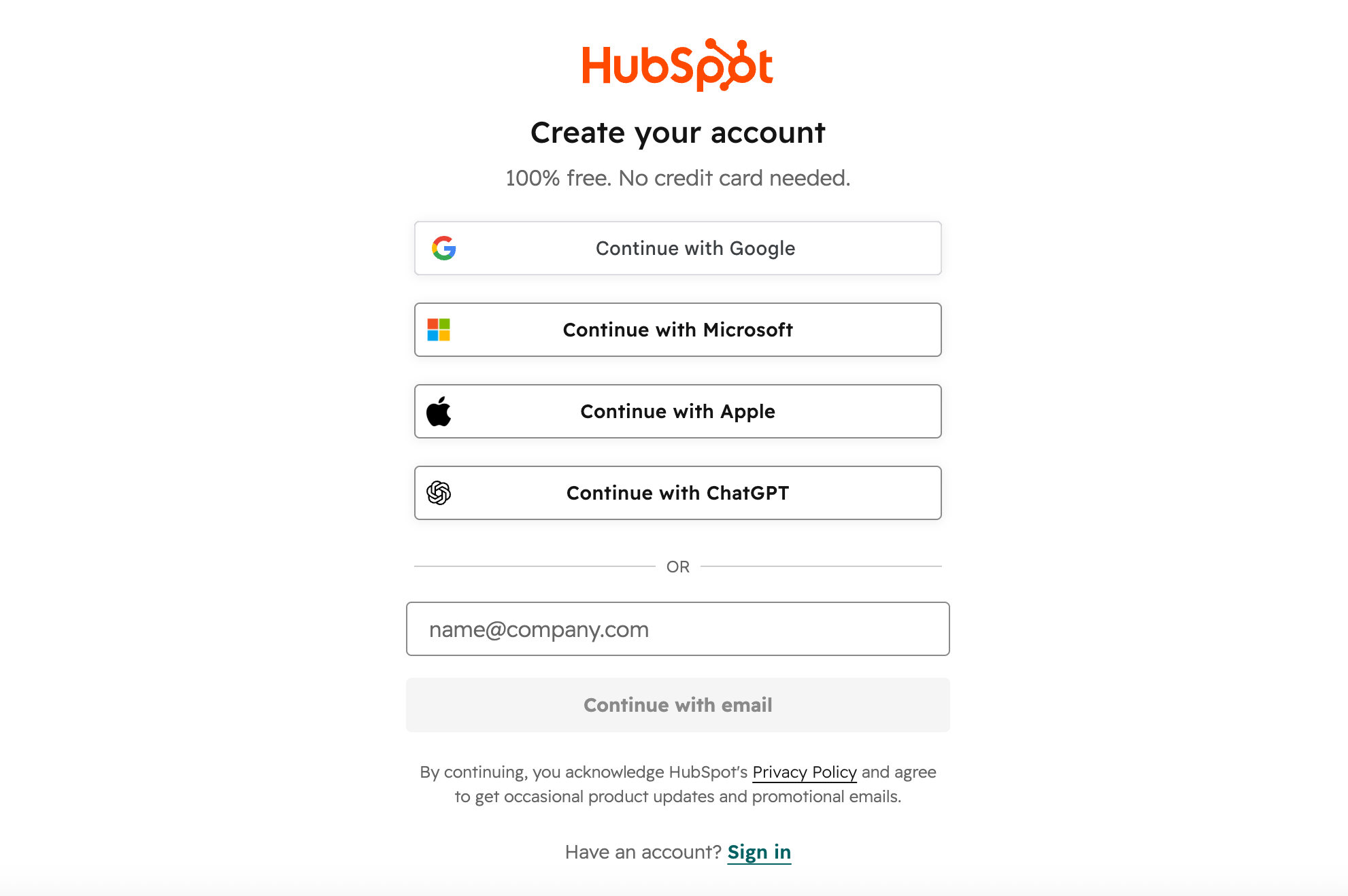
 hubspot-create-free-account

Sign up with your name and email, or use a Google login or Apple ID. You are logged in as soon as the account exists, and no credit card is needed at any point.

2. Configure Account Defaults

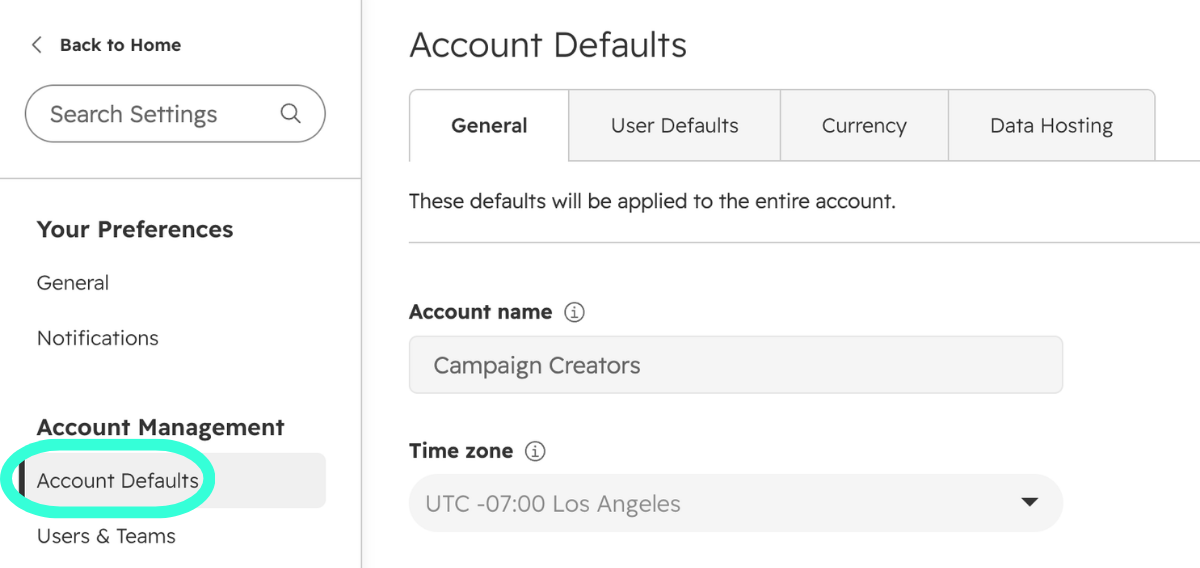
Before you add data, set the details that shape how everything behaves. Account defaults cover your time zone, currency, date format, company information, branding, and notification settings. In HubSpot, go to Settings (gear icon) > Account Defaults.

 hubspot-configure-account-defaults

The exact options vary by account and permissions, and getting currency and time zone right at this stage prevents a lot of confusing reporting later.

3. Add Your Second User

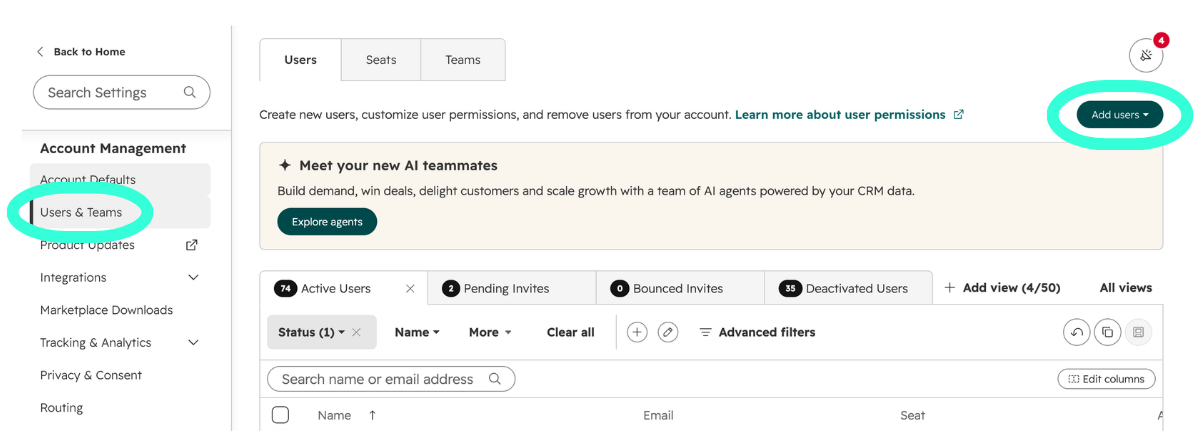
A free account supports two users total. You can invite one other person and control what they see through user permissions. Go to Settings > Users & Teams > Add users > Create new.

 hubspot-add-users

Enter the email address, assign access, and send the invitation. If the second seat appears unavailable, check for deactivated users still occupying it.

4. Import Existing Contacts

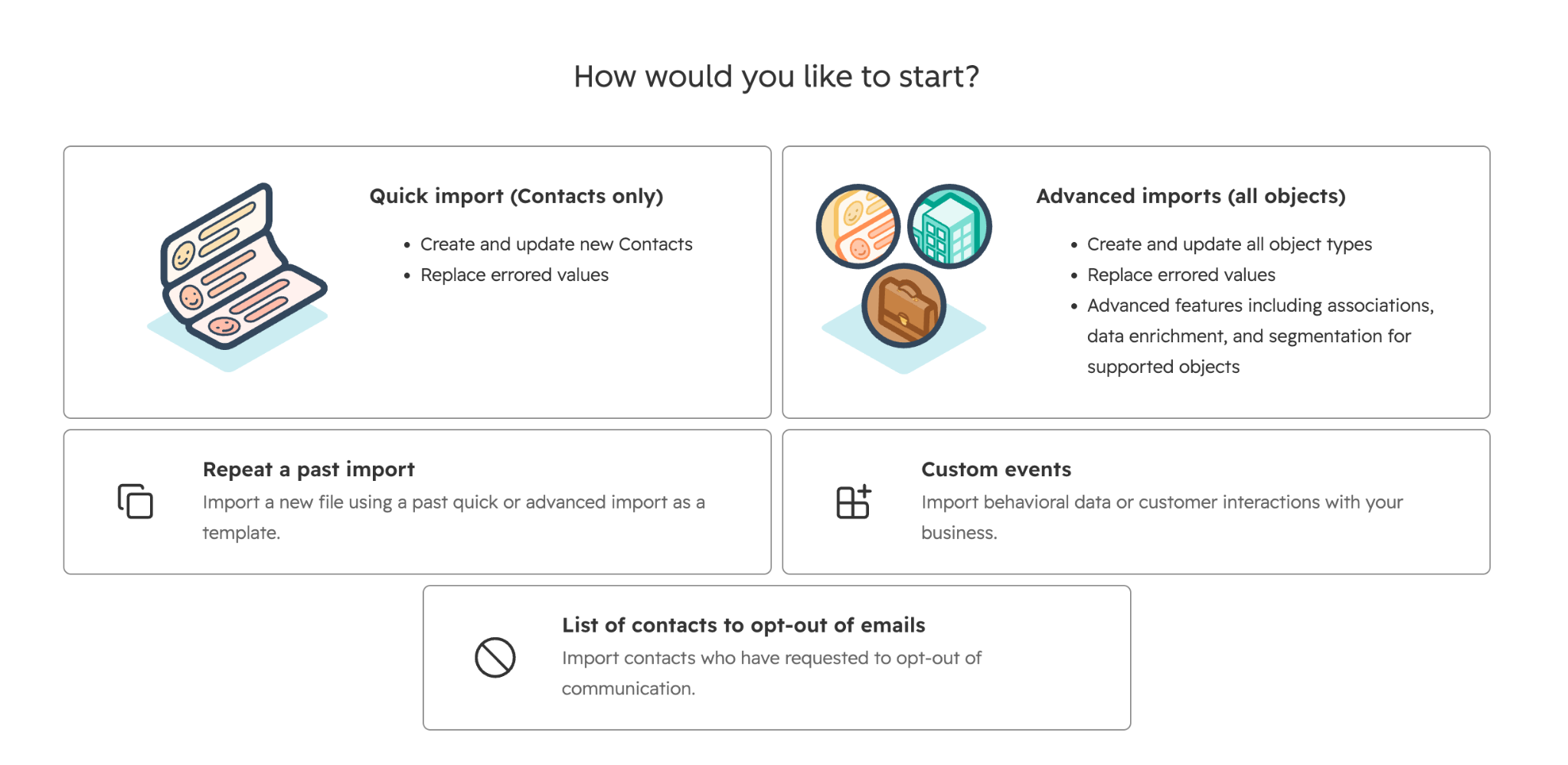
You do not have to start from zero. Bring in customer and prospect data from a spreadsheet through the import tool. Go to CRM > Contacts > Import. It will redirect you to Data Integration; then click Import a File. You will see these options below:

 import-contacts-hubspot

During the import, you need to map spreadsheet columns to CRM properties so names, email addresses, companies, and phone numbers land in the right fields. Clean the file first. A CRM full of dead email addresses is an expensive address book, and deduplicating after the fact is slower than fixing the spreadsheet.

5. Connect Your Email

Connecting your inbox makes the sales tools work alongside the email you already send. HubSpot's free tools connect with Gmail, Google Workspace, and most versions of Outlook.

Go to Settings > General > Email. Once connected, email tracking and engagement notifications start logging activity against contact records without anyone copying and pasting.

6. Build Your Deal Pipeline

Your last setup step is deciding how you want to see opportunities. Free accounts include one deal pipeline, which is enough for a single sales process.

Go to CRM > Deals, then create a deal and assign it to the appropriate stage. Keep the stages tied to buyer actions you can verify, such as a booked call or a sent proposal, and not to internal feelings about how likely a deal is. Get a clearer understanding of deal stages with this guide.

What Can You Automate With HubSpot's Free Tools?

HubSpot’s free tools can automate basic tasks such as sending follow-up emails after form submissions, notifying your team, and managing simple contact or list actions. These automations are limited to single actions tied to specific assets and do not include the full multi-step workflows builder available in paid plans.

1. Send a Follow-Up Email After a Form Submission

The most common use is an immediate response to a form fill. Someone downloads a guide, and HubSpot sends the email with the download link without anyone on your team touching it.

You configure this from the form editor. On free tools, you can create one "send an email after form submission" simple workflow per form, with a limit of one action in it, according to HubSpot's form automation documentation. One form, one email, and that is the extent of it.

2. Notify Your Team Automatically

You can also trigger an internal notification when something happens. A "Request a Demo" submission can ping the right person immediately, which beats having someone refresh the submissions list every few hours.

For a two-person team, this single automation often does more for response time than anything else in the account.

3. Handle Basic Ad and List Tasks

The free ad tools support limited campaign management and audience syncing across two ad networks, with a spend ceiling in place. Basic segmentation lets you group contacts by form submissions, contact properties, and marketing email activity, which is enough to separate one campaign's leads from another's for follow-up.

Where Free Automation Stops

HubSpot's full workflows tool automates multi-step processes across contacts, companies, deals, and tickets using triggers, branches, delays, property updates, task creation, and integrations. That builder is available in the Professional and Enterprise editions.

So a free account handles this. Form submitted → send follow-up email.

It cannot handle this. Form submitted → wait two days → check engagement → send a second email → create a sales task → assign an owner → update lifecycle stage.

Starter editions sit in the middle, lifting the per-form action limit into the three-to-ten range depending on which Hub you buy. If your process requires delays and branching logic, free automation will not stretch to cover it, and building manual workarounds to fill that gap takes more time than the upgrade.

What Are the Limitations of HubSpot Free CRM?

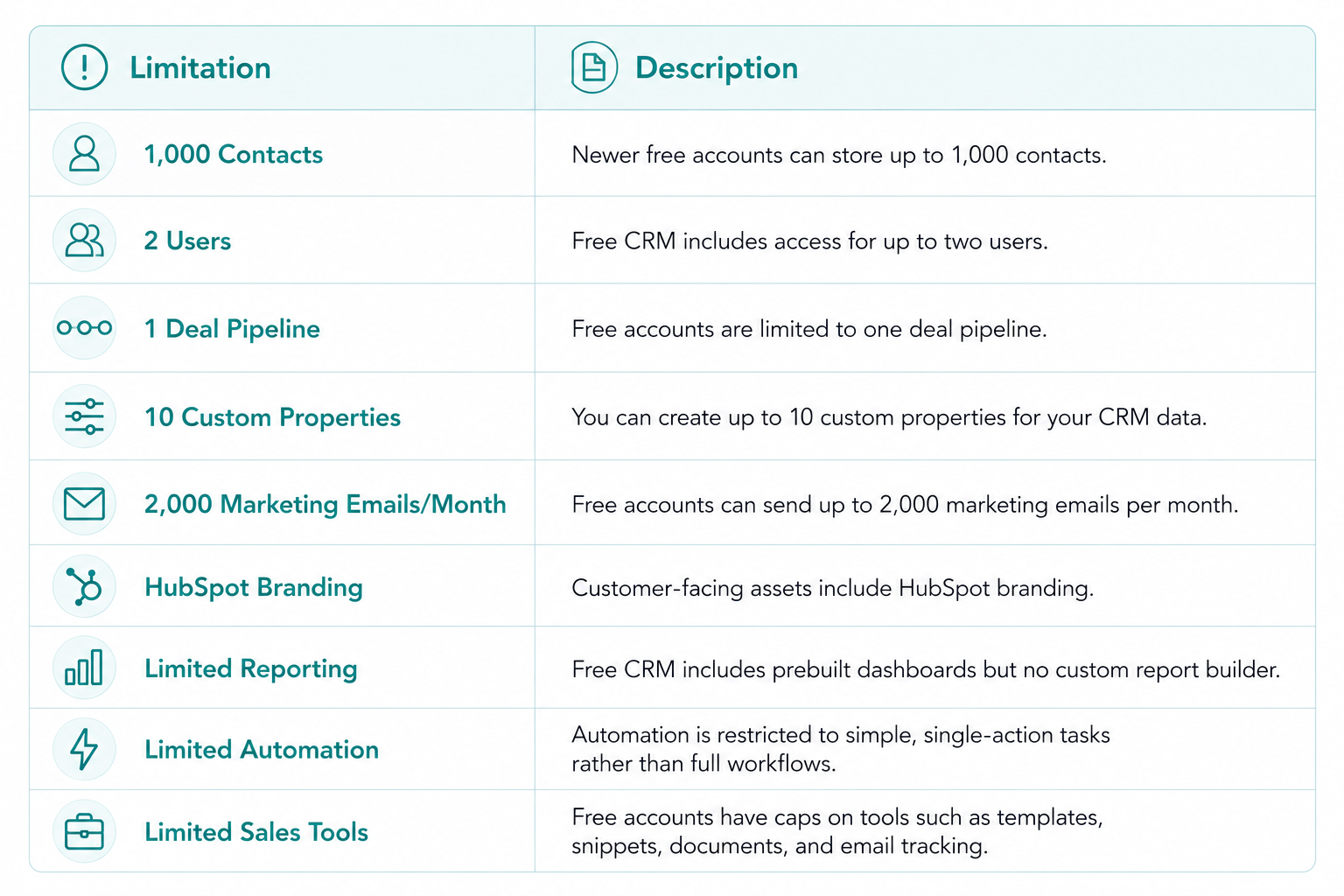
HubSpot Free CRM has limits on contacts, users, pipelines, custom properties, marketing emails, branding, reporting, and customer support.

hubspot-free-crm-limitations

1,000 Contacts on Newer Accounts

HubSpot Free CRM allows up to 1,000 contacts under the applicable Free CRM limit. You can check your account’s current contact limit and usage in Data Management > Data Model > Limits.

Two Users

Free accounts include two users. That covers a founder and a salesperson. It does not cover a third person, so the moment marketing, sales, and operations all need access, you are buying seats.

One Deal Pipeline and Ten Custom Properties

Free and Starter accounts get one deal pipeline, and Professional lifts that considerably. Free accounts also cap custom properties at ten, which pushes you toward mapping your data into HubSpot's built-in fields before inventing new ones. Other sales tools carry their own small numbers, including three email templates, three snippets, five documents, one personal meeting link, and 200 email tracking notifications per month.

2,000 Marketing Emails Per Month

Free accounts send up to 2,000 marketing emails per calendar month, counted per recipient. One send to a list of 1,000 people uses half your monthly quota. One-to-one sales emails from the CRM are counted separately and are far more generous.

For a monthly newsletter to a few hundred subscribers, this holds. For a promotional sequence or a re-engagement campaign, it does not.

HubSpot Branding on Customer-Facing Assets

Free HubSpot tools include HubSpot branding on emails, landing pages, forms, meeting links, and chat widgets. Removing it requires a paid plan. This is usually minor for startups but can affect how an enterprise-facing company presents itself.

Reporting Without a Custom Report Builder

Free accounts include prebuilt dashboards for marketing, sales, and service activity. What they lack is the custom report builder, so you cannot construct a report from scratch that combines contact, company, deal, and activity data. Multi-touch attribution and customer journey analytics sit behind Professional as well.

Taken together, these limits make HubSpot Free a good starting point for organizing customer data and building consistent processes. As your operation grows, the limits can become restrictive when you need more automation, higher volume, and room to scale.

When Should You Upgrade From HubSpot Free CRM?

You may have outgrown HubSpot Free CRM when its limits start creating extra work or preventing your team from following the process you need. Here are five common signs:

  • You still need a spreadsheet alongside HubSpot. A separate spreadsheet usually means the CRM cannot handle part of your process or the data you need to track.
  • Your team repeats the same tasks every day. Manually assigning leads, sending follow-ups, or updating fields are clear signs that you need more automation.
  • A third person needs CRM access. Free CRM only supports two users, so sharing a login is not a safe workaround.
  • Your email campaigns keep hitting the monthly limit. Planning campaigns around the 2,000-email monthly cap can restrict your marketing activity.
  • Different products or regions need different sales processes. One pipeline can make it difficult to manage separate sales processes and produce accurate reporting.

If none of these describe your team, staying free is a reasonable decision.

Which Paid Product Solves Which Problem

HubSpot lets you upgrade the specific product that addresses the limit you have reached. Marketing Hub Starter increases email capacity, removes HubSpot branding, and expands form automation. Sales Hub Starter adds another deal pipeline and increases limits for templates, snippets, and documents. Professional editions add advanced features such as full workflows, sequences, and custom reporting. Sequences require Sales Hub or Service Hub Professional or Enterprise.

Choose the paid product based on the problem you need to solve. Upgrading to Professional just to increase email volume, for example, adds features you may not need.

Ready to Get Started With HubSpot?

HubSpot Free CRM gives a small team a real place to manage contacts, track opportunities, capture leads, and connect marketing with sales. Start with what you need now, and expand as the process gets more demanding.

Structure is the part worth getting right early. Properties, pipeline stages, and lifecycle definitions set on day one are what your reporting depends on two years later, and they are painful to redo once thousands of records depend on them.

Campaign Creators is a HubSpot Elite Solutions Partner, and we help teams set up HubSpot accounts properly, migrate existing data, and work out which upgrades are worth paying for.

Frequently Asked Questions

Is HubSpot Free CRM Really Free Forever?

Yes. The free tools have no expiration date, no trial period, and no credit card requirement. HubSpot offers paid products to raise limits and unlock functionality, and nothing forces you off the free tier if you stay inside its caps.

How Many Contacts Can You Store on the Free Plan?

New free accounts store up to 1,000 contacts. Accounts created before HubSpot's September 2024 change may still have a much higher ceiling, so check usage and limits in your own account settings for the number that applies to you.

Can You Use Workflows on HubSpot Free CRM?

Not the full workflows tool. Free accounts get one simple workflow per form with a single action, such as sending a follow-up email or an internal notification.

How Many Marketing Emails Can You Send for Free?

Up to 2,000 per calendar month, counted per recipient. A single send to 500 contacts uses 500 of your monthly quota. One-to-one sales emails sent from the CRM fall under separate and much higher limits.

What Is the Difference Between HubSpot Free Tools and Starter?

Starter raises the caps that constrain free accounts and removes HubSpot branding. Depending on which Hub you buy, it adds email volume, more pipelines, higher limits on templates and documents, more actions per form automation, and access to email and chat support.

Automated Lead Nurturing Strategies Using HubSpot Lifecycle Automation

Automated Lead Nurturing Strategies Using HubSpot Lifecycle Automation

Many organizations invest heavily in lead nurturing, they create content libraries, building email workflows, and launching automation campaigns...
Read More
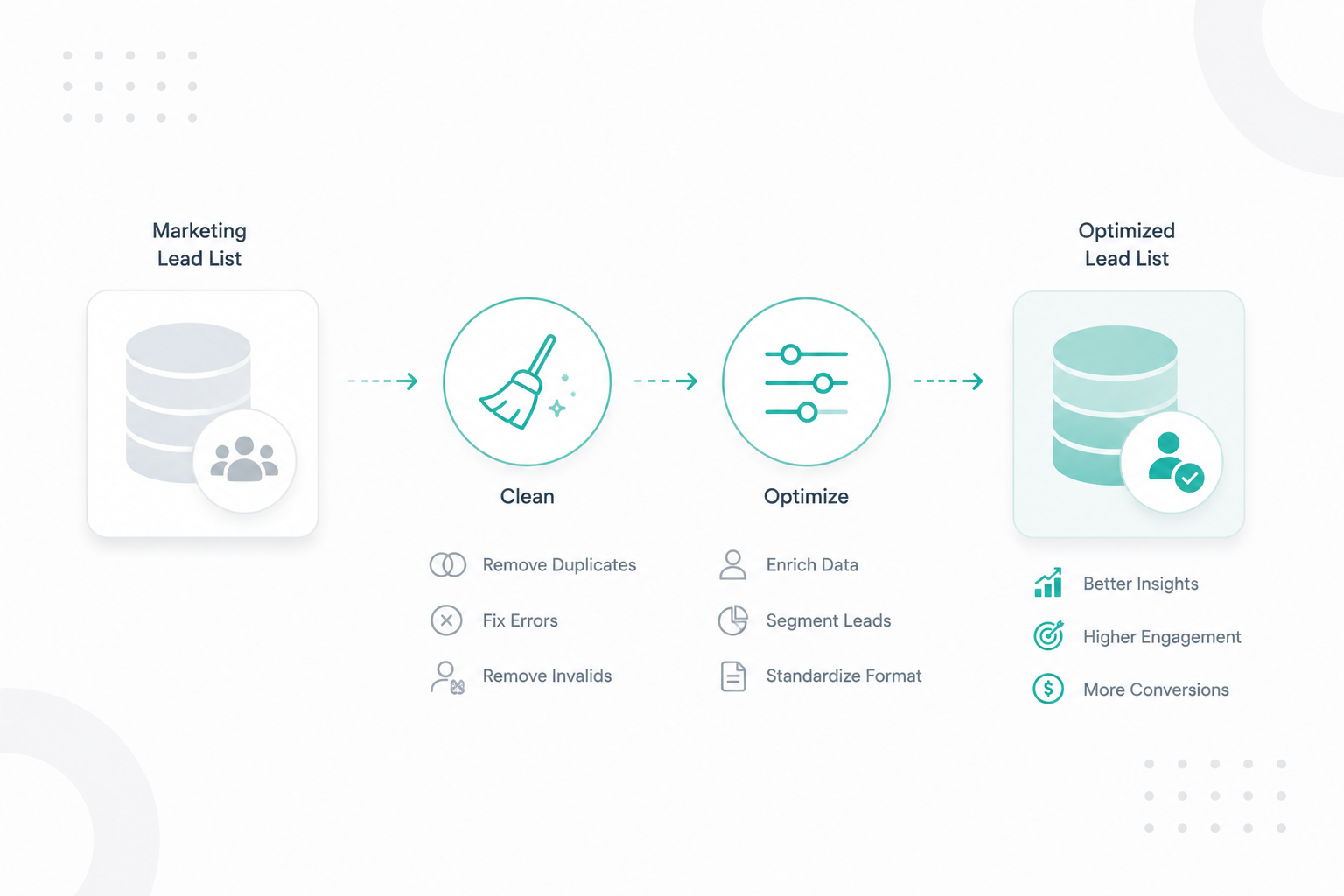
Marketing Lead List: How to Clean and Optimize Your Database

Marketing Lead List: How to Clean and Optimize Your Database

A marketing lead list helps businesses identify and reach potential customers through targeted sales and marketing campaigns. In B2B marketing, these...

Read More
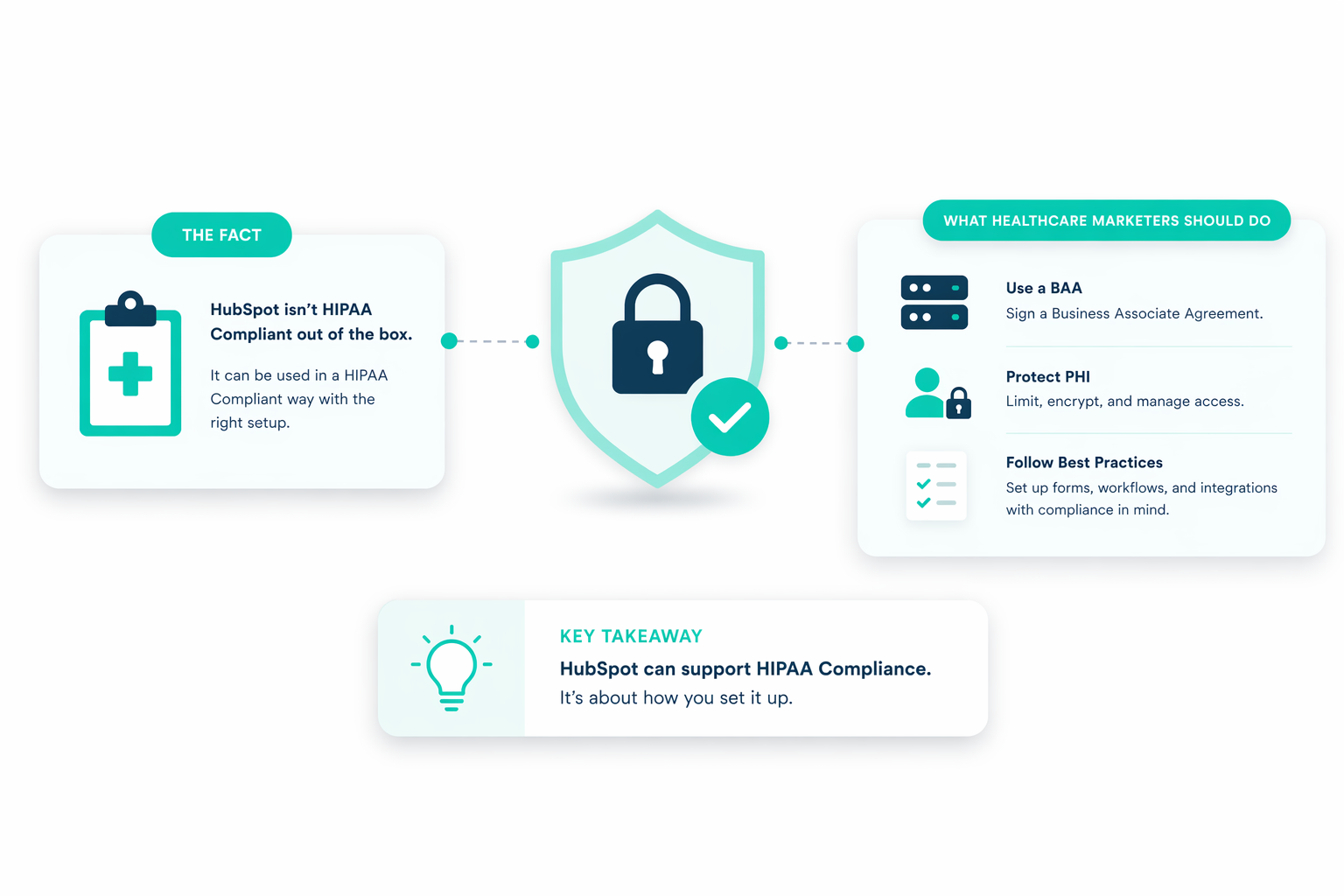
Is HubSpot HIPAA Compliant? What Healthcare Marketers Need to Know

Is HubSpot HIPAA Compliant? What Healthcare Marketers Need to Know

Healthcare marketing often involves emails, appointment reminders, and follow-ups that touch sensitive patient data. That creates real risk if your...

Read More