



7 min read

How Healthcare Brands Are Using AI Without Breaking Compliance

How Healthcare Brands Are Using AI Without Breaking Compliance

AI is changing how patients find care, ask questions, and decide where to go next. Search engines now surface instant answers, and many patients turn to chatbots or social platforms before ever visiting a provider’s website. Because of this shift, your marketing has to do more than bring in traffic. It needs to recognize intent in real time and turn that interest into action. When applied correctly, AI helps you move beyond visibility and generate up to 3x more qualified patient leads through more relevant and timely interactions.

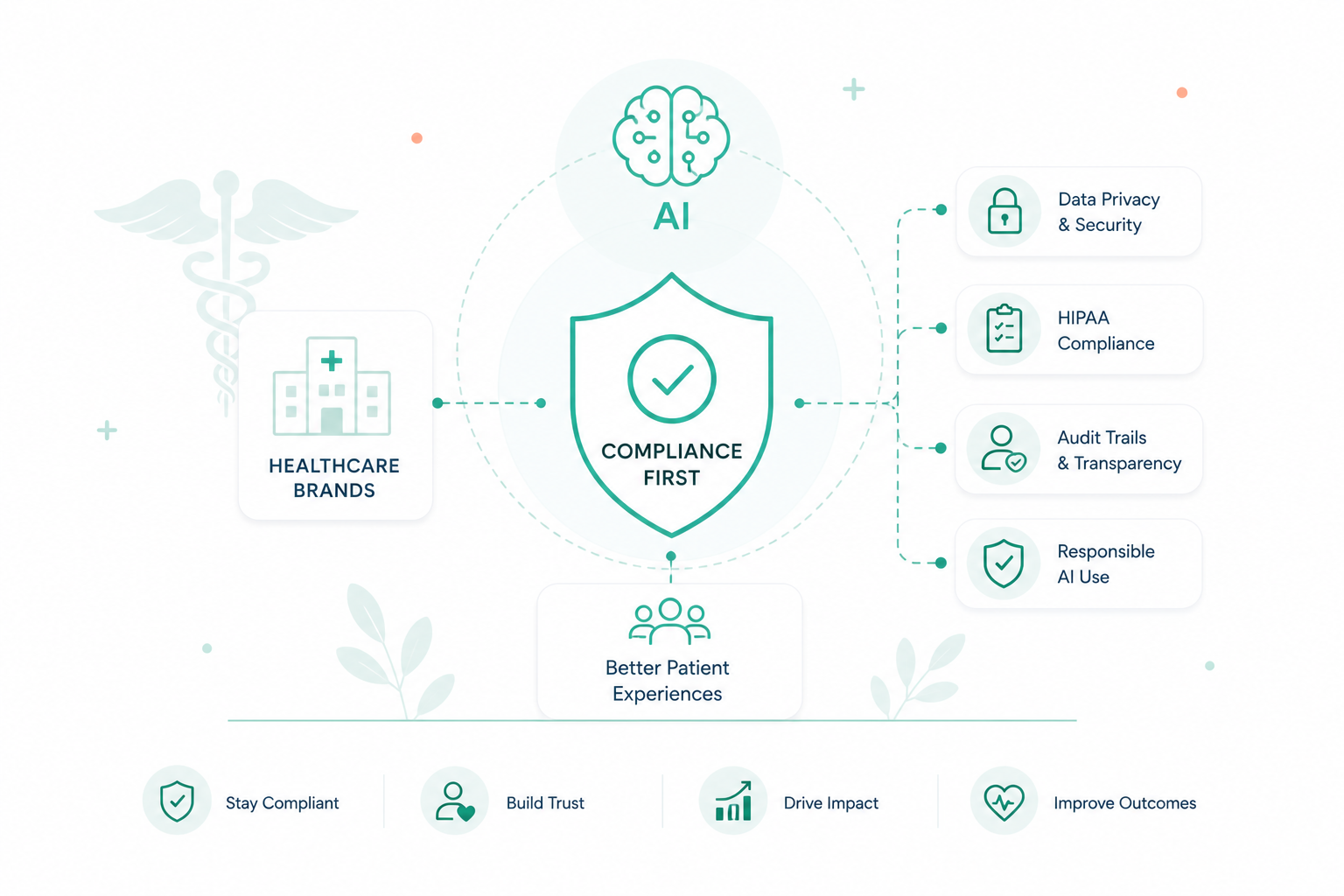
As these tools become part of your strategy, there’s also a responsibility that comes with them. Every use of AI in healthcare marketing needs to meet compliance standards. Claims have to stay accurate, patient data needs to remain protected, and automated systems should be transparent and accountable.

This article walks through how you can use AI to strengthen patient acquisition, improve engagement, and increase efficiency, without losing alignment with regulatory expectations or patient trust.

The New Path Patients Take to Find Care

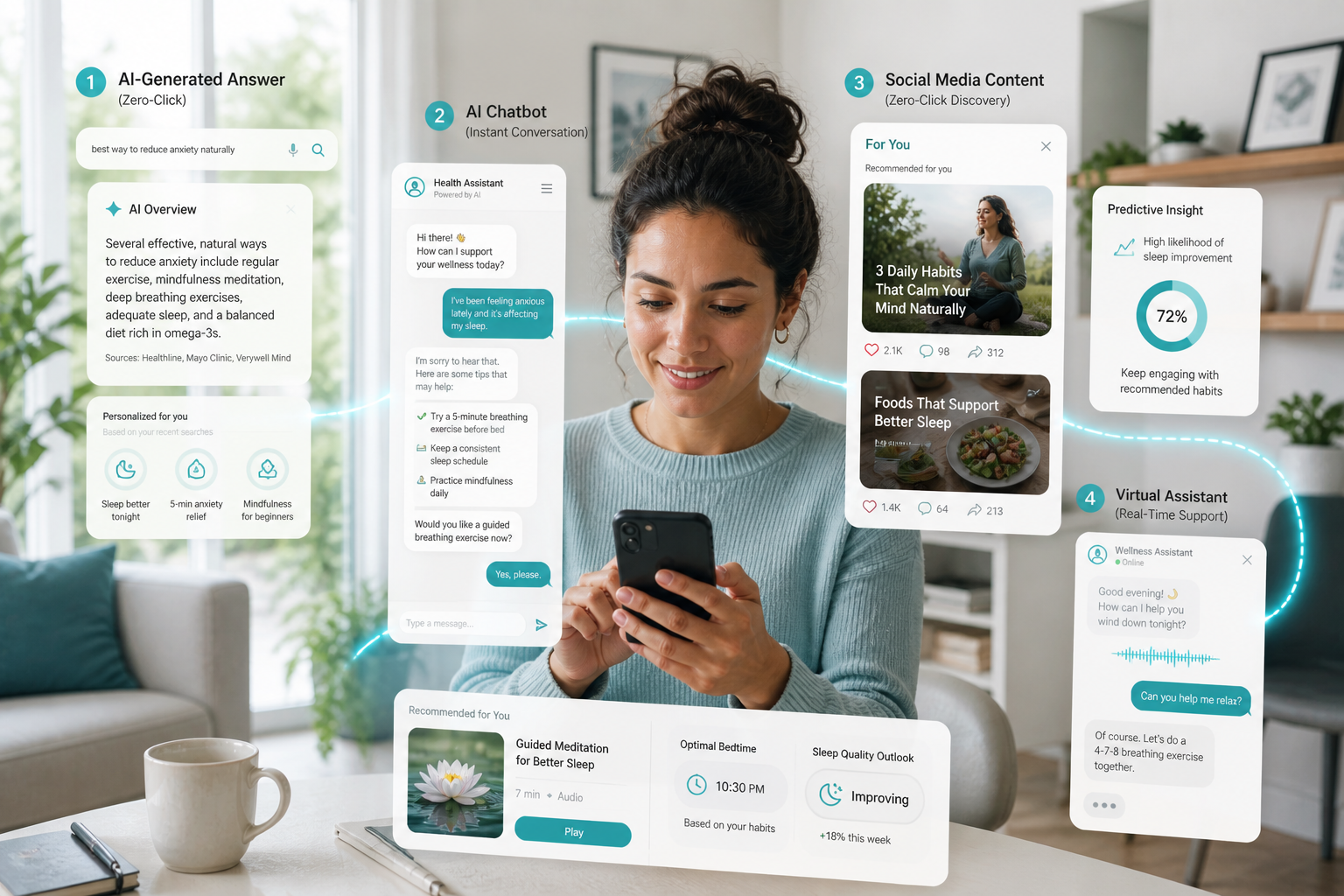
generate an image  showing a patient moving through multiple digital touchpoints from their phone with hubspot interface pop-ups starting with an AI-generated answer on a search engine, then shifting to a chatbot conversation on a phone, scrolling through social media health content, and finally interacting with a virtual assistant late at night. The scene should feel fluid and non-linear, with glowing interface elements layered around the patient to represent personalized recommendations, predictive insights, and real-time responses, emphasizing a “zero-click” world where information comes instantly without visiting traditional websites.

The search landscape for medical information is undergoing a massive transformation as traditional methods fade. Google now populates results pages with AI-generated answers that often satisfy a user's query immediately. This trend creates a "zero-click" environment where patients obtain the information they need without clicking through to a healthcare brand's website.

Consequently, the old strategy of relying on informational, SEO-tailored landing pages is becoming more difficult to maintain. Beyond standard search engines, individuals now turn to non-Google chatbots like ChatGPT or social search platforms to find care options and conduct deep research.

This means healthcare brands must adapt to reach patients through context-aware and personalized touchpoints. AI tools facilitate this through predictive analytics that identify individuals at risk for certain conditions or treatment gaps. For example, platforms can now determine the exact probability that a patient might fail to adhere to a medication schedule. These systems then select the most effective communication channel for that specific person, such as a text message or a phone call, rather than sending a generic reminder. This creates "segments of one," in which the care-finding process becomes highly individualized.

Virtual health assistants and chatbots further change the discovery process through 24/7 availability. These tools provide instant responses to urgent questions about side effects or medication dosages in the middle of the night. Patients often appreciate the non-judgmental nature of these bots, which provides a safe space to repeat questions they might feel embarrassed to ask a human provider.

AI also powers recommendation engines that suggest relevant educational content or health interventions tailored to a patient's unique profile. This technology helps bridge the gap between physician visits and ensures patients feel supported throughout their entire journey.

Where AI Delivers Real Marketing Value in Healthcare

AI is creating measurable gains across healthcare marketing, from patient acquisition to engagement and operational efficiency. The value comes from turning large volumes of data into precise actions that improve outcomes without increasing waste.

Driving Patient Growth and Adherence With Predictive Targeting

AI looks at past patient behavior to predict what someone is likely to do next. That changes how you target and communicate.

For example, a pharmacy system can flag patients who are likely to miss their next refill based on past delays. The system sends a text reminder to one patient, but schedules a pharmacist call for another who responds better to human interaction.

This level of targeting increases adherence. In one case, cholesterol medication adherence increased by 7.9% after using predictive models.

The same idea applies to marketing campaigns. A telehealth brand can use AI to identify people actively searching for symptoms or treatments, then show ads tailored to those behaviors. That leads to more patient signups without increasing customer acquisition cost.

Scaling Content and Patient Engagement Across Every Touchpoint

AI helps you create more content and stay responsive without adding more work for your team. For example, a healthcare provider can generate multiple versions of an ad for diabetes care. Each one is written slightly differently for different audiences. One version focuses on prevention, another on symptom management. The system tests all versions and prioritizes the best-performing one.

On the engagement side, a patient visiting a website at 11 PM might have questions about medication side effects. A conversational AI chatbot can answer instantly, instead of making the patient wait until the next day. This keeps patients engaged and supported at all times, not just during office hours.

Improving Financial Efficiency and Expanding Patient Access

AI can review insurance and billing data to find patients who qualify for financial aid but have not applied.

For example, a patient with a high out-of-pocket cost for a specialty medication may meet the criteria for a co-pay assistance program but remain unaware of it. AI can flag this gap based on coverage details, claim history, and billing patterns. The system can trigger a personalized outreach message that explains the program, outlines potential savings, and guides the patient on the next steps to apply.

This increases program participation and helps more patients access treatment they might otherwise delay or avoid.

How to Use AI in Advertising Without Misleading Patients

In healthcare, every claim, whether written by a human or generated by AI, is treated the same under regulatory standards. That means accuracy, transparency, and oversight must be built into every step of your marketing workflow.

AI-Generated Claims Must Meet the Same Evidence Standards

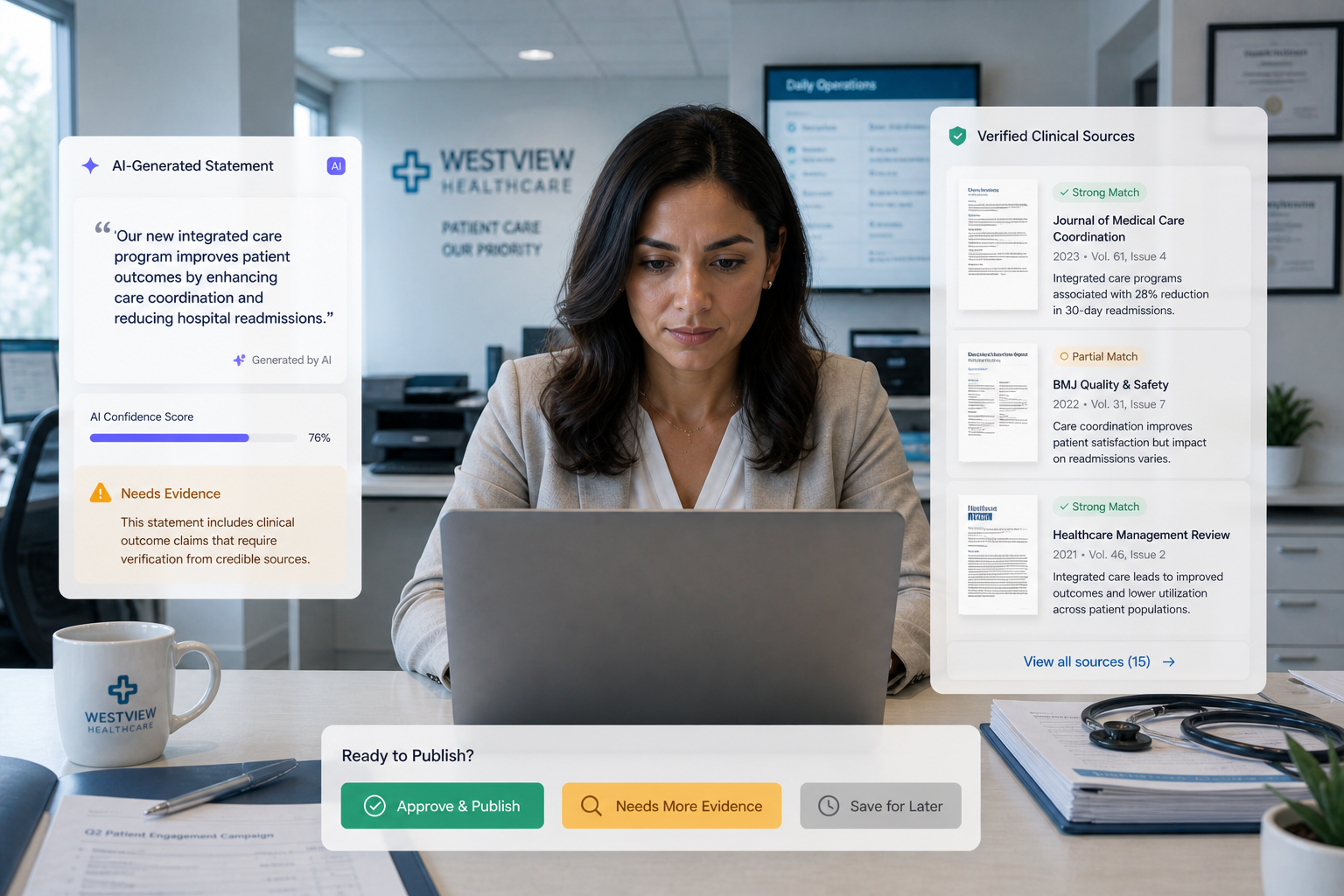
A healthcare marketer reviewing an AI-generated medical claim on a laptop, with one side showing the AI-written statement and the other side showing verified clinical sources and research documents. The focus is on checking accuracy before publishing, with subtle visual cues like “approved” and “needs evidence” labels.

Any claim produced with AI is treated as if your organization wrote it. There is no distinction in enforcement. The Federal Trade Commission requires that all health-related claims be supported by competent and reliable scientific evidence.

This becomes a major risk with generative AI because these systems can:

  • Produce fabricated statistics that appear credible
  • Invent clinical citations that do not exist
  • Overstate treatment outcomes or timelines

An AI-generated ad might claim a treatment “improves recovery by 80%” without a real study behind it. Even if unintentional, that still qualifies as a deceptive claim under FTC standards.

Internal policies should explicitly block:

  • Unverified success rates
  • Unsupported comparisons (“faster,” “safer,” “more effective”)
  • Any claim that cannot be traced to an approved source

Build a Controlled AI Content System With Human Oversight

Organizations using AI effectively do not rely on open-ended generation. They build controlled systems that include: pre-approved medical sources and datasets, prompt frameworks that restrict what AI can generate, and mandatory review from medical, legal, or compliance teams.

This reduces the risk of hallucinations, where AI presents false information as fact. These errors are well-documented in healthcare AI and require active mitigation through validation and constraints.

Regular audits are also part of this system. AI models can drift over time, introducing new inaccuracies or bias. Ongoing monitoring helps detect:

  • Changes in output quality
  • Emerging compliance risks
  • Bias in messaging or targeting

Organizations that combine AI speed with structured review consistently produce safer and more reliable marketing content.

Protect Patient Data and Avoid High-Risk Targeting Practices

A simple scene showing a healthcare dashboard with patient data blurred or anonymized, alongside a shield or lock icon to represent privacy protection. A marketer views general audience insights instead of personal details, reinforcing the idea of using safe, non-sensitive data for targeting.

Healthcare marketing must comply with data protection rules enforced by the Department of Health and Human Services under HIPAA. This includes strict limits on how protected health information (PHI) can be used.

Key risks include:

  • Using PHI in ad targeting without proper authorization
  • Feeding sensitive patient data into non-compliant AI tools
  • Targeting users based on inferred health conditions

Even outside HIPAA, regulators are increasing scrutiny on how AI uses sensitive data. Targeting someone based on a suspected medical condition can raise both privacy and ethical concerns.

What the brand should do is:

  • Use de-identified or aggregated data for modeling
  • Limit targeting based on sensitive health signals
  • Vet AI vendors for compliance with healthcare data standards

For a deeper understanding of how HIPAA impacts healthcare organizations, this informative guide can help.

Disclose AI Use and Maintain Transparency in Patient Interactions

Patients need clarity about what they are interacting with and where information comes from.

Regulators and industry guidance emphasize transparency as a core requirement for AI in healthcare marketing. Disclosure helps prevent confusion and builds trust, especially in high-stakes decisions.

This includes clearly labeling chatbots or AI-generated responses, avoiding any implication that AI content is direct medical advice, and explaining the role of AI in content creation or recommendations.

Ensure Patients Can Escalate to Human Care at Any Time

AI should support access to care and not replace it. Patient-facing tools such as chatbots must include clear escalation paths to human providers. These “break glass” mechanisms are especially important for:

  • Complex medical questions
  • Urgent or sensitive concerns
  • Situations where AI responses are incomplete

A chatbot handling medication questions should immediately route a patient to a clinician if symptoms or risks exceed predefined thresholds. This protects patient safety and ensures compliance with expectations around responsible AI use in healthcare systems.

Keeping Pace With Changes in AI and Healthcare Compliance Rules

Healthcare rules have tightened, and expectations are no longer flexible. You now need to treat many safeguards as required.

Organizations should run vulnerability scans and penetration tests at least once a year as mandated by Federal authorities. This shows your systems can actually handle real-world cyber threats and not just pass internal checks.

You also need a complete, up-to-date asset inventory. Every device, app, or tool that touches patient data must be logged and secured. If something is used but not recorded, that alone can trigger a compliance issue. At the same time, tools like multi-factor authentication and strong encryption are now baseline expectations. You can’t justify skipping them during an audit.

Using chatbots or automated tools requires clear disclosures at the start of the interaction. Patients should immediately know they are not talking to a human. You also need audit trails that log prompts and responses so you can track how decisions are made and prevent unlicensed medical advice. Every chatbot should include a simple way for users to reach a real provider when needed.

Risk management needs to be structured. You should follow recognized frameworks like the NIST AI Risk Management Framework or ISO standards. If you rely on vendors, update agreements and make sure you understand how their tools are trained and what data they use. When all of this works together, you can use AI confidently without exposing your organization to unnecessary risk.

Build Better Healthcare Systems With HubSpot and AI!

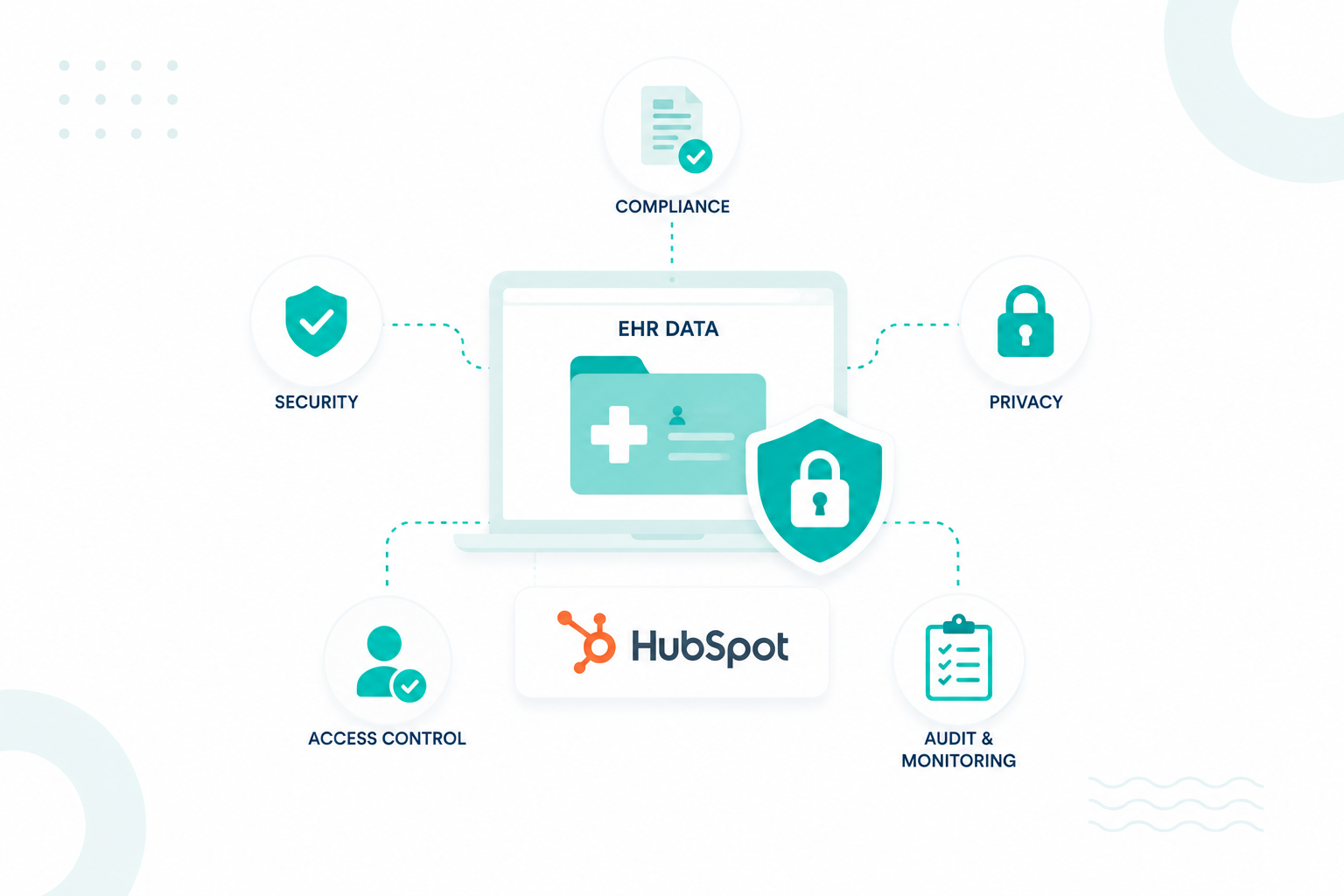
Healthcare brands should treat AI as part of their compliance program. Every output reflects your brand, your clinical standards, and your legal responsibility. Your workflows need to connect marketing, clinical review, legal, and security from the start, so nothing moves forward without proper oversight. Tools like HubSpot can support this structure by centralizing data, tracking patient interactions, and creating auditable workflows that keep teams aligned and accountable.

If you want to learn more about how HubSpot works or how AI can fit into your current setup, Campaign Creators can help you apply these systems in a way that supports both growth and compliance across your marketing and patient engagement efforts.

Frequently Asked Questions

Can you use tools like ChatGPT for healthcare marketing without violating privacy laws?

Yes, but only if you avoid entering protected health information into non-compliant tools and apply strict controls around how data is used, stored, and reviewed. You also need internal policies and human oversight to ensure outputs meet healthcare regulations.


What is a Business Associate Agreement, and why does it matter for AI vendors?

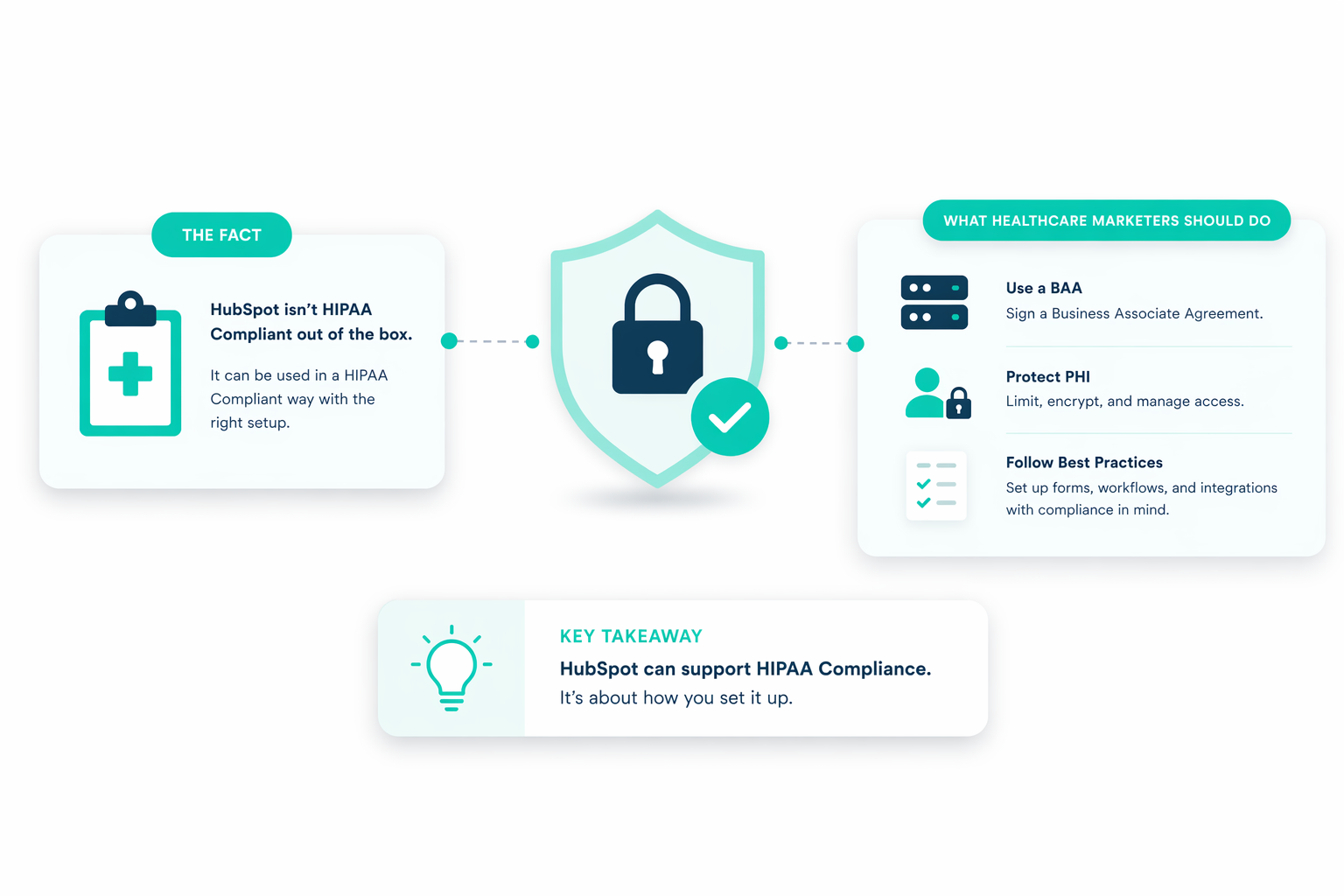
A BAA is a legal contract that requires vendors to protect PHI under HIPAA standards. Without it, using an AI vendor that handles patient data can put your organization at direct compliance risk.


How do you safely anonymize or de-identify patient data for AI use?

You need to remove or mask all identifiers that can trace data back to an individual, including indirect identifiers that could be re-linked. Proper de-identification follows HIPAA standards and often requires validation to reduce re-identification risk.


What types of healthcare marketing claims are most likely to trigger regulatory scrutiny?

Claims about treatment effectiveness, recovery rates, or comparisons like better or faster are closely reviewed, especially if they lack strong clinical evidence. Any statement that could mislead patients or overpromise outcomes increases regulatory risk.


How do you prevent AI from generating fabricated statistics or citations?

You need to restrict AI to approved data sources, use controlled prompts, and require human review before publishing. Regular audits also help catch errors and prevent the system from drifting into inaccurate outputs.


Is HubSpot HIPAA Compliant? What Healthcare Marketers Need to Know

Is HubSpot HIPAA Compliant? What Healthcare Marketers Need to Know

Healthcare marketing often involves emails, appointment reminders, and follow-ups that touch sensitive patient data. That creates real risk if your...
Read More
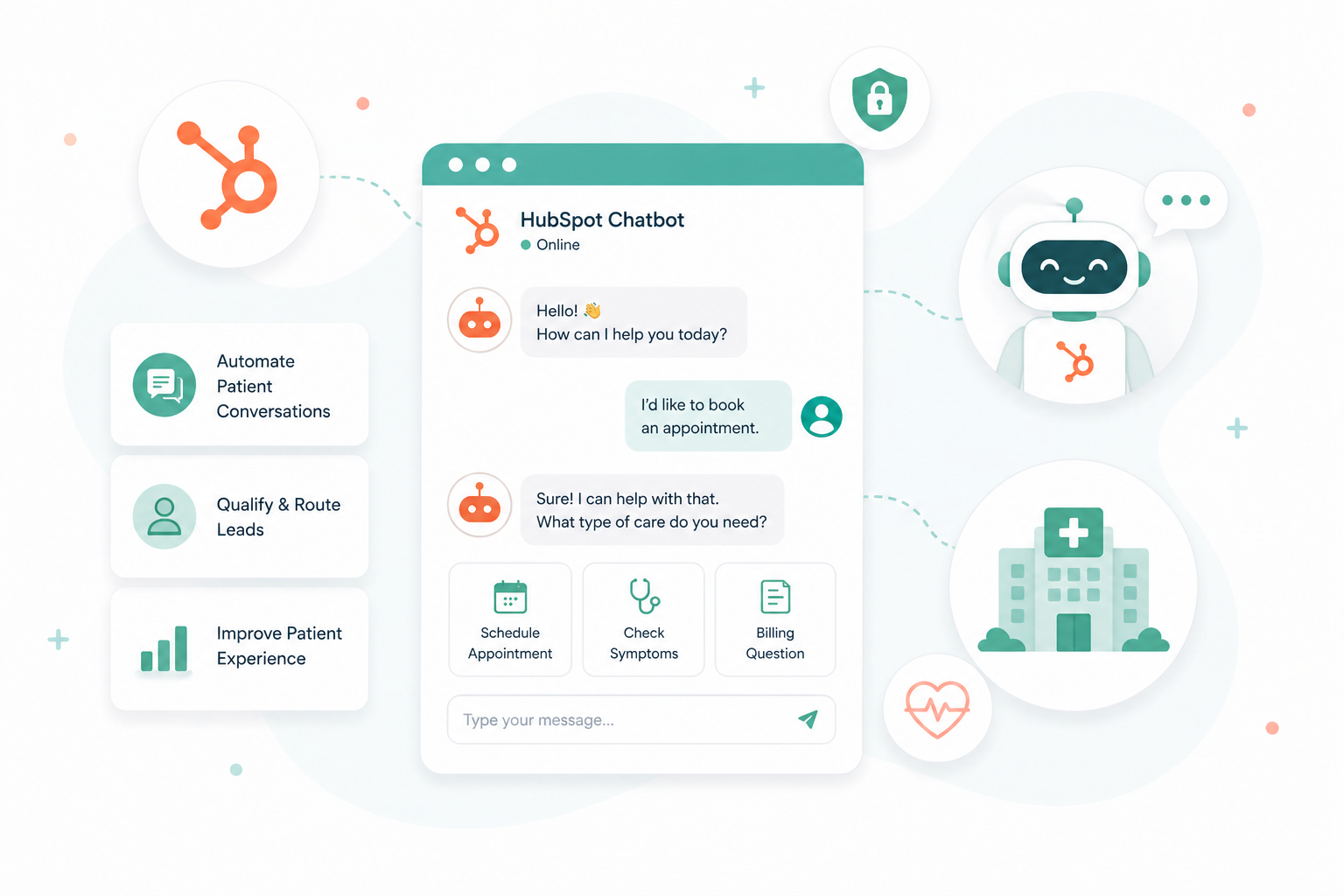
Can You Use HubSpot Chatbots in Healthcare?

Can You Use HubSpot Chatbots in Healthcare?

Can You Use HubSpot Chatbots in Healthcare? Yes, you can use HubSpot chatbots in healthcare, but not for anything involving patient health...

Read More
HubSpot vs Traditional Healthcare CRM Systems

HubSpot vs Traditional Healthcare CRM Systems

Healthcare is shifting toward a full patient experience, where you’re expected to deliver the same smooth digital interactions found in retail and...

Read More