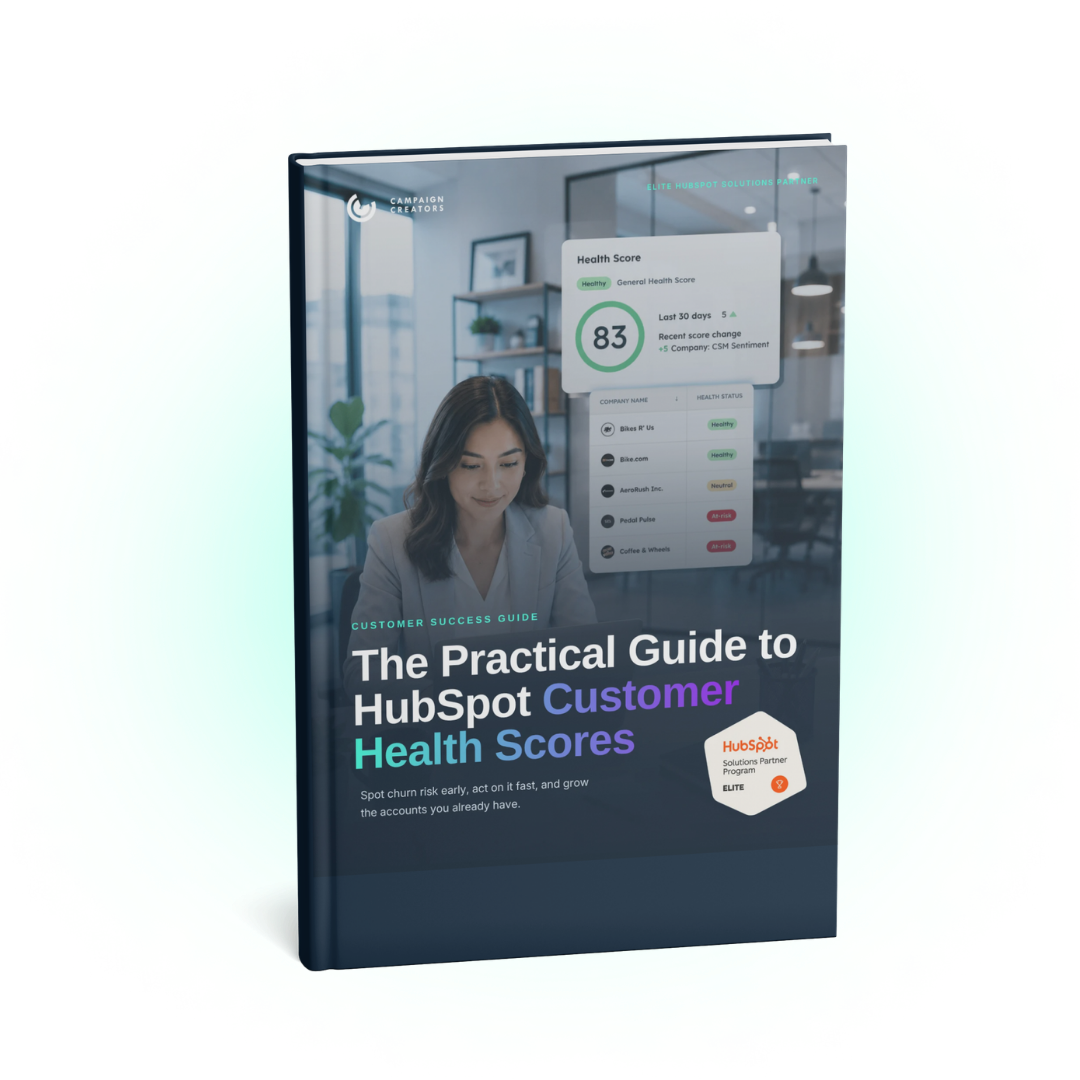
Guide to HubSpot Customer Health Scores
Keeping a customer costs far less than winning a new one, and by the time churn rate and renewal rate report what happened, the account is already gone. A customer health score works the other way around.Health scoring is built into HubSpot customer success workspace. What separates a score your CSMs act on from one they quietly ignore is which signals you pick, how you weight them, and what happens the moment a status changes.
What You’ll Find Inside
You finish with a scoring model your team believes and a workflow that fires when an account slips. Ten chapters take you from picking five to eight signals your CSMs trust, through the eight-step build in the customer success workspace, to the weighting models, thresholds, and retention plays that turn the number into action. A quarterly review cycle and five common mistakes close it out.
-
What is a customer health score?
A customer health score is one number that sums up how strong your relationship with an account is right now. It reads the signals a customer gives off while they are still with you, such as meetings attended, tickets opened, survey responses, and product usage, then adds them up so your team can see which accounts need attention this week. Churn rate and renewal rate report what already happened. A health score points forward.
-
Which HubSpot plan do I need to build a customer health score?
Health scores come with Service Hub Professional and Enterprise. Anyone who builds or uses a score needs an assigned Service Seat, and building one takes Super Admin or Manage Customer Success Settings permissions. Professional gives you one customer success workspace and the full scoring builder. Enterprise adds up to five team workspaces, more than one health score, custom object scoring, and reporting on score distribution and average score over time.
-
What signals should go into a customer health score?
Start with five to eight signals your CSMs already trust. Behavior signals cover product usage and adoption, completed meetings and answered calls, and support activity such as open tickets and time to close. Commercial signals cover renewals, expansion, and repeated late payments. Feedback signals cover NPS, CSAT, and CES responses, plus your team's own read on the account. A short model is easier to explain and easier to correct when a CSM disagrees with it.

-
Can HubSpot score product usage data from my own application?
Yes, once the data lands in HubSpot. Health scores read properties and events on contacts and companies, so logins and feature usage sitting in your product or an analytics tool need a route onto the record first. Send the numbers into a company property using the HubSpot API, a data sync app, or your integration platform. Enterprise accounts can also send product actions in as custom events and score them as event criteria.
-
What is the difference between health score and health status?
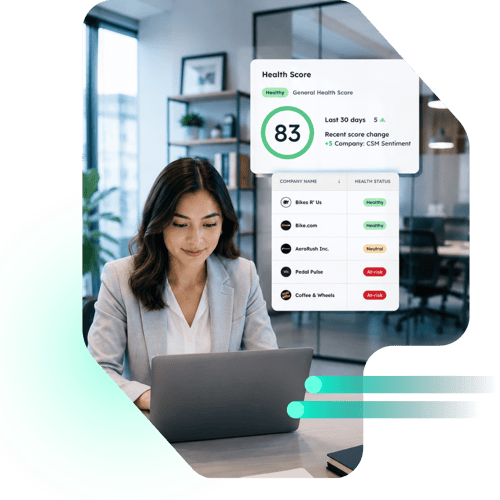
Health score is the total points an account has earned from your rules. Health status is the label attached to that score, such as Healthy, Neutral, or At-risk. Your team reads the label first, and the number explains it. HubSpot creates both as properties when you turn a score on, so you can sort a view, filter a list, trigger a workflow, or build a report on either one.
- Customer success managers who want to know which accounts to open on Monday, not which ones they lost last quarter
- Service leaders paying for Service Hub Professional or Enterprise who have never switched health scoring on
- RevOps teams asked to build a scoring model and unsure which signals hold up or how to weight them
- Teams whose product logins and feature usage sit outside HubSpot and need a route onto the company record before any of it can be scored
- Anyone running a health score that CSMs work around because nobody trusts the number
What's New
HubSpot Insights from Campaign Creators.
10 min read
HubSpot Onboarding Services: What's Included, Cost, Process & How to Choose
Sep 10, 2026
8 min read
What to Look for in a HubSpot Implementation Partner
Sep 8, 2026