



7 min read

How Are Enterprise Websites Optimizing Conversions for AI Search?

How Are Enterprise Websites Optimizing Conversions for AI Search?


Enterprise website conversion optimization connects far beyond landing pages and CTA buttons. Modern enterprise CRO frameworks integrate CRM data, AI-driven search visibility, sales alignment, and revenue attribution into a single operating system.

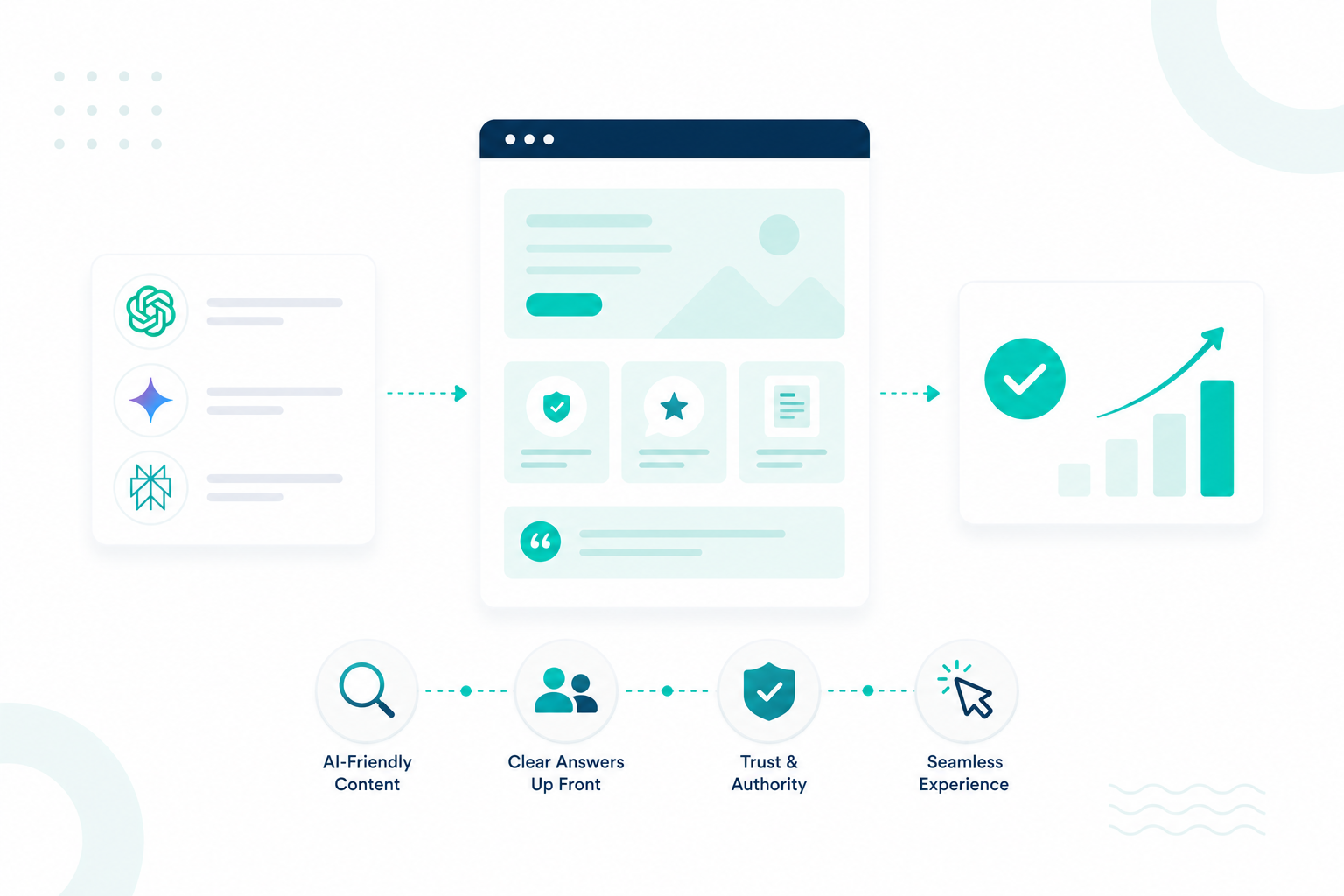
Many enterprise companies generate traffic yet struggle to turn visibility into qualified pipeline growth. AI-driven search experiences, fragmented customer journeys, and disconnected reporting systems have changed how buyers research and evaluate vendors. A stronger CRO framework helps enterprises reduce friction, improve buying experiences, and connect website performance directly to revenue outcomes.

Platforms like HubSpot help enterprises centralize customer data, automate workflows, personalize experiences, and measure conversion activity across the full funnel.

Key Takeaways

  • Enterprise CRO focuses on pipeline growth, buyer intent, and revenue attribution rather than isolated conversion metrics.
  • AI search experiences are reducing traditional click behavior, increasing the importance of structured and highly extractable content.
  • HubSpot helps enterprises centralize CRM data, behavioral insights, automation workflows, and personalization systems into one conversion framework.
  • SEO, GEO, and CRO operate as one connected growth system because visibility and conversion increasingly depend on content quality, machine readability, and buyer experience.

Why Enterprise Website Conversion Strategies are Changing in the AI Search Era

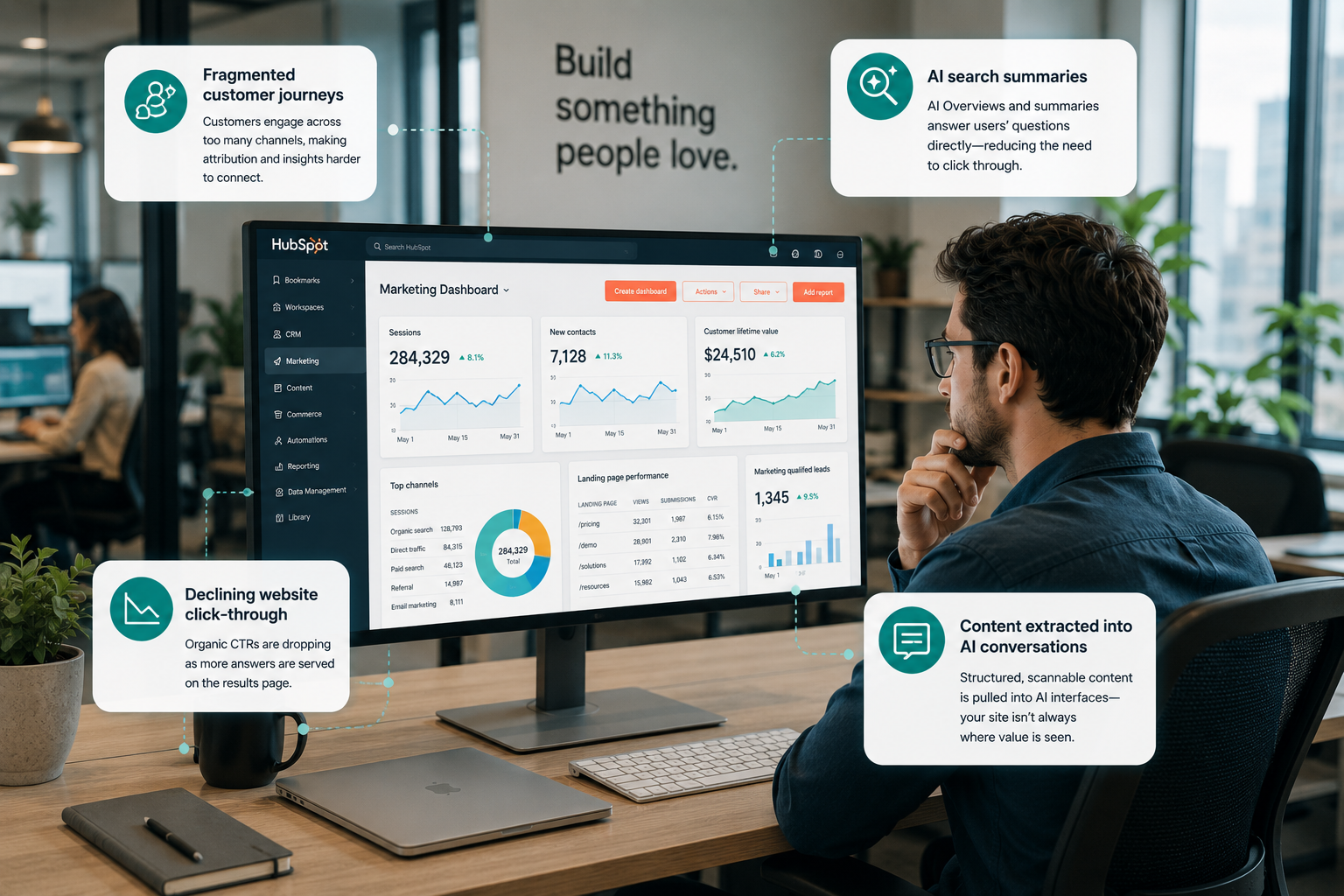
enterprise marketing dashboard displayed across multiple floating browser windows, showing fragmented customer journeys, AI search summaries, declining website click-through graphs, and structured content blocks being extracted into conversational AI interfaces, with a professional corporate aesthetic, soft lighting, and subtle data visualization elements that communicate how AI search is changing enterprise website conversion strategies.

Enterprise conversion strategies are changing because AI search systems have altered how buyers discover, evaluate, and interact with information online.

Traditional search behavior often pushed users toward multiple website visits before decisions were made. AI Overviews, generative search engines, and conversational AI systems now summarize information directly inside search experiences. This reduces click-through opportunities and increases the importance of authoritative, structured, and extractable content. Research from the Pew Research Center found that users clicked source websites only 8% of the time when AI summaries appeared, compared to 15% without summaries.

Another recent research also found that Google AI Overviews appear heavily for question-based queries and frequently surface sources differently from traditional rankings.

This shift creates several enterprise CRO challenges:

  • Buyers consume more information before visiting a website
  • Decision journeys involve more fragmented touchpoints
  • Traditional traffic growth no longer guarantees pipeline growth
  • Brand trust and topical authority influence visibility more heavily
  • Content clarity impacts both discoverability and conversions

Enterprise websites now need stronger content architecture, better buyer journey alignment, and tighter CRM integration to maintain conversion efficiency in AI-driven search environments.

What an Enterprise Conversion Optimization Framework Inside HubSpot Includes

An enterprise conversion optimization framework inside HubSpot connects CRM data, behavioral insights, automation workflows, content systems, and attribution reporting into one centralized operating model.

Many enterprise marketing teams operate across disconnected systems. Website analytics, CRM records, lead scoring, advertising platforms, and sales reporting often sit in separate environments. This fragmentation creates reporting gaps and weakens optimization decisions.

HubSpot helps enterprises unify these systems through shared customer records, centralized automation, and lifecycle tracking.

A strong enterprise CRO framework typically includes:

Framework Area

Purpose

CRM integration

Connects website behavior with customer records

Behavioral tracking

Identifies high-intent activity across pages and campaigns

Lead scoring

Prioritizes sales-ready prospects

Workflow automation

Improves follow-up speed and nurturing

Personalization

Adapt experiences based on user behavior

Attribution reporting

Connects conversions to revenue outcomes

Content optimization

Improves visibility and engagement

Predictive lead scoring also plays a larger role in enterprise optimization. Recent reporting shows AI-based lead scoring improves accuracy by 30% and reduces false positives by 25%.

Modern enterprise CRO frameworks also require tighter collaboration between marketing, RevOps, sales, and customer success teams because conversion performance now spans the full customer journey.

Where Enterprise Websites Lose High-Intent Buyers Across the Funnel

enterprise buyers receiving personalized website experiences based on industry, engagement history, and buying stage, with AI systems analyzing first-party behavioral data across dashboards, CRM integrations, lifecycle email flows, and predictive conversion models, designed with modern enterprise software visuals and subtle data-driven interface elements.

Enterprise websites commonly lose high-intent buyers through friction, disconnected messaging, weak buyer journey alignment, and poor transition points between discovery and conversion.

Many enterprise websites attract qualified traffic but create unnecessary complexity during evaluation. Buyers often encounter unclear navigation, fragmented content paths, inconsistent messaging, or forms that create too much resistance early in the journey.

Several friction points frequently reduce enterprise conversion performance:

1. Unclear Value Communication Creates Early Buyer Drop-Off

Buyers make fast judgments about relevance and business fit. Weak messaging creates confusion immediately after arrival.

Many enterprise websites rely on generic positioning, such as:

  • “Industry-leading platform”
  • “Transform your business”
  • “Innovative enterprise solutions”

These statements fail to explain:

  • What problem does the company solve
  • Who does the solution help
  • What business outcome buyers should expect
  • Why the solution differs from alternatives

Research around B2B digital buying behavior shows buyers often enter evaluation stages already familiar with vendors and shortlist preferences. This increases pressure on enterprise websites to communicate value quickly and clearly.

Strong enterprise CRO frameworks position the core value proposition immediately through:

  • Outcome-focused headlines
  • Industry-specific messaging
  • Buyer-stage clarity
  • Operational and financial impact
  • Supporting proof elements

When messaging lacks specificity, buyers struggle to justify continued evaluation internally.

2. Fragmented Buyer Journeys Break Momentum Across the Funnel

Enterprise buying journeys rarely follow linear paths. Buyers move between educational content, product evaluation, pricing research, procurement validation, and stakeholder discussions continuously.

Different stakeholders need different forms of validation:

  • Finance teams evaluate ROI
  • IT teams evaluate security
  • Operations teams evaluate implementation risk
  • Executives evaluate strategic fit
  • End users evaluate usability

Many enterprise websites separate these resources into disconnected sections without guiding buyers toward the next stage naturally. A visitor may read a blog article, visit a product page, search for pricing, look for integrations, try finding customer proof, or leave the site without reaching a conversion point. This creates silent funnel leakage.

Enterprise CRO frameworks improve buyer progression through:

  • Intent-based internal linking
  • Role-specific pathways
  • Connected content ecosystems
  • Persistent navigation logic
  • Contextual CTAs tied to buyer stage

The goal is to reduce cognitive effort during evaluation.

3. Weak Trust Signals Slow Enterprise Decision-Making

Enterprise purchases involve financial risk, operational risk, and career risk for decision-makers. Buyers need evidence that the vendor is stable, credible, secure, and proven before internal consensus happens.

Enterprise websites commonly weaken trust when they:

  • Hide pricing expectations completely
  • Lack of implementation clarity
  • Provide shallow case studies
  • Avoid technical documentation
  • Present vague product claims
  • Show outdated branding or UX
  • Create inconsistent messaging between marketing and sales

Gartner research also found that 69% of B2B buyers report inconsistencies between website information and sales conversations. This creates uncertainty during high-stakes evaluations. Strong enterprise conversion systems reduce perceived risk through:

  • Detailed case studies
  • ROI validation
  • Customer logos
  • Product walkthroughs
  • Security documentation
  • Integration details
  • Transparent onboarding expectations
  • Executive-level proof points

Trust acceleration has become a major CRO function in enterprise environments.

4. Poor Conversion Architecture Creates Invisible Funnel Friction

Many enterprise websites technically generate leads but create friction during conversion moments. Common issues include long demo request forms, aggressive qualification gates, weak CTA hierarchy, generic conversion messaging, poor mobile experiences, confusing navigation, and inconsistent user flows. Buyers expect digital experiences that feel efficient and intuitive.

Enterprise CRO frameworks improve conversion architecture through progressive form strategies, multi-step conversion paths, intent-based CTAs, cleaner information hierarchy, and faster page performance. These changes reduce friction without weakening lead quality.

5. AI Search Behavior Is Increasing Hidden Funnel Losses

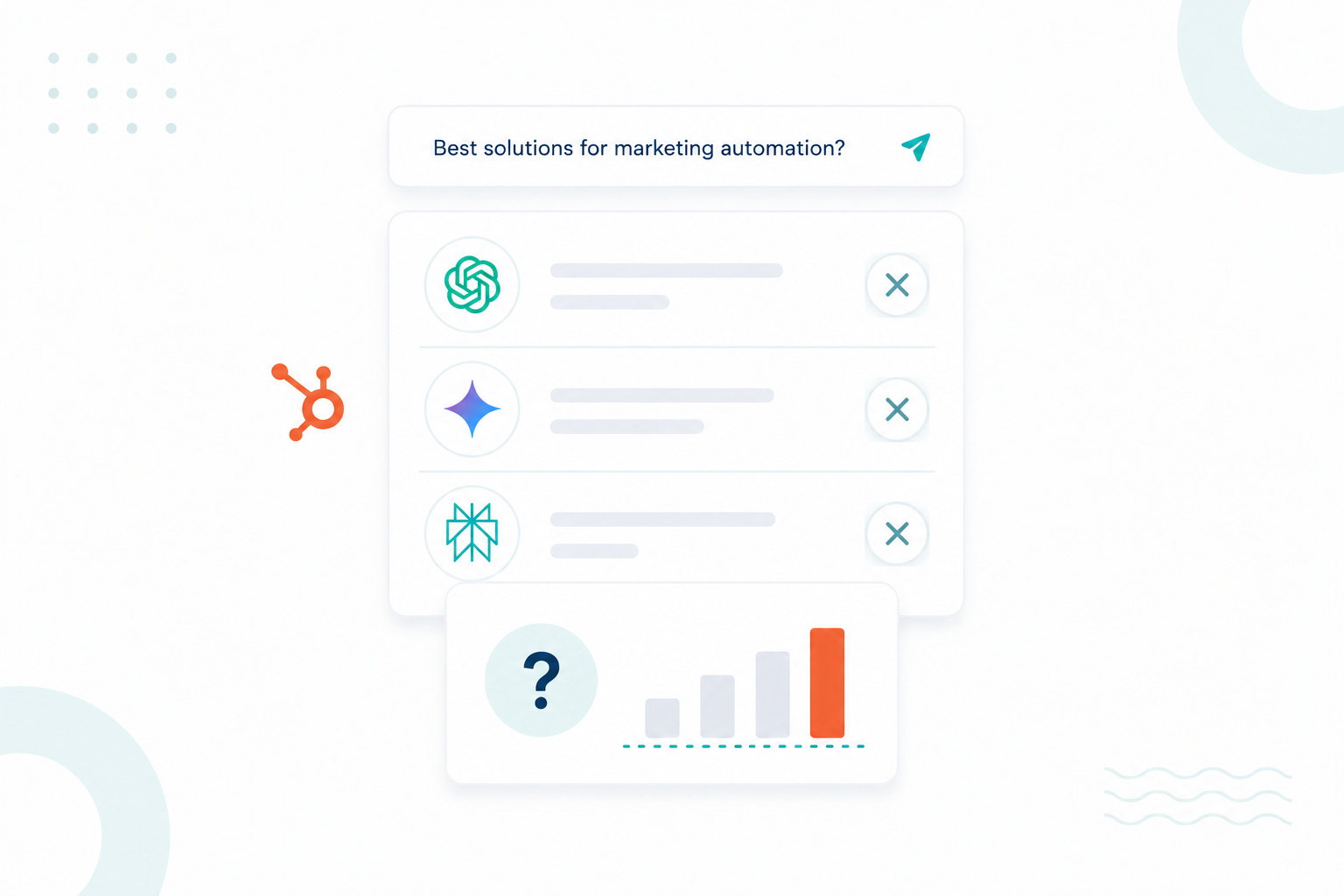
AI-driven search behavior changes how buyers interact with enterprise websites before visits even happen. Many buyers now use AI summaries during research, compare vendors through generative search, consume extracted answers without clicking, and arrive later in the buying cycle. This compresses evaluation windows and increases pressure on enterprise websites to:

  • Build trust immediately
  • Deliver clear answers quickly
  • Create extractable content structures
  • Reduce buyer confusion fast

Enterprise websites that fail to adapt to AI-driven buying behavior risk losing high-intent buyers before meaningful engagement even begins.

How AI, Personalization, and First-Party Data Support Enterprise CRO

enterprise buyers receiving personalized website experiences based on industry, engagement history, and buying stage, with AI systems analyzing first-party behavioral data across dashboards, CRM integrations, lifecycle email flows, and predictive conversion models, designed with modern enterprise software visuals and subtle data-driven interface elements.

AI, personalization, and first-party data help enterprises create more relevant buyer experiences, improve lead qualification accuracy, and optimize conversions across complex customer journeys.

Buyers expect experiences that reflect their industry, intent, company size, buying stage, and engagement history. Static websites struggle to meet these expectations.

First-party data gives enterprises stronger visibility into behavioral patterns such as:

  • Pages viewed
  • Content downloads
  • Product interest
  • Return visits
  • Engagement frequency
  • Funnel progression

AI systems then analyze these signals to support personalization, predictive scoring, automated segmentation, and conversion optimization.

HubSpot's recent studies show that 93% of marketers report that personalization improves leads or purchases. There is also some other research that shows AI personalization systems contribute strongly to revenue growth and operational efficiency.

HubSpot supports these capabilities through CRM-connected personalization, workflow automation, behavioral segmentation, and AI-enhanced marketing operations.

Personalization now influences several enterprise CRO areas:

  • Dynamic CTAs
  • Industry-specific messaging
  • Lifecycle-based email nurturing
  • Personalized landing experiences
  • Predictive lead prioritization
  • Behavioral segmentation

This creates more relevant buying experiences and improves conversion quality across longer sales cycles.

Why SEO, GEO, and CRO are Converging Into One Enterprise Growth System

SEO, GEO, and CRO are converging because visibility, extractability, user experience, and conversion performance now influence each other directly.

Traditional SEO focused heavily on rankings and traffic acquisition. AI-driven search experiences now evaluate content quality, authority, semantic clarity, and extractable structure more aggressively.

Generative Engine Optimization (GEO) focuses on improving visibility inside AI-generated answers and conversational search systems as AI-referred traffic and AI-generated search experiences continue growing rapidly across enterprise search behavior. This shift changes enterprise website priorities:

Traditional SEO Focus

Modern Enterprise Growth Focus

Rankings

Visibility across AI systems

Traffic volume

Qualified buyer engagement

Keywords

Buyer intent and topical authority

Isolated pages

Connected content ecosystems

Clicks

Pipeline influence

Enterprise content now performs multiple functions simultaneously:

  • Supports search visibility
  • Improves AI extractability
  • Educates buyers
  • Builds authority
  • Creates conversion opportunities
  • Feeds CRM enrichment systems

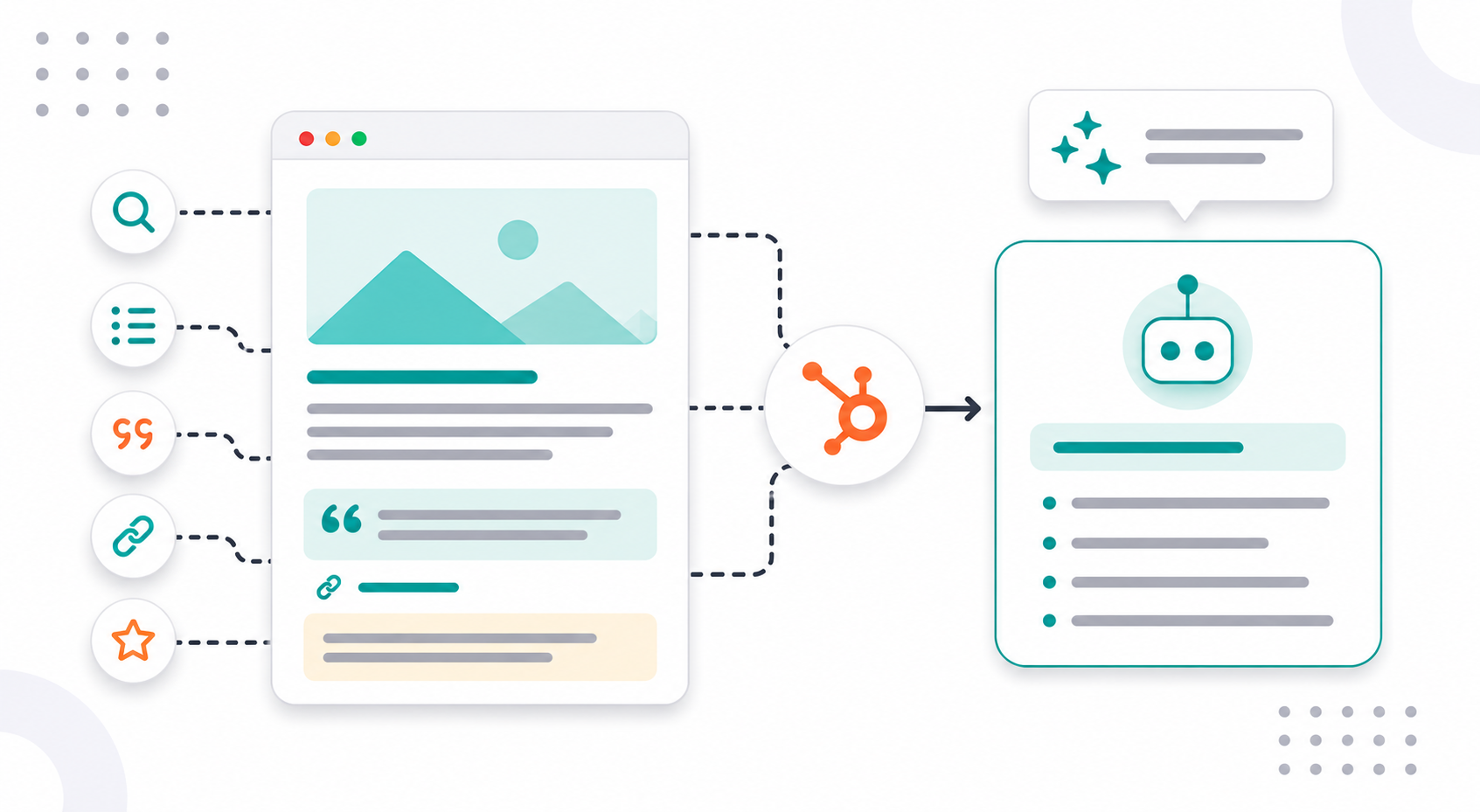
Question-based headings, concise answers, structured formatting, and machine-readable content improve both discoverability and conversion usability.

This convergence also increases the importance of operational alignment between SEO teams, content strategists, CRO specialists, and RevOps functions.

What Enterprises Should Measure to Connect Website Conversions to Revenue

Enterprises should measure pipeline influence, SQL quality, opportunity creation, revenue attribution, and customer progression metrics to connect website conversions directly to business growth.

Traditional CRO reporting often focused heavily on form fills, clicks, or conversion percentages. These metrics provide limited visibility into actual commercial impact. Enterprise CRO frameworks perform better when reporting connects marketing activity with revenue outcomes.

Key enterprise CRO metrics include:

Metric

Why It Matters

Sales-qualified leads (SQLs)

Measures conversion quality

Opportunity creation rate

Tracks pipeline influence

Pipeline velocity

Measures buyer progression speed

Revenue attribution

Connects marketing to closed revenue

Lead-to-customer conversion rate

Evaluates funnel efficiency

Customer acquisition cost (CAC)

Measures acquisition efficiency

Multi-touch attribution

Identifies influential touchpoints

HubSpot can help enterprises centralize attribution visibility through lifecycle tracking, CRM-connected reporting, automation workflows, and revenue analytics, giving teams clearer measurement frameworks to identify which content, campaigns, channels, and conversion paths contribute most strongly to revenue growth.

Start Optimizing Enterprise Conversions for AI Search!

AI search experiences, fragmented customer journeys, and rising buyer expectations continue to reshape how enterprise websites perform. Companies that centralize customer data, improve extractable content structures, reduce buyer friction, and connect marketing activity directly to revenue gain stronger operational visibility and more scalable growth systems.

HubSpot supports this shift through unified CRM infrastructure, workflow automation, behavioral tracking, personalization capabilities, and attribution reporting that connect website activity with pipeline performance.

If you want assistance improving enterprise CRO or HubSpot-driven growth systems, Campaign Creators helps enterprises build scalable conversion strategies that connect marketing performance more directly to revenue outcomes.

Frequently Asked Questions

What Is Generative Engine Optimization (GEO) in Enterprise Marketing?

Generative Engine Optimization is the process of structuring content so AI search systems can understand, trust, and reference it within AI-generated answers. It focuses on extractable content, semantic clarity, topical authority, and conversational search visibility across AI-driven discovery platforms.

What Makes an Enterprise Landing Page Convert Better?

High-converting enterprise landing pages combine clear business outcomes, strong trust signals, buyer-stage alignment, fast page performance, and frictionless conversion paths.

Which Enterprise Website Pages Usually Generate the Most Conversions?

Websites commonly generate the highest conversion rates from product pages, pricing pages, solution pages, demo pages, customer case studies, and high-intent comparison content.


How Can Enterprises Reduce Friction Across Long Buying Cycles?

Enterprises reduce buying friction through clearer buyer journeys, faster lead routing, personalized nurturing, role-specific content, simplified conversion paths, and CRM-connected automation.

How Should Enterprises Structure Content for AI Search Visibility?

Companies should structure content using question-based headings, concise answer-first formatting, short content chunks, semantic organization, and machine-readable formatting.

How to Build an AEO Prompt Strategy Inside HubSpot

How to Build an AEO Prompt Strategy Inside HubSpot

ChatGPT, Google Gemini, and Perplexity are now part of the buying journey, influencing how customers research brands and make decisions. Because of...

Read More
How to Turn HubSpot AEO Recommendations into a Content Action Plan

How to Turn HubSpot AEO Recommendations into a Content Action Plan

A I s earch visibility is becoming a bigger part of how buyers discover, compare, and evaluate companies. Many brands still track rankings and...

Read More
Why Your Brand Is Not Showing Up in ChatGPT, Gemini, or Perplexity

Why Your Brand Is Not Showing Up in ChatGPT, Gemini, or Perplexity

Search behavior changed rapidly across 2025 and 2026. People now ask questions directly inside AI platforms like OpenAI ChatGPT, Google Gemini, and...

Read More