


Why Your Brand Is Not Showing Up in ChatGPT, Gemini, or Perplexity
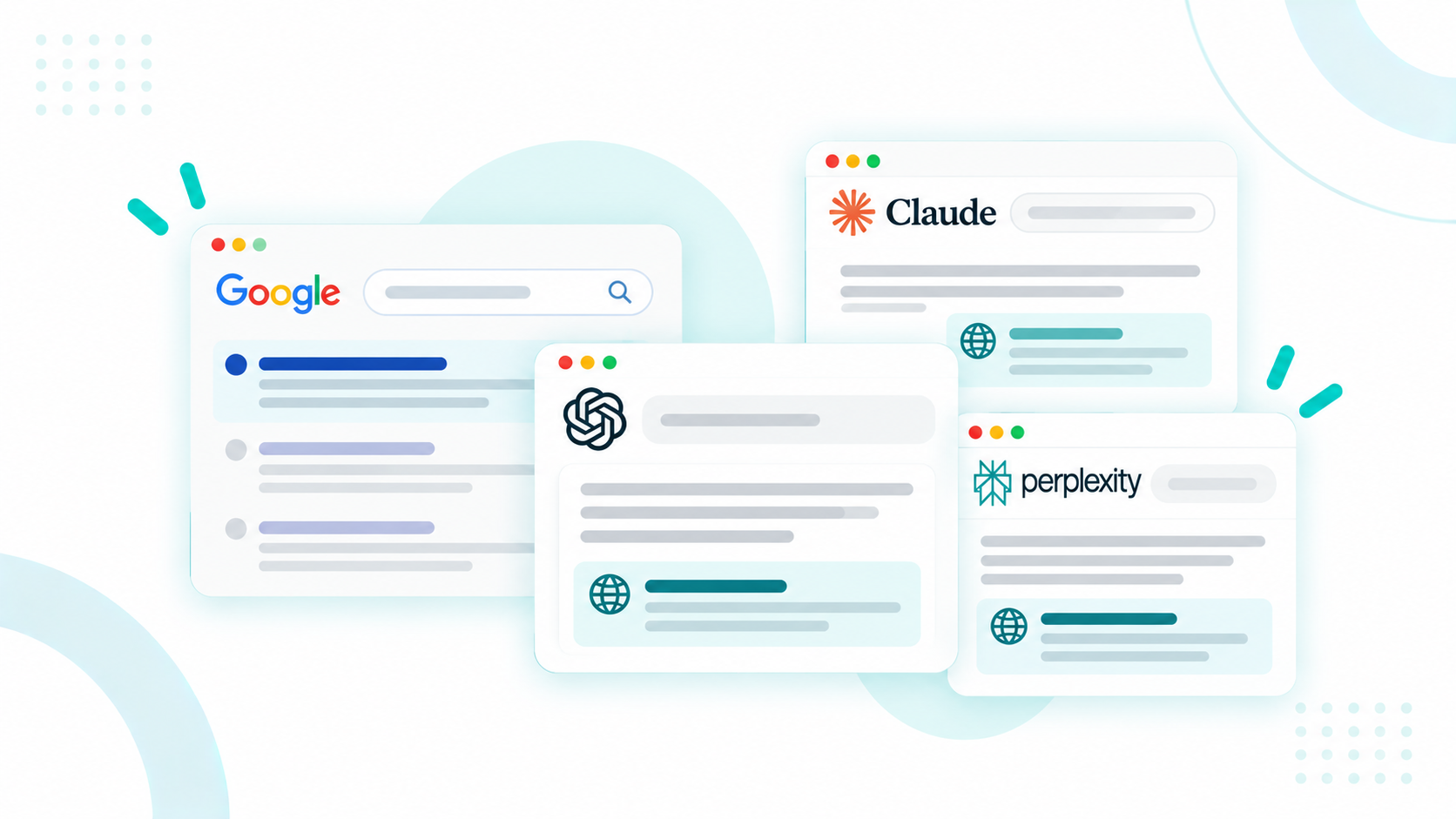
Search behavior changed rapidly across 2025 and 2026. People now ask questions directly inside AI platforms like OpenAI ChatGPT, Google Gemini, and...
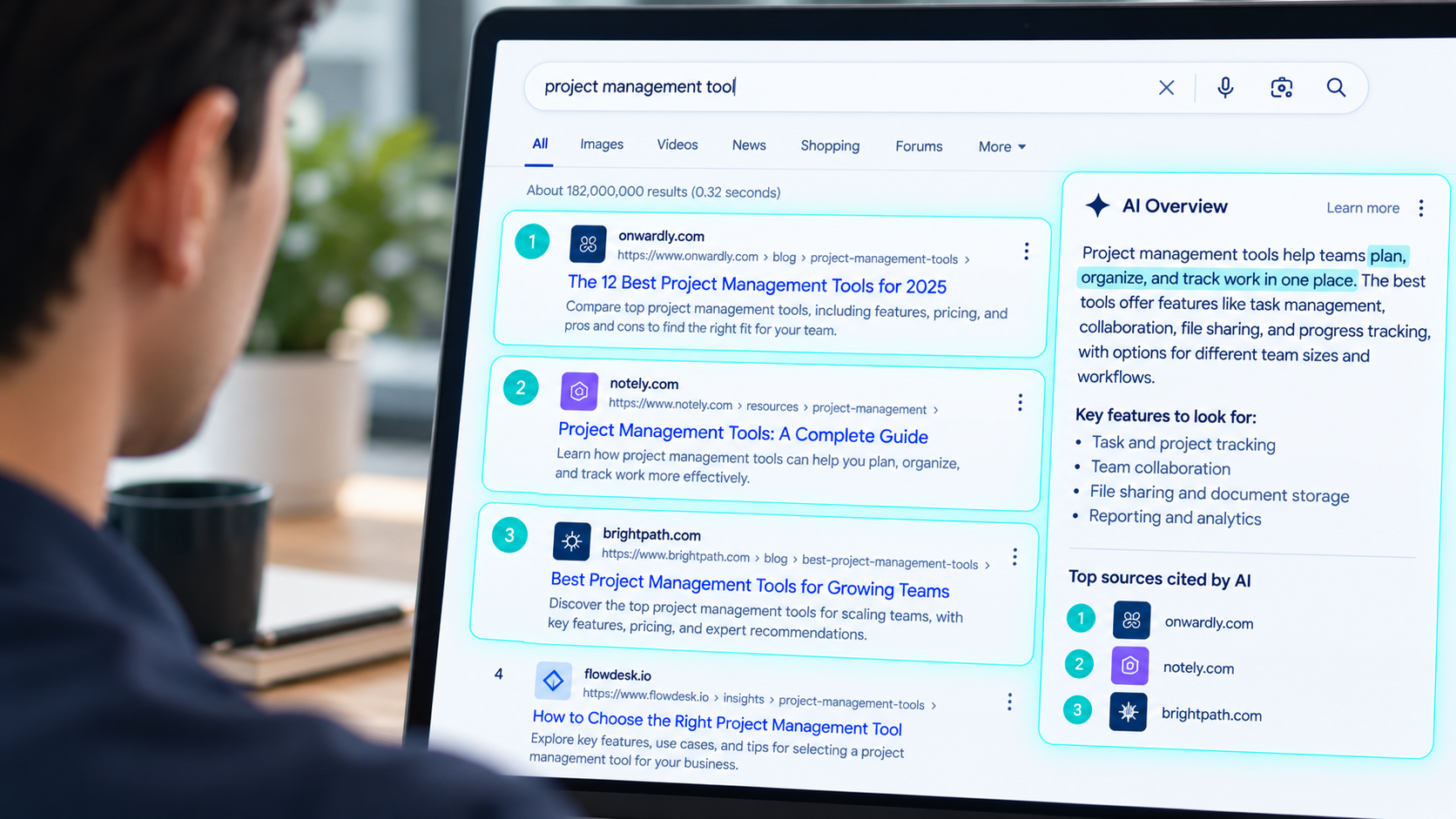
Ranking on Google still helps your pages get cited in AI search, but it no longer guarantees it. Pages in the top three search results get cited by AI engines almost every time. Yet more than half of the top AI citations come from pages outside the top 10. AI engines cite brands they understand and trust across the web, not just pages that rank.
If your SEO reports still focus on position tracking, you're seeing only half of how buyers find you now. That gap sits at the center of a recent workshop by GrowthX CEO Marcel Santilli, drawn from 10,000 hours of AEO work. His case is that most AI visibility scores chase a moving target, and that brands win by fixing what AI engines read about them first. We will take a closer look at the key points from the talk below.
If your team wants to know how visible your brand is in AI answers, our SEO & AEO team helps HubSpot users turn that question into a clear plan.

AI engines cite top-ranking pages often, but rankings explain only part of what gets cited. A strong Google position gives a page a head start, but a large share of AI citations go to pages that don't rank at all.
Three large 2025–2026 studies show both sides of the picture.
|
Data set |
What it found about ranking |
What it found about non-ranking pages |
|
548,534 pages retrieved by ChatGPT across 15,000 prompts (March 2026) |
Pages ranking #1 on Google were cited 43.2% of the time, 3.5 times more often than pages beyond the top 20 |
ChatGPT left 85% of the pages it retrieved uncited |
|
1,645 AI citations across 11 AI platforms (August 2026 snapshot) |
The top three traditional results were cited by at least one AI platform 98.9% of the time |
55.2% of top-10 AI citations did not rank in the traditional top 10 |
|
ChatGPT's 1,000 most-cited pages (September 2025) |
Cited pages that did rank had a median domain rating of 90 |
The engines also behave very differently. In one snapshot, sources with no measured organic ranking made up 12.2% of Perplexity citations but 77.0% of ChatGPT citations. Perplexity's results looked a lot like Google's. ChatGPT didn't closely match any search index.
Our analysis is that a high ranking gets your page into the room, especially on Perplexity. It doesn't decide who gets quoted, and it explains little about ChatGPT. Keep investing in SEO, but stop treating citations as an automatic reward for ranking.
Ranking is about where your page appears in a list of results. Representation is about your brand becoming part of the answer itself. That's the real difference between SEO and AEO, and it's bigger than moving from Google to ChatGPT.
|
Ranking (SEO) |
Representation (AEO) |
|
|
Core question |
Where does our page appear? |
Does our brand become part of the answer? |
|
What competes |
Individual pages |
Passages, facts, and brand mentions from many sources |
|
Strongest inputs |
Relevance, links, technical health |
Entity clarity, consistent facts, third-party mentions, structured content |
|
What the buyer sees |
A link they may click |
A summary that may name you, cite you, or leave you out |
|
How you measure it |
Position, impressions, clicks |
Visibility percentage, share of voice, citations, sentiment |
|
Stability |
Fairly steady from day to day |
Changes with each run, model, and prompt |
SEO is still the foundation, and a page that ranks well is easier for AI engines to find. The engines don't agree with each other, though. In one study, no two AI platforms shared more than 24.1% of the pages they cited.
AEO adds a layer on top of SEO. The unit of competition becomes your brand's whole information footprint, not one URL. That means content strategy has to cover the information ecosystem around your brand. Keywords, pages, and rankings are still part of it. So are your third-party mentions, customer proof, and how consistently your facts appear across the web.
If AEO is new to your team, our explainer on what AEO in HubSpot is and how brands get cited covers the basics.
The biggest takeaway from Marcel Santilli's workshop is that you can't track your way into AI answers. You earn a place in them by fixing what AI engines read about you, and you judge progress the way you'd read a brand survey and not a ranking report.
Santilli, the CEO of GrowthX, gave the 90-minute session at HubSpot's Unbound 2026 in Boston, drawing on his team's hands-on AEO work with customers. Here's what we took from it, and where we see things a little differently for HubSpot teams.
Santilli opened by questioning the numbers most AEO dashboards report. His test is simple. A metric needs a stable object, a repeatable observation, and a known denominator, and AI answers offer none of the three.
We think this is the most useful point in the talk. It explains why teams feel lost when a visibility score jumps or drops for no clear reason. It also lands on the move from ranking to representation, because if the answer changes on every run, the one thing you fully control is the information it draws from.
Santilli treats the website as the canonical source for buyers, answer engines, and training bots. As he put it,
"Your website is your public version of your context and is your public knowledge base."
He orders the work from what you control, to what you distribute, to what you earn. This corrects a common mistake. It's tempting to chase Reddit threads and listicle placements while your own product pages still describe the company three different ways. Fix the source first, and every mention you earn later points back to one consistent story.
In the session, Santilli builds every strategy, brief, and page on documented company context. That covers who you are, what you sell, who you serve, and the jobs your buyers are trying to get done.
We agree, and for HubSpot teams we'd go one step further. Much of that context already sits in your CRM, in product, persona, lifecycle, and deal records. A messy CRM doesn't stay inside sales ops. It leaks into your content briefs, your AEO prompts, and, eventually, the answers AI engines give about you.
Santilli treats keyword lists as a faulty data set and replaces them with specific buyer questions, grouped into topics and ranked by fit, demand, and buying intent. His goal for marketing is blunt.
"I propose we just think about how to consistently become by far the best answer to every question that matters."
The logic holds up. A keyword squeezes dozens of intents into two or three words, while an AI prompt carries one person's full situation.
Website-first is the right order, but it isn't a reason to wait on earned media. Only 32.3% of ChatGPT's top 1,000 citations came from content types brands can realistically influence, such as educational pages, reviews, news, and blogs. Those seats are scarce and earned mentions build slowly, so outreach should start while the website work is still underway.
The workshop sharpened a view we already hold. AEO isn't really a new channel. It's a test of how well your website, your CRM, and your reputation agree with each other.
AI engines include brands they can identify clearly, confirm across several sources, and match to the buyer's question. No single tactic does that. It comes from seven signals working together.
These are correlations, not proven causes. Large brands naturally have more mentions, more content, and more visibility. Even so, the pattern is consistent enough to act on, and our guide to improving third-party brand mentions with HubSpot AEO shows how to find the sources worth pursuing.
Prompt tracking can't work like rank tracking because AI answers have no stable ranking to track. The answer changes with every run, model, user, and wording of the prompt.
In his AEO workshop, GrowthX CEO Marcel Santilli argued that an AI visibility score needs three things before it means anything. It needs a stable object, a repeatable observation, and a known denominator. Most prompt dashboards have none of the three, because the models, the context, and the people asking keep changing.
Research from SparkToro and Gumshoe backs this up with numbers. Across 2,961 runs of 12 prompts, ChatGPT and Google's AI returned the same list of brands less than once in 100 runs. The same list in the same order showed up closer to once in 1,000 runs.
Real prompts vary just as much. When 142 people wrote their own prompt for the same headphone question, the average semantic similarity between prompts was only 0.081. Yet the same four brands still appeared in 55–77% of the 994 answers. Position was noise, but presence was a real signal.
Measure AI visibility the way you'd run a brand survey. Track how often your brand appears across many prompts over several weeks, and track mentions, citations, and accuracy as separate signals.
Marcel Santilli's workshop splits AI visibility into five areas, which are presence, influence, reputation, perception, and alignment. Here's how we map each one to the reports in HubSpot AEO.
|
Area |
Question it answers |
Where to look in HubSpot AEO |
|
Presence |
Do we show up for the questions our buyers ask? |
Brand visibility (prompt coverage across engines) |
|
Influence |
Do engines use our own content as a source? |
Owned domain citation rate vs. competitors, Top owned citations |
|
Reputation |
Do third parties back us up? |
Citations by channel, Citations with brand mention rate vs. competitors |
|
Perception |
How positively do engines describe us? |
Sentiment score and Sentiment over time |
|
Alignment |
Does the description match our positioning? |
No report covers this, so review a sample of answers by hand each month |
HubSpot AEO is available with Marketing Hub Professional or Enterprise, or as a standalone HubSpot AEO subscription. Professional tracks up to 25 prompts a day and Enterprise up to 50, across ChatGPT, Gemini, and Perplexity. That limit makes prompt choice important, so follow these steps.
For a step-by-step walkthrough, see our guide to benchmarking AI visibility against competitors.
Start with the website you control, then build the content and mentions around it, then measure and refine. We organize that work into three layers: Data Foundation, Connected Experience, and AI & Optimization.
AI engines can only describe you accurately if your own facts are accurate and consistent. Audit your homepage, About page, product pages, and pricing page so each one describes the same company, category, and audience.
Your CRM belongs in this layer too. In Marketing Hub Professional and Enterprise, HubSpot AEO offers CRM-based prompt suggestions, so clean product, persona, and deal data leads to more relevant prompts to track.
Replace keyword lists with the actual questions buyers ask. Traditional keyword tools often miss these specific queries, so focus on understanding what your audience wants to know. Then assign each page a clear purpose.
Outside your site, earn mentions on the review sites, publications, communities, and YouTube channels your buyers already trust.
Run visibility checks in waves, then fix what the data shows. Look first at pages that already rank but aren't cited, since those are the closest wins. The Top owned citations report in HubSpot AEO shows which of your pages engines already trust, so you can model new pages on them.
If you want the full approach in one place, our modern guide to AEO and AI search visibility explains how AI search is changing the way buyers research, compare, and choose solutions.
Our team starts with an AEO audit that shows where you appear, where competitors win, and which buyer questions count most. From there, we set up HubSpot AEO around your ICPs, products, and prompts, then restructure existing pages into answer-first content that engines can cite.
As a HubSpot Elite Solutions Partner, we build this work inside the HubSpot portal your team already uses. If you're ready to turn rankings into representation, see how our HubSpot SEO & AEO services work.
Ranking on Google can improve your chances of being cited by AI engines, but it does not guarantee that your brand will appear in their answers. Representation depends on clear, consistent brand facts, answer-first content, and mentions across the sources AI engines trust. Measure it as visibility across many prompts over time.
Want to know where your brand stands today? See how visible your site is in AI search with our free AEO Auditor.
Backlinks can still help by improving search rankings and making your pages easier to discover.
Not if you want to appear in ChatGPT search. OpenAI says sites that block OAI-SearchBot won't be shown in ChatGPT search answers, while blocking GPTBot only opts your content out of model training.
There's no fixed timeline. HubSpot AEO starts collecting data once your prompts are tracked, and HubSpot recommends reviewing several weeks of results before judging a trend.
GEO and AEO both focus on making content more visible in AI-generated answers. The main difference is how the terms are used, as both involve optimizing content so AI platforms can find, understand, and reference it in their responses.
Schema markup helps search engines understand what a page is about. However, adding schema does not guarantee that AI platforms will cite your content. It is best used to provide clear information about your pages rather than as a direct way to increase AI citations.
Search behavior changed rapidly across 2025 and 2026. People now ask questions directly inside AI platforms like OpenAI ChatGPT, Google Gemini, and...
Multiple industry studies and platform updates now show that AI-generated responses are changing click behavior, citation patterns, and content...
What Is an AI Visibility Score and How Should Marketers Use It? More people are starting to search through AI tools instead of scrolling through...