


A HubSpot Elite Solutions Partner built to help organizations unify strategy, systems, and execution. We design HubSpot systems that scale.

See how we've solved complex HubSpot challenges across migrations, integrations, CMS, automation, and optimization.

Join a team building smarter HubSpot systems. We value strategic thinkers who move proactively, care about quality, and want to do meaningful work.

7 min read

How to Benchmark Your AI Visibility Against Competitors Using HubSpot AEO

How to Benchmark Your AI Visibility Against Competitors Using HubSpot AEO

Your AI visibility means little without knowing how it compares to your competitors. A high AI Visibility Score might look positive, but if competing brands appear in more AI-generated answers or dominate the topics that matter to your business, you are still losing potential customers.

Benchmarking shows where you stand in AI search. It helps you compare AI Visibility Score, Share of Voice, prompt coverage, cited sources, and topic ownership to understand which brands AI recommends most often and why.

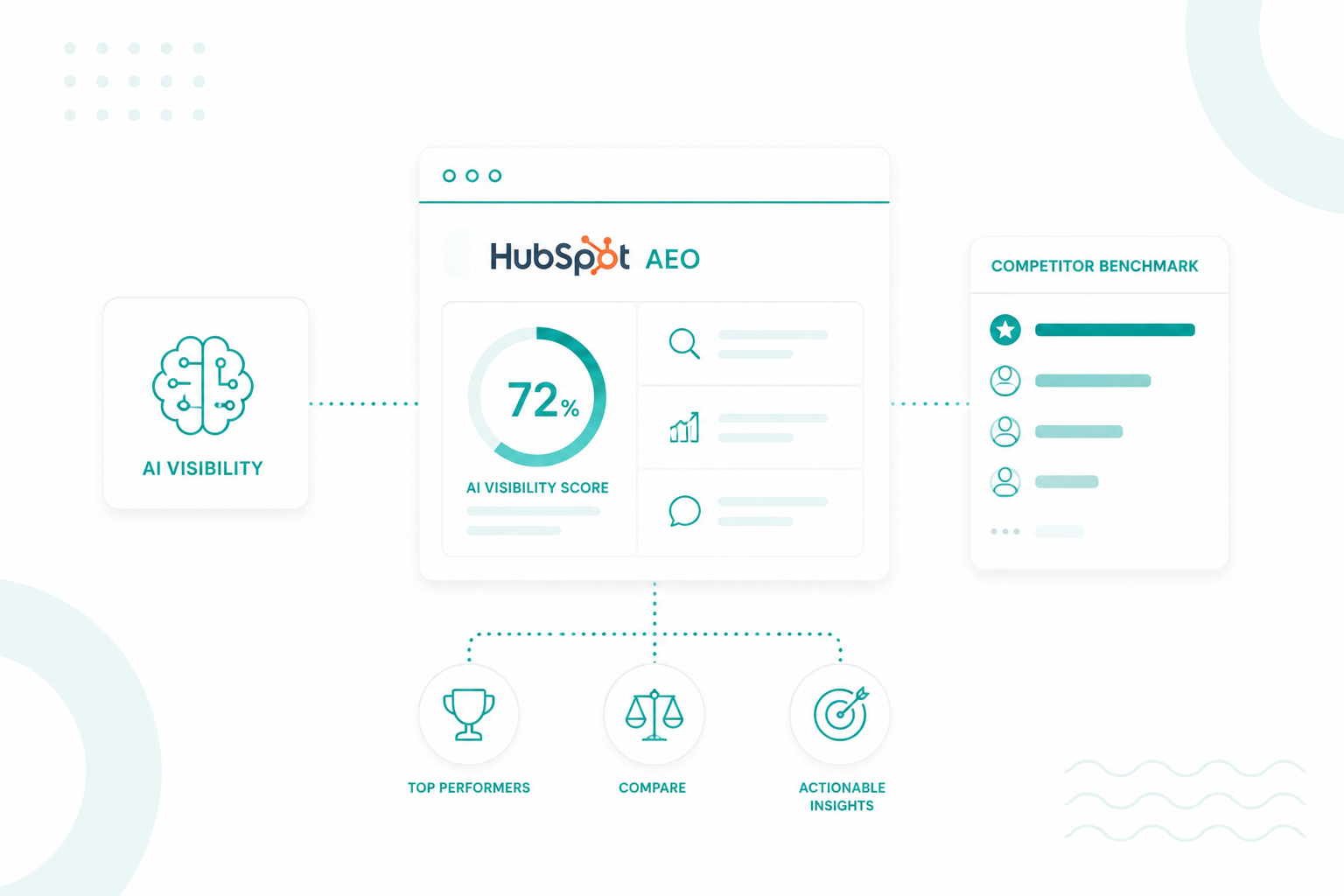
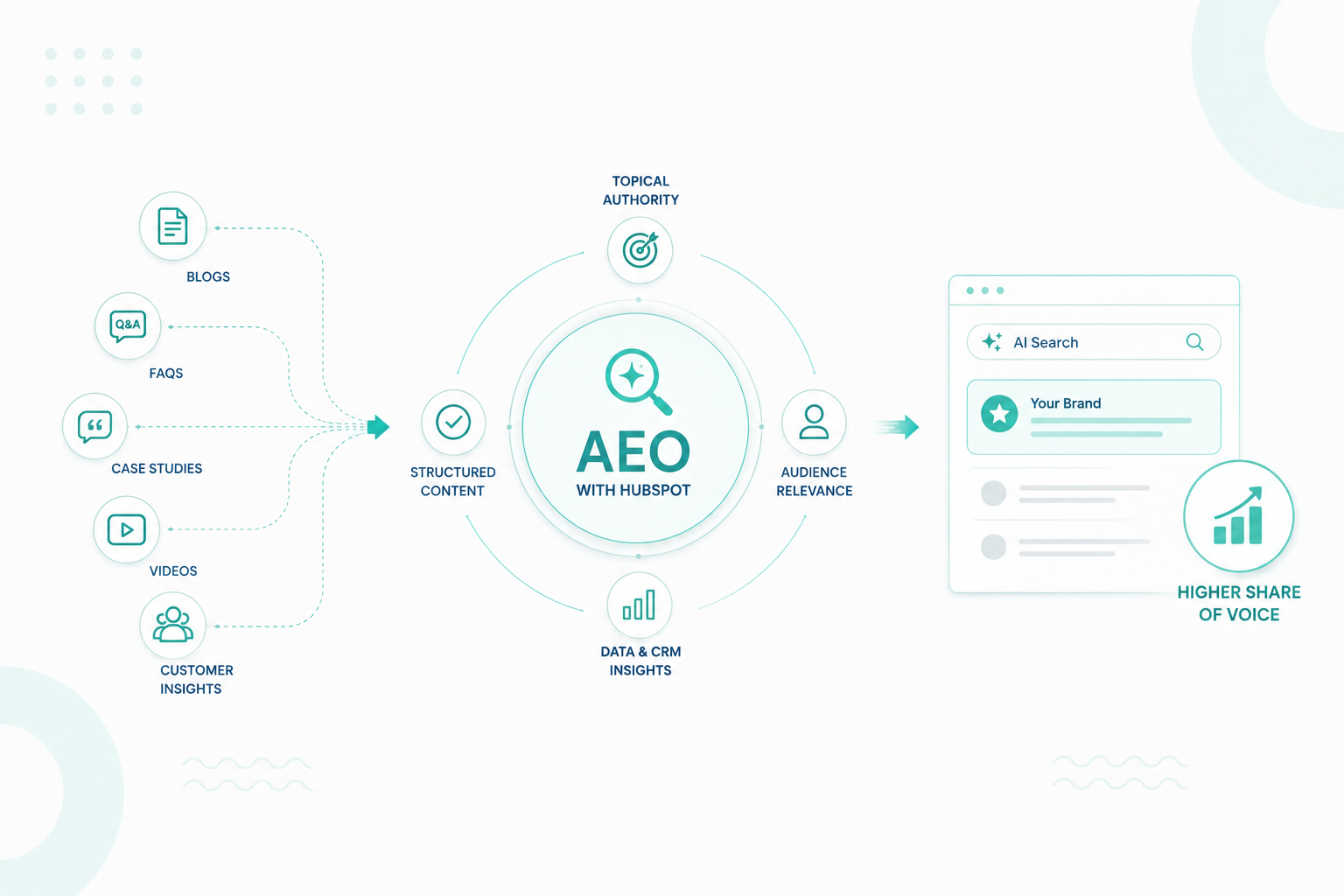
HubSpot AEO brings these comparisons into one place. You can track your AI visibility alongside competitors, identify the prompts they win, analyze the sources AI trusts, and find the gaps limiting your performance. This article explains how to benchmark your AI visibility against competitors using HubSpot AEO and use those insights to improve your position across AI search.

Key Takeaways

  • AI visibility only becomes meaningful when you compare it with competitors, because recommendations are relative, not absolute.
  • Share of voice, prompt coverage, and citation analysis together reveal why competitors earn recommendations.
  • Benchmarking helps you prioritize the prompts, products, and content gaps that have the greatest impact on AI visibility.

Why You Should Benchmark Your AI Visibility Against Competitors

Why You Should Benchmark Your AI Visibility Against Competitors

Google says AI Overviews now reach more than 1.5 billion people every month. It shows how quickly AI has become part of the way people discover information online. As AI search becomes a bigger part of the customer journey, it is no longer enough to know whether your business appears in AI-generated answers.

Because AI assistants often recommend only a limited number of businesses for a given query, what matters is how your visibility compares with competing brands. Benchmarking helps you understand whether your business is earning those recommendations or being replaced by competitors.

  • It identifies your true competitive position: Your strongest competitors in AI search may not be the same brands that rank highest in Google.
  • It finds visibility gaps: Comparing your AI visibility with competitors reveals the questions, products, or services where they earn recommendations and your brand does not.
  • It prioritizes optimization efforts: Benchmarking highlights the biggest opportunities to improve your AI visibility by showing where competitors consistently outperform your brand.
  • It understands why competitors are recommended: Analyzing competitor citations, trusted sources, and content coverage helps explain why AI platforms favor certain brands over others.
  • It tracks progress over time: Regular benchmarking shows whether your optimization efforts are increasing your visibility relative to competitors as AI-generated answers evolve.

Benchmarking your AI visibility against competitors transforms AI search from an unknown channel into a measurable competitive advantage. Rather than asking, "Are we visible in AI?", you can answer more valuable questions: Who is being recommended instead of us? Where are we losing visibility? What changes will help us close the gap?

How to Set Up Competitor Benchmarking in HubSpot AEO

1. Create Your Brand and Competitor Profile

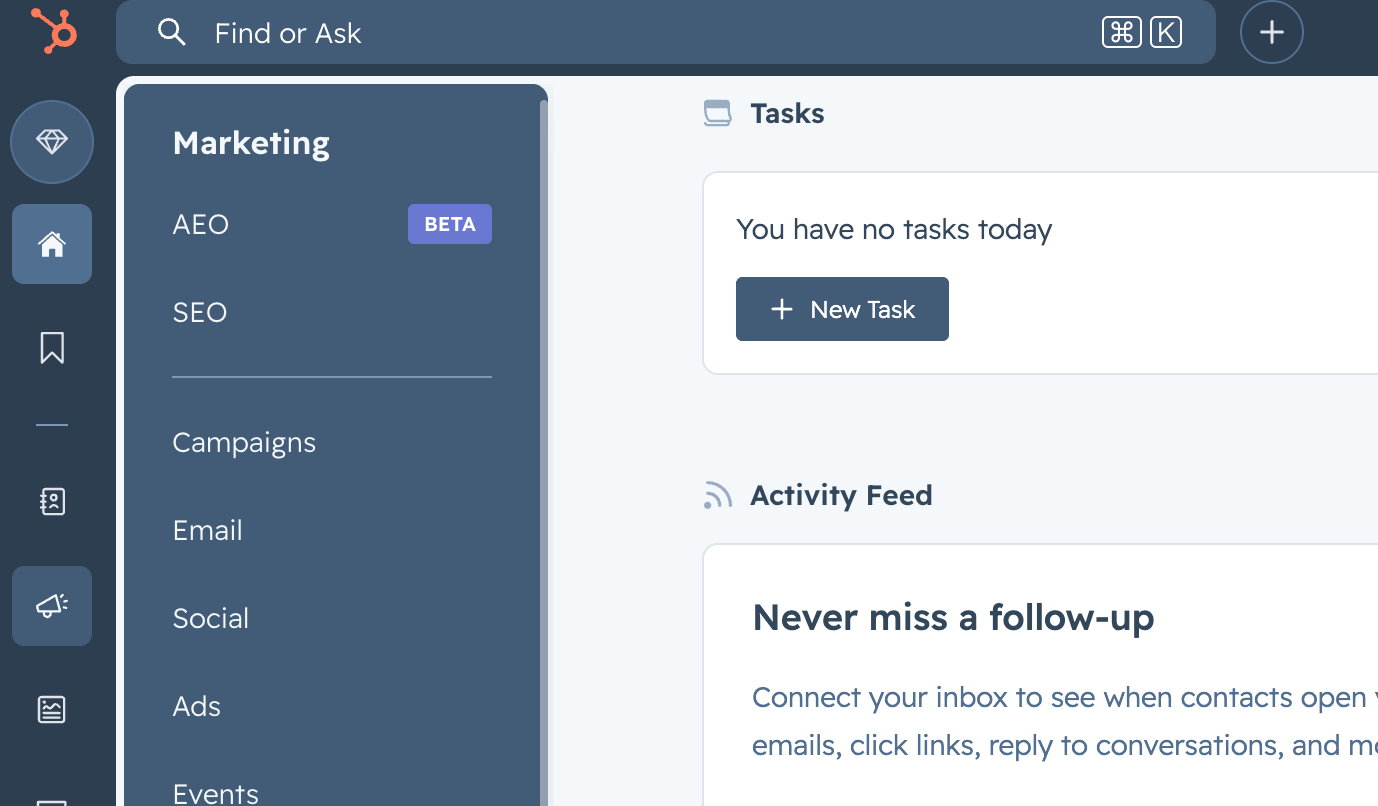
Open HubSpot Account → Marketing → AEO in HubSpot and click Get Started.

hubspot-marketing-aeo-navigation

Enter your brand name, website domain, brand name variations, and business type. Then add the competitors you want to benchmark against.

For each competitor, include:

  • Company name
  • Website domain
  • Brand name variations or abbreviations

Keep your list focused on direct competitors that sell similar products or services and compete for the same buyers. Remove irrelevant suggestions, add missing competitors, and click track and add competitors to begin benchmarking.

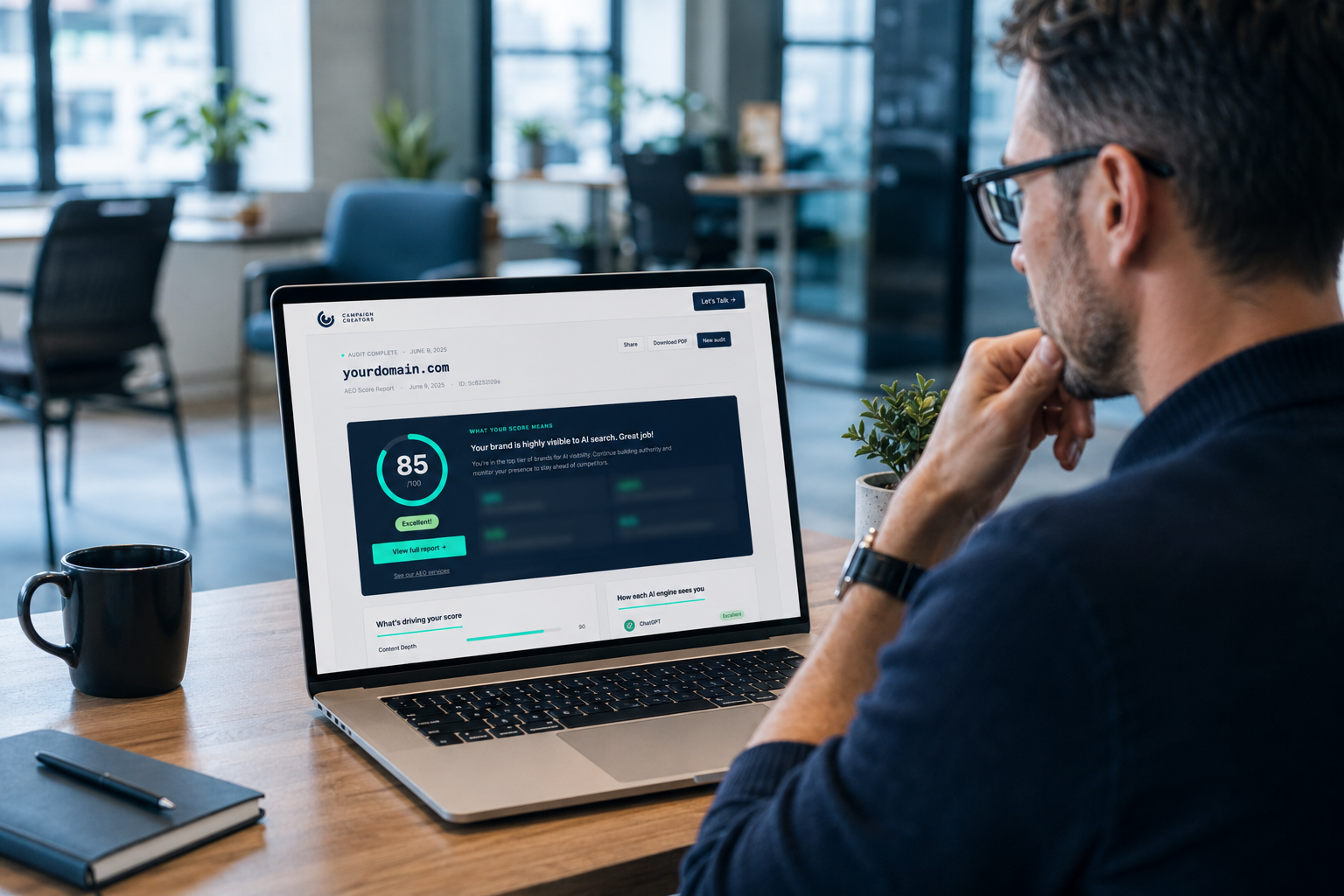
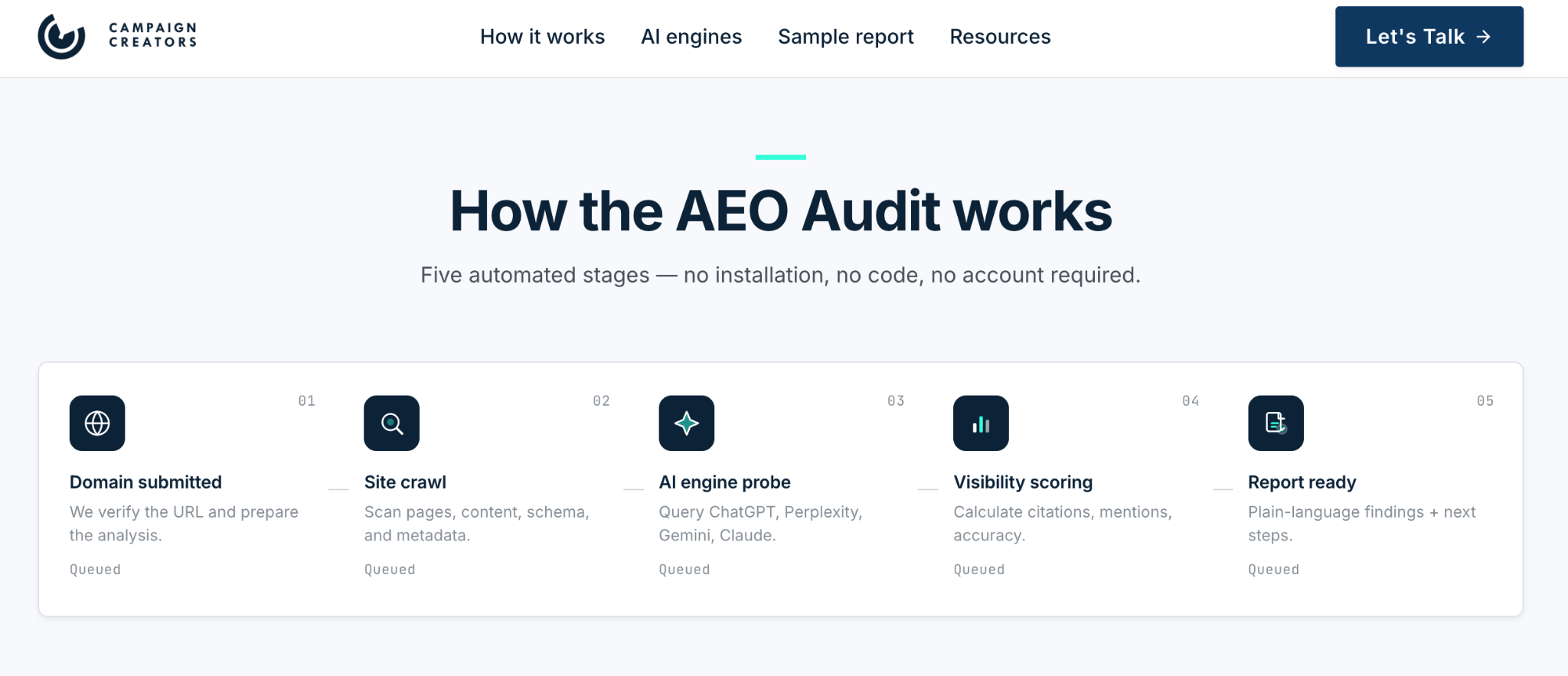
If you don't have a HubSpot account yet or want a quicker alternative, you can also use our AEO Audit Tool to check your AI visibility.

campaign-creators-aeo-hubspot

2. Configure Products, ICPs, and Buyer Prompts

Add the products or services you want to monitor and match each one with the Ideal Customer Profile (ICP) most likely to search for it. HubSpot uses this information to generate prompts that reflect real buyer questions.

For example:

Product

Ideal Customer Profile

CRM Software

Sales Managers

Marketing Automation

Marketing Directors

Payroll Software

Small Business Owners

Review the generated prompts to make sure they match how your customers search. If important buying scenarios are missing, you can edit existing prompts, add your own manually, or use HubSpot's AI to generate additional prompts.

3. Let HubSpot Build Your Benchmark

After setup, HubSpot immediately starts tracking AI-generated responses across supported answer engines and refreshes the data daily. As more prompts are analyzed, your benchmark becomes more reliable. Monitor key metrics such as:

  • AI Visibility Score
  • Share of Voice
  • Competitor visibility
  • Brand mentions
  • Citation sources
  • Prompt coverage

During the first few weeks, treat the results as a baseline while HubSpot collects enough data to identify meaningful trends.

4. Compare Your Performance Against Competitors

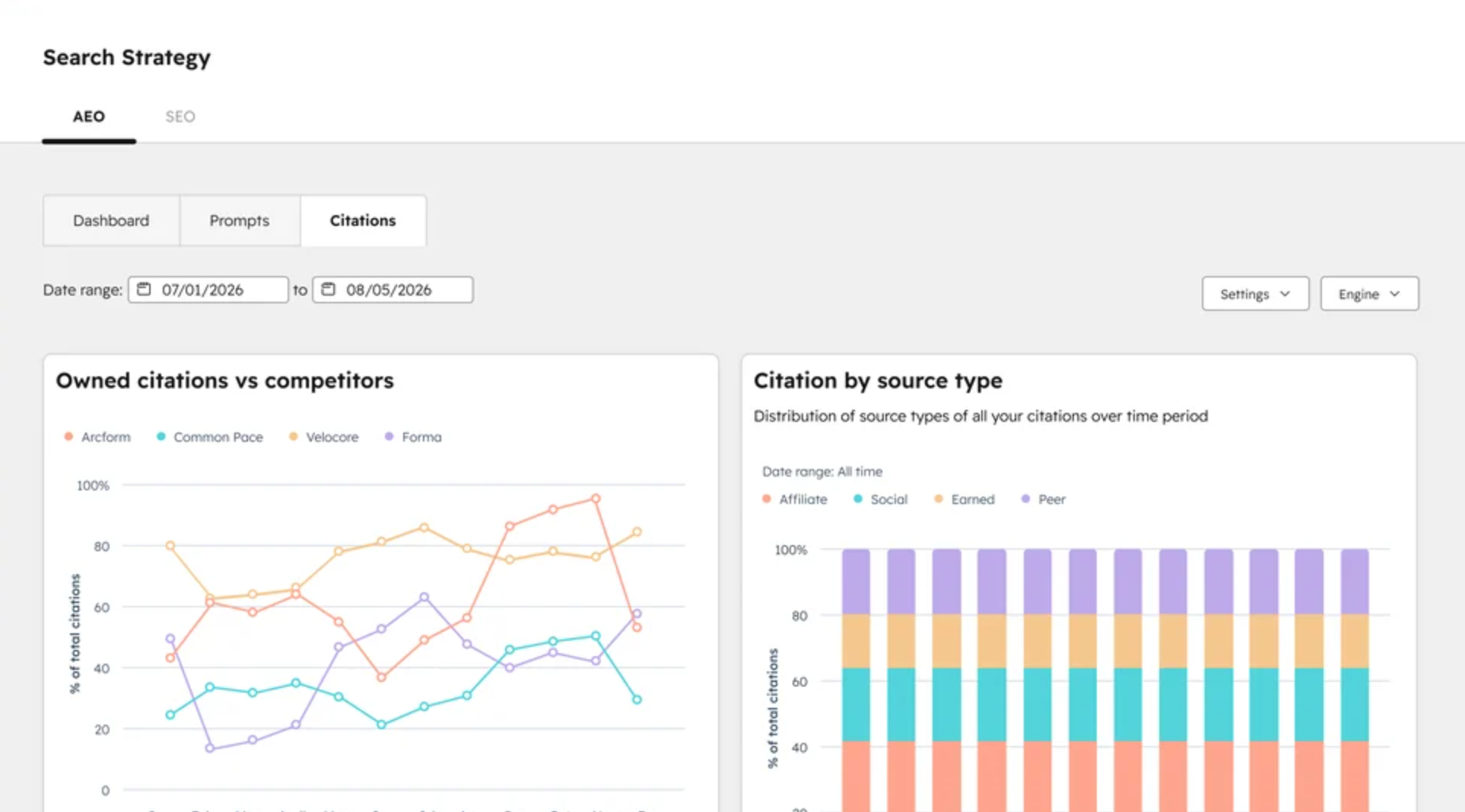
Open the Competitive Landscape dashboard to see how your brand compares with competitors across tracked citations or prompts. Filter the results by answer engine or date range to understand where competitors are gaining more visibility.

aeo-benchmarking-dashboard-hubspot

Look for patterns such as:

  • Competitors appearing for high-intent buying questions where your brand is absent
  • AI citing competitor websites more often than yours
  • Higher competitor visibility in ChatGPT, Gemini, or Perplexity
  • Products or customer segments with low prompt coverage

These comparisons help you identify exactly where your AI visibility is falling behind.

5. Prioritize Improvements Based on the Data

Use the benchmarking results to decide where to focus your optimization efforts. You may:

  • Create content for prompts where competitors consistently appear, and your brand does not.
  • Update existing pages with clearer product information, first-party insights, FAQs, and supporting evidence to improve their chances of being cited.
  • Act on HubSpot's recommendations, such as creating new content, publishing videos, or pursuing outreach opportunities to increase AI visibility.
  • Track your AI Visibility Score, Share of Voice, and prompt coverage over time to measure the impact of your changes and identify new optimization opportunities.

Which AI Visibility Metrics You Should Compare

Looking at these metrics below provides a more complete picture of your AI presence:

  • AI Visibility Score: This provides an overall measure of how visible your brand is across supported AI platforms.
  • Share of Voice: This shows how much of the AI conversation your brand owns compared to competitors for the same prompts.
  • Brand Mention Frequency: This measures how often AI platforms mention your brand in responses. Comparing it against competitors helps you see whether AI increasingly recognizes your business as a relevant source.
  • Citation Rate and Sources: Look at both how often your content is cited and which sources AI references for competing brands.
  • Prompt Coverage: This measures the percentage of tracked prompts where your brand appears.
  • Platform Coverage: Compare your visibility across platforms such as ChatGPT, Gemini, and Perplexity. Performance often varies between AI tools, making platform-specific insights useful for prioritizing optimization work.
  • Brand Sentiment and Consistency: Review how AI describes your business, not just whether it mentions you.
  • Visibility Trends Over Time: Long-term trends make it easier to measure the impact of your optimization efforts and identify meaningful changes in visibility.

As you monitor them over time, you can identify where visibility is improving, where competitors are gaining ground, and which optimization efforts are delivering the biggest impact.

How Citation Analysis Reveals Your Competitive Gaps

hubspot-aeo-citation-analysis

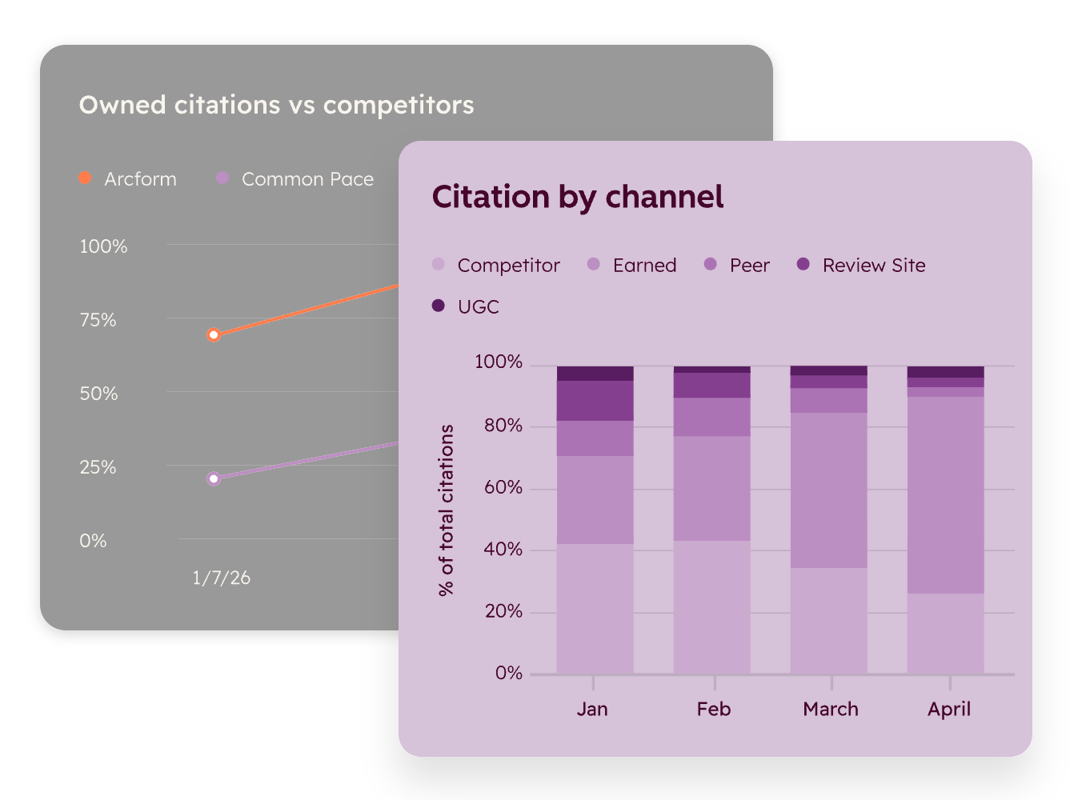
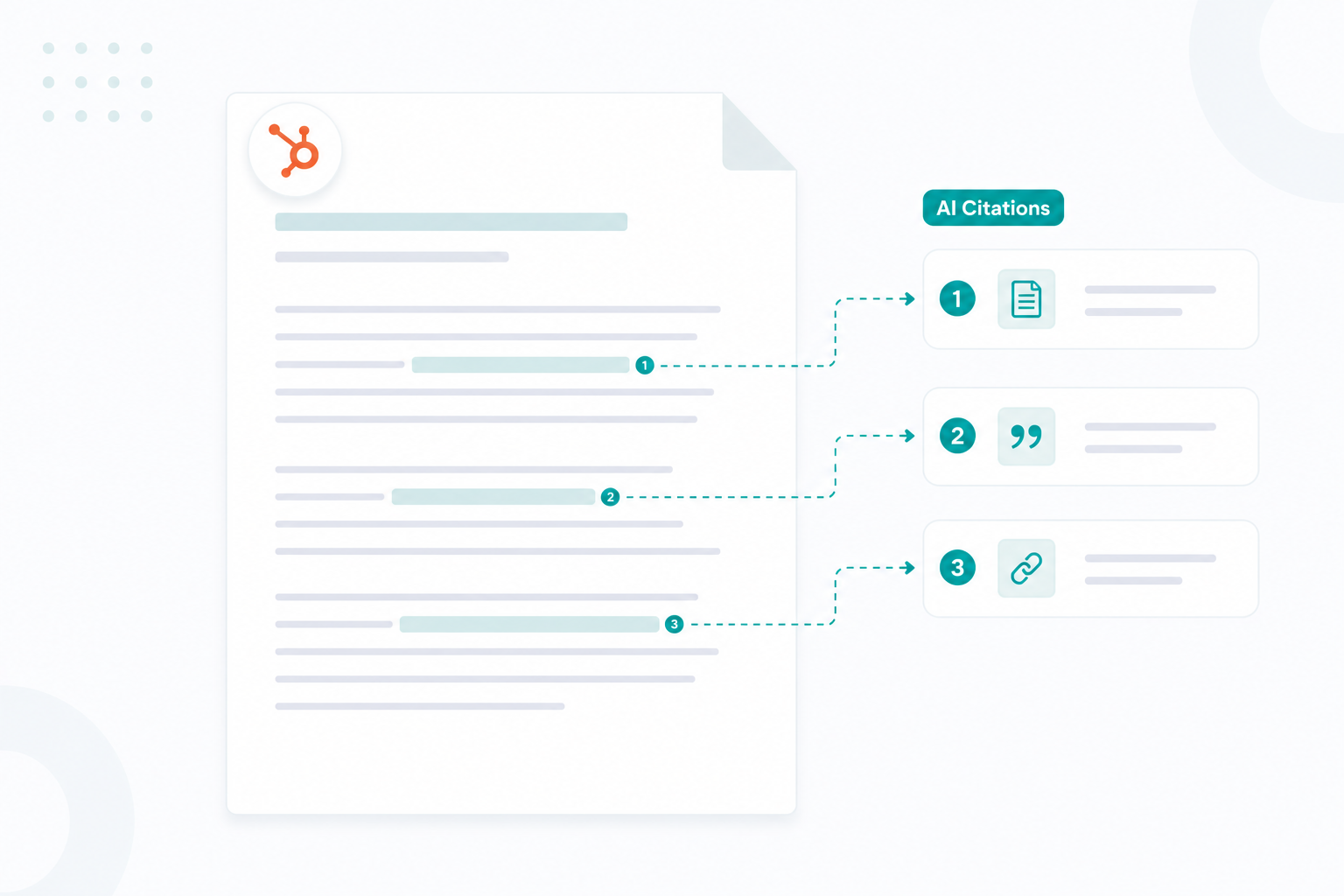
Citation analysis in HubSpot shows why AI platforms recommend certain brands by revealing the sources, pages, and content they use to generate answers. It explains what gives competitors an advantage.

  • Compare where citations come from: See whether AI platforms rely on your website, industry publications, review sites, forums, or other third-party sources. This shows how your authority compares with competitors.
  • Identify missing topic coverage: If competitors are consistently cited for questions where your brand never appears, you have clear opportunities to create or improve content around those topics.
  • Understand which pages AI trusts: Citation analysis reveals whether AI references blog posts, product pages, comparison content, case studies, or other assets. You can then invest in the content formats that are already influencing recommendations.
  • Spot authority gaps: If competitors earn citations from respected publications or industry websites that never mention your brand, you have clear opportunities to strengthen your external credibility.
  • Prioritize optimization with evidence: Citation data shows which content, topics, and authority signals are most likely to increase your AI visibility.

Together, these insights show why competitors earn recommendations and where your brand can close the gap.

What Actions You Should Take to Improve Your AI Visibility Score

1. Optimize pages that are already close to ranking

Start by reviewing the prompts where your brand appears inconsistently or ranks behind competitors. These pages often require less effort than creating new content from scratch.

Update them by improving headings, expanding sections that answer buyer questions, adding FAQs, refreshing outdated information, and making your product or service more relevant to the topic. After publishing the updates, compare your AI Visibility Score and citation rate over the following weeks to measure the impact.

2. Create content for prompts where competitors are winning

Use the Competitive Landscape report to identify prompts where competitors appear, but your brand does not. Create pages that answer those specific buyer questions.

For example, if competitors are cited for:

  • Best CRM for manufacturing companies
  • HubSpot vs Salesforce comparison
  • CRM for growing B2B businesses

Create dedicated content around those topics instead of relying on a generic CRM product page. This helps your content match the questions AI platforms are already answering.

3. Improve the pages AI is already citing

Citation Analysis shows exactly which pages AI platforms reference when recommending your brand. Review those pages regularly and strengthen them by:

  • Adding recent statistics or examples
  • Including original insights or customer experiences
  • Expanding answers to common questions
  • Keeping product information accurate and current

Since these pages already have authority with AI platforms, improving them can increase both citation frequency and overall visibility.

4. Strengthen your third-party authority

If competitors are consistently cited from industry publications, review sites, or news websites while your brand is not, focus on building your presence beyond your own website.

Practical actions include securing guest articles, earning media coverage, encouraging customer reviews, publishing research, and contributing expert commentary to trusted industry publications. These third-party mentions strengthen the authority signals AI models use when generating recommendations.

5. Publish content in multiple formats

HubSpot's recommendations may suggest creating more than blog articles. AI platforms increasingly cite videos, social content, webinars, and other educational resources. After publishing a new article, repurpose it into formats such as:

  • A YouTube video
  • A LinkedIn post
  • A webinar or presentation
  • A downloadable guide

Expanding a topic across multiple channels increases the number of trusted sources AI can reference when answering user queries.

6. Follow HubSpot's prioritized recommendations

Rather than deciding what to optimize next yourself, review the Recommendations tab in HubSpot AEO. The platform analyzes your visibility data and highlights the actions that are most likely to improve your score, such as creating a missing page, updating existing content, publishing social content, producing a video, or increasing your presence on third-party websites. Working through these recommendations in priority order helps you focus on changes that address measurable visibility gaps.

Finally, always treat your AI Visibility Score as an ongoing benchmark. Regular updates, competitive analysis, and continuous optimization help you maintain and improve your visibility as AI search continues to evolve.

Know Where You Stand in AI Search!

If your organization needs a better way to measure and improve its AI visibility, HubSpot AEO provides the insights to benchmark competitors, track Share of Voice, analyze citations, and identify the changes most likely to increase your visibility across AI search.

Campaign Creators help businesses use HubSpot AEO to benchmark AI visibility, uncover competitive gaps, and build strategies that improve how AI platforms discover, cite, and recommend their brands.

From getting started with AI optimization to refining an existing strategy, our team can help you turn AI visibility data into measurable business growth.

Frequently Asked Questions

Does good SEO automatically improve AI visibility?

No. Strong SEO provides a good foundation, but AI platforms also consider citations, brand authority, reviews, and other trusted sources.

How often should you benchmark AI visibility?

Review your performance at least once a month to identify trends and measure the impact of your optimization efforts.

What makes AI platforms recommend one brand over another?

AI platforms evaluate several signals, including content quality, authority, trusted citations, reviews, and how well a page answers the user's question.

Can AI visibility change without updating your website?

Yes. Your visibility can change as competitors publish new content, AI models evolve, citation patterns shift, and trusted sources across the web change.

Can you benchmark multiple products or services separately?

Yes. Tracking products or services individually helps you identify which areas perform well and which need more optimization.

Should you create new content or update existing pages first?

Start by improving existing pages that already have visibility before investing in new content. Strengthening pages that AI already recognizes can often produce faster results.

How to Use Citation Analysis to Improve AI Search Visibility

How to Use Citation Analysis to Improve AI Search Visibility

Citation analysis helps uncover which sources AI engines trust, which competitors dominate AI-generated answers, and why certain pages earn...

Read More
Why Your Brand Is Not Showing Up in ChatGPT, Gemini, or Perplexity

Why Your Brand Is Not Showing Up in ChatGPT, Gemini, or Perplexity

Search behavior changed rapidly across 2025 and 2026. People now ask questions directly inside AI platforms like OpenAI ChatGPT, Google Gemini, and...

Read More
What Is an AI Visibility Score and How Should Marketers Use It?

What Is an AI Visibility Score and How Should Marketers Use It?

What Is an AI Visibility Score and How Should Marketers Use It? More people are starting to search through AI tools instead of scrolling through...

Read More