


Skip to the main content.

WEBSITE GROWTH & CONVERSION

Web Design & Development


SEO & AEO


Conversion Rate Optimization


Lead Generation Strategies


HUBSPOT SUPPORT & ENABLEMENT

HubDesk


HubSpot Training


HubSpot Change Management

FREE TOOLS & ASSESSMENTS

AEO Auditor


HubSpot Al Readiness Scorecard


LEARN & WATCH

View All Resources


Ebooks & Templates


Webinars On-Demand


Expert Videos

14 min read

The Biggest B2B Marketing Trends We've Seen So Far in 2026

The Biggest B2B Marketing Trends We've Seen So Far in 2026

Three quarters of 2026 are behind us and with HubSpot UNBOUND just wrapping up, the changes that looked like experiments back in January are now simply how B2B buying works. Buyers open ChatGPT before they open Google, AI agents build campaigns that used to sit in someone's task list, video and interactive tools carry more of the evaluation, and review sites and Reddit threads decide if an AI recommendation gets believed.

One thread runs through all of it. AI is showing every company how connected its marketing operation already was, so teams with clean CRM data, clear processes, and a solid reputation outside their own website are seeing real returns. While teams without those things are moving their existing problems around faster. That may sound harsh, but there is an encouraging side to it. Most of these foundations are things you can improve this quarter.

Here is what we will get into.

  1. AI Search Is Changing How B2B Buyers Find and Judge Vendors
  2. AI Agents Are Moving From Content Help Into Campaign Execution
  3. First-Party Data and Customer Context Decide What AI Can Do
  4. Personalization Is Shifting From Segments to Individual Buyer Journeys
  5. B2B Content Is Getting More Visual, Interactive, and Multi-Format
  6. Brand Trust and Third-Party Validation Carry More Weight Now
  7. Marketing, Sales, and Customer Success Are Becoming One Revenue System


1. AI Search Is Changing How B2B Buyers Find and Judge Vendors

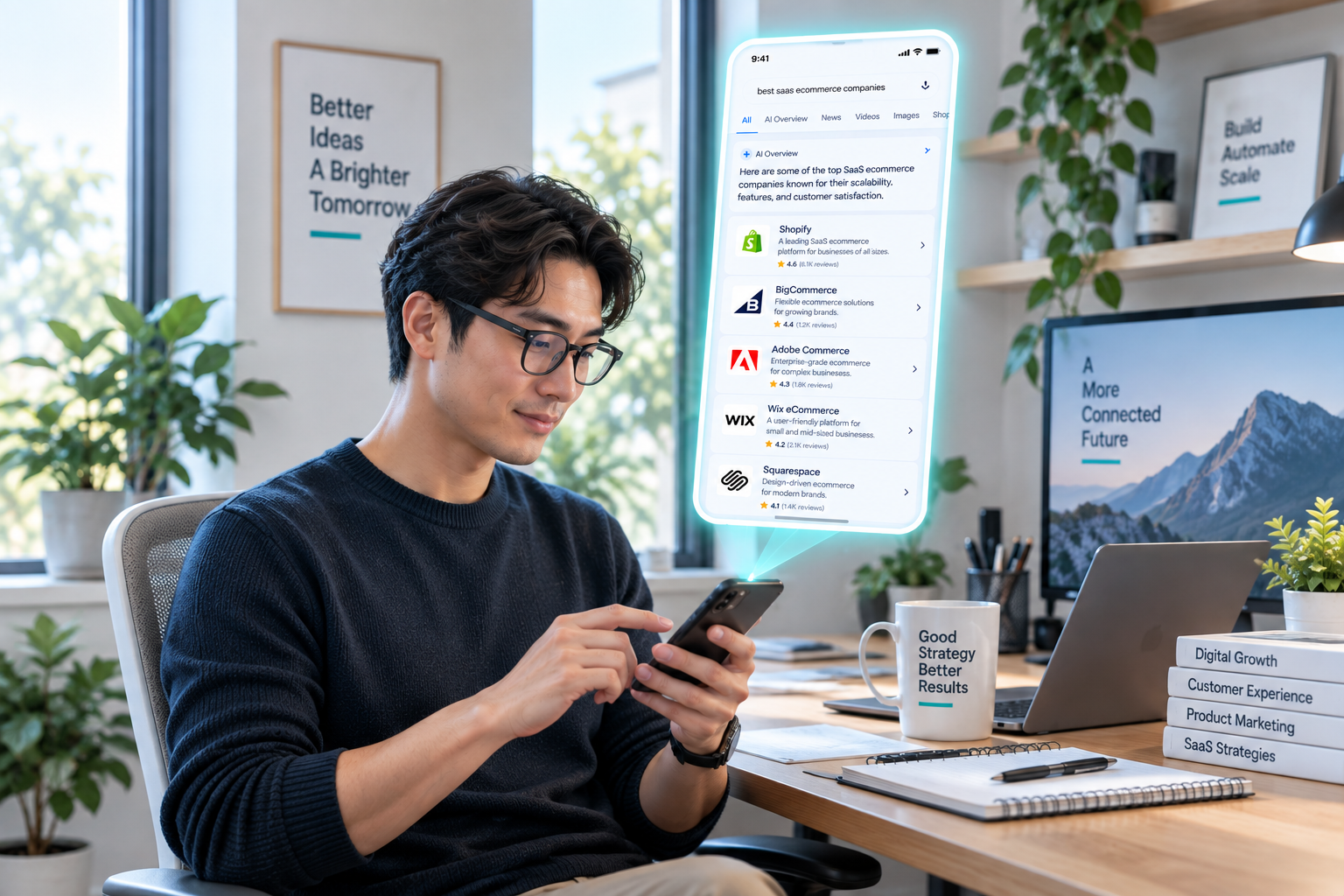
person-reading-an-ai-search-result-summary

Your buyers are still doing their homework. They are just doing it somewhere that never shows up in your analytics, asking ChatGPT, Gemini, Perplexity, or Google AI to explain a category, compare a few providers, and suggest who is worth a call.

A survey of 1,076 software buyers and decision-makers this year shows how quickly this moved. 51% of B2B software buyers now start their research in an AI chatbot more often than in Google, up from 29% the year before. What happens after that first prompt is the part worth sitting with, because 69% of buyers say a chatbot surfaced something that led them to choose a different vendor than the one they expected to pick, and 33% bought from a brand they had never heard of until the AI mentioned it. Being unknown is no longer disqualifying, and being well known is no longer protection.

You can already see the traffic side of this in your own reports. When HubSpot launched its AEO product at its Spring Spotlight on April 14, it reported that organic traffic for its customers had fallen 27% year over year while industry reports showed AI referral traffic tripling. Fewer visits arrive from search and more arrive from answers, which is a different shape of demand than the one most reporting was built for.


AEO Asks a Different Question Than SEO

SEO asks if a page can rank for a keyword and earn a click. Answer Engine Optimization, or AEO, asks if your brand gets mentioned, cited, or recommended inside the answer your buyer reads. The two support each other, since pages that rank well are often the pages engines pull from.

AEO became its own job because AI answers produce so few clicks. Pew Research Center looked at nearly 69,000 Google searches from 900 U.S. adults and found people clicked a regular search result in 8% of visits when an AI summary appeared, compared with 15% when none did, and clicked a link inside the summary itself in only 1% of visits. In practice, the summary roughly halves your chance of a visit, and the little citation links almost nobody uses. That data comes from early 2025, and AI search has changed a lot since.

The visits you do get tend to be better than average. Ahrefs shared its own analytics showing AI search made up 0.5% of its traffic over 30 days while producing 12.1% of signups, and Gartner's research on supplier websites describes the same pattern across B2B, with fewer visits arriving but those visitors converting at a higher rate. Someone who shows up after an AI has already explained the category is much closer to a decision than someone clicking through from a keyword search, which means a small AI traffic number can be hiding real pipeline.


The Tools That Measure AI Visibility

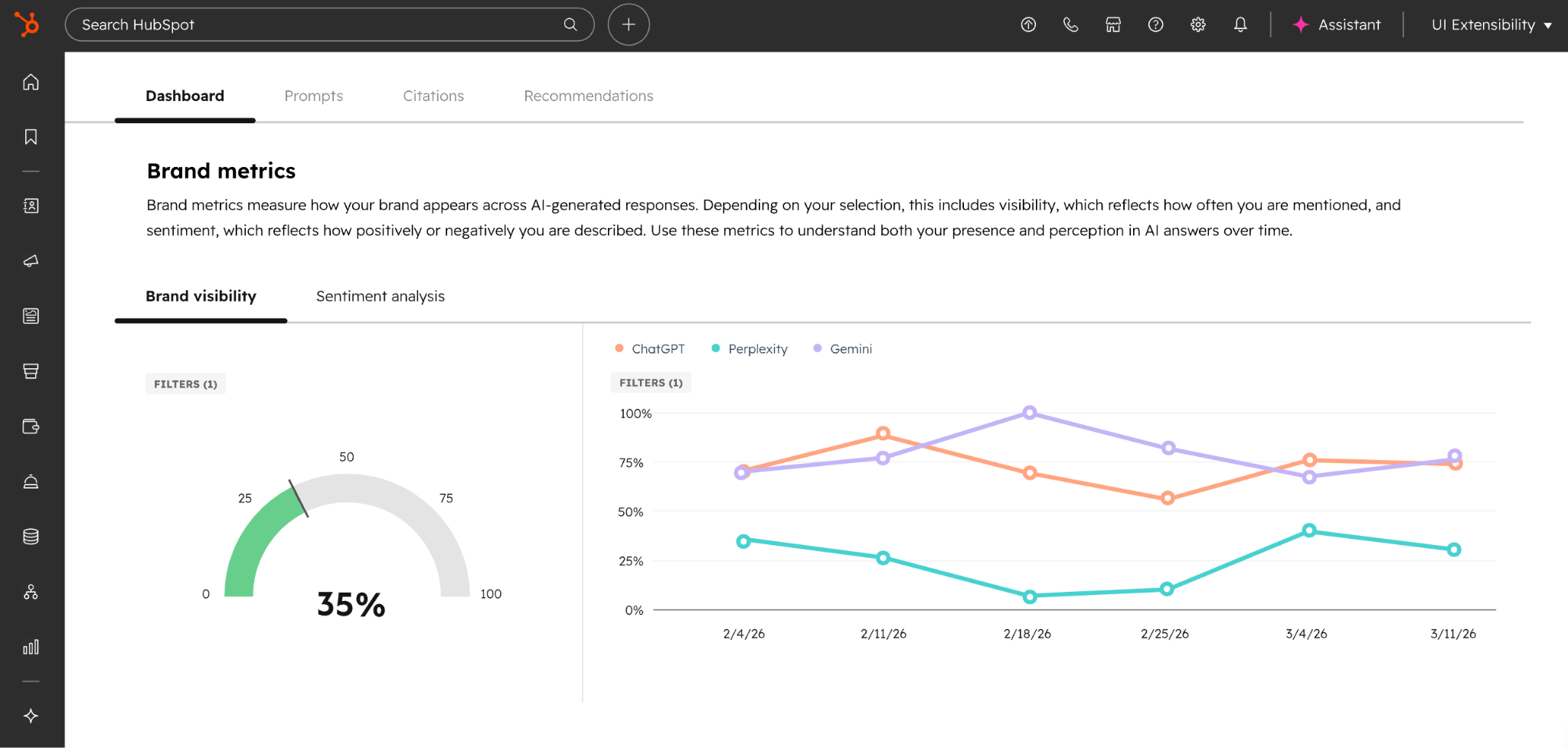
HubSpot AEO covers ChatGPT, Gemini, and Perplexity, giving you a brand visibility score, prompt tracking, citation analysis, and prioritized recommendations that connect straight into HubSpot's content tools. hubspot-aeo-tool-dashboard

It reads your CRM data to suggest which prompts are worth tracking, shows how often you appear next to competitors on those same prompts, and scores how positively engines describe you.

Outside HubSpot, Ahrefs Brand Radar tracks mentions and AI share of voice alongside the SEO, YouTube, and Reddit signals feeding those answers, while Semrush's AI Visibility Toolkit adds a crawler audit so you can confirm the bots behind ChatGPT and Gemini can actually read your pages. Otterly.AI watches a wider spread of surfaces, including Google AI Overviews, Copilot, and Claude, and Profound and XFunnel come up most often in enterprise conversations.

Businesses need to start measuring this because you cannot manage how AI describes your company if you do not know what it is saying. Pick one tool, track 20 to 25 prompts your buyers would realistically type, and record four numbers, which are visibility percentage, share of voice, citation count, and citation share. That gives your team a clear baseline to monitor and improve.

You may download our AEO & AI Search Visibility Guide to understand where your brand currently appears in AI search and where to focus your efforts next.


2. AI Agents Are Moving From Content Help Into Campaign Execution

For about two years, AI in marketing meant a faster first draft, where you prompted, it produced, and you handled everything else. Agents changed who does what, because an agent reads your business data, follows rules you set, uses the tools it has access to, decides within those limits, and then acts.

A content generator writes five subject lines for you, while an agent picks the audience, writes the email, personalizes it from CRM fields, enrolls the contact in a workflow, and keeps going while you review what it produced.


The Agents Doing Marketing Work Today

HubSpot now has these AI agents built directly into the platform. Their Campaign Agent takes an objective plus context such as audience, brief, past performance, and brand identity, then plans the campaign and builds the landing page, form, and emails around it. Assets stay in review and do not publish themselves, so a person still signs off before anything reaches a buyer.

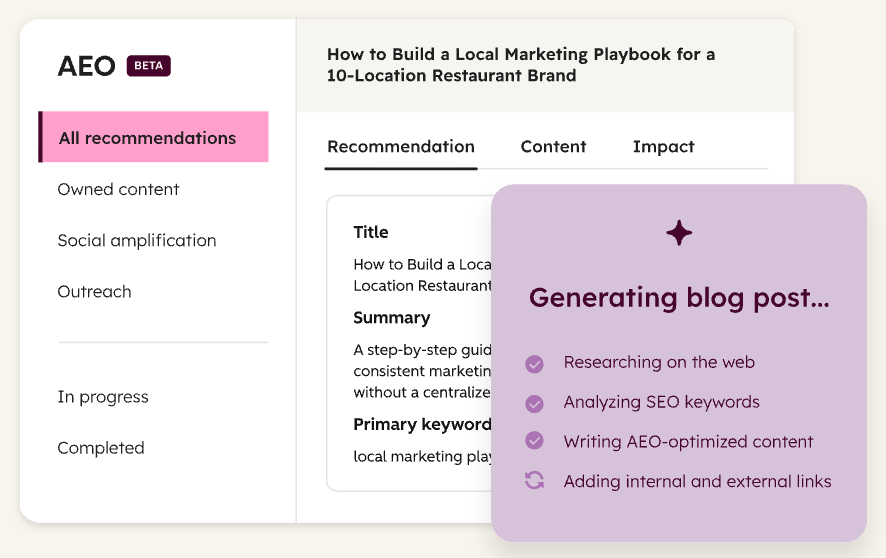
Content Agent researches before it writes and grounds drafts in brand voice, audience data, competitive context, and AEO recommendations.

hubspot-content-agent

The interesting part is not that AI can write a post, since it has done that for years. It is that the post now inherits the campaign objective and the visibility gap it was created to close.

The rest of the lineup covers the funnel, with Prospecting Agent watching more than 40 buying signals to find and research good-fit accounts, Data Agent answering CRM questions and cleaning fields inside workflows, Customer Agent handling inbound questions and escalating to a person at a confidence threshold you set, and Revenue Agent following up on unpaid invoices and adjusting its approach based on how the buyer responds.

Salesforce and Adobe are building toward the same place, with Agentforce Marketing putting agents on planning, creation, personalization, and optimization, and Adobe positioning agentic AI as the link between insight and action.


3. First-Party Data and Customer Context Decides What AI Can Do

AI has made content, personalization, and automation easier and cheaper to scale. But AI can only work with the knowledge and context you give it. That is why two companies using the same tools can get very different results.

Data Tells You What Happened While Context Tells You Why

ChatGPT Image Sep 23, 2026, 07_22_18 PM

First-party data is what you collect directly, including form submissions, page views, email engagement, deal records, support tickets, and product usage. Context is the layer that gives those facts meaning, so a page view tells you what someone did, while context tells you who they are, what they are trying to solve, and what has already happened between you.

HubSpot calls it Growth Context, with a Smart CRM that logs calls, emails, and meetings on its own and a Context Home screen that scores how complete your records are.

Salesforce Data Cloud and Adobe Real-Time CDP do similar work for companies already in those ecosystems, unifying profiles across marketing, sales, service, and product.

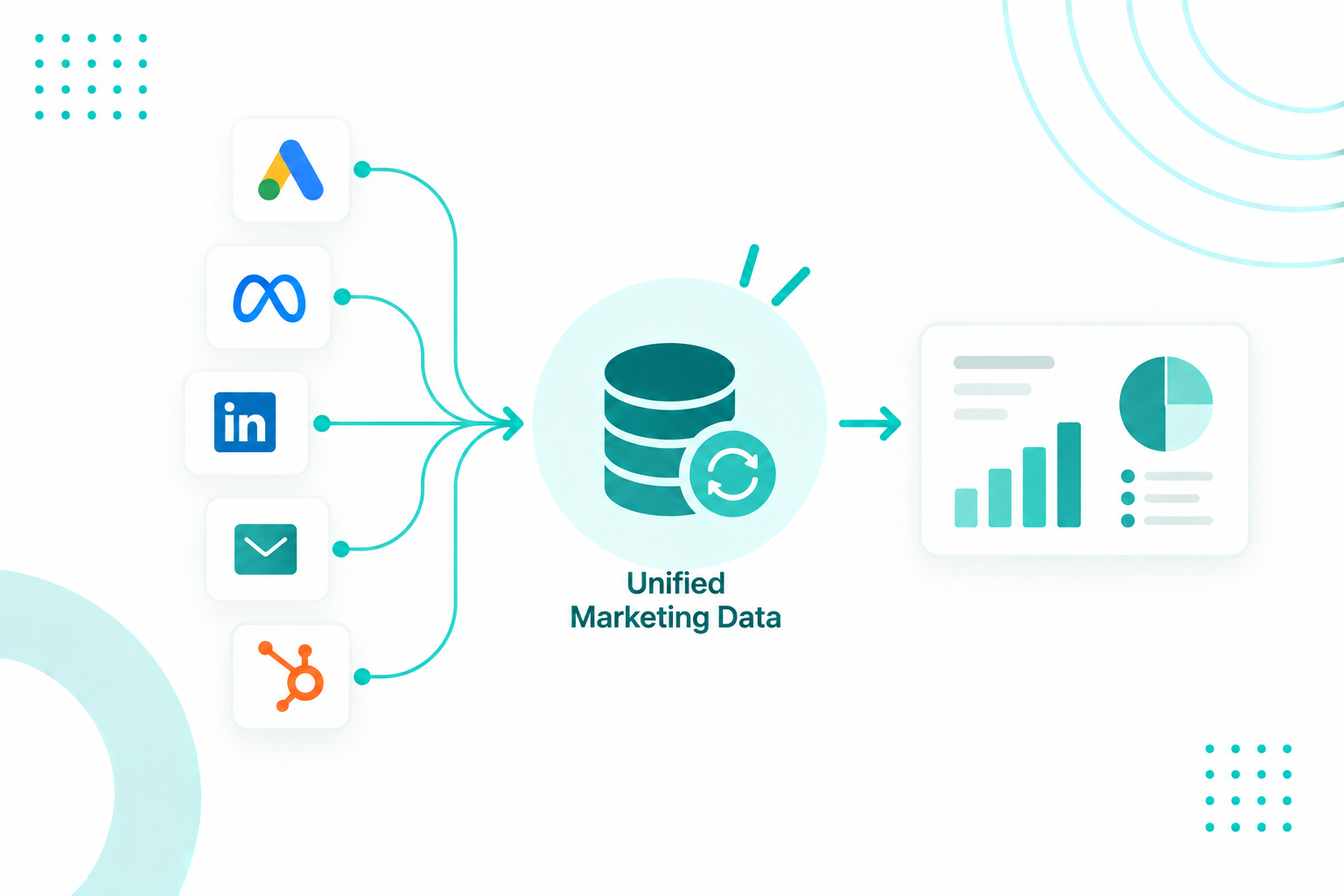
Plenty of teams are building this outside a suite, which is worth knowing if you do not want to consolidate everything into one vendor. A common setup collects events with Segment or RudderStack, models them in Snowflake or BigQuery with dbt, then pushes the useful fields back into the CRM and ad platforms using Hightouch or Census. The appeal is that your definitions of a qualified account or an active customer live in one place and stay consistent everywhere they appear.

The Practical Work Is Capture, Enrichment, and Hygiene

“Context” sounds abstract until you break it down into three practical jobs: capturing what happens, enriching what you know, and keeping the data clean.

  • Capture. Gong and Fathom can add call summaries and next steps to deal records. Warmly, RB2B, Koala, and Common Room capture additional signals from website visits, product usage, and community activity.
  • Enrichment. HubSpot Breeze Intelligence, ZoomInfo, Apollo, and Clay fill in missing firmographic and technographic data. Clay can also use multiple sources when the first one cannot provide a field.
  • Hygiene. Tools like Insycle and HubSpot Data Management handle deduplication and field standardization, keeping CRM data reliable for both people and AI agents.

There is a newer piece worth watching. The Model Context Protocol has become the common way to connect assistants like Claude and ChatGPT to internal systems, so a marketer can ask a question and have the model pull live CRM, analytics, and documentation without anyone building a custom integration. That is quietly making context portable across tools in a way the last decade of point-to-point integrations never managed.

Disconnected Data Costs Revenue and Not Just Reporting Time

In most B2B companies, the customer sits in pieces, with marketing holding campaign data, sales holding deal activity, customer success holding adoption and support history, and finance holding the contract. Buyers feel every seam between them. A pulse survey from McKinsey found that inconsistent information across teams is now the top reason buyers switch suppliers, named by more than 50% of nearly 4,000 decision-makers.

Context deserves the investment because it is the one input that improves everything downstream at the same time, making agents more accurate, personalization more relevant, reporting more believable, and buyers less likely to leave over a contradiction. Start with the handful of fields your reports and workflows actually read, get one capture tool feeding them automatically, and widen from there.

4. Personalization Is Shifting From Segments to Individual Buyer Journeys

Segments tell you who someone is. A journey considers what they are working on, what they have already seen, and what should sensibly come next.

Nearly everyone claims to do this, and very few do it deeply. The same pulse survey of McKinsey found more than 90% of B2B organizations personalize content somewhere in the journey, while only 20% of market leaders run true one-to-one personalization compared with 5% of everyone else.

Segments Set the Starting Point and Not the Experience

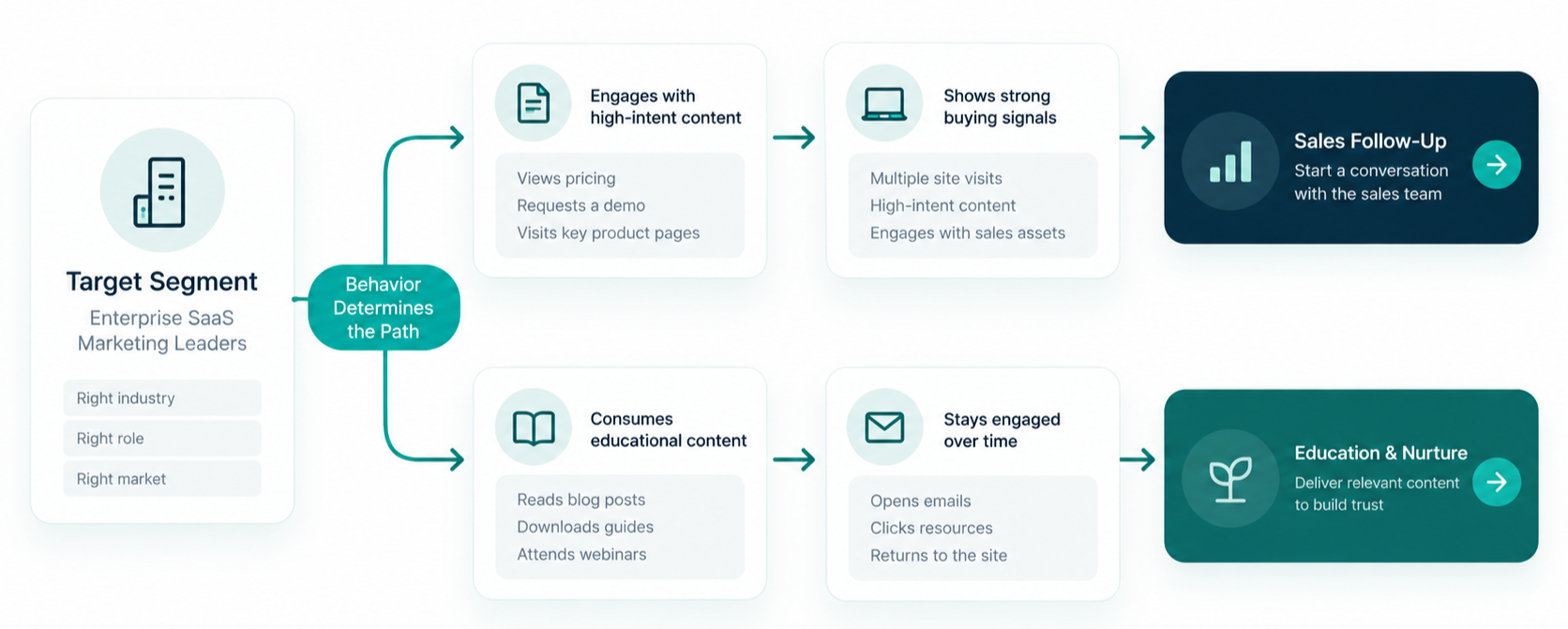
A traditional setup sends implementation content to mid-funnel marketing leaders at enterprise SaaS companies, which beats sending everyone the same thing and still treats every person inside the segment as interchangeable.

A journey-based setup keeps that segment and reacts to behavior, so the VP who read implementation content, joined a webinar, has an open opportunity, and just returned to the pricing page gets implementation resources and a fast sales follow-up, while the VP who downloaded one guide and went quiet gets education. Same list, different next move.

 marketing-customer-journey-flowchart

The Personalization Stack Teams Are Actually Buying

Personalization covers three different jobs, and the tools tend to fall into those same categories:

  • Knowing who is in market. 6sense and Demandbase use intent signals to identify accounts researching your category before they engage with you.
  • Changing the experience. Tools like Mutiny let marketers personalize website content by account, industry, or buying stage, changing elements such as the hero, social proof, and CTA.
  • Reacting in the moment. Warmly can alert sales while a prospect is on the site, Qualified can qualify visitors and book meetings through AI chat, and HubSpot’s Nurture Agent can personalize automated emails based on CRM and behavioral data.

Other tools extend personalization into timing and buying experiences. HubSpot Marketing Hub Enterprise can optimize email send times based on individual engagement, while digital sales rooms such as Storylane and Consensus bring demos, pricing, and deal documents into one personalized experience.

The bigger shift is from segment-level personalization to individual buyer journeys. Two prospects with the same ICP can have completely different priorities, and a B2B buying group can require different information for executives, technical evaluators, procurement, and end users while everyone remains connected to the same opportunity.

Personalize Where It Changes the Decision

More personalization does not automatically create a better experience. A highly specific recommendation based on the wrong assumption can feel careless rather than helpful.

Focus personalization on six levers: the message, resource, action, timing, channel, and next step. Everything else can stay consistent.

This is one of the simplest ways to improve results from the traffic you already have. Start with your highest-traffic nurture sequence and make each step respond to what the person actually does. That gives you a practical personalization model before investing in a larger platform.

5. B2B Content Is Getting More Visual, Interactive, and Multi-Format

Blog posts, ebooks, and webinars still carry your research and search visibility. What changed is that one idea now needs to exist in several forms, because buyers run into it in several places.

Video Became a Default Format

A trend study found that 82% of B2B marketers prioritize short-form video for reaching prospects. Production is also getting easier. Descript lets you edit by changing the transcript, Murf handles voiceovers, and clipping tools can turn one webinar into multiple short-form assets.

Video works because some B2B products are easier to show than explain. A four-minute screen recording of a project management tool being built can demonstrate what 2,000 words cannot.

project-management-tool-demo-example

There is also a search benefit. Gartner found that answer engines can use video as searchable data, giving videos additional visibility through titles, descriptions, transcripts, and chapters. They also reported that YouTube has overtaken LinkedIn as the leading platform for B2B IT and high-tech buyers, with 53% relying on it for product and vendor decisions.

Where you host the video matters too. Wistia and Vidyard can send viewing data into the CRM, while YouTube is better suited to discovery. Many teams use both: YouTube for reach and a hosted player for buyer-level engagement data.

Interactive Demos Became the Standard Mid-Funnel Asset

The clearest content change in B2B this year is the self-guided demo moving from a nice extra to something buyers expect before they will book a call. The category has split into distinct options, which makes picking one easier than it looks.

  • Navattic and Storylane capture your real product through a Chrome extension and turn it into a clickable tour you can embed on a pricing page or send in a follow-up email.
  • Arcade and Supademo sit at the lighter end, with Arcade producing demos and video from the same recording and Supademo pricing low enough for small teams to test the format.
  • Walnut and Reprise build full demo environments for enterprise sales engineering, where a clickable replica is not enough.
  • Consensus automates personalized video demos for multi-stakeholder deals, which suits long buying cycles with people who never join a live call.

One Idea, Several Formats

AI has made it much cheaper to adapt one idea into multiple formats, which is what tools like HubSpot’s Content Remix are designed to do. An article can become a podcast script, while a webinar can become short videos and social posts.

Each format has a different job. Text adds depth and gives AI search engines something to cite. Video demonstrates what is difficult to explain in words. Interactive tools give buyers specific answers while giving you behavioral signals. Social content puts the idea where discovery happens.

Companies that publish in only one format can miss parts of the buying journey happening on YouTube, interactive experiences, and product tours. Start with your best-performing piece, adapt it into a video and an interactive experience, and see which format your buyers actually engage with.


6. Brand Trust and Third-Party Validation Carry More Weight Now

A buyer can meet your reputation inside an AI answer before ever seeing your website, which adds a step to the journey where they decide if that answer can be trusted.

AI Builds the Shortlist and Outside Proof Confirms It

AI can narrow the list of vendors a buyer considers, but it does not remove the need for validation. Once a company makes the shortlist, buyers often look outside the vendor’s own website to see whether customers, review sites, and communities support what the AI told them.

That makes third-party proof part of the buying journey. Teams are auditing profiles on G2, TrustRadius, and Capterra for outdated pricing, missing integrations, and incomplete information. They are also running structured review campaigns through UserEvidence or customer surveys to collect reviews that answer real evaluation questions, not just provide star ratings.

Reddit deserves separate attention. Teams can use Reddit Pro to track brand mentions and tools like GummySearch to find discussions around their category. Those conversations can influence how buyers evaluate a vendor and can also appear in AI-generated answers.

Buyers Still Check AI's Work With a Human

Healthy skepticism survived all of this. 69% of 645 B2B buyers prefer to confirm what AI told them with a sales rep, while the same research found 73% actively avoid suppliers who send irrelevant outreach. Buyers want to research alone and then talk to a person right before they commit, and the invitation only reaches teams who already seem informed.

Specific Proof Beats Brand Claims

“Exceptional support” is a claim. “We cut implementation time by 30% after migrating” is evidence. Buyers and AI search engines can do much more with the second.

Build reviews and case studies around the questions buyers ask during evaluation: integrations, implementation speed, ROI, support, security, and why a customer chose you over another option. Your sales team needs proof they can bring into a meeting when finance, IT, or other stakeholders start asking for evidence.


7. Marketing, Sales, and Customer Success Are Becoming One Revenue System

Buyers never experience your org chart. They experience your website, ads, sales conversations, onboarding, support, and eventually the renewal decision. Each interaction shapes the next one, so when teams work from different data or processes, the experience can quickly become disconnected.

The MQL Handoff Loses Its Central Role

In the traditional setup, marketing scores a lead and passes it over a wall, which produces the familiar symptoms of disconnected data, broken handoffs, and three teams working from different definitions of success. A connected model looks at the account, so marketing can see sales activity, sales can see marketing engagement, and customer success can see what was promised before the deal closed.

Routing tools are where this gets enforced in practice, with Chili Piper, HubSpot, and LeanData handling the rules for who gets what and when, so a hot signal reaches the right rep in minutes without a weekly meeting about ownership.

Customer Success Now Carries Revenue

Customer success has become more commercial, with teams increasingly involved in renewals, expansion, and revenue growth. The challenge is often less about selling skills and more about unclear ownership between customer success and sales. A simple starting point is defining who owns renewals, who handles expansion opportunities, and when each team steps in.

Platforms like ChurnZero, Gainsight, Vitally, and Planhat help make that ownership visible by combining product usage, support history, and contract dates into customer health scores that teams can act on before a renewal goes quiet.

On the front end, HubSpot’s Revenue Hub and Salesforce Revenue Cloud are bringing quoting, billing, and renewals closer to the same systems that manage the original customer journey. That creates a more connected revenue process instead of leaving finance with a spreadsheet and marketing with a partial view of what happens after the deal closes.


The Priorities Worth Your Attention for the Rest of 2026

  1. Baseline your AI visibility. Track 20 to 25 real buyer prompts in HubSpot AEO, and report visibility and citation share next to organic sessions.
  2. Fix the fields agents depend on before adding agents. Lifecycle stage, record owner, and activity logging come first, with a call recorder and a visitor identification tool keeping them current without manual entry.
  3. Add one answer-shaped content type. An FAQ glossary or a set of industry solution pages with FAQ schema is the highest-leverage version, going by what worked for HubSpot.
  4. Ship one interactive demo. Put it on the pricing page and watch which sections buyers replay, since that tells you what your sales conversations should open with.
  5. Move one nurture from static to signal-based. Take the sequence with the most traffic and make each step depend on what the person actually did.
  6. Write down the handoff rules. Ownership, qualification, exit criteria, and escalation, on one page that marketing, sales, and customer success all agree on.

The lesson from 2026 is not that B2B marketing became AI-driven. It is that AI made the condition of your data, your processes, and your outside reputation impossible to hide, which means the companies investing in those foundations now will pull further ahead every quarter that AI gets better.


Where Should You Start?

Two questions decide how much of this you can act on today. How do AI platforms describe your company right now, and is your CRM in good enough shape for agents to work inside it?

You can answer both in a few minutes. The AEO Auditor shows how your brand appears in AI answers and where the gaps are. If you are running HubSpot, the HubSpot AI Readiness Scorecard grades the portal itself, covering data quality, lifecycle setup, and the process definitions every agent depends on.

Campaign Creators is a HubSpot Elite Solutions Partner built to help organizations unify strategy, systems, and execution. Our work spans CRM architecture, migrations and integrations, RevOps, AEO and content, and conversion-focused web design. We focus on what works and what breaks inside real portals.

Run the diagnostics, send us what you get, and we will tell you what to fix first and what can wait until next year.

Frequently Asked Questions

How Long Does a Marketing Data Integration Take?

A simple native connection can go live in a day, while a multi-source integration with cleanup, mapping, and testing usually runs four to twelve weeks, and the initial sync on a very large database can take several days on its own.

What Is the Difference Between Marketing Data Integration and a CDP?

Integration connects systems so data can move between them, while a customer data platform is a dedicated product that ingests those sources, resolves identities, and builds unified customer profiles for activation.

Do You Need a Data Warehouse to Integrate Marketing Data?

No, plenty of teams get everything they need from native connectors and CRM syncs, and a warehouse earns its place once you need historical, high-volume, or cross-source analysis your operational tools cannot handle.

Can You Integrate Marketing Data Without a Developer?

Yes, for supported apps with native connectors and guided field mapping, but custom objects, unusual field logic, and unsupported systems will need API work.

Does Integrating Marketing Data Help With AI Tools?

Yes, AI features and agents act on the records in your CRM, so connected and clean data is what keeps them from making decisions on partial or outdated customer information.