


8 min read

How to Use HubSpot AEO to Track Brand Visibility in ChatGPT, Gemini, and Perplexity

How to Use HubSpot AEO to Track Brand Visibility in ChatGPT, Gemini, and Perplexity

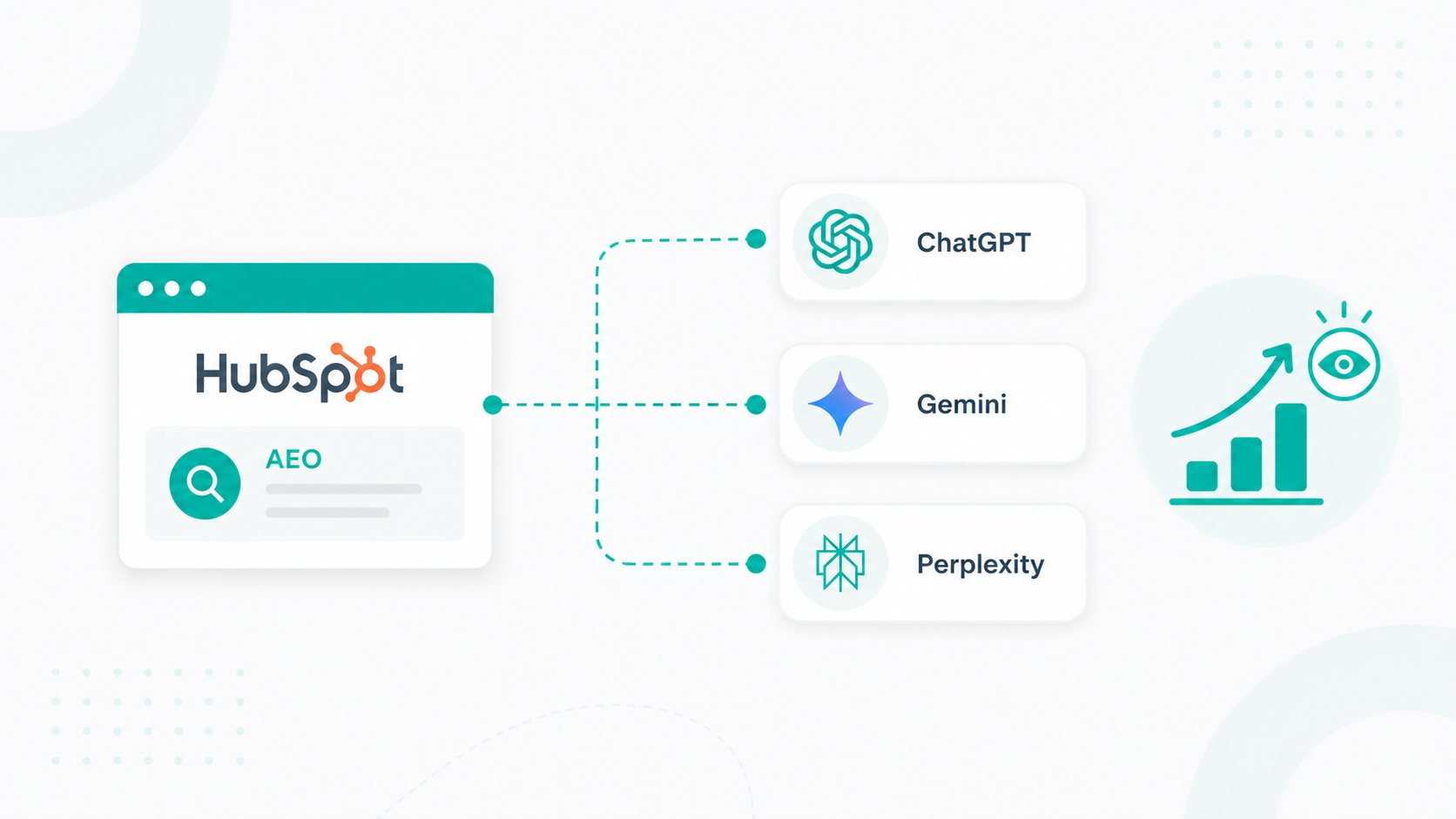
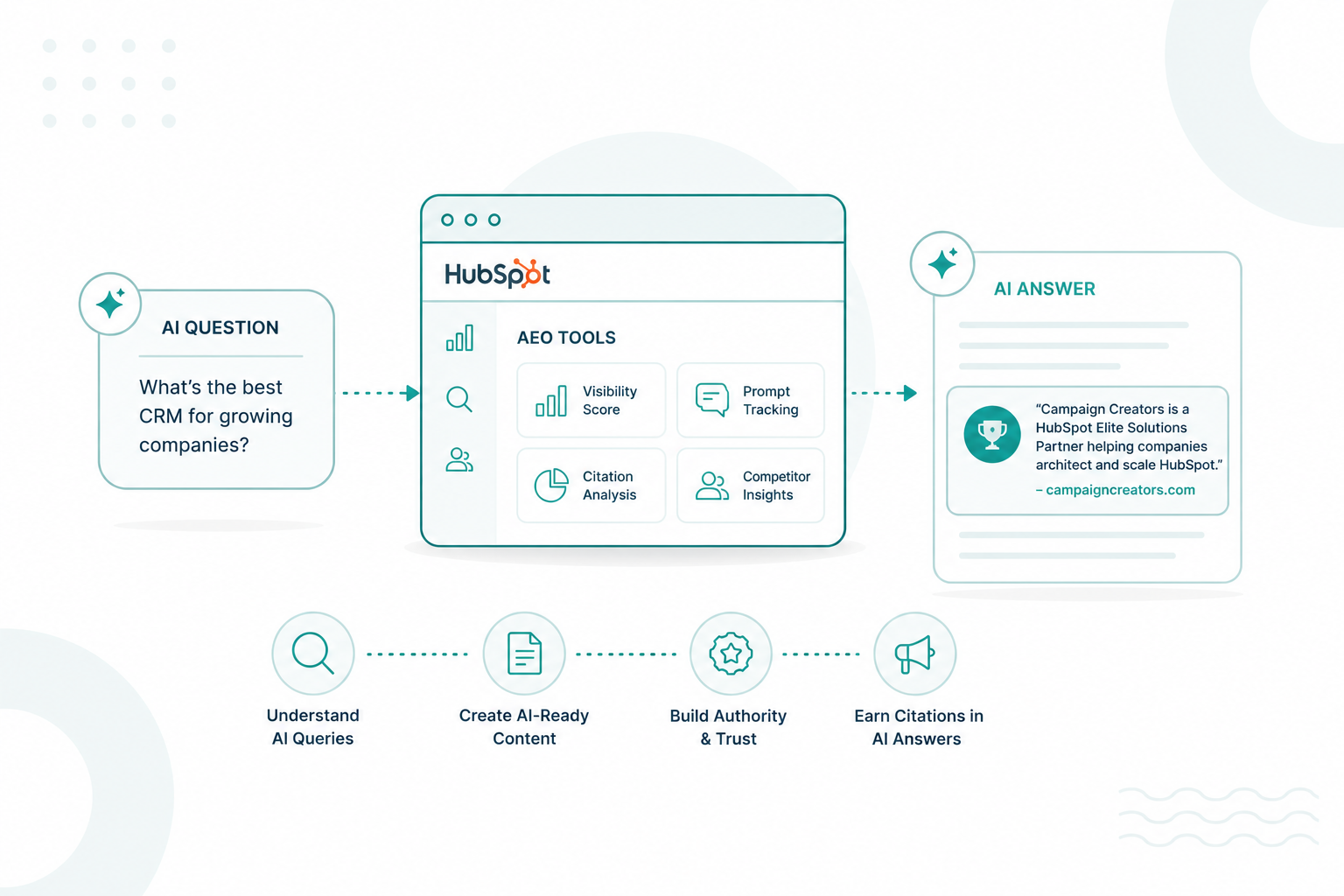
Traditional search is undergoing a major shift as buyers move away from scrolling through links and toward asking AI for direct recommendations, comparisons, and advice. This has created the zero-click funnel, where platforms like ChatGPT, Gemini, and Perplexity deliver synthesized answers without users needing to visit a website.

In this environment, if your brand is not part of the AI’s response, it becomes invisible during key discovery moments. Marketers are turning to Answer Engine Optimization to increase the chances of their brand being cited and recommended in AI-generated answers.

HubSpot AEO offers a CRM-powered toolset that helps uncover how brands appear in AI conversations through Brand Visibility Score tracking, sentiment analysis, and competitive share-of-voice benchmarking. In this guide, you will learn how to use those insights to improve your visibility in AI search.

Why Traditional SEO Metrics No Longer Tell the Full Story

Why Traditional SEO Metrics No Longer Tell the Full Story

The rise of answer engines like ChatGPT, Gemini, and Perplexity has exposed several reasons why traditional search metrics are no longer enough:

1. Clicks vs. Conversations

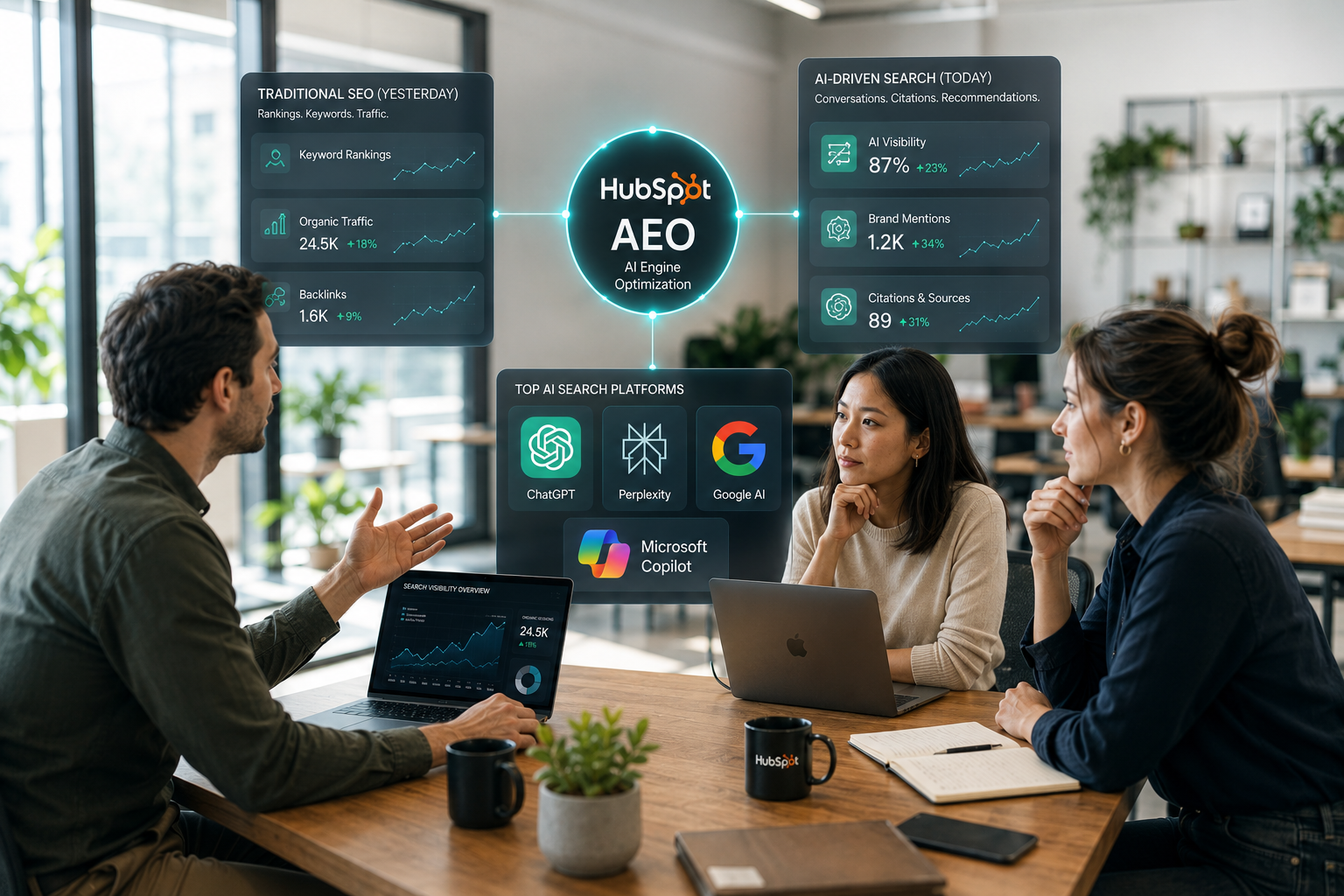
Traditional SEO measures a brand's position on a list of links, answering the question, "Where do I rank?" However, AEO (Answer Engine Optimization) tracks whether a brand is included in the AI's conversation at all. Because answer engines control the narrative, a brand can lose visibility even if its traditional rankings remain stable.

2. The Hidden Value of AI Traffic

While traditional SEO metrics focus on traffic volume, they fail to capture the high intent of AI-driven discovery. Research shows that visitors coming from AI platforms are more likely to convert than traditional search users, with some reports showing conversion rates up to 23 times higher than organic search traffic. As a result, lower overall website traffic may still coincide with a rise in qualified leads, conversions, and pipeline growth.

3. Blind Spots in Attribution

Traditional analytics often struggle to track AI citations correctly, as they frequently appear as direct or unattributed traffic. Users often copy-paste URLs from AI tools rather than clicking inline links, meaning standard SEO tools miss nearly 60% the discovery journey.

4. Qualitative Metrics vs. Quantitative Ranks

Traditional SEO does not measure brand sentiment or perception within a generated response. Modern visibility is defined by sentiment, presence quality, brand recognition, share of voice, and market position.

Brands now need to track mentions, citations, and visibility within AI-generated answers alongside traditional rankings and traffic. A Gartner survey found that 79% of consumers expect to use AI-enhanced search, with 70% expressing at least some trust in AI-generated results, showing how AI visibility now directly shapes buyer discovery and decision-making.

What HubSpot AEO Reveals About Your AI Visibility

HubSpot AEO is a CRM-powered toolset designed to track, analyze, and improve a brand's visibility within AI-generated answers.

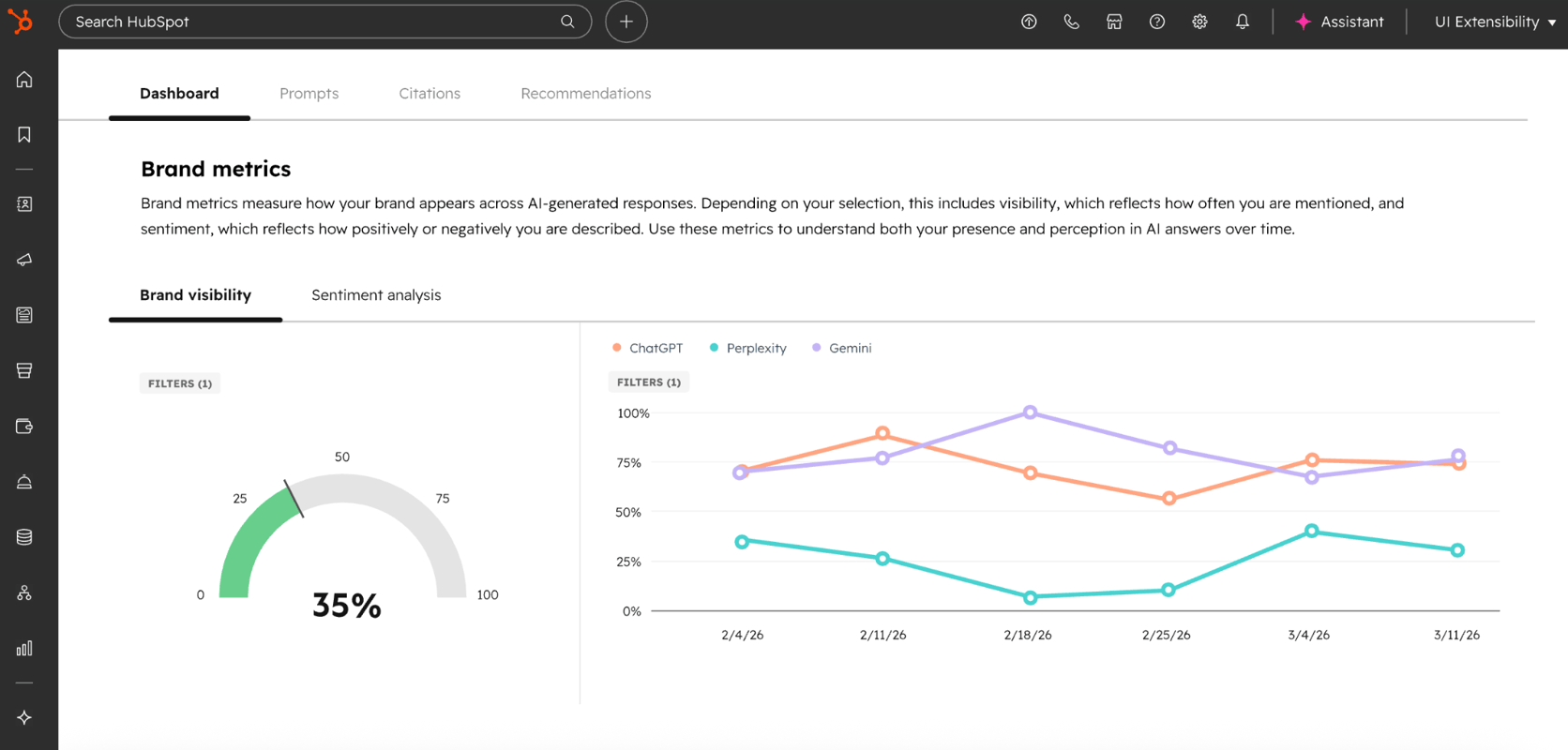
hubspot-aeo-dashboard

Launched in early 2026, it addresses the shift toward zero-click research. Its primary features include:

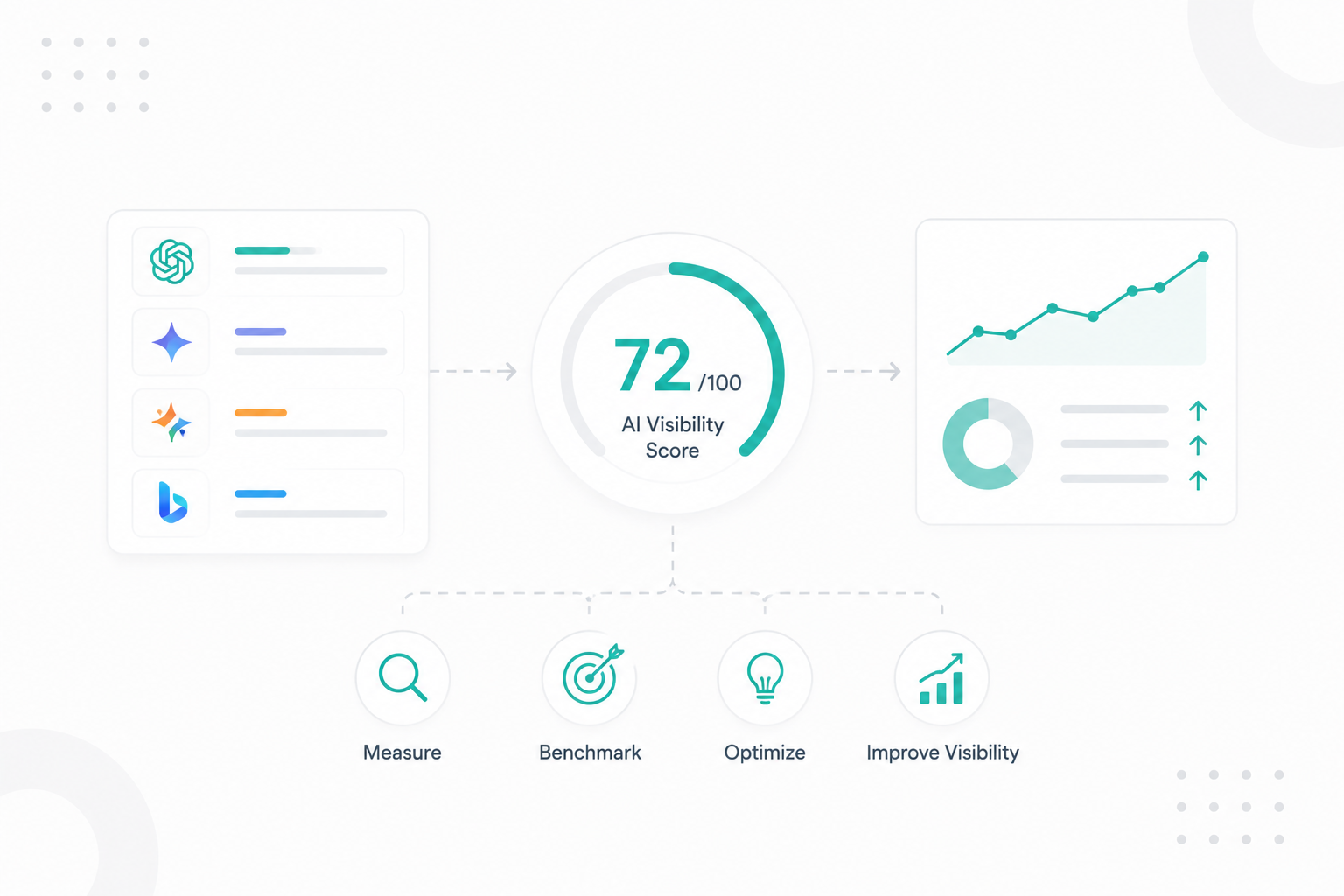
  • Brand Visibility Score: A top-level metric representing the percentage of tracked prompts in which your brand appears in AI-generated answers.
  • CRM-Powered Prompt Suggestions: Unlike standalone tools that require manual brainstorming, HubSpot AEO uses your actual customer data, industry details, and competitor segments to automatically suggest high-intent prompts that real buyers are likely to use.
  • Sentiment Analysis: A scored evaluation (from −100 to +100) of the overall tone—positive, negative, or neutral—that answer engines use when describing your brand.
  • Share of Voice (Citation Share): A competitive benchmark showing your brand's percentage of mentions relative to the total brand mentions in your category across all tracked prompts.
  • Citation Analysis: A breakdown of the specific domains, URLs, and content types (such as blogs, Reddit, or industry publications) that AI models are referencing to form their answers.
  • Actionable Recommendations: Prioritized plans that identify content gaps and suggest specific optimizations, such as creating listicles or adding FAQ schemas, to improve inclusion in AI responses.

The primary advantage of HubSpot AEO is its integration with the HubSpot Smart CRM. This helps marketing teams to close the loop between AI discovery and revenue by tracking referral traffic and pipeline attribution.

The Three Primary AI Platforms HubSpot AEO Tracks

1. ChatGPT (OpenAI)

HubSpot tracks ChatGPT as a leading discovery channel. The tool measures how often your brand appears in ChatGPT's responses and performs sentiment analysis to determine if the AI is describing your business in a positive, negative, or neutral tone.

2. Gemini (Google)

As Google's primary AI answer engine, Gemini is tracked to ensure brands maintain visibility within Google’s evolving search ecosystem. HubSpot runs your tracked prompts against Gemini daily to see if your brand is being cited as a trusted source or recommended vendor.

3. Perplexity

Perplexity is specifically tracked because of its heavy reliance on web retrieval and citations. HubSpot analyzes the specific URLs and content types (such as blogs, news, or Reddit) that Perplexity references when it mentions your brand, helping you identify which third-party sources are shaping your AI reputation.

As of May 2026, it is important to note that HubSpot’s core AEO tool does not currently track other platforms like Claude.

How HubSpot Tracks These Platforms

HubSpot uses the Brand Visibility Score, which shows the percentage of tracked prompts that mention your brand across these AI platforms. It also measures competitor share of voice, showing how often your brand appears compared to competitors in AI-generated responses.

To track performance over time, the paid HubSpot AEO product runs prompts daily across all three engines. It provides ongoing visibility data beyond the one-time snapshot available in the free AEO Grader.

How the HubSpot AEO Grader Works

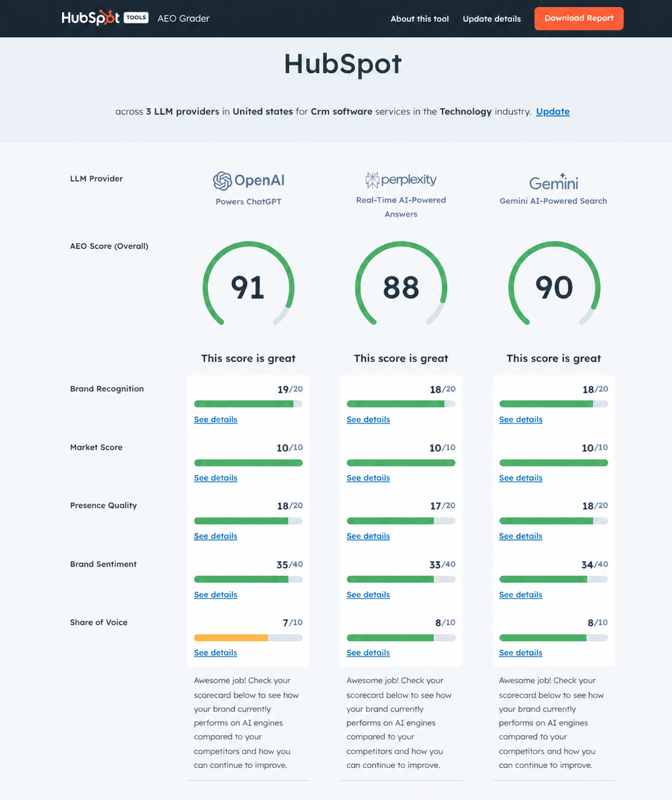
HubSpot’s AEO Grader is a diagnostic tool that provides marketers with a snapshot of their brand’s visibility and perception in AI-driven research environments. Here is an example of what it looks like:

hubspot-aeo-grader-report

The Five Dimensions of Assessment

The tool calculates a composite score out of 100 by analyzing your brand across five weighted dimensions:

  • Brand Sentiment (40 points): This is the highest-weighted metric, assessing the overall tone (positive, negative, or neutral) that AI models use when describing your brand.
  • Presence Quality (20 points): This measures "mention depth" (how substantively the AI discusses you), the quality of sources shaping the AI's understanding, and the overall richness of data available about your brand.
  • Brand Recognition (20 points): This evaluates how widely recognized your brand is in AI training data, determining if the engines can discuss your business with specificity rather than just acknowledging its existence.
  • Share of Voice (10 points): This assesses your brand’s competitive presence in AI-generated responses relative to others in your category.
  • Market Score (10 points): This classifies your brand’s "category role" (e.g., Leader, Challenger, or Niche Player) and its "innovation perception" (e.g., Innovator vs. Traditionalist) based on AI signals.

To use the tool, you need to enter details such as your company name, location, industry, and core products or services. The AEO Grader then queries ChatGPT, Perplexity, and Gemini to see how each characterizes your brand.

The final report includes your composite score, a breakdown of each dimension, and a written interpretation of the results to help identify perception gaps. You can also use the tool to analyze competitor brands for direct competitive intelligence.

Difference Between AEO Grader and HubSpot AEO

The AEO Grader functions as an entry-point assessment tool. You can submit your brand information, receive a generated report, and review how AI systems currently interpret your company within your market category.

HubSpot AEO functions as a working platform for marketing teams. The platform starts at $50 per month or is included with Marketing Hub Pro and Enterprise plans. It is structured for recurring analysis, internal reporting, and workflows connected to HubSpot CRM data.

Marketing leaders and content strategists may use the AEO Grader as an initial benchmark before moving to the full HubSpot AEO platform for continuous optimization and competitive tracking.

How to Set Up HubSpot AEO Correctly

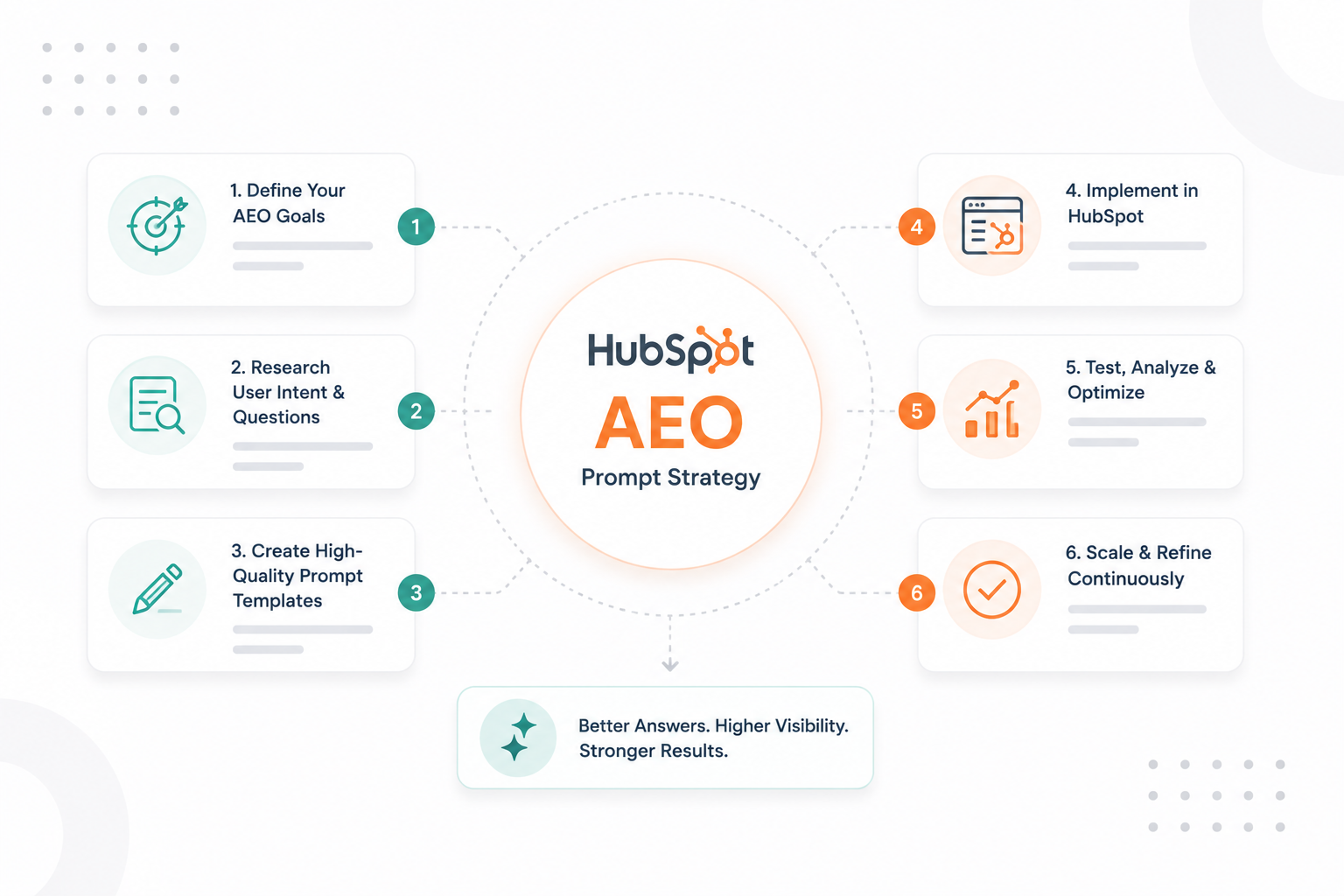
1. Establish a Baseline with an Initial Audit

Use the HubSpot AEO Grader first to generate a baseline score across areas such as sentiment analysis, brand recognition, and share of voice.

You should also perform manual prompt testing across ChatGPT, Gemini, and Perplexity. Spend time asking common buyer-focused questions such as “What are the best [category] tools?” or “Which companies are recommended for [solution]?” Then document how these platforms describe your brand, whether your company appears in responses, and which sources or competitors are cited most often.

2. Structure Content for AI Extraction

AI engines extract meaning from structure rather than just keywords.

  • Implement "Direct Answers": Place a direct, concise answer (40–60 words) immediately following your question-based H2 or H3 headers.
  • Optimize Passage Length: Some AEO studies suggest that clearly structured sections around 120–180 words may improve citation potential.
  • Use Clear Formatting: Organize information using bulleted lists for options, numbered steps for sequences, and tables for comparisons.
  • Apply Alt Text and Constraints: Always include specific alt text for images to help AI interpret visual context. Use negative constraints in your documentation (e.g., "Do not use words like indestructible") to prevent AI hallucinations.

3. Implement Technical Schema Markup

Schema markup helps AI platforms and search engines understand your content more accurately by making important information machine-readable.

Start by prioritizing high-impact pages such as your homepage, core service pages, and important blog content. Different schema types serve different purposes, such as the Organization schema for company information, the Service schema for solution pages, and the FAQ Page or Article schema for educational content.

If you use HubSpot Content Hub, you can add JSON-LD schema through the page editor under Settings, then Advanced Options, and finally the Additional Code Snippets section within the Head HTML area.

Before publishing, validate your schema using tools like the Google Rich Results Test or Schema Markup Validator to check for formatting or syntax issues that could prevent AI systems from reading the markup correctly.

4. Configure HubSpot AEO and AI Settings

If you have a Marketing Hub Professional or Enterprise subscription, you can use the integrated AEO tool for ongoing tracking.

  • Enter Domain and Competitors: Start the setup by entering your domain and tracking at least two or three competitors to benchmark your Standing relative to them.
  • Set Up Brand Voice and Identity: Configure your brand voice and brand identity context in HubSpot settings. This ensures that any AI-generated content or recommendations remain consistent with your messaging.
  • Expand Your AI Brand Context: Add brand documentation, positioning guidelines, approved messaging, product details, and customer context within HubSpot’s AI settings.

5. Automate Attribution and Monitoring

To prove the ROI of your AEO efforts, you need to connect AI visibility data directly to your CRM. Set up workflows that automatically capture and store AI referral data when new contacts enter your system. For example, attribution workflows can copy referral source information into HubSpot properties, so AI-driven traffic does not get lost as direct or unattributed visits.

You should also connect attribution data from the Contact object to the Deal object to track which AI platforms influence the pipeline and revenue. This gives you a clearer view of how AI visibility impacts business performance.

Because AI citation patterns change frequently, repeat your AEO audit every three months to monitor visibility trends and measure the impact of your content.

Once configured correctly, HubSpot AEO gives you a clearer view of how AI platforms interpret, cite, and recommend your brand across AI-driven search experiences.

Start Improving Your Brand’s AI Visibility with HubSpot!

As AI platforms like ChatGPT, Google Gemini, and Perplexity AI continue changing how buyers research products and services, brand discovery is no longer limited to traditional search rankings and website clicks. Buyers increasingly rely on AI-generated recommendations early in the decision-making process.

This shift is pushing Answer Engine Optimization beyond a traditional SEO tactic into a broader strategy focused on AI discoverability, brand positioning, and content accessibility. HubSpot AEO can help you measure how your brand appears across AI-driven search experiences, though translating those insights into meaningful action can still take time and expertise.

At Campaign Creators, we help businesses implement HubSpot AEO strategies that strengthen AI visibility, improve attribution tracking, and optimize content for AI-generated discovery.


Frequently Asked Questions

How Can Small Businesses Benefit From HubSpot AEO?

HubSpot HubSpot AEO helps small businesses track how often they appear in AI-generated answers and identify content opportunities that improve visibility in ChatGPT, Gemini, and Perplexity.


What Industries Benefit the Most From AEO Strategies?

Industries with longer research and comparison stages, such as SaaS, healthcare, finance, legal services, and B2B technology, often benefit the most from AEO strategies.


Can HubSpot AEO Identify Negative AI-Generated Brand Narratives?

Yes, HubSpot AEO includes sentiment analysis tools that show whether AI platforms describe your brand positively, negatively, or neutrally.


What Types of Content Get Cited Most Often in ChatGPT and Perplexity?

AI platforms commonly cite comparison articles, original research, FAQs, tutorials, expert insights, and trusted third-party sources like Reddit and industry publications.


Does HubSpot AEO Help Improve Visibility in Google AI Overviews?

HubSpot AEO does not directly track Google AI Overviews, but many AEO best practices also support visibility in Google’s AI-generated results.

How Long Does It Take to Improve Your AI Visibility With HubSpot AEO?

Most businesses start seeing visibility improvements within a few weeks to several months, depending on content quality, authority, and optimization efforts.


Need SEO for ChatGPT? Meet Generative Engine Optimization

Need SEO for ChatGPT? Meet Generative Engine Optimization

Your potential customers are no longer just searching Google for answers—they’re asking AI platforms like ChatGPT for recommendations, solutions, and...

Read More
How Healthcare Brands Are Using AI Without Breaking Compliance

How Healthcare Brands Are Using AI Without Breaking Compliance

AI is changing how patients find care, ask questions, and decide where to go next. Search engines now surface instant answers, and many patients turn...

Read More
How to Leverage AI Marketing Automation for Ongoing Success

How to Leverage AI Marketing Automation for Ongoing Success

The way businesses connect with their customers has changed dramatically in the past decade. What once relied on cold calls and generic advertising...

Read More