

What Is AEO in HubSpot? How to Get Your Brand Cited in AI Answers
Artificial intelligence is changing how people discover brands online. Many buyers now ask ChatGPT, Gemini, Perplexity, and other AI platforms for...
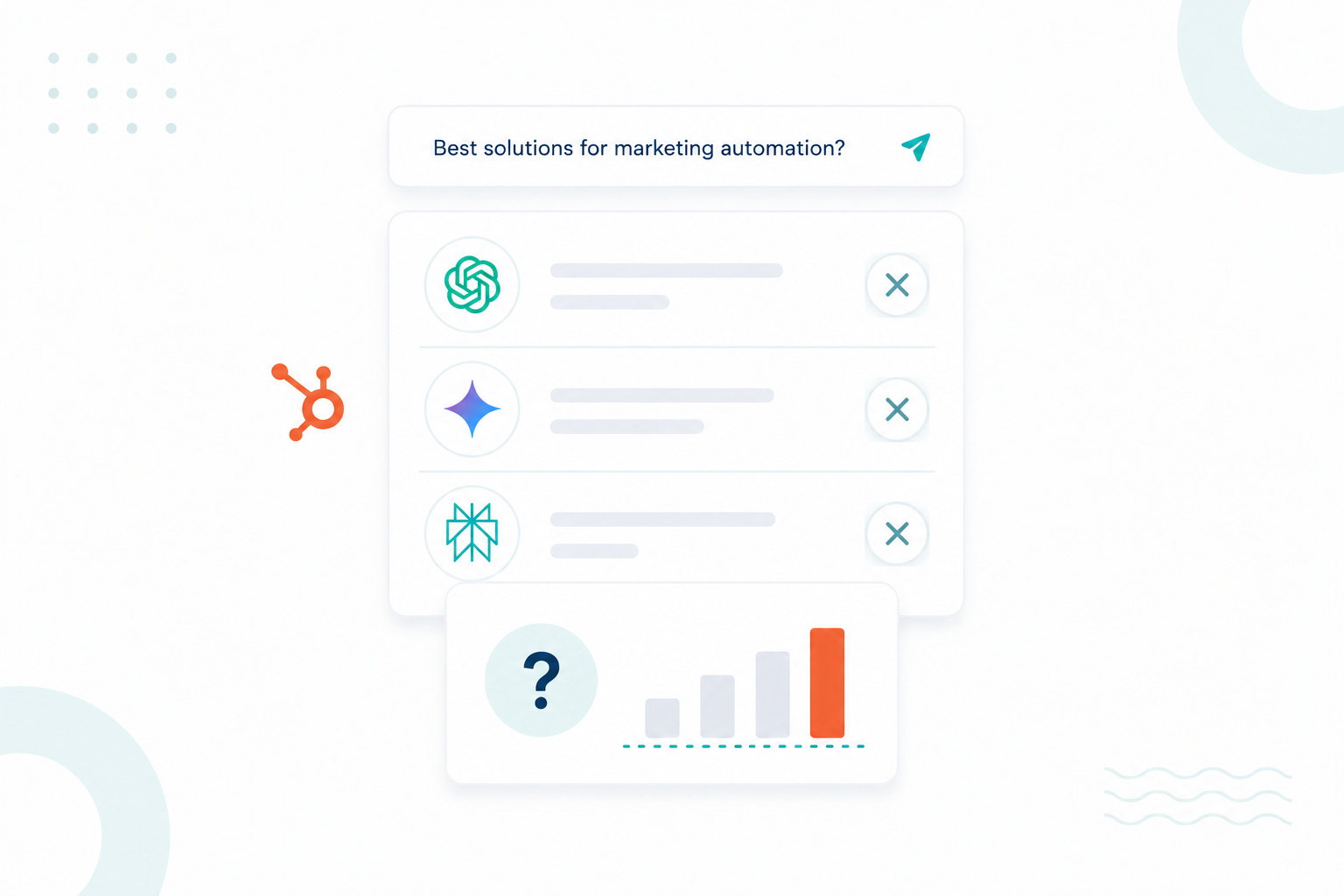
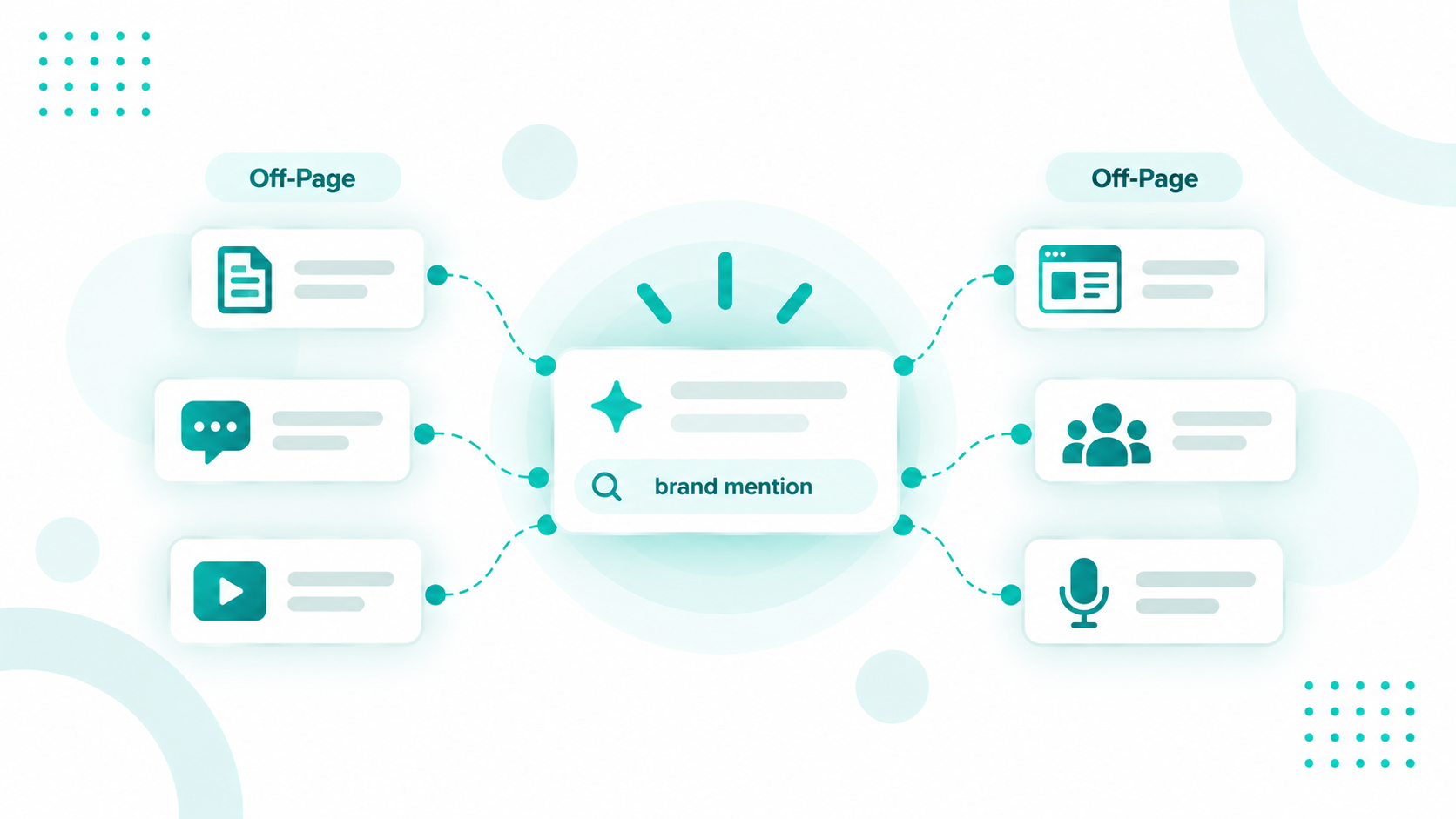
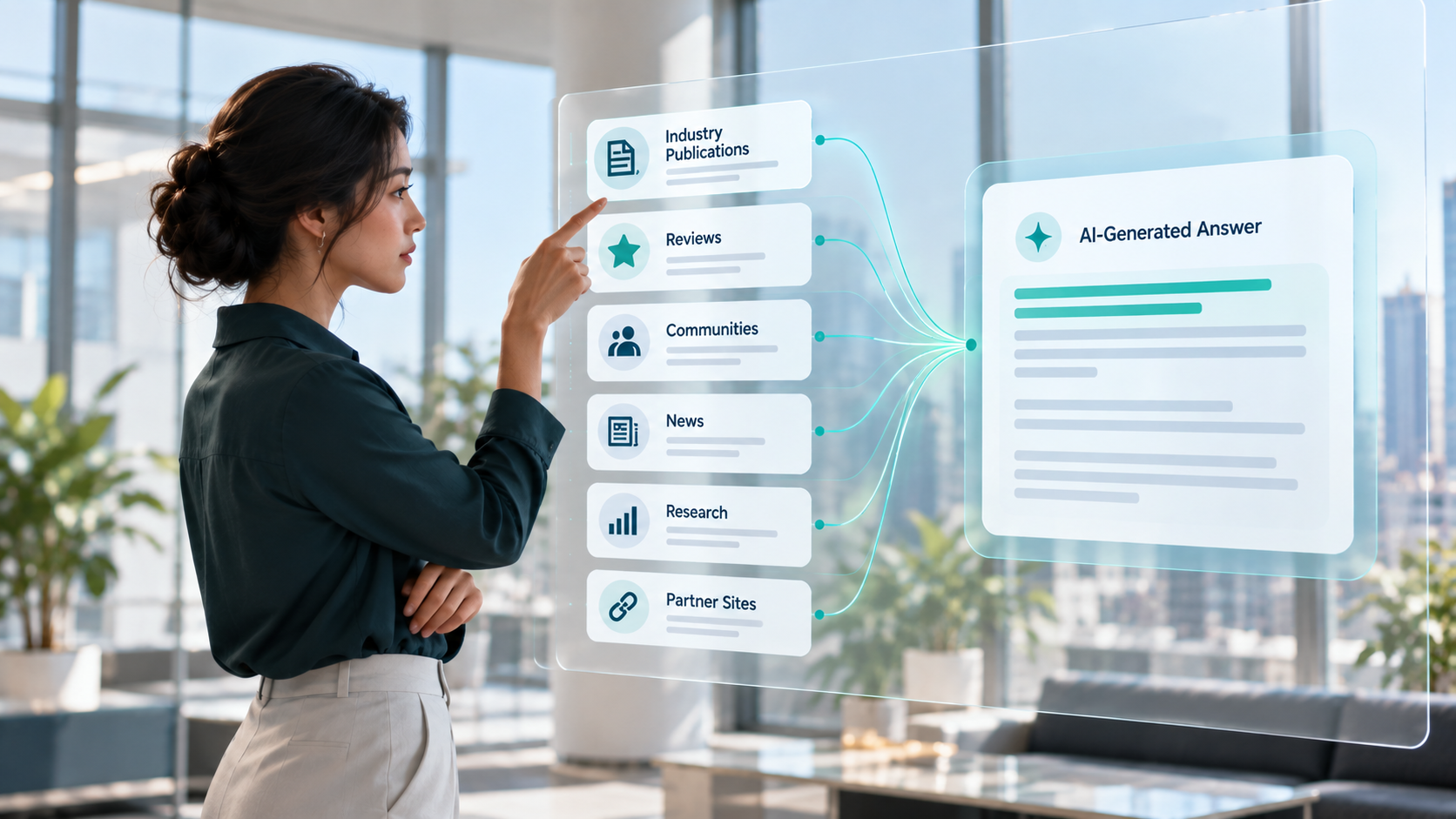
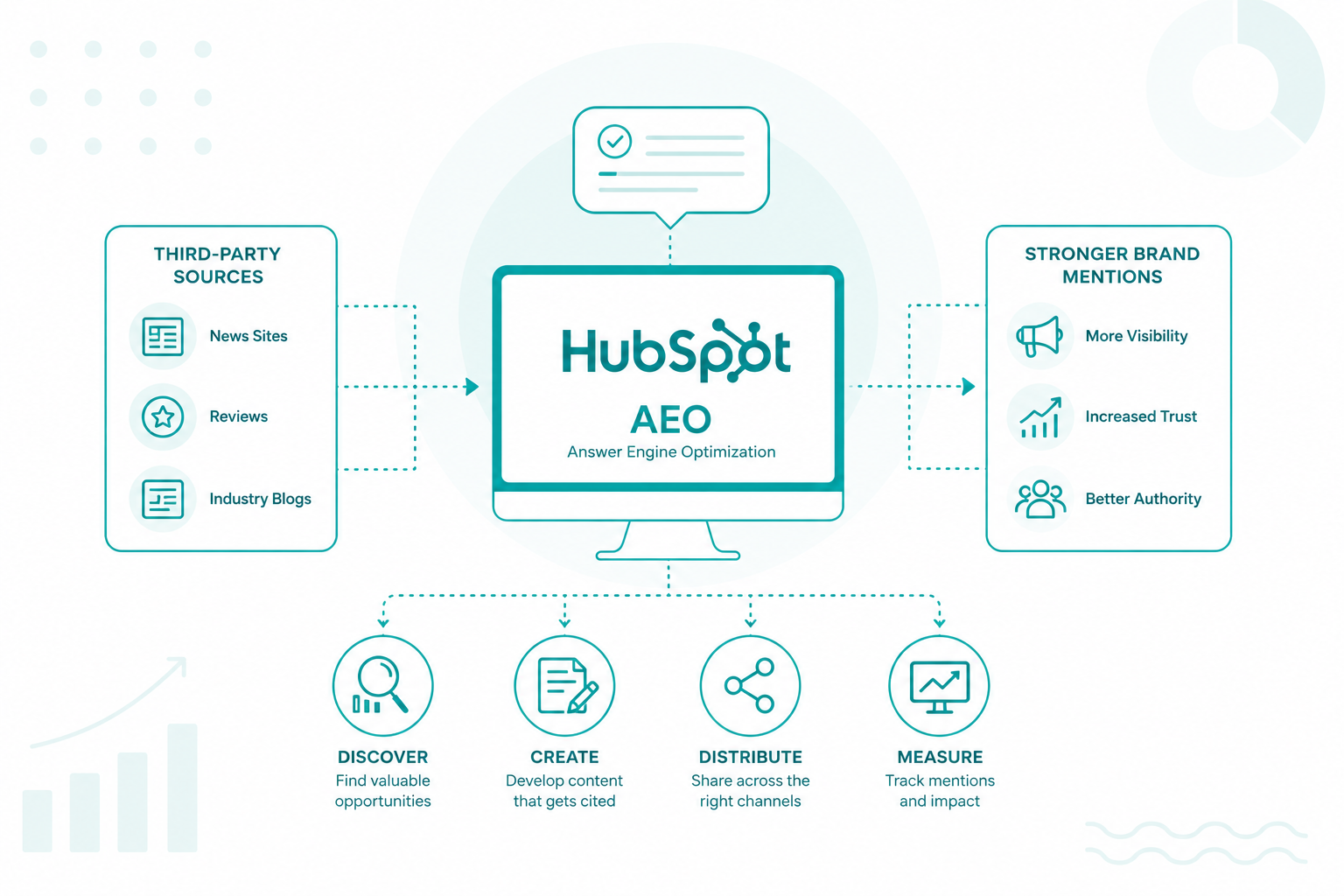
Ask ChatGPT or Google’s AI Mode to recommend a brand similar to yours, then look at the sources behind the answer. You’ll likely see review sites, industry roundups, YouTube videos, Reddit threads, and other third-party sources alongside the company’s own website. AI search uses information from across the web to understand and describe your brand.
Off-page AEO is the work of shaping how your brand is represented across those external sources. Brand mentions are central to this because they connect your company to specific categories, services, and use cases, even without a link to your website.
At Campaign Creators, our SEO and AEO team helps B2B companies understand where AI engines mention their brand, where competitors are being cited, and what content opportunities to pursue. This guide focuses on the off-site factors that shape how AI search understands your brand.

Off-page AEO is the practice of improving how your brand is understood, referenced, and surfaced in AI-generated answers through information published outside your own website. That includes industry publications, review platforms, directories, partner sites, forums, videos, podcasts, and interviews. It complements on-page AEO, which makes your own content clear, structured, and easy for answer engines to use.
Off-page AEO is a marketing framework for planning the off-site side of AI visibility. Google itself treats AEO and GEO as part of SEO.
Traditional off-page SEO centers on earning editorial backlinks, since Google uses links to discover pages and judge relevance. Off-page AEO keeps backlinks in the picture. It also looks at what the wider web says about your brand and which sources AI engines pull from when they build an answer.
|
Off-Page SEO |
Off-Page AEO |
|
|
Main focus |
Backlinks and referring domains |
Backlinks, brand mentions, and third-party coverage |
|
Where results show up |
Ranked search results |
AI-generated answers and their citations |
|
Key metrics |
Backlinks, rankings, organic traffic |
Mentions, citations, share of voice, cited domains |
|
Core question |
Which authoritative sites link to us? |
Which sources discuss, compare, or validate us? |
The two work best together. A brand with a strong backlink profile can still show up weakly in AI answers when few other sources discuss it.
Interesting read: Is AI the Secret SEO Weapon for Better Website Conversions?
Brand mentions are important in AI search because they give answer engines independent evidence about what your company does, who it serves, and which category it belongs to. When several sources connect your brand to the same service or use case, AI systems have more context to recognize you and include you in relevant answers. A few research supports this:
These findings show a correlation. Brands with many mentions also tend to have more search demand, stronger content, and bigger audiences. Even with that caveat, the data shows that your off-site footprint shapes AI visibility enough to deserve its own plan.
Your own website still plays a role. AI models reference brand-owned pages, such as product pages and homepages, when a query shifts from exploring options to checking specific details. Third-party sources shape discovery and evaluation, and your site supplies the facts they build on.
AI search engines use third-party sources by running several related searches behind one question. They then retrieve information from multiple pages and combine it into a single answer. That answer can draw on your website, a G2 profile, a partner directory listing, a trade article, and a Reddit thread at the same time. Google's AI Overviews and AI Mode use retrieval-augmented generation and query fan-out, both grounded in the core Search index.
Google's AI features can also show what people say about products and services across blogs, videos, and forum discussions. ChatGPT search and Microsoft Copilot follow a similar pattern, searching the web and citing the pages they use.
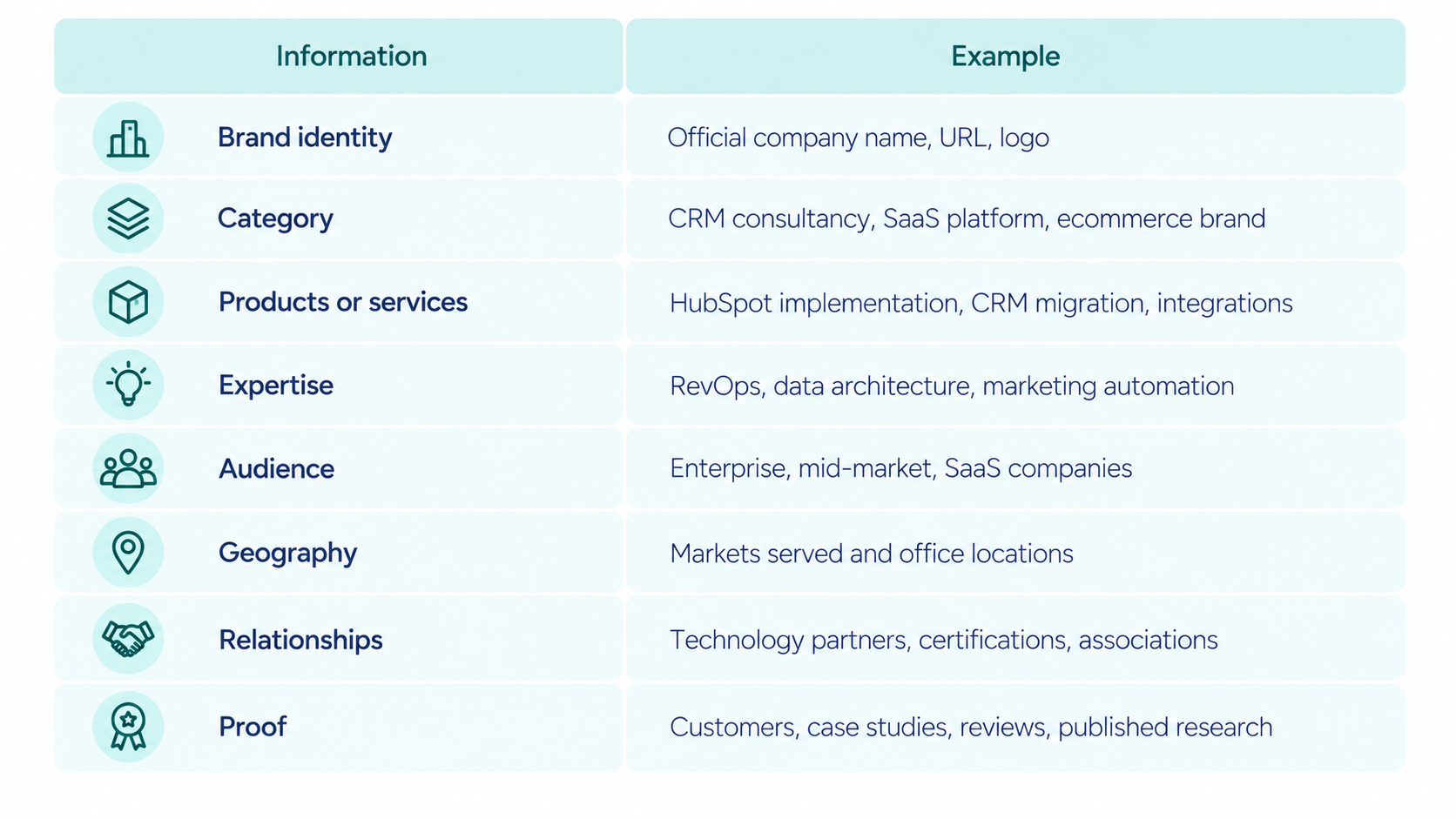
Search systems organize information around entities, meaning real-world companies, products, and people, along with the facts that connect them. Google built its Knowledge Graph on this idea by gathering facts from across the web and from structured databases.
Third-party sources strengthen those connections. Say one source calls a company a HubSpot implementation partner, another covers its CRM migration work, and a third quotes its team on RevOps. AI systems then see a repeated link between that brand and those services.
A mention is when an AI answer names your brand without a linked source. A citation is when the answer attributes information to a source or links to a URL.
Semrush and Kevin Indig studied 3,981 domain appearances across ChatGPT, Google AI Overviews, Gemini, and AI Mode. They found that 61.7% of citations were "ghost citations," where a page got a source link, but the brand was never named. Only 13.2% of appearances earned both a citation and a mention.
This gives brands two separate opportunities. Third-party pages can describe you in ways that get repeated in AI answers, and they can also become the sources those answers cite. Either way, your AI visibility depends partly on pages you don't control.
Want to see how mentions and citations work together? Watch The Power of Citations and Mentions in AI Search to see what these two signals mean for your brand’s visibility.
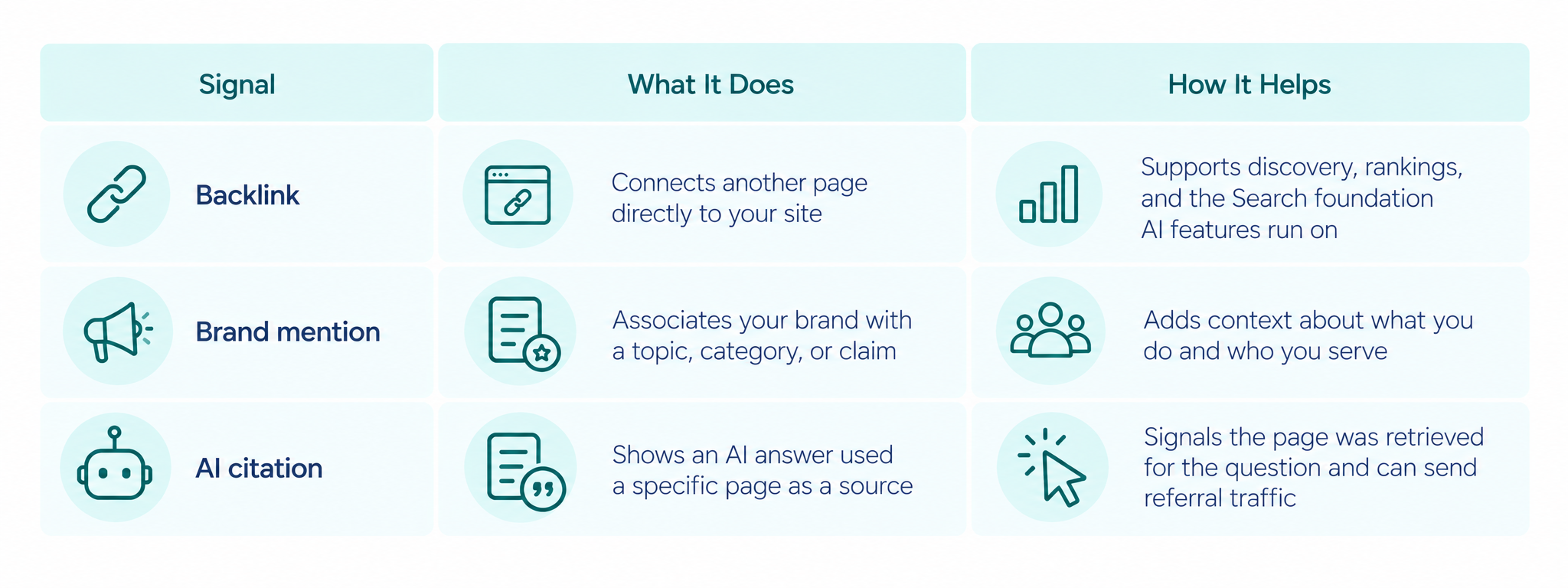
Brand mentions and backlinks both support AI visibility. Backlinks strengthen the Search foundation that AI features run on, and brand mentions add context about what your company does. A backlink is a link from another site to yours. A brand mention is any reference to your company, with or without a link.

A single trade article can produce all three signals. It can mention your company, link to your site, and later get cited in an AI answer that names you.
A few mentions on sources your buyers trust do more for AI visibility than dozens on unrelated sites. A detailed review, a respected trade publication, or an accurate comparison page gives AI systems far more useful context.
Chasing inauthentic mentions isn't as helpful as it seems, because its AI features depend on both quality ranking systems and spam protection. Mentions work best when people have a genuine reason to talk about you.
Off-page AEO brand mentions come from any public place where your company is discussed. That includes industry publications, review platforms, comparison articles, directories, partner pages, communities, YouTube, podcasts, case studies, and social profiles. Each source type adds a different kind of context about your brand.
|
Source |
What It Adds |
|
Industry publications |
Expertise and category association |
|
Review platforms |
Customer experience and evaluation |
|
Comparison articles and listicles |
Positioning against alternatives |
|
Directories and marketplaces |
Core facts such as category, location, and services |
|
Partner and integration pages |
Ecosystem relationships and certifications |
|
Reddit and forums |
Firsthand experiences and use cases |
|
YouTube |
Demos, reviews, and expert explanations |
|
Podcasts and interviews |
Expertise tied to your people and brand |
|
Customer case studies |
Real problems, industries, and outcomes |
|
Social and professional profiles |
Public identity and positioning |
Reviews, comparisons, and industry publications get a closer look in the next section. The three source types below also deserve a spot in your plan.
YouTube mentions showed the strongest correlation with AI visibility in Ahrefs' study of ChatGPT, AI Mode, and AI Overviews. Ahrefs counts a YouTube mention whenever a brand name appears in a video's title, transcript, or description. That means tutorials, product reviews, and interviews that name your brand all add to your footprint. Mention volume also correlated slightly more strongly than view-weighted impressions, which suggests smaller videos still count.
Community threads use specific, practical language about tools, services, and problems. That makes them useful when people ask AI for recommendations or firsthand opinions. Communities tend to downvote or remove sales pitches, so helpful, genuine answers earn the most traction.
Directories and partner listings confirm the basics about a company, including its category, services, certifications, and relationships. For a SaaS company, that might include profiles on G2, Capterra, Product Hunt, software marketplaces, and technology partner directories.
Customer case studies published on a client's site or in a trade outlet add even more context. They explain what the brand did, for whom, and with what result. Check out how we structure our case studies to help people find the right information about our work and give AI search more context about the brands and results we’re associated with.
Third-party reviews, comparisons, and industry sources are important because they supply the evaluation AI engines need to answer commercial questions. A question like “What does project management software do?” can be answered from a company’s own site. A question like “What’s the best project management software for a growing team?” requires comparing options, which is exactly what these sources are built to do.
An analysis of 30,000 commercial keywords has found that 34.5% of AI Overviews cited at least one review platform. That share rose to 49% for searches with terms like "review" or "rating." Gartner Peer Insights, G2, Capterra, Software Advice, and TrustRadius accounted for 88% of all review-platform links in the dataset.
Reviews cover details that product pages leave out, like implementation effort, support quality, and trade-offs. A complete, current profile on the platforms your buyers use gives AI engines that material.
Comparison articles, listicles, and reviews can put your brand directly into the formats AI engines use to answer shortlist and recommendation questions. Content such as “best tools for growing teams” or “X vs. Y” gives AI systems information about how different products compare across features, use cases, pricing, and audience.
Earning a place in relevant independent lists and head-to-head comparisons can help your brand appear when potential customers ask AI to compare or recommend options.
Trade publications, news coverage, podcasts, and expert quotes can connect your brand to a subject area through sources you don't control. An article that explains your expertise clearly or a podcast where your team answers real buyer questions can give AI engines additional context about your brand and expertise.
This makes digital PR a useful part of an AEO strategy. Third-party coverage can reinforce what your brand does and the topics associated with your expertise.
Brand consistency across the web helps answer engines connect every mention to the same company. When your website, LinkedIn page, directory listings, partner profiles, and press coverage describe you consistently, AI systems get a clearer picture of what you do and which queries you fit.
For example, a company that describes itself as a data analytics consultancy on its website, a technology provider on one directory, and a business intelligence firm on another profile. AI systems then have to reconcile different descriptions to determine which category best fits the company.
Brand names overlap more often than people expect. Two companies can share a name, a product can share a name with its parent company, and one acronym can point to several organizations. A mention that appears alongside your website, industry, products, or leadership gives AI systems enough context to match it to your company.

Reviewers, journalists, and customers will always describe you in their own words. Keep your profiles and published facts accurate so their coverage has a solid base to draw from.
You can build an off-page AEO strategy in three stages. First, benchmark what AI engines already say about your brand. Next, identify the third-party sources shaping those answers. Then strengthen your presence in those sources over time. These seven steps give you a practical starting point.
For more tactics on earning outside coverage, see our guide on how marketers can increase third-party mentions to improve AI search visibility.
As more discovery moves into AI search, brand visibility will depend more on how your company appears inside AI answers and on the sources behind them. At Google I/O 2026, Google said AI Mode passed one billion monthly users about a year after launch, with AI Overviews at 2.5 billion monthly users. This shift expands the focus of search visibility beyond traditional rankings. Brands now need to appear in AI-generated answers and across the sources AI systems use to build those answers.
Each AI engine selects and uses sources in its own way. A brand may appear prominently in one AI platform while having little or no visibility in another. This makes AI visibility a platform-by-platform consideration, with brands needing to understand where they appear, how they are represented, and which external sources support their presence.
Google launched Search Console reports for generative AI features on June 3, 2026. These reports give site owners a dedicated view of their visibility across AI Overviews, AI Mode, and Discover.
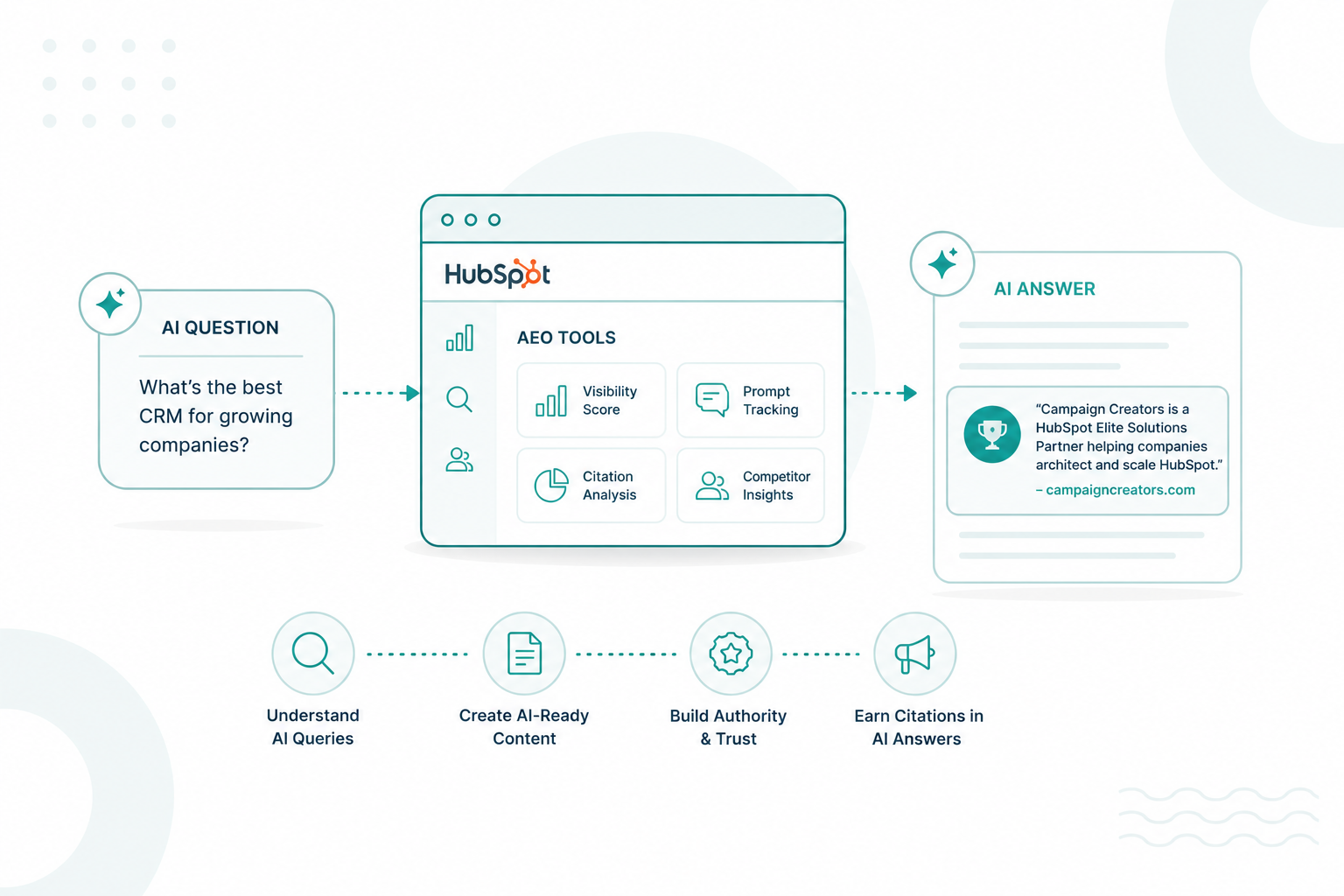
Off-page AEO requires a broader measurement approach. Beyond impressions, brands need to track mentions, citations, share of voice, and the third-party domains that influence AI-generated answers. Tools such as HubSpot AEO extend this visibility across AI platforms including ChatGPT, Gemini, and Perplexity.
Reviews, earned coverage, partnerships, and community participation now feed search visibility directly. PR teams will increasingly track if their coverage shows up in AI answers, and SEO teams will watch what gets said about the brand off-site. SEO stays the foundation, and off-page AEO extends it to the rest of the web. The brands that do well there will be easy for AI systems to understand, easy to verify, and discussed by sources buyers already trust.
Curious what ChatGPT or Google's AI Mode says when someone asks about your category? It's worth checking. The answer often shows which competitors get named first and which reviews, roundups, and articles AI engines rely on to decide. Our free AEO Auditor gives you a quick read on where your brand shows up and where the gaps are.
From there, we can help you turn what you find into a plan. We work with B2B companies to track AI mentions and citations and map the third-party sources shaping their category. We also build the content and coverage that help earn their brand a place in those answers. Talk to our team to review your results and identify where to focus next.
Expect gradual progress over several months, since reviews, coverage, and community presence build over time and each AI engine refreshes its sources at its own pace.
Yes, because niche publications, focused review profiles, and active community participation can make a smaller brand the most relevant answer for specific questions in its category.
GEO, or generative engine optimization, targets the same AI search visibility, and off-page AEO is the part of that work focused on third-party sources.
AI engines cite press releases occasionally, but independent coverage earns far more citations, so releases work best as a way to prompt articles about your news.
Yes, because a calm, specific reply shows how you handle problems and adds your side of the story to a page AI engines may cite.
It can improve them over time by giving AI engines accurate profiles and credible coverage to draw from.
A monthly review of the same prompt set works well for spotting trends, with weekly checks during launches, rebrands, or major campaigns.
Schema helps search engines read your own pages, and Google says its generative AI features need no special schema, so off-page AEO depends more on third-party coverage.
Artificial intelligence is changing how people discover brands online. Many buyers now ask ChatGPT, Gemini, Perplexity, and other AI platforms for...
Search behavior changed rapidly across 2025 and 2026. People now ask questions directly inside AI platforms like OpenAI ChatGPT, Google Gemini, and...
Third-party brand mentions improve your AEO performance when they connect your brand to a specific topic inside sources that answer engines already...