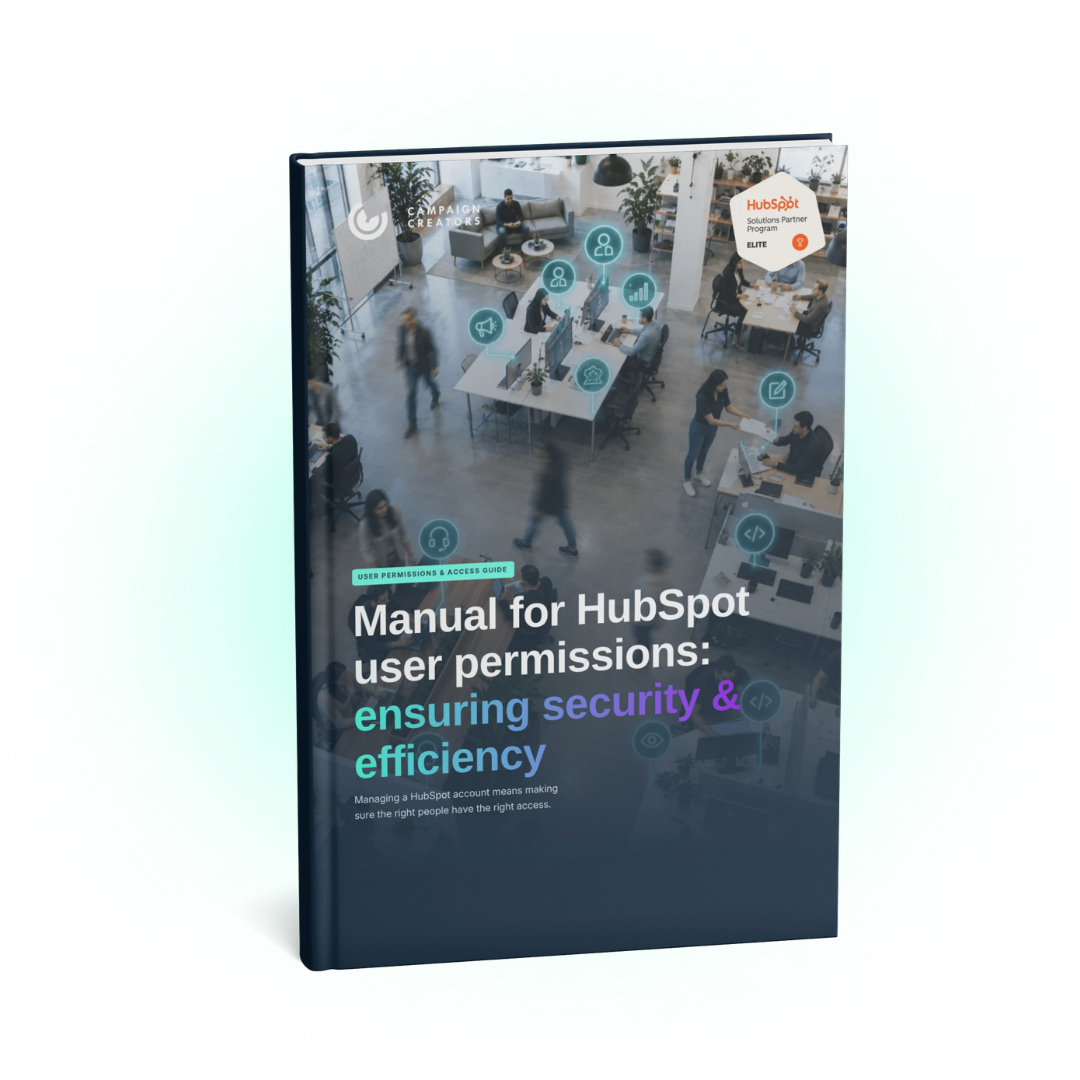
HubSpot User Permissions Guide: Manage Access Securely & Efficiently
82% of data breaches involve the human element, often from people having access they no longer need. This guide walks you through how to manage HubSpot user permissions the right way, so your team has exactly the access they need to do their job, and nothing more.
What You’ll Find Inside
This guide covers how HubSpot user permissions actually work, including seats, permission sets, and templates. You'll get a step-by-step walkthrough for setting up teams, adding users, and assigning the right access, plus how to review and maintain permissions as your team grows. It also includes a look at HubSpot's AI Teammates (Breeze) and a printable quick-setup checklist.
A seat determines which paid HubSpot features a user can access, like Sales Hub or Service Hub tools. Permissions determine what that user can actually do within those tools — view, create, edit, or delete records. You need both set up correctly; having a seat doesn't automatically grant full access.
Only a Super Admin or someone with the "Add and edit users" permission can manage other users' access. Note that users with this permission can only assign access they already have themselves — for example, only a Super Admin can grant Super Admin status to someone else.
It means giving each user only the access they need to do their job, and nothing more. This matters because a large share of data breaches come from people having access to things they no longer need — least privilege keeps that risk contained without slowing your team down.
Instead of configuring permissions individually for every new hire, a permission set lets you save a predefined access configuration and apply it to anyone in a similar role. Update the set once, and the change applies to everyone assigned to it. This feature is available on HubSpot Enterprise.
Permissions shouldn't be a "set it and forget it" task. Best practice is to review access whenever someone joins, changes roles, or leaves the company — and to schedule regular audits in between using tools like Permission History and Compare Access.
Who This Is For
This guide is built for HubSpot admins, IT/ops leads, and team managers responsible for onboarding users, assigning seats, or maintaining account security. It's especially useful for growing teams that need a repeatable process for permissions, rather than ad hoc access decisions, to keep sensitive data protected as headcount and roles change.







.png?width=1080&height=1080&name=Hero%20Image%20Templates%20(9).png)