


Deltek Costpoint and Vantagepoint × HubSpot
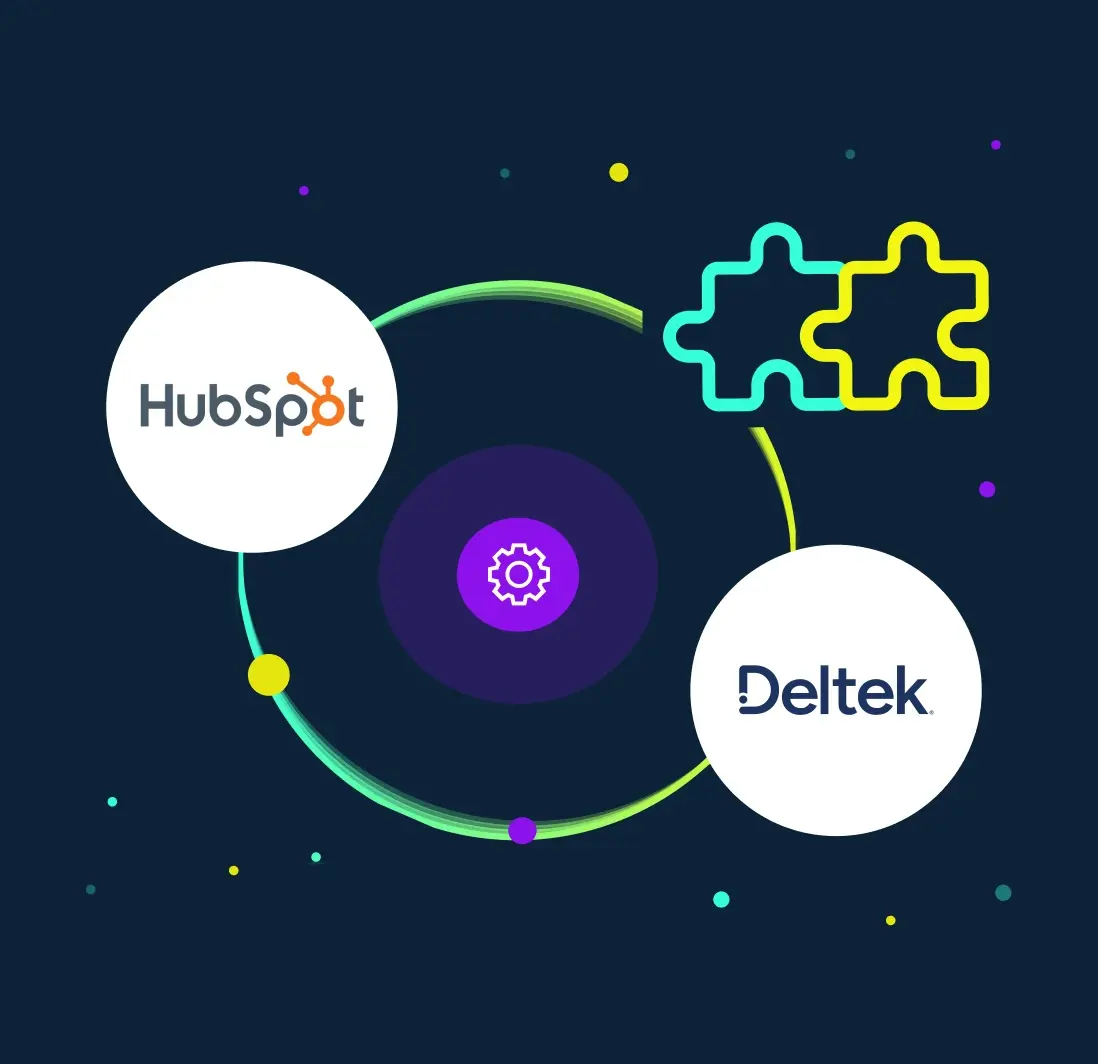
How firms, contacts, pursuits, projects and billing in Deltek Vantagepoint, and customers, contracts and projects in Deltek Costpoint, can flow into HubSpot, how HubSpot deals map to Deltek's project-based structures, and how a CC-built integration layer serves either product.
Does Deltek integrate with HubSpot?
Deltek makes two different ERPs. Vantagepoint runs architecture, engineering and other professional services firms, with CRM, projects, resource planning and billing in one system. Costpoint runs government contractors, with project accounting, contracts, billing and compliance. A firm runs one or the other, and this assessment covers both.
Public documentation. The client's own admin issues credentials, with no vendor approval needed.
Open API. The client's administrators issue access: a Vantagepoint consumer key and secret, and Costpoint web services deployed from its Integration Console.
Based on the vendor's public documentation. Access terms are confirmed with the vendor and the client in discovery.
Both Deltek products expose documented integration services, so HubSpot can run pursuits and see every won project and invoice.
Campaign Creators assessment
Vantagepoint publishes a REST API covering its hubs (firms, contacts, projects, activities, marketing campaigns), billing and accounting transactions, with OAuth 2.0 credentials generated in Vantagepoint's API Authorization form. Costpoint exposes integration services as SOAP and REST web services, built with the Costpoint Integration Console from Costpoint's own applications, so every import runs the same validation as the browser. The main design question is structural: Deltek tracks work as projects with a stage and a project, phase and task breakdown, not as standalone deals. For Costpoint, the contractor's compliance obligations decide which fields may leave Costpoint at all.
Ratings are CC judgments from Deltek's public documentation. Vantagepoint API detail is public; Costpoint service definitions are built per client in the Integration Console. Both are confirmed against the client's system in discovery.
A pursuit becomes the project
In Vantagepoint, a pursuit is a project record that moves from an in-pursuit stage to a won stage, so the data carries straight through from prospect to active project. HubSpot deals map onto that record cleanly.
Deals are not projects
Deltek structures work as project, phase and task (WBS1, WBS2, WBS3 in Vantagepoint), and Costpoint adds contracts above projects. HubSpot keeps the deal and a project summary; the breakdown stays in Deltek.
Compliance sets the field list
Costpoint holds government contract data that may be controlled. The contractor's security and compliance owners approve every field before it leaves Costpoint, and controlled data stays there.
Which Deltek APIs does the integration use?
Seven Deltek areas are relevant to HubSpot. Four carry the integration, two support it, and one is a scope decision to make early.
Vantagepoint firms & contacts
Firms hub · Contacts hubFirms hold clients, prospects, vendors and partners; contacts link to their firm. Vantagepoint's CRM also tracks activities and marketing campaigns.
- Firm ID and Contact ID become HubSpot match keys
- Client flag separates clients from other firm types
- Create, read, update and delete through the Hubs API
Vantagepoint projects & pursuits
Projects hub · pipeline stagesA pursuit is a regular project with a pipeline stage. Stages are set up as in pursuit, won, lost or do not pursue, with estimated revenue and a won/lost date and reason.
- HubSpot deal ↔ Vantagepoint project in pursuit
- Won stage keeps the same record as the active project
- Phases and tasks (WBS2, WBS3) stay in Vantagepoint
Vantagepoint billing
Billing API · Accounting Transactions APIBilling invoices by project, plus accounting transactions such as invoices and cash receipts.
- Invoice number, amount and project on the deal
- Receivable balance per client
- Read-only in HubSpot; Vantagepoint stays the ledger
Costpoint customers, contracts & projects
Data Integration servicesCustomers, contracts and the multi-level project structure that carries funding, billing and cost. Data Integration exports filtered result sets and imports with insert, update and merge modes.
- Customer ID and contract ID become HubSpot keys
- Awarded contracts and project summaries flow in
- Exports filter on a last-modified column
Costpoint Integration Console
Integration methods and modulesIntegration methods are created from Costpoint applications, grouped into modules and deployed as web services. Process and report integration can run Costpoint processes and reports.
- Services are defined per client, not a fixed catalog
- Same validation as the browser client
- Test Integration Module generates sample requests
Organizations, currencies & custom fields
Organizations · custom fields · user-defined hubsVantagepoint uses organizations and supports custom fields and user-defined hubs; Costpoint supports extensibility columns. Both run multi-company and multi-currency setups.
- Organization maps to HubSpot business units or teams
- Custom fields read through the API
- Confirm user-defined hubs in scope
Who owns pursuits, firms and contacts
Scope decisionVantagepoint has its own CRM for firms, contacts and pursuits. Decide which system owns each, and at which stage a HubSpot deal creates the Deltek project.
- Recommended: HubSpot owns marketing, leads and early pipeline
- Deltek owns projects from go/no-go or award onward
- Costpoint: inbound only unless finance approves writes
How does the Deltek HubSpot integration work?
HubSpot and Deltek never talk directly. A CC-built integration layer runs one adapter per Deltek product, reads changes on a schedule, matches each record, applies the compliance field list, and writes to HubSpot in batches.
Each record has one owner
HubSpot owns marketing, leads and the early pipeline. Deltek owns projects, contracts, phases, labor, billing and the ledger once a project exists.
The project number is the link
The Vantagepoint project number (WBS1) or the Costpoint contract and project IDs are stored on the HubSpot deal and project record, so every later update matches without guesswork.
Only approved fields leave Deltek
The compliance filter passes only fields on the signed list. Controlled or export-restricted data never reaches the integration layer's output.
What does Deltek HubSpot integration setup involve?
Each phase ends on a gate the client signs off before the next begins. Read-only flows go live first, so business development sees Deltek data in HubSpot before HubSpot writes anything back.
Discovery & ownership
Confirm which Deltek product and modules are licensed, hosting, organizations and currencies, and which system owns firms, contacts and pursuits.
Compliance review
For Costpoint, the contractor's security and compliance owners classify every candidate field and approve what may be stored in HubSpot.
Access
Vantagepoint: generate API credentials in API Authorization and create an integration user. Costpoint: build and deploy the integration methods in the Integration Console and grant the user integration access.
Match rules & stage map
Agree how firms and customers match, and map HubSpot deal stages to Vantagepoint pipeline stages and won/lost reasons.
HubSpot data model
Create the dlt_ properties, the Project custom object, deal pipeline and invoice views in a HubSpot sandbox.
Build read and write flows
Build modified-since reads with idempotent writes and an error replay queue, then deal-to-project creation in Vantagepoint at the agreed stage.
Backfill, parallel run & launch
Load firms, contacts, active pursuits and an agreed project and invoice history, run two weeks in parallel, then switch on writes.
What does the Deltek HubSpot integration sync?
Vantagepoint names follow its documentation (Firm ID, Contact ID, WBS1, pipeline stage). Costpoint services are defined per client, so Costpoint field names are described plainly and confirmed in discovery.
| Deltek field | HubSpot property | Object | Direction | Notes |
|---|---|---|---|---|
| Vantagepoint · firms & contacts | ||||
| Firm ID | dlt_firm_id | Company | ↔ Both | Primary match key. Written back when HubSpot creates the firm. |
| Firm name | name | Company | ↔ Both | HubSpot fills blanks only once the firm exists. |
| Firm address | address, city, state, zip, country | Company | ↔ Both | Main address. |
| Client flag / firm type | dlt_firm_type | Company | DLT → HS | Client, prospect, vendor or partner. Confirm field in discovery. |
| Contact ID | dlt_contact_id | Contact | ↔ Both | Primary match key for contacts. |
| Contact name, email, phone | firstname, lastname, email, phone | Contact | ↔ Both | HubSpot owns marketing consent. |
| Contact's firm | Contact ↔ Company association | Contact | ↔ Both | Matched on Firm ID. |
| Vantagepoint · projects & pursuits | ||||
| Project number (WBS1) | dlt_wbs1 | Deal | ↔ Both | Written to the deal when Vantagepoint creates the project. |
| Project name | dealname | Deal | ↔ Both | Name as approved by project accounting. |
| Pipeline stage | dealstage | Deal | ↔ Both | Stage map agreed in discovery. |
| Estimated revenue | amount | Deal | ↔ Both | HubSpot estimate until the project is won. |
| Won/Lost date | closedate | Deal | DLT → HS | Required by Vantagepoint on a won, lost or do-not-pursue stage. |
| Won/Lost reason | closed_lost_reason, dlt_won_reason | Deal | DLT → HS | From Vantagepoint's reason list. |
| Client ID on project | Deal ↔ Company association | Deal | ↔ Both | Matched on Firm ID. |
| Organization | dlt_organization | Deal | ↔ Both | Confirm the organization levels in use. |
| Vantagepoint · billing | ||||
| Invoice number | dlt_invoice_number | Invoice | DLT → HS | One HubSpot invoice record per Vantagepoint invoice. |
| Invoice amount and date | dlt_invoice_amount, dlt_invoice_date | Invoice | DLT → HS | Confirm field names in discovery. |
| Project on invoice (WBS1) | Invoice ↔ Deal association | Invoice | DLT → HS | Matched on WBS1. |
| Receivable balance per client | dlt_ar_balance | Company | DLT → HS | Rolled up in the integration layer. |
| Costpoint · customers, contracts & projects | ||||
| Customer ID | dlt_cp_customer_id | Company | DLT → HS | Primary match key. Confirm column in discovery. |
| Customer name and address | name, address | Company | DLT → HS | Fill blanks only. |
| Contract ID | dlt_contract_id | Deal | DLT → HS | Links the awarded contract to the HubSpot deal. |
| Contract value and funded value | dlt_contract_value, dlt_funded_value | Deal | DLT → HS | Only if approved on the field list. |
| Project ID (top level) | dlt_project_id | Project (custom object) | DLT → HS | Lower levels stay in Costpoint. |
| Project status and dates | dlt_project_status, dlt_project_end | Project (custom object) | DLT → HS | Drives renewal and recompete timing. |
| Billed to date | dlt_billed_to_date | Company | DLT → HS | Rolled up per customer. Only if approved. |
How are authentication and API limits handled?
Each Deltek product is set up by the client's administrator. Values Deltek does not publish are marked for confirmation.
| Topic | Deltek | HubSpot |
|---|---|---|
| Access model | Vantagepoint: an administrator generates a consumer key and secret in Utilities › Integrations › API Authorization. Costpoint: the user needs Allow Application Access via Integration Services plus rights to each application. | Self-serve in the client portal. Custom objects need an Enterprise hub. |
| Interfaces | Vantagepoint REST API (Hubs, Billing, Accounting Transactions, General and Configuration). Costpoint SOAP and REST web services, XML or JSON, deployed from the Integration Console. | REST APIs: CRM objects, custom objects, associations, imports. |
| Authentication | Vantagepoint: OAuth 2.0 access tokens from the consumer key and secret, with a callback URL, scopes and an optional password grant. Costpoint: UsernameToken, SAML token or JSON Web Token over SSL. | Private app access token or OAuth 2.0 public app, scoped per object. |
| Change detection | Vantagepoint: scheduled reads of changed records; confirm the filter in discovery. Costpoint: export services filter on a last-modified column. | Webhooks for HubSpot changes such as deal stage. |
| Rate limits | Not published. Confirm with Deltek for each product and hosting option. | Per-10-second burst and daily limits by subscription tier. |
| Hosting & network | Deltek cloud or client-hosted. Costpoint in Deltek's government cloud may restrict inbound access; confirm the network path and allowlisting. | Hosted by HubSpot; the integration layer calls HubSpot over HTTPS. |
| Sensitive data | Costpoint may hold controlled unclassified or export-controlled information. Only fields on the signed list leave Costpoint. | Sensitive data properties available on Enterprise; field-level permissions by team. |
What should you plan for, and what does the integration unlock?
Severity reflects impact on the SOW, not technical difficulty alone.
Challenges to plan for
Government contract data can fall under CMMC, DFARS or ITAR obligations. The contractor decides what HubSpot may hold; plan the compliance review as a gate, not a formality.
A HubSpot deal is one record; a Deltek project has phases and tasks, and Costpoint adds contracts above it. Agree what HubSpot stores and at which stage a deal creates a project.
Vantagepoint's CRM holds firms, contacts, activities and pursuits. Sign off ownership field by field, or the two systems will create duplicates of each other.
The Integration Console defines services from the client's own applications. Budget a discovery spike to design and deploy the methods before the build.
Moving a Vantagepoint project to won, lost or do not pursue needs a date and a reason. HubSpot must collect both before it writes the stage.
Projects carry an organization and currency. Map organizations to HubSpot business units or teams and report in the deal's currency.
Opportunities in HubSpot
Marketing and business development work the pursuit in HubSpot, and the same opportunity becomes the Deltek project without rekeying.
Vantagepoint's won/lost reasons meet HubSpot campaign and engagement data, so firms see which programs lead to wins.
Costpoint contract and project end dates drive HubSpot tasks and sequences well before a recompete or renewal.
Billing and receivable balances on the company record show account leaders the full relationship.
At the agreed stage, HubSpot creates the Vantagepoint project so proposal time can be charged to it.
HubSpot pipeline, Deltek won projects and billing meet in one dashboard, split by organization and market.
Business development works in HubSpot. Projects and billing run in Deltek.
Each step hands the record to the system that owns it. HubSpot runs marketing, leads and the early pursuit; Deltek runs the project, the contract, the work and the invoice, and reports back.
- Firms, contacts and customers sync from Deltek, so every HubSpot pursuit uses a real Firm ID or Customer ID.
- At the agreed stage, a HubSpot deal creates the Vantagepoint project in pursuit and receives its project number.
- Stage changes, won/lost dates and reasons sync both ways until the pursuit ends; for Costpoint, the award arrives as a contract and project.
- Invoices and balances flow back to HubSpot, so account leaders see the whole relationship.
Which HubSpot properties does the integration create?
All custom properties use the dlt_ prefix in a Deltek property group. Rollups such as receivable balance are calculated in the integration layer so every report agrees.
| Internal name | Label | Object | Type | Source / logic |
|---|---|---|---|---|
| dlt_firm_id | Vantagepoint Firm ID | Company | Single-line text | Firm ID; unique |
| dlt_cp_customer_id | Costpoint Customer ID | Company | Single-line text | Customer ID; unique |
| dlt_firm_type | Deltek Firm Type | Company | Dropdown | Client, prospect, vendor, partner |
| dlt_ar_balance | Deltek Receivable Balance | Company | Number (currency) | Sum of open invoices |
| dlt_contact_id | Vantagepoint Contact ID | Contact | Single-line text | Contact ID; unique |
| dlt_wbs1 | Vantagepoint Project Number | Deal | Single-line text | WBS1; unique |
| dlt_organization | Deltek Organization | Deal | Dropdown | Project organization |
| dlt_won_reason | Won Reason | Deal | Dropdown | Vantagepoint won/lost reason list |
| dlt_contract_id | Costpoint Contract ID | Deal | Single-line text | Awarded contract; unique |
| dlt_project_id | Costpoint Project ID | Project | Single-line text | Top-level project; unique |
| dlt_project_status | Deltek Project Status | Project | Dropdown | Project status as set in Deltek |
| dlt_invoice_number | Deltek Invoice Number | Invoice | Single-line text | Invoice number; unique |
Interactive scope builder
Choose the Deltek product, areas and fields for this engagement and the direction each one syncs. Required fields are the keys the integration cannot run without. Copy the summary into the SOW or a reply to the client.
Scope summary
Sources & verification
Based on public documentation from Deltek. Each item marked for confirmation is verified against the client's system during the access phase.
Deltek HubSpot integration FAQ
Does Deltek integrate with HubSpot?
Yes, through a custom integration. Vantagepoint publishes a REST API with OAuth 2.0 credentials, and Costpoint exposes integration services as SOAP and REST web services built in the Costpoint Integration Console. Campaign Creators builds an integration layer with one adapter per Deltek product.
What data syncs between Deltek and HubSpot?
From Vantagepoint, firms, contacts, pursuits with their pipeline stage, invoices and receivable balances sync to HubSpot companies, contacts, deals and invoices, and HubSpot sends new firms, contacts and deals as projects in pursuit. From Costpoint, customers, awarded contracts, project summaries and billed-to-date totals flow into HubSpot, limited to the fields the contractor approves.
Which system owns which data?
HubSpot owns marketing, leads and the early pipeline. Deltek owns projects, contracts, phases, labor, billing and the ledger once a project exists. The phase and task breakdown stays in Deltek, and HubSpot keeps the deal and a project summary.
What does setting up the Deltek HubSpot integration involve?
Seven phases, each closed by a client sign-off: discovery and ownership, a compliance review for Costpoint fields, access, match rules and the stage map, the HubSpot data model, building the read and write flows, and backfill with a two-week parallel run before writes are switched on.
How long does the integration take and what does it cost?
Timeline and cost depend on which Deltek product and modules are in use, hosting, the objects in scope and, for Costpoint, the fields compliance approves. Campaign Creators confirms these in discovery and provides a fixed scope before the build starts.
Ready to Get More From HubSpot?
Whether you’re implementing HubSpot, optimizing what you already have, connecting systems, or scaling your customer experience, we’ll help you figure out the right next step.