.png?width=420&height=121&name=cc-logo-color%20(2024).png "Campaign Creators - logo in dark blue and transparent background")


 Campaign Creators
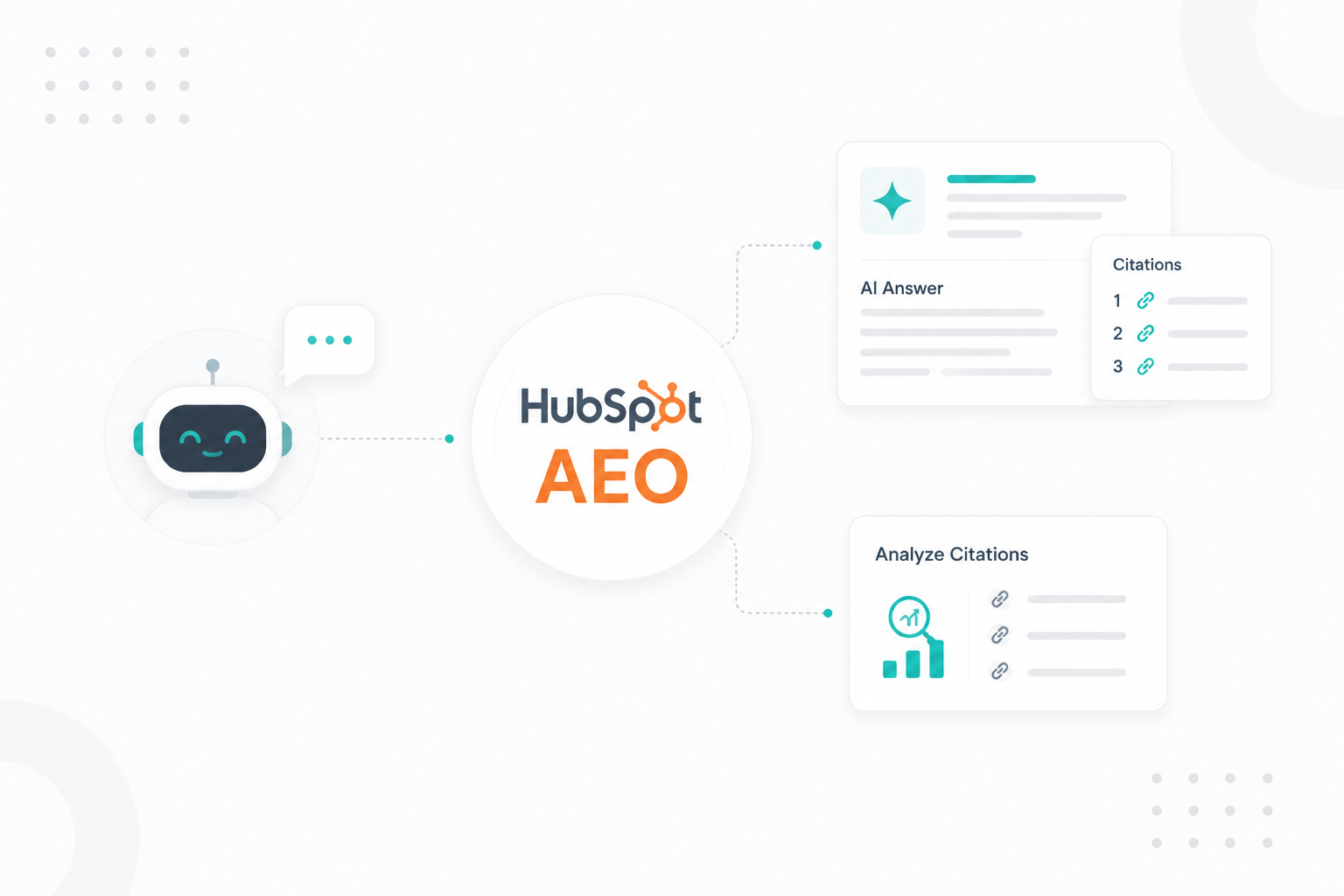
Citation analysis helps uncover which sources AI engines trust, which competitors dominate AI-generated answers, and why certain pages earn visibility even without strong traditional rankings. It also reveals how factors such as entity recognition, original research, structured answers, and third-party mentions influence citation selection.
For brands investing in Generative Engine Optimization and Answer Engine Optimization, citation analysis is becoming one of the clearest ways to measure real AI search presence and identify visibility gaps before they impact discovery, traffic, and conversions.
This article explains how citation analysis works in AI search, how AI engines choose sources, what metrics matter most for GEO and AEO, and how you can use citation data to improve brand visibility across AI-generated search experiences.
Why Citation Analysis Is Becoming a Core Part of GEO and AEO
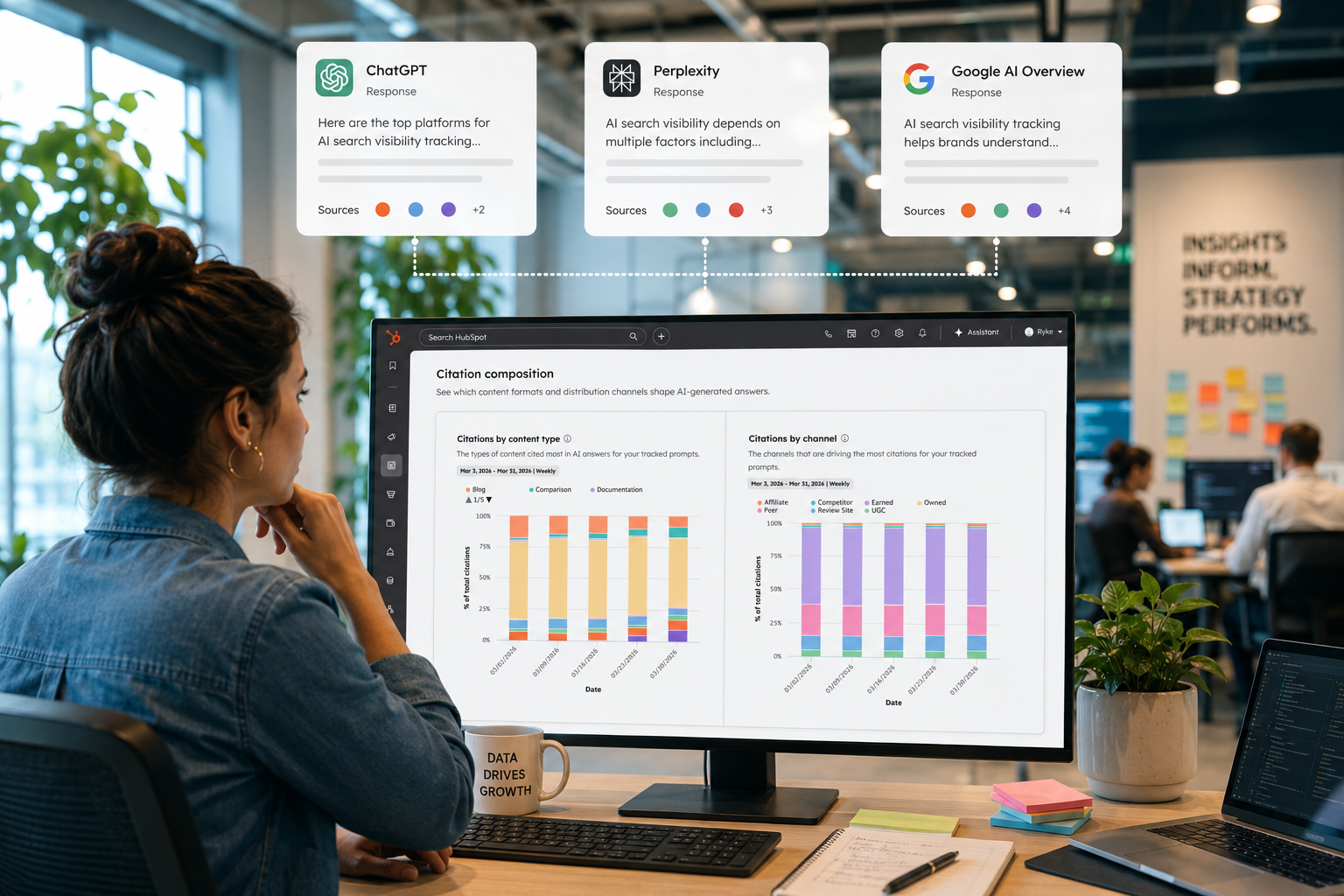
Citation analysis provides the only reliable way to measure brand visibility in an era where traditional search metrics are increasingly disconnected from how AI systems retrieve information. Below is a closer look at why citation analysis is gaining importance in SEO, GEO, and AI search:
1. The Disconnect from Traditional SEO Rankings
Citation analysis is necessary because ranking #1 on Google no longer guarantees that it is the cited answer in an AI response. Data shows that only 12% of URLs cited by AI tools like ChatGPT and Gemini appear in Google’s top 10 organic results for the same query.
Furthermore, approximately 80% of LLM citations do not rank in the top 100 Google results at all. Marketers must analyze citations because traditional SEO tools cannot track where their brand appears or is missing in the invisible early-funnel of AI conversations.
2. Understanding the AI Decision Logic
AI engines do not rely on traditional “PageRank” systems to select sources. Instead, they use Retrieval-Augmented Generation pipelines that evaluate content through factors such as information gain, semantic relevance, and entity coherence. Citation analysis helps reveal how these models re-rank documents, showing that AI systems tend to prioritize content containing unique data, original insights, or novel analysis, while structurally devaluing pages that simply repeat information already available elsewhere.
The analysis also shows that AI citation patterns align more closely with text-based authority signals, particularly multi-platform brand mentions, which demonstrated a strong correlation (r=0.87) compared to traditional backlink counts.
3. Mapping "Query Fan-Out" and Intent
Marketers use citation analysis to identify "fan-out" sub-queries, which account for 51% of all AI citations. AI systems often split a single user prompt into multiple hidden sub-queries to synthesize a final answer; for example, a query about "best hotels" might trigger sub-queries about safety, pricing, and local charm.
Citation analysis helps brands understand which specific sub-queries they are winning and where competitors are filling the gaps.
4. Managing Platform-Specific Sourcing Personalities
Each AI engine has a distinct sourcing philosophy, making cross-platform citation analysis vital for a diversified strategy.
- ChatGPT: Often functions as an "Encyclopedia Curator," favoring institutional sources like Wikipedia.
- Perplexity: Acts as a "Community Listener," leaning heavily on Reddit and community-validated content.
- Google AI Overviews: Prioritizes YouTube and multimedia content.
By analyzing these variations, brands can tailor their outreach and content formats to the specific personality of the engine they wish to target.
5. Brand Protection and Accuracy Monitoring
Citation analysis also plays an important role in brand safety because AI-generated citations do not always fully reflect the source context or accurately support the claims they reference. This can create risks around hallucinations, misattribution, or the amplification of negative third-party sentiment connected to a brand.
How AI Search Engines Choose Sources and Citations
AI search engines use Retrieval-Augmented Generation (RAG) pipelines that prioritize semantic meaning, unique information, and brand authority. The source selection process typically follows a structured four-stage workflow:
- Query Analysis & Intent Extraction: The model parses the user's prompt to determine the underlying information needed and the appropriate response format.
- Document Retrieval via Vector Embeddings: The engine searches web indexes using mathematical representations of meaning. This enables a page about "reducing employee turnover" to be retrieved for a query about "keeping staff from quitting," even if the exact keywords are missing.
- Re-Ranking by Relevance and Information Gain: Retrieved documents are scored based on how much unique value they add. Systems structurally penalize content that merely repeats what other sources say, prioritizing original research or novel analysis.
- Citation Generation: During the final synthesis, the model weaves selected sources into the output and performs post-generation verification to ensure the cited source actually supports the claim.
AI models also use a Citation Confidence Framework to determine if a piece of content is trustworthy enough to cite. It includes information gain, structural confidence, verification confidence, and entity coherence.
The Intent-Source Divide
Source selection also changes based on the framing of the user query.
- Transactional Queries: (e.g., "Cheap hotel in Tokyo") often lead AI engines to cite intermediary platforms like online travel agencies all the time.
- Experiential Queries: Focused on atmosphere, local charm, or unique experiences tend to shift citations toward brand-owned websites, travel blogs, and other editorial-style sources.
Search-Answerable Depth (SAD) is another major differentiator for brand-owned sites, as AI systems tend to favor content with deeper contextual coverage, including detailed FAQs, neighborhood insights, and experience-driven information that helps answer discovery-focused queries more directly.
How to Perform Citation Analysis for AI Search Visibility
1. Defining the Tracking Perimeter
This begins with identifying 10–30 high-intent prompts that your buyers are likely to ask AI engines, such as comparison-based questions like “How does [Product A] compare to [Product B]?” or other queries tied to real purchase decisions.
CRM data can also help surface prompts based on actual customer inquiries and recurring sales conversations. From there, you should define a competitor set that includes your top direct competitors so you can benchmark Share of Voice by comparing how often your brand is mentioned versus competing brands.
Platform selection is equally important because each AI engine has its own sourcing behavior and sourcing personality as discussed above. Because of these, tracking should span multiple AI platforms, including Gemini, Claude, and AI Overviews, to capture a more accurate view of citation visibility.
2. Conducting the Citation Audit
Once the prompts are set, you must audit the results to see which sources the AI engine is grounding its answer in.
- Probabilistic Monitoring: AI search is not deterministic; the same query can produce different results every time. Analysis should involve running prompts multiple times or weekly to measure citation frequency and mention velocity.
- Source Classification: Categorize citations by type: Owned (your website), Earned (news, press releases), Social/Community (Reddit, Quora), and Intermediaries (G2, Capterra, or OTAs in travel).
- Intent-Source Mapping: Analyze if your brand is appearing for transactional queries (focused on price and booking) versus experiential queries (focused on atmosphere and value). In some sectors, experiential queries are significantly more likely to cite non-intermediary, brand-owned content.
3. Measuring Key Performance Metrics
One of the main metrics is the Brand Visibility Score, which measures the percentage of tracked prompts where your brand appears in AI-generated responses. Recently, HubSpot launched its own AI Search Grader tool to help businesses track AI visibility.
Teams also monitor the AERP Saturation Score to evaluate how consistently their brand appears across a defined set of target topics within AI-generated answers. In addition to visibility metrics, sentiment and context analysis are important because they help distinguish between a linked citation, which can drive referral traffic and authority, and a simple mention without attribution.
4. Analyzing the Discovery Gap (SAD Audit)
To understand why competitors are cited over your brand, perform a Search-Answerable Depth audit. This involves scoring your content and competitor content on a 0–3 scale across five dimensions:
- FAQ Depth: Are there comprehensive question-and-answer pairs?
- Contextual Guides: Are there detailed neighborhood or area guides?
- Freshness/Blogs: Is there a regular cadence of updated information?
- Technical Access Info: How easy is it for a bot to parse your basic entity details?
- Unique Content: Does the page offer original research or distinctive data that provides "information gain"?
5. Turning Data into Actionable Recommendations
The final step is using the findings to improve your AI visibility. If competitors are consistently cited on review sites or forums where your brand is missing, prioritize getting mentioned there. If your pages rank in search but are not appearing in AI answers, restructure content into short answer blocks under question-based headings. You should also check your robots.txt file to ensure AI crawlers like ChatGPT’s OAI-SearchBot and PerplexityBot can access your pages properly.
And that is how you perform citation analysis for AI search visibility. Since tracking citations across multiple prompts and AI platforms can quickly become difficult to manage manually, many businesses now use specialized tools to automate monitoring and visibility tracking, including HubSpot’s AEO tools.
Using HubSpot AEO to Track AI Search Visibility
HubSpot AEO is a tool designed to help marketers track and improve how their brands appear in AI-generated answers across platforms like OpenAI’s ChatGPT, Google Gemini, and Perplexity AI. It focuses on metrics such as AI citation share, brand mentions, and Share of Voice to measure visibility in AI search.
The platform also shows which domains, pages, and content formats are most frequently cited in your category. This helps you identify what AI systems are referencing so you can create content that improves your chances of being surfaced in AI-generated responses.
Deep-Dive Citation Analysis
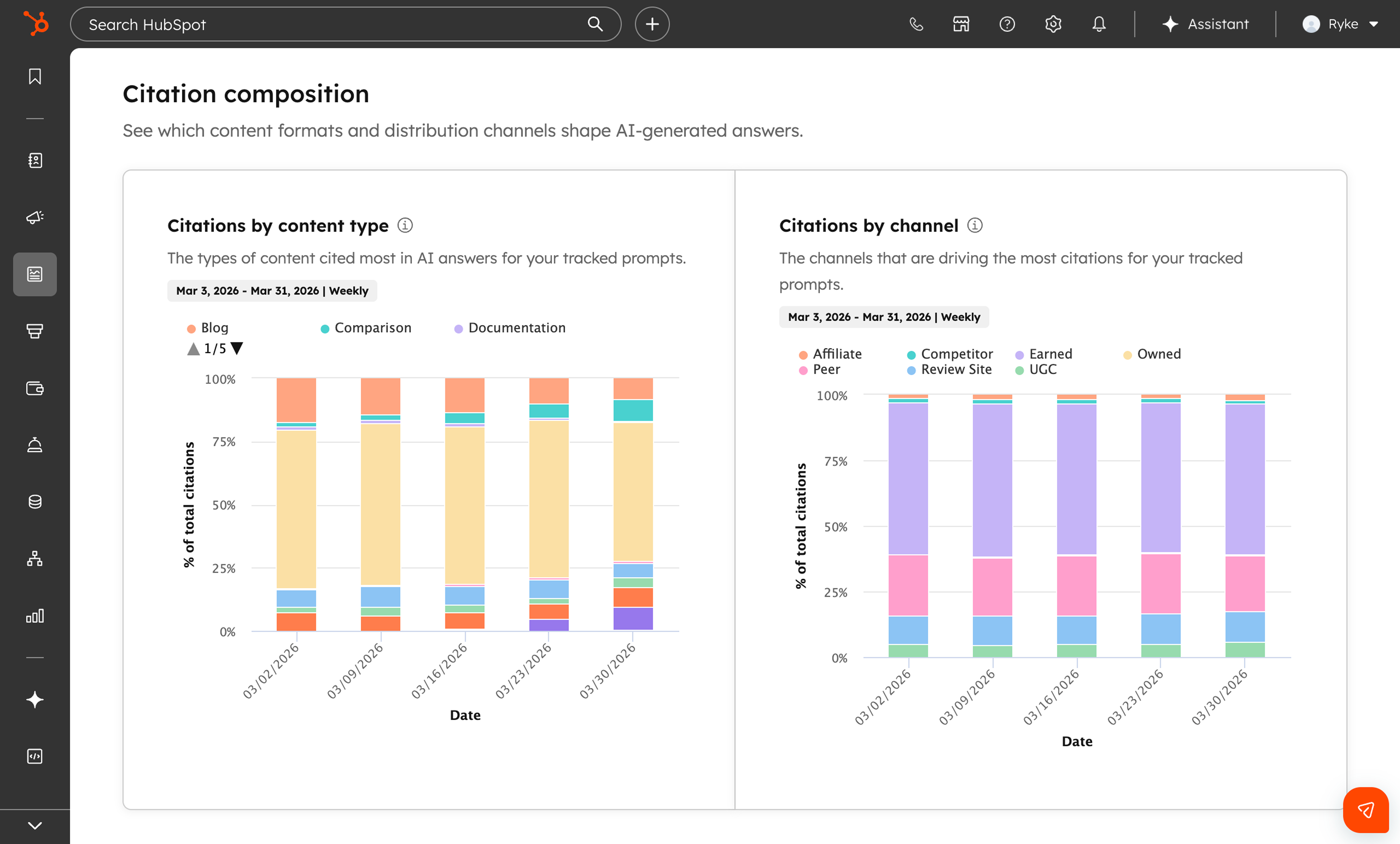
A critical component of the tool is the Citations View, which reveals the underlying sources AI engines use to ground their synthesized answers. This analysis helps teams to:
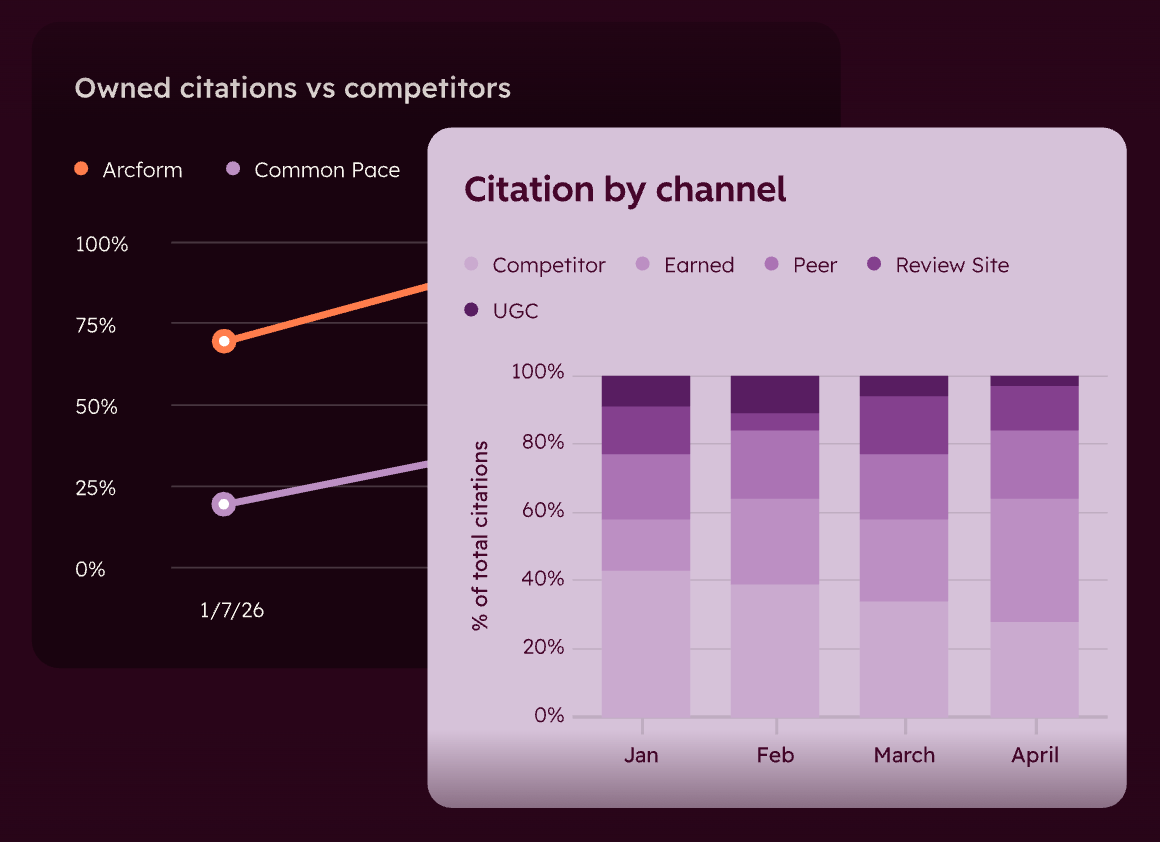
- Identify Citation Channels: Categorize sources into owned content (your website), social/community (Reddit, Quora), and earned media (news, reviews).
- Analyze Formats: Determine if specific content formats, such as comparison listicles or deep-dive blogs, are earning more citations for high-intent prompts.
- Pinpoint Specific Domains: See exactly which third-party websites (e.g., G2, industry directories) are shaping the answers buyers see, providing a clear target list for outreach and digital PR.
The tool also bridges the gap between analysis and execution through several features:
- Ranked Recommendations: Based on visibility gaps and citation patterns, the tool generates a prioritized list of content and outreach actions. Each recommendation includes suggested titles, target audiences, and the specific keywords needed to close the gap.
- Integrated Execution: For HubSpot Marketing Hub users, these insights are connected to the platform’s execution layer, allowing marketers to create or update content and publish social posts directly from the recommendation screen.
Successful AEO requires a recurring cadence of reviewing the Brand Visibility trend, acting on new content recommendations, and refreshing aging content to maintain citable status. If you want to explore the topic further, you can learn more from this guide: GEO & the Age of AI Search
The Risks of Manipulating AI Citation Systems
1. Systemic Reliability and the Citation Problem
One of the most significant risks is the inherent unreliability of current AI grounding mechanisms. Research indicates a pervasive Systemic Reliability Problem, where 50% to 90% of LLM citations fail to fully support the claims they are attached to.
- Hallucination and Misattribution: AI models may generate content not present in any retrieved document or combine claims from multiple sources that do not individually support the final synthesized statement.
- Retriever Misses: Systems often fail to find the correct source even when it exists, leading to the citation of incorrect articles to support factual claims.
There is also a growing risk involves "circular citations," where LLMs are trained on AI-generated content that cites other AI-generated sources, potentially creating a feedback loop of unverified information.
2. Brand and Reputation Risks
Organizations that attempt to manipulate these systems or fail to monitor them face substantial risks to their brand authority.
- Uncontrollable Attributions: AI engines may attribute damaging or incorrect claims to a brand's content that the brand never actually made. This is particularly dangerous because these responses are often synthesized behind the "invisible early-funnel" of private AI conversations that are difficult for organizations to see or control without active monitoring.
- Negative Sentiment Bias: Not all platforms treat brands equally. For instance, Google AI Overviews are more likely than ChatGPT to surface negative sentiment about a brand.
Attempting to manipulate visibility using traditional marketing fluff can also backfire. AI systems structurally penalize unverifiable superlatives like "industry-leading" or "best-in-class" if they are not backed by data, treating them as low-trust signals.
3. Market Calcification and Feedback Loops
The logic behind AI citation increasingly favors established entities, creating a winner-take-all dynamic that can be difficult for newer brands to break into. AI-generated citations tend to concentrate around a relatively small group of highly recognized domains, reinforcing the visibility of brands that already have strong mention frequency and authority signals across the web.
Because large language models are trained on existing web data, they often associate frequently mentioned brands with credibility, leading those brands to be cited more often and gain even more visibility in future datasets and AI-generated answers.
As these internal representations of trusted entities become more reinforced, smaller or newer brands may face a narrowing opportunity to establish citation visibility.
The Future of Citation-Based Visibility in AI Search
In this new landscape, success is no longer defined by being the first link on a page, but by being the authoritative source that an AI engine chooses to ground its response.
The Reality of the Zero-Click Era
The shift toward citation-based visibility is driven by a massive decline in traditional search clicks. Research indicates that approximately 60% of Google searches now end without a click, and when an AI summary appears, users only click an organic result 8% of the time.
Because buyers are increasingly evaluating vendors and making decisions entirely within the AI interface, brand visibility inside the answer has become as critical as ranking on the page.
New Metrics for Success (AEO vs. SEO)
As traffic metrics become less reliable, the future of measurement lies in Answer Engine Optimization KPIs:
- AI Citation Share: The percentage of category-relevant AI queries where your brand appears.
- Brand Mention Velocity: The rate at which a brand is mentioned across new AI contexts over time.
- Entity Resolution: How consistently a brand is represented as a verifiable entity across the web (Wikipedia, LinkedIn, industry directories).
The SAD Benchmark for Visibility
To improve visibility in AI search, many brands are focusing on Search-Answerable Depth, which measures how thoroughly a page answers likely user questions and supports discovery-focused queries. Audits consistently show that cited websites provide deeper and more complete information than non-cited pages, especially in areas such as detailed FAQs, area or neighborhood guides, original insights, and unique data assets.
These shifts show that content depth is becoming a stronger differentiator in AI search visibility, as AI engines increasingly favor pages that can directly answer nuanced questions instead of relying only on traditional technical SEO signals.
Position Your Brand for Long-Term Visibility in AI Search!
Brands that monitor citation patterns can better understand which sources AI platforms trust, where competitors dominate the conversation, and which content formats earn the most exposure across AI-driven search experiences.
Platforms such as HubSpot AEO are also helping businesses measure performance through metrics like citation share, brand mentions, and AI-driven share of voice, giving marketers a clearer understanding of how their brand appears within AI-powered discovery environments.
At Campaign Creators, we help businesses implement HubSpot AEO strategies designed to strengthen AI visibility, improve attribution tracking, and optimize content for AI-driven discovery.
Explore how we use HubSpot to grow AI visibility and performance!
