
A HubSpot Elite Solutions Partner built to help organizations unify strategy, systems, and execution. We design HubSpot systems that scale.

See how we've solved complex HubSpot challenges across migrations, integrations, CMS, automation, and optimization.

Join a team building smarter HubSpot systems. We value strategic thinkers who move proactively, care about quality, and want to do meaningful work.

9 min read

How to Increase Your Share of Voice in AI Search Using HubSpot AEO

How to Increase Your Share of Voice in AI Search Using HubSpot AEO

AI search is changing how people find and evaluate businesses. 51% of consumers say generative AI has changed how they research information online, making AI visibility just as important as traditional search visibility. If your brand doesn't appear in AI-generated answers, potential buyers may never consider your business.

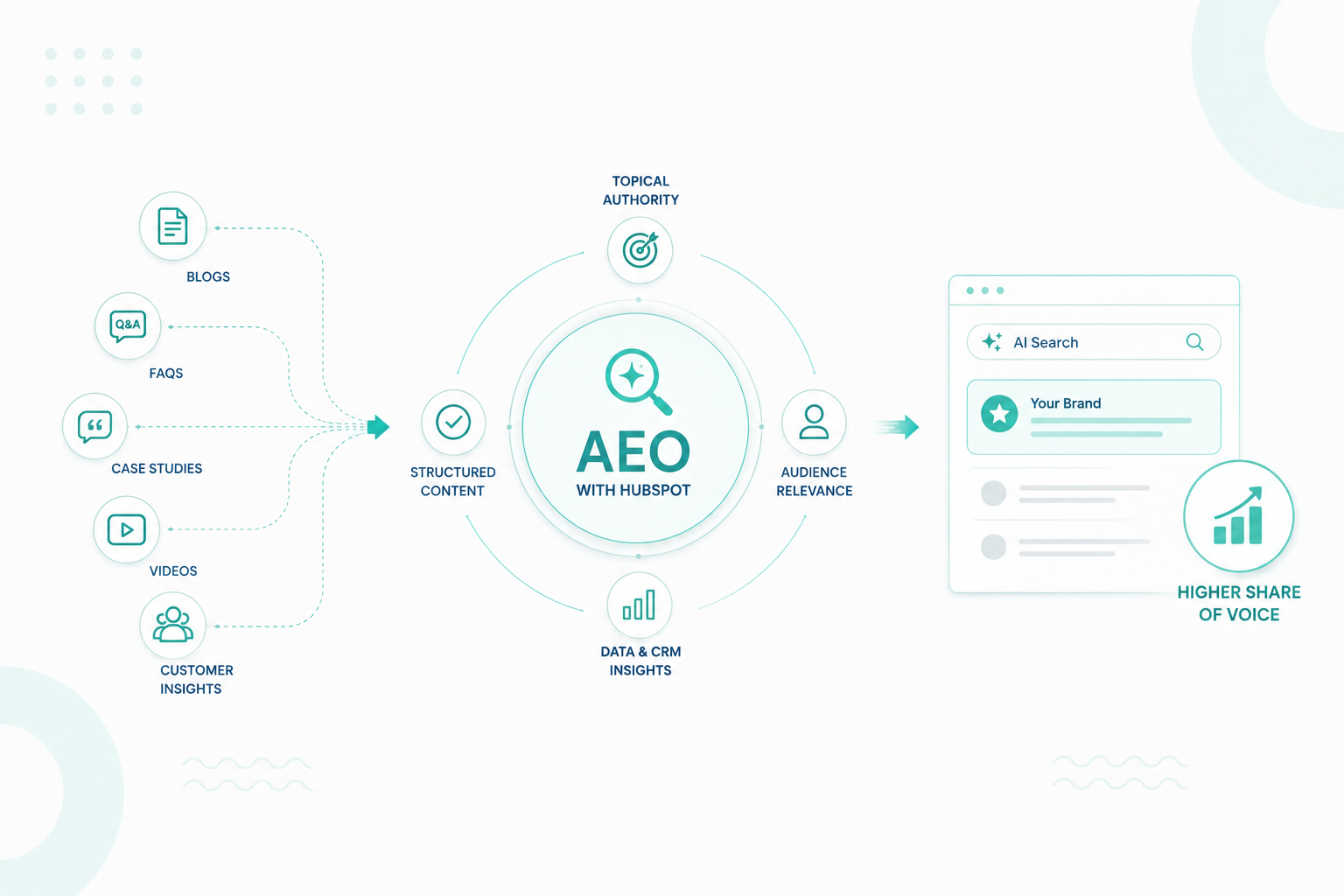
Increasing your share of voice in AI search means earning more mentions and citations across the buyer questions that matter most. HubSpot AEO helps you measure visibility, identify content gaps, and prioritize improvements to increase your presence across AI search platforms.

This article explains how HubSpot AEO helps you increase your share of voice in AI search, improve AI visibility, optimize your content, avoid common mistakes, and build a long-term AI search strategy.

Key Takeaways

  • AI share of voice measures how often your brand appears in AI-generated answers compared to competitors.
  • HubSpot AEO measures brand mentions, citations, and competitor recommendations across AI platforms.
  • Clear answers, comprehensive content, and authoritative sources increase your share of voice.

What Is Share of Voice in AI Search?

digital-marketer-researching-ai-search-visibility-share-of-voice

Share of voice (SOV) in AI search measures how often your brand is mentioned, cited, or recommended in AI-generated answers compared to your competitors across a defined set of prompts or queries. It shows how visible your brand is in answer engines like ChatGPT, Google AI Overviews, Gemini, Claude, and Perplexity.

Unlike traditional SEO, which measures rankings and clicks, AI search measures whether your brand becomes part of the answer. Users may never visit a search results page if an AI assistant provides a complete response. This makes brand mentions and citations a key measure of visibility.

For example, if 100 users ask AI tools for the best HubSpot implementation partners and your company is mentioned in 35 of those responses, your AI share of voice is 35%. The higher your share of voice, the more often potential customers encounter your brand during AI-assisted research, increasing awareness, credibility, and the likelihood of being considered.

How HubSpot AEO Helps You Measure and Improve AI Visibility

HubSpot AEO tests your brand's presence across AI search by running the buyer prompts you choose against supported answer engines, including ChatGPT, Gemini, and Perplexity.

It captures each AI-generated response, identifies which brands are mentioned, records the sources AI cites, and tracks how those results change over time.

1. Tracks AI Responses for Your Buyer Prompts

You begin by creating prompts that reflect the questions your prospects ask before making a purchase, such as:

  • Best HubSpot implementation partner
  • CRM for manufacturing companies
  • Marketing automation platform for B2B SaaS

HubSpot runs these prompts daily across AI platforms, stores every response, and lets you compare how answers evolve. You can review the exact AI response for each prompt instead of relying on one-off manual searches.

2. Shows Exactly Where Your Brand Appears

For every tracked prompt, HubSpot identifies:

  • Whether your brand was mentioned
  • Which competitors were recommended
  • Which AI engine generated the response
  • The complete AI answer

This helps you pinpoint the topics where your brand consistently appears and the questions where competitors receive the recommendation.

3. Identifies the Sources AI Uses

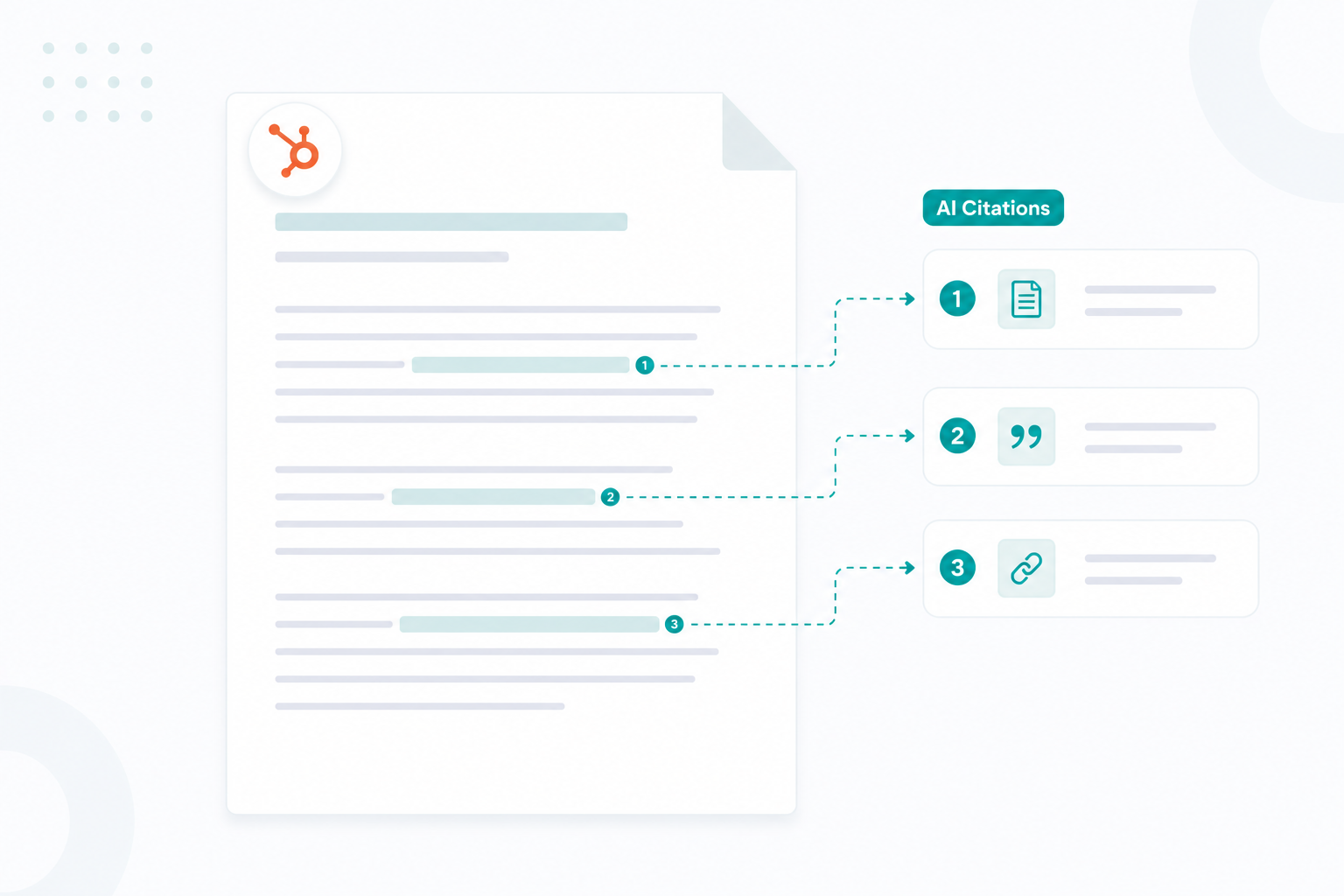
Every AI response is backed by information gathered from across the web. HubSpot analyzes those citations so you can see which domains influenced the answer.

The platform categorizes sources such as:

  • Your own website
  • Competitor websites
  • Review platforms
  • Social media
  • User-generated content
  • Third-party publications

This makes it easier to identify authority gaps. If AI consistently cites industry publications or review sites that mention competitors but not your business, you know where additional visibility efforts can have the greatest impact.

4. Recommends Specific Actions Based on Visibility Gaps

After analyzing your prompt coverage and citations, HubSpot generates prioritized recommendations tailored to your results. These recommendations can include:

  • Creating content around uncovered buyer questions
  • Updating existing pages with missing information
  • Publishing LinkedIn content on topics AI frequently references
  • Producing YouTube videos for underserved queries
  • Building authority through third-party websites that AI commonly cites

The recommendations are tied directly to the visibility gaps HubSpot detects, helping teams focus on improvements with the highest potential impact.

5. Measures Whether Your Optimizations Are Working

After publishing new content or earning additional citations, HubSpot continues checking the same prompts on a recurring basis. Because the prompts remain consistent, you can measure whether your visibility expands after each optimization, identify which initiatives lead to more AI mentions, and monitor long-term trends across multiple answer engines.

Learn how to build an AEO prompt strategy inside HubSpot with this guide.

Which Content Strategies Increase Your Share of Voice in AI Search?

Create Content Around High-Intent Buyer Prompts

Start with the questions your prospects ask before making a purchase. These are the prompts AI tools frequently receive when users compare vendors, evaluate software, or research solutions.

Examples include:

  • Best HubSpot implementation partner
  • HubSpot vs Salesforce for manufacturing
  • CRM for B2B SaaS companies
  • How much does HubSpot implementation cost?

Publishing comprehensive answers for these topics increases the likelihood that AI models will reference your expertise when generating responses. HubSpot AEO recommends relevant prompts based on your company, competitors, and industry, making it easier to prioritize content that aligns with buyer intent.

Answer Questions Clearly and Early

AI models often extract concise passages from web pages. Place the direct answer within the first 40 to 60 words of each section before expanding with supporting details, examples, or best practices.

Use descriptive headings written as questions or clear statements so AI systems can quickly identify the information users are looking for. Each section should stand on its own without relying heavily on surrounding context.

Cover Topics in Greater Depth

A single article rarely establishes topical authority. Build content clusters that explore a subject from multiple angles, including:

  • Beginner guides
  • Step-by-step tutorials
  • Comparisons
  • Pricing pages
  • FAQs
  • Case studies
  • Industry-specific use cases

This broader coverage gives AI systems more opportunities to associate your brand with a particular subject and cite your content across different types of queries.

Publish Across Multiple Channels

AI answer engines draw information from more than websites. They also reference social platforms, videos, community discussions, and third-party publications.

Repurpose key insights into formats such as:

  • LinkedIn articles and posts
  • YouTube videos
  • Webinars
  • Industry publications
  • Customer success stories

Maintaining a consistent presence across multiple channels strengthens your overall visibility and provides additional sources that AI can reference.

Strengthen Third-Party Authority Signals

AI systems frequently cite trusted external sources when generating answers. Building authority beyond your own website can increase the likelihood that your brand appears in AI responses.

Examples include:

  • Customer reviews
  • Guest articles
  • Industry directories
  • Analyst reports
  • Partner websites
  • Digital PR coverage

HubSpot AEO's citation analysis shows which third-party domains your competitors already reference, helping you identify where additional visibility could improve your share of voice.

How to Optimize Your Website for AI Search Using HubSpot

HubSpot AEO helps you identify exactly what to improve to increase your visibility in AI search. It provides clear recommendations based on your website's performance. Here's how it helps:

Optimize Existing Pages Based on AI Visibility Gaps

HubSpot AEO analyzes the prompts you're tracking and compares your website with the pages AI currently references. If your brand is missing from responses, the platform recommends which existing pages should be updated and explains why they're not earning citations. These recommendations are prioritized based on your largest visibility gaps, helping you focus on updates that are most likely to improve AI visibility.

Create Content for Missing Buyer Questions

HubSpot identifies prompts where your competitors appear, but your brand does not. It then recommends new content topics that address those unanswered buyer questions.

For example, if AI frequently answers questions about "HubSpot implementation pricing" or "best CRM for manufacturing" without mentioning your company, HubSpot may recommend creating dedicated pages that directly address those topics.

Strengthen Content With Clear, Complete Answers

AI systems favor pages that answer questions directly and provide enough context to support those answers. When updating your website, structure each page so it:

  • Answers the primary question near the beginning of the section.
  • Uses descriptive headings that match buyer intent.
  • Covers related follow-up questions on the same page.
  • Includes practical examples, comparisons, or supporting evidence.

Well-structured pages are easier for AI systems to understand and cite when generating responses.

Expand Your Topical Coverage

AI answer engines evaluate how comprehensively a website covers a subject. HubSpot's recommendations often point to related topics that strengthen your authority across an entire subject area instead of focusing on a single page.

For example, a company targeting HubSpot implementation could build supporting content around:

  • HubSpot onboarding
  • CRM migration
  • HubSpot integrations
  • HubSpot implementation costs
  • HubSpot implementation timelines
  • Industry-specific implementation guides

Covering connected topics helps AI systems recognize your website as a reliable resource for that subject.

Improve Pages AI Already References

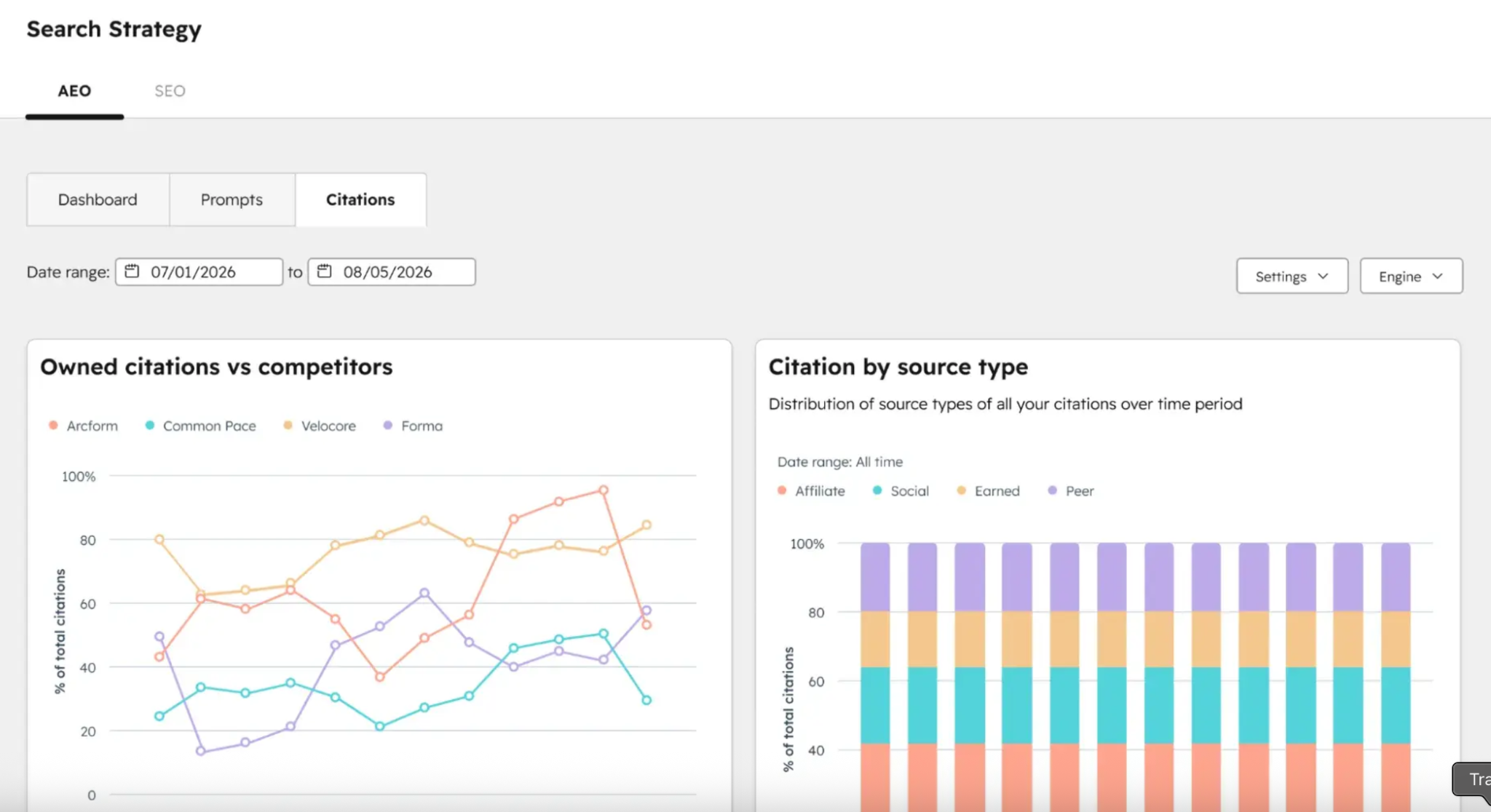
HubSpot's citation analysis shows which pages AI already cites for your brand. These pages are strong candidates for optimization because AI has already identified them as valuable sources.

citation-analysis-hubspot-aeo

Refreshing these pages with current information, stronger explanations, additional examples, and updated statistics can help maintain and expand their visibility in AI-generated answers over time.

Publish Improvements Directly in HubSpot

If you're using Marketing Hub Professional or Enterprise, HubSpot connects AEO recommendations with its content management tools. You can update website pages, publish new blog posts, and create supporting social content from within HubSpot, making it easier to turn AI visibility insights into ongoing website improvements.

Which Mistakes Can Reduce Your Share of Voice in AI Search?

Answer engines look for evidence that a brand consistently answers relevant questions and is supported by trustworthy sources. If your brand isn't appearing in AI-generated responses, these are some of the most common reasons:

1. Tracking the Wrong Buyer Prompts

Your AI visibility is only measured against the prompts you monitor. If you track broad or low-intent questions that your buyers rarely ask, your reports won't reflect the searches that influence purchasing decisions.

For example, tracking "What is CRM?" provides little insight if your ideal customers are asking "Best HubSpot implementation partner for manufacturing."

2. Ignoring Competitor Citation Patterns

Many companies focus only on whether their own brand appears in AI answers. They don't investigate why competitors are mentioned more frequently.

HubSpot AEO compares your citation sources with your competitors' and identifies which websites, content types, and third-party publications AI relies on when recommending them. This analysis helps explain why competitors receive more AI mentions and highlights opportunities to strengthen your own authority.

3. Leaving Visibility Gaps Unaddressed

If AI never mentions your brand for a particular buyer question, publishing additional content without understanding the gap can waste time.

HubSpot AEO identifies prompts where competitors consistently appear, but your business does not, then recommends specific actions, such as creating a new article, expanding an existing page, publishing LinkedIn content, or developing YouTube content. Each recommendation includes the reasoning behind it, helping you prioritize work with the greatest potential impact.

4. Publishing Content Without Measuring Its Impact

Publishing new pages doesn't guarantee greater AI visibility. Without monitoring the same prompts over time, it's difficult to know whether your updates changed how AI responds.

HubSpot AEO reruns your tracked prompts daily across ChatGPT, Gemini, and Perplexity, allowing you to compare AI responses before and after content updates. This ongoing measurement helps you determine which optimizations increase your visibility and which require further refinement.

5. Guessing Instead of Following Data

One of the biggest mistakes is making optimization decisions based on assumptions. Teams often create content they believe AI wants without validating whether it addresses real visibility gaps.

HubSpot AEO converts visibility data into prioritized recommendations based on your tracked prompts, citation analysis, and competitor performance. Every recommendation explains why it was generated, giving your team a clear, evidence-based path for improving AI visibility instead of relying on trial and error.

How Can You Build a Long-Term AI Search Strategy with HubSpot?

1. Build a Prompt Library That Reflects Your Buyer's Journey

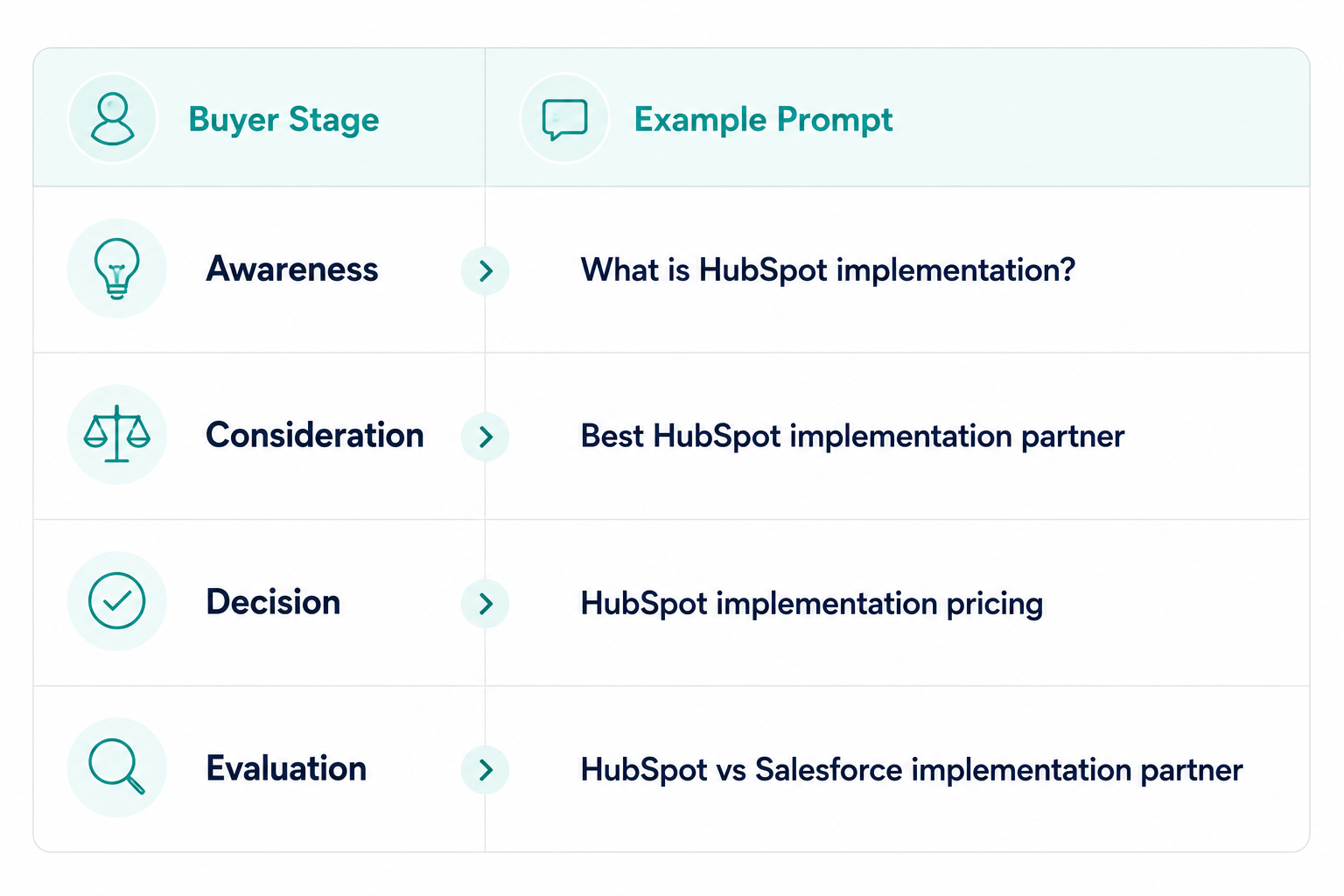
Don't track random keywords. Create a library of prompts that represent the questions prospects ask throughout their buying journey. For example, if you sell HubSpot implementation services, organize prompts into stages such as:

buyer-stage-prompt-table-example

HubSpot AEO stores these prompts and runs them daily across ChatGPT, Gemini, and Perplexity. Using the same prompt set over time gives you a consistent benchmark for measuring progress.

2. Review Visibility Trends Every Month

AI visibility changes constantly, so avoid checking results only after publishing new content. Each month, review:

  • Which prompts gained visibility
  • Which prompts lost visibility
  • Which competitors are appearing more frequently
  • Whether new competitors have entered your tracked prompt set

Trend data is more valuable than a single snapshot because it reveals whether your overall AI visibility is improving or declining over time.

3. Prioritize Recommendations by Business Impact

HubSpot AEO generates recommendations based on the visibility gaps it detects. Instead of trying to complete every recommendation, prioritize work based on commercial value.

For example:

  • Update pages tied to high-value service offerings before informational blog posts.
  • Create content for prompts with strong buying intent before broad educational topics.
  • Pursue third-party citations for your most profitable solutions first.

This approach aligns your AI optimization efforts with revenue opportunities instead of simply increasing content volume.

4. Turn Every Recommendation Into a Content Workflow

Treat HubSpot AEO recommendations as tasks. For each recommendation:

  1. Assign an owner.
  2. Create or update the recommended content.
  3. Publish the changes.
  4. Record the publication date.
  5. Compare AI visibility before and after the update.

Building this repeatable workflow makes AI optimization part of your regular content operations instead of an occasional initiative.

5. Measure Every Content Update Against AI Visibility

A long-term strategy requires feedback. After publishing new content or refreshing existing pages, continue tracking the same prompts to determine whether those changes increase brand mentions, citations, or competitive visibility.

HubSpot AEO reruns your tracked prompts daily and compares results over time, making it easier to identify which content updates improve AI visibility and which topics need further optimization. This creates a continuous cycle of measure → optimize → publish → evaluate, helping your strategy evolve as AI search changes.

Take Control of Your AI Search Visibility

If your organization needs a structured way to measure AI visibility and prioritize the right improvements, HubSpot AEO provides the insights to track buyer prompts, analyze AI citations, uncover competitor advantages, and identify the actions most likely to increase your share of voice.

Campaign Creators help organizations turn those insights into a practical AI search strategy. We help businesses implement HubSpot AEO, strengthen their content strategy, improve authority across trusted sources, and build a repeatable process that supports long-term visibility in AI search.

Explore how we use HubSpot to grow AI visibility and performance!

Frequently Asked Questions

Does Publishing More Content Automatically Improve AI Visibility?

No. AI search rewards useful, accurate, and authoritative content rather than a high volume of articles.

How Long Does It Take to Improve AI Share of Voice?

There is no fixed timeline. Results depend on how quickly AI platforms discover new content and whether your updates improve the information AI uses to generate answers.

Do Customer Reviews Influence AI Search Visibility?

Yes. AI systems frequently reference trusted review platforms when evaluating businesses, making positive and credible reviews an important authority signal.

Can Videos Help Improve AI Share of Voice?

Yes. AI platforms often reference video content, especially when it provides helpful explanations or answers common buyer questions.

Is AI Share of Voice the Same as Traditional SEO Rankings?

No. Traditional SEO measures how well your pages rank in search results, while AI share of voice measures how often your brand is mentioned or cited in AI-generated answers.

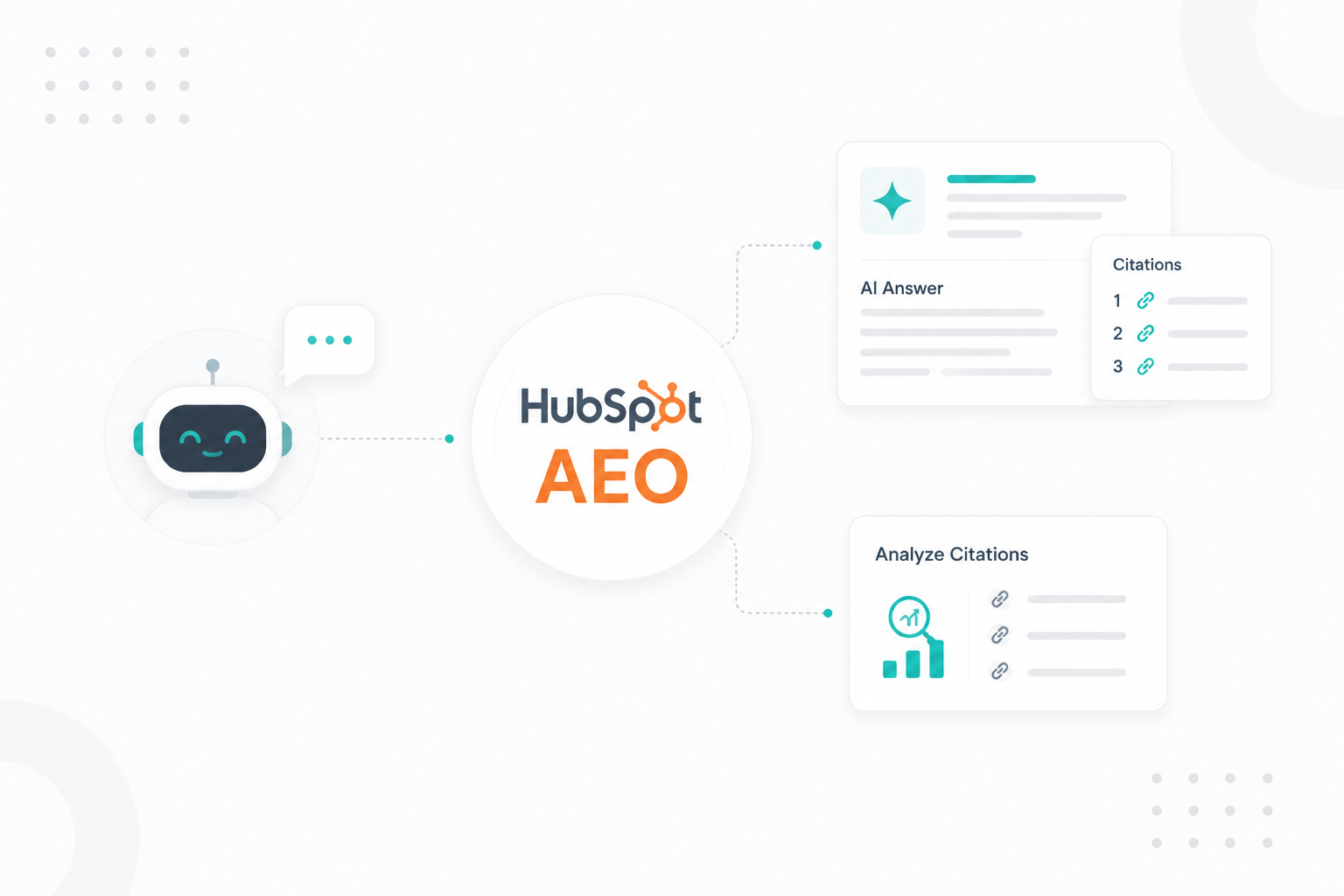
How to Find Which Content AI Is Citing with HubSpot AI Visibility

How to Find Which Content AI Is Citing with HubSpot AI Visibility

AI tools like ChatGPT, Gemini, and Perplexity are changing how people find information online. HubSpot found that 42% of CRM buyers use AI search...
Read More
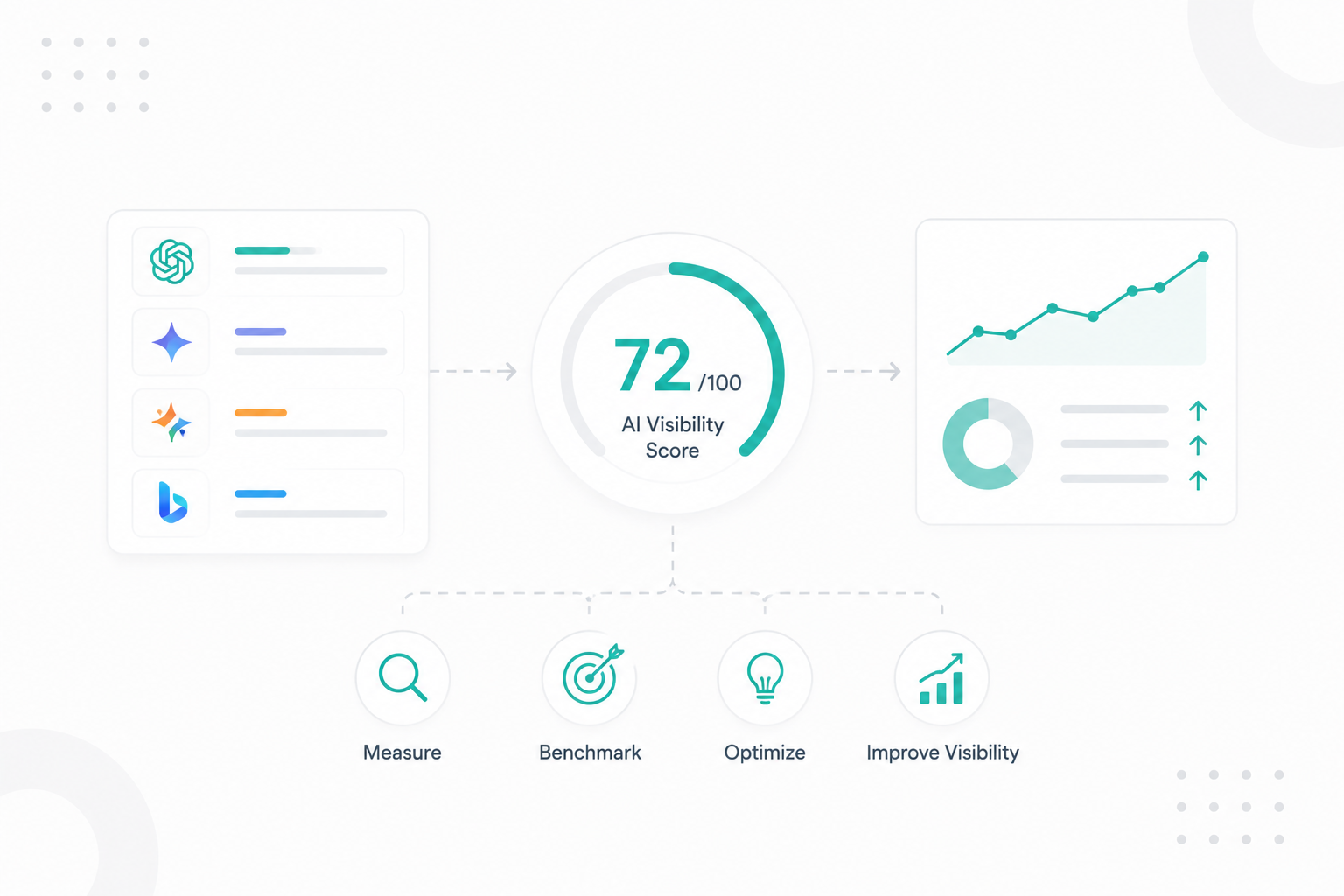
What Is an AI Visibility Score and How Should Marketers Use It?

What Is an AI Visibility Score and How Should Marketers Use It?

What Is an AI Visibility Score and How Should Marketers Use It? More people are starting to search through AI tools instead of scrolling through...

Read More
How to Use Citation Analysis to Improve AI Search Visibility

How to Use Citation Analysis to Improve AI Search Visibility

Citation analysis helps uncover which sources AI engines trust, which competitors dominate AI-generated answers, and why certain pages earn...

Read More