A blog post nobody shares, an offer with no follow-up, a landing page that does not match the ad that brought people there. Each one costs you results you already paid for, and none of them show up as a problem until you look at the system as a whole.
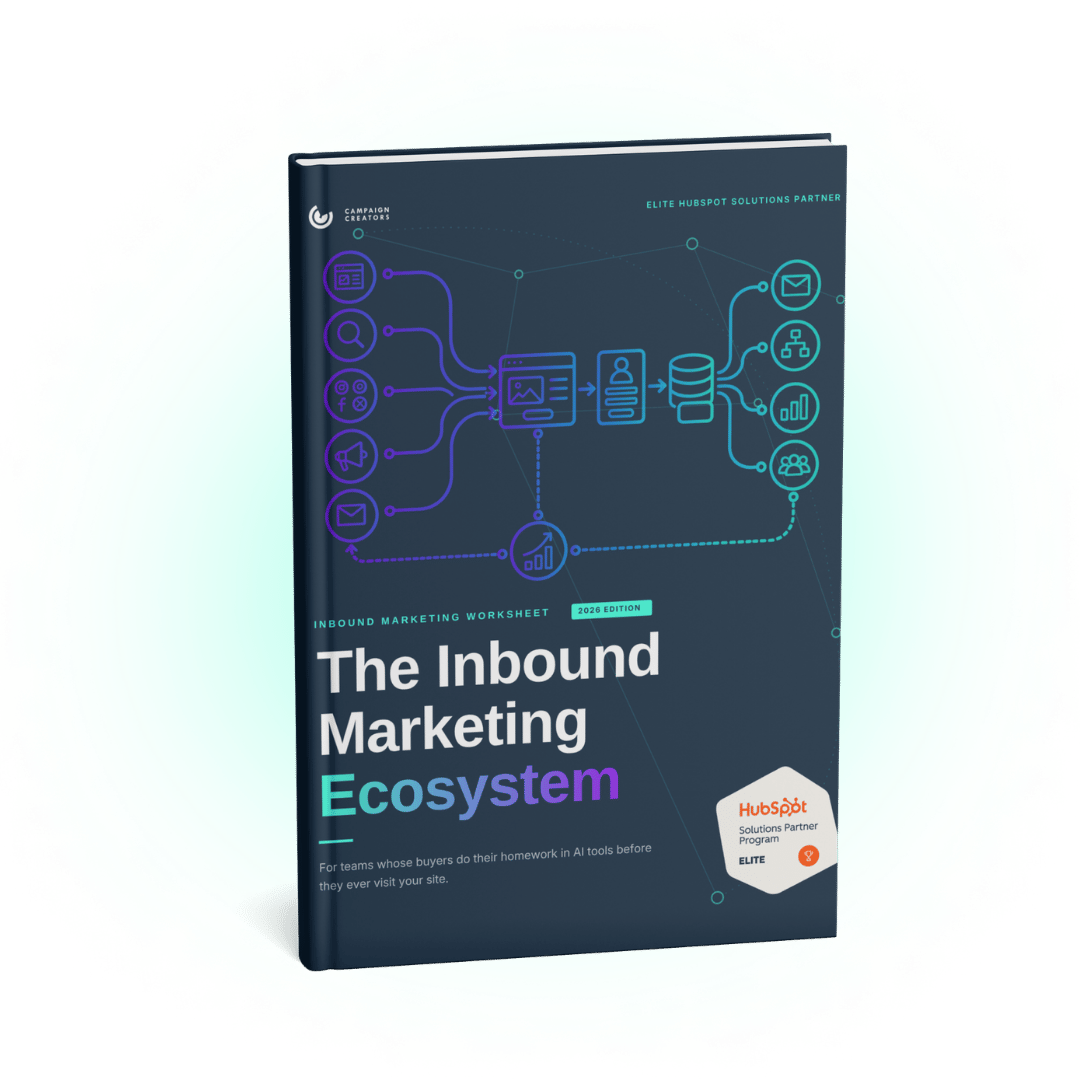
This worksheet maps that system on one page, then walks you through it using a single topic of yours. It also accounts for something that changed recently: buyers now ask ChatGPT, Gemini, or Perplexity about a category before they visit any company website, and those tools build their answers from whatever they can read about you publicly.
What You’ll Find Inside
By the end you have a topic defined in your buyer's words, a position on it your competitors are not stating, four connected pieces of content with owners and dates, a landing page promise that matches the link people clicked, three offers mapped to lifecycle stages, follow-up timing agreed to across marketing and sales, and a baseline for how often AI tools name you today. The final pages show where each of those pieces gets built in HubSpot.
It is the set of connected pieces that move someone from a stranger to a customer: the content you publish, the website hosting it, the channels distributing it, the landing page and offer that capture a signup, and the follow-up that runs afterward. The term matters because each piece depends on the others, and a break anywhere costs you results you already paid for.
AEO stands for Answer Engine Optimization. SEO earns clicks from search engines. AEO gets your company named inside the answer an AI tool writes, where there may be no click at all. Both need planning, because the second one does not appear in your normal traffic reports.
They are offers matched to how ready someone is to buy. A TOFU offer is quick and useful, traded for an email, and it is about the buyer's problem rather than your company. A MOFU offer teaches them something and tells you more about them. A BOFU offer helps them decide, like a consultation, an audit, or real pricing.
Fewer than most teams attempt. Four channels done consistently will beat nine done occasionally, and every channel needs one owner, one schedule, and its own copy. The worksheet has you assign all three before adding a channel to the plan.
Buyers ask ChatGPT, Gemini, or Perplexity about a category before they visit any company website, and those tools build their answers from what they can read about you publicly. If your site never states plainly what you do and who you help, something less accurate fills the gap.
Who This Is For
Marketing teams planning a campaign around one topic and needing every piece to connect before launch
Anyone who has noticed buyers arriving already informed, and wants to know what AI tools are saying about their category
In-house marketers who need sales in the room to agree on what "qualified" means
Teams with content, follow-up, and reporting owned by different people who rarely plan together
HubSpot users looking to map their existing tools to a documented plan