.png?width=420&height=121&name=cc-logo-color%20(2024).png "Campaign Creators - logo in dark blue and transparent background")


 Campaign Creators
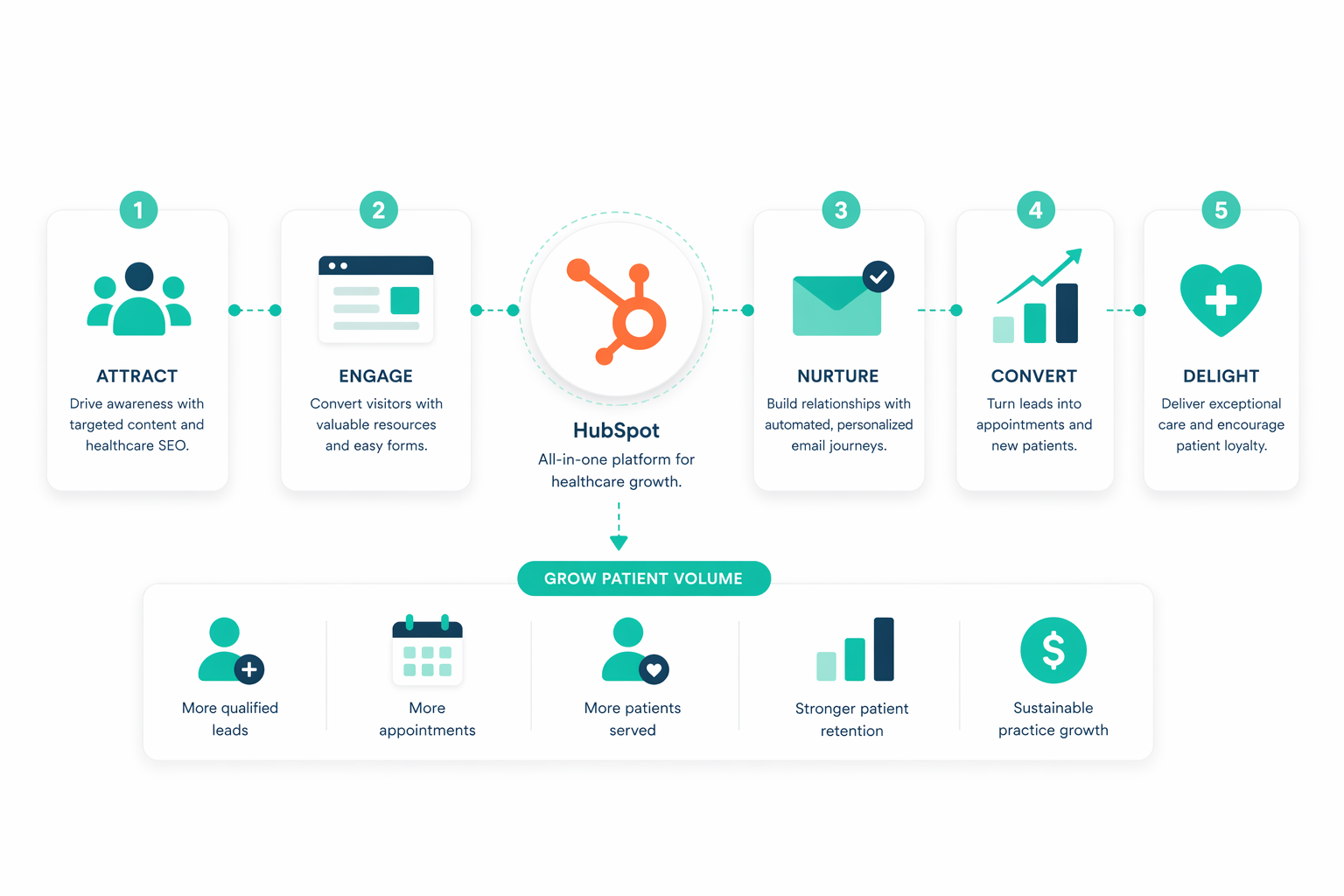
Healthcare has reached a point where strong clinical care is expected. Patients now expect the same digital convenience they get from banking or retail, like instant scheduling and personalized communication. Traditional Electronic Health Record (EHR) systems still support clinical accuracy, but they weren’t built to handle marketing campaigns or manage ongoing patient relationships. HubSpot fills that gap. It connects scattered data and simplifies the non-clinical journey.
With HubSpot’s rollout of HIPAA-compliant features and a Business Associate Agreement (BAA), healthcare organizations can now use Protected Health Information safely for personalized outreach. Moving to a modern CRM setup like HubSpot can drive real growth, with many providers seeing up to a 3x increase in inbound leads within the first year.
Why Healthcare Organizations Are Turning to HubSpot
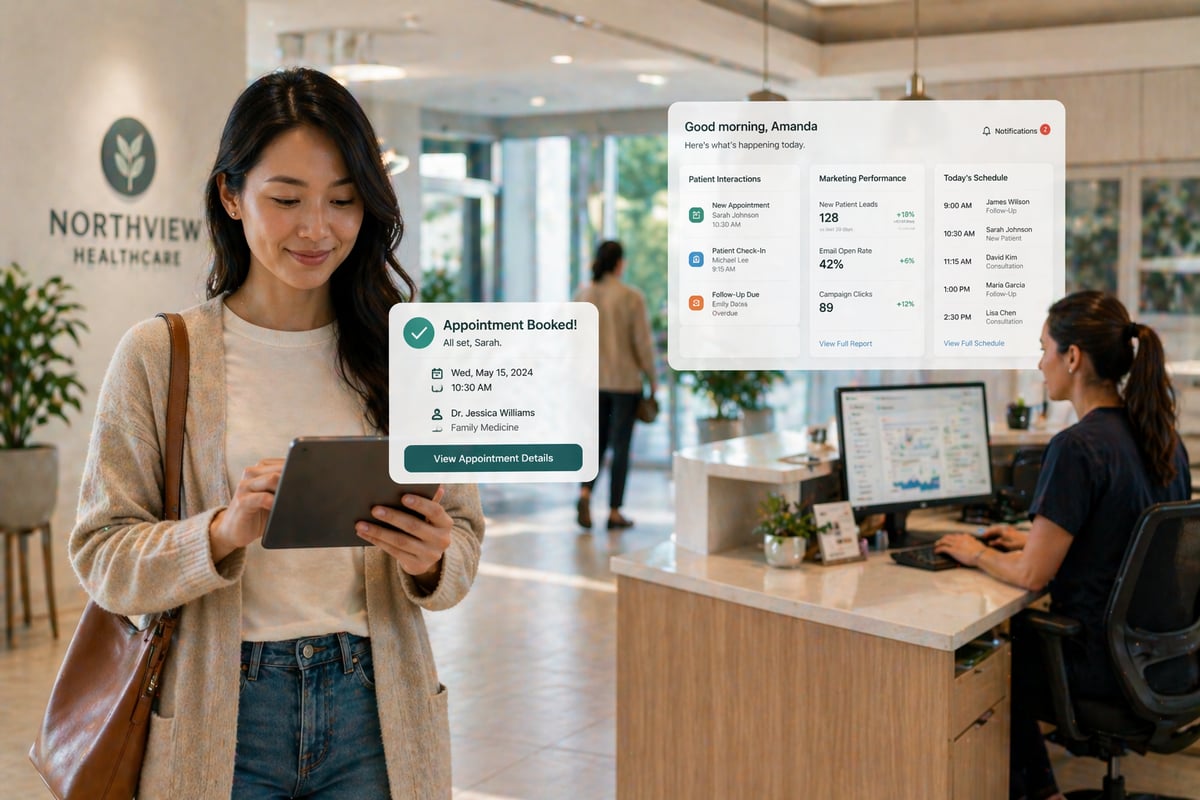
Traditional healthcare systems often fall short of patient expectations for modern, retail-style digital experiences like instant appointment booking and personalized communication.
To close that gap, healthcare organizations are adopting HubSpot as an operational engagement layer that works alongside clinical systems. EHR platforms still handle documentation and compliance, but they were never built for marketing automation, referral management, or ongoing patient engagement. HubSpot brings these non-clinical interactions into one place from the first inquiry to post-discharge follow-ups, creating a single, connected view of the patient journey.
This shift accelerated in 2024 with the rollout of HubSpot’s HIPAA-support features. Before this, strict regulations around Protected Health Information (PHI) limited the use of modern CRM platforms. With compliance tools in place and the option to sign a Business Associate Agreement, healthcare organizations can now use PHI safely to automate outreach and manage patient relationships without compromising security.
At the same time, competition across healthcare services continues to grow. Organizations are under pressure to improve both access and experience. HubSpot stands out as a faster and more intuitive option compared to traditional enterprise healthcare CRMs, which often require long implementation timelines and technical support. Its ease of use allows both medical and administrative teams to adopt it quickly, reducing friction and speeding up execution.
By bringing marketing, sales, and service together in one platform, healthcare organizations can move from reactive processes to a more proactive, patient-focused approach.
How Healthcare Organizations Use HubSpot to Drive Growth
Healthcare organizations drive measurable growth with HubSpot. After 12 months, many report up to 2x website traffic and a 73% increase in closed deals. This growth comes from centralizing communication and managing engagement in one place, turning the non-clinical side of the patient relationship into a clear and trackable driver of results.
Maximizing Inbound Patient Acquisition
The platform facilitates aggressive growth by providing the tools necessary to attract and convert prospective patients through data-driven digital strategies. For example, the medical center Santagostino achieved a 1,359% increase in organic traffic and expanded its patient database ninefold by deploying comprehensive engagement workflows.
Organizations use integrated analytics to track the performance of individual marketing channels, which empowers them to identify exactly which advertisements or organic search efforts result in new bookings. This clear visibility into patient acquisition costs enables marketing teams to allocate resources toward the highest-performing campaigns.
Strengthening Referral Networks and Partnerships
Strategic growth frequently depends on the health of external professional relationships. HubSpot pipelines enable healthcare teams to track physician networks and community partnerships with the same rigor applied to patient leads. By documenting referral patterns and ensuring consistent follow-up with referring doctors, practices maintain a steady stream of new patient consultations.
This systematic approach ensures that referral sources from individual practitioners to online directories are correctly attributed, facilitating accurate care coordination and billing.
Accelerating the Path from Inquiry to Procedure
The transition from a prospective inquiry to an active treatment plan is a critical stage where many organizations lose potential revenue. Healthcare providers use automated lead capture and routing to ensure that inquiries receive immediate attention.
Sales Hub tools further support growth by helping staff convert initial consultations into documented treatment plans or recommended procedures. This ensures a seamless experience that builds patient trust.
Expanding Revenue through Strategic Patient Retention
Sustainable growth is achieved by maximizing the lifetime value of existing patients through automated re-engagement and loyalty programs. Retention systems enable organizations to identify patients who have not returned within a six-month window and automatically trigger personalized offers or preventive care reminders.
Providers foster stronger relationships that turn satisfied patients into loyal, returning clients with the help of special offers and customized care packages tailored to a patient’s specific history and preferences.
Executive Visibility and Data-Driven Scalability
For healthcare executives, growth is managed through enhanced pipeline visibility and precise revenue attribution. HubSpot unlocks end-to-end visibility of the sales and marketing funnels, which empowers leadership to make informed decisions regarding budget management and strategic pivots. Rather than relying on gut intuition, teams use A/B testing to evaluate which messages and benefits resonate most with their specific audience. This process ensures that the organization can scale its operations securely in a competitive market while maintaining a clear view of its return on investment.
What Makes HubSpot Effective for Patient Experience
1. Seamless Access via Frictionless Scheduling
HubSpot transforms the entry point of care by replacing clunky booking processes with agile, patient-centric scheduling tools. Integration with platforms like Acuity or athenahealth provides patients with the ability to book, reschedule, or cancel appointments instantly through smart booking links. These links route individuals to the correct specialist based on existing CRM data, which reduces administrative hurdles and ensures patients see the right provider faster.
Furthermore, automated SMS and email reminders derived from real-time scheduling data significantly reduce no-shows and keep patients well-informed about their upcoming care.

2. Proactive Engagement through Personalized Care Journeys
Modern patients demand relevant communication that reflects their unique health needs. HubSpot addresses this by syncing demographics and appointment history from EHRs like Epic to trigger highly personalized outreach. This facilitates condition-specific campaigns that adapt to a patient's engagement levels and specific interests.
For instance, providers can automate post-discharge follow-ups or preventive care reminders based on real clinical triggers. Such tailored interactions, including educational content about specific therapy approaches or visualized treatment protocols, foster deeper trust and increase the likelihood of care adherence.
3. 24/7 Empowerment with Secure Patient Portals
Using HubSpot’s CMS, healthcare organizations provide secure portals that grant patients round-the-clock access to their health information. These portals dynamically pull data from the CRM, enabling individuals to view lab results, access test results promptly, and request copies of medical records without staff intervention.
Beyond clinical results, these portals act as a centralized hub for care plans and notifications, ensuring that family members and the broader care team remain aligned and active in the patient’s journey.
4. Rapid Resolution with Centralized Support and AI
The platform enhances the service experience by consolidating all patient inquiries from administrative questions to medical concerns into a unified ticketing system. This help desk functionality ensures that requests are resolved faster and with greater consistency.
To provide immediate assistance outside of standard office hours, AI-powered chatbots and customer agents handle routine queries and scheduling requests 24/7. Additionally, providers can build comprehensive knowledge bases that offer easily accessible documentation on common questions.

Real-World Examples of HubSpot in Healthcare
These organizations show how centralized data and automation turn operational issues into measurable growth.
JumpstartMD Rebuilt Its Marketing System Without Disrupting Patient Communication
JumpstartMD, a multi-location healthcare provider operating 14 clinics, relied on SQL-based segmentation and multiple custom Salesforce objects to manage marketing. Campaign execution depended on technical teams, which slowed down even simple tasks like audience segmentation. The system also handled over 573,000 appointment records tied to patient communication, making any disruption risky.
With HubSpot, the marketing system was centralized. Data, segmentation, and automation now run without SQL or external support. Complex logic was rebuilt into workflows and active lists, and over 646 assets and 100,000+ CRM records were migrated without disrupting patient messaging. Marketing teams can now launch campaigns independently, improving speed and consistency.
TELUS Health Restored Data Trust and Attribution
TELUS Health operated with a fragmented CRM setup. Inconsistent lead source data, a broken Salesforce integration, and over 200 workflows created gaps in reporting. Marketing teams struggled to prove ROI, and sales teams lacked confidence in lead quality.
With HubSpot, the system was rebuilt around clean data and standardized attribution. Over 350,000 records were unified, lead sources were consolidated, and workflows were simplified. TELUS Health now tracks performance accurately, improves lead routing, and aligns marketing and sales.
Santagostino Increased Patient Volume Through Centralized Engagement
Santagostino faced disconnected patient touchpoints that limited growth, visibility, and consistency in patient communication. With HubSpot Marketing Hub, patient engagement was centralized into a single system. Automated workflows were introduced to manage the full patient journey, from initial inquiry to booking and follow-up. This allowed the organization to deliver more timely and relevant communication, improving both patient experience and internal efficiency.
As a result, Santagostino saw a 1,359% increase in organic traffic and expanded its patient database by nine times. CRM-driven campaigns now generate an average of 13,000 bookings per quarter. This shift not only increased patient volume but also improved conversion rates and retention, giving the organization a more predictable and scalable growth model.
Situations Where HubSpot Works Best in Healthcare
HubSpot fits healthcare organizations that need a better way to manage patient communication, marketing, and data outside of clinical systems. It works best when existing tools create gaps in engagement, visibility, or execution.
1. Prioritizing Fast Setup and Team Adoption
HubSpot works well for small to mid-sized practices and healthtech startups that need to move quickly without adding complexity. Many organizations become operational within a few weeks, which supports faster execution without slowing down day-to-day operations.
The interface is straightforward, so existing staff can manage campaigns, workflows, and data without relying on technical specialists. This reduces dependency on engineers and allows teams to take ownership of their systems earlier.
2. Managing Long and Complex Patient Journeys
The platform fits organizations that rely on multi-step decision processes. In elective care settings, such as med spas or surgical clinics, patient journeys often start with an inquiry and move through consultations before a final decision. HubSpot helps teams to track each stage, follow up consistently, and keep prospects engaged.
In B2B healthtech, where sales cycles can take months and involve multiple stakeholders, the platform provides clear visibility into each deal, helping teams manage longer timelines and maintain consistent communication.
3. Supporting HIPAA-Compliant Automation
For organizations ready to invest in advanced capabilities, HubSpot supports automation within a compliant framework. Telehealth providers and specialty networks often need to use Protected Health Information to trigger follow-ups, reminders, or ongoing care communication.
With the right setup, teams can automate these processes while keeping sensitive data secure and aligned with regulatory standards. This allows more personalized engagement without increasing risk.
4. Connecting Disconnected Systems and Data
HubSpot becomes valuable when data is spread across multiple systems, such as EHRs, CRMs, and billing platforms. These gaps often lead to manual work and inconsistent reporting. With integrations, HubSpot brings this data together into a single system, giving teams a clearer view of both operations and patient engagement. This shift enables leadership to rely less on assumptions and more on real data, using testing and performance insights to improve outcomes and guide growth decisions.
Turn Patient Experience into Growth with HubSpot!
Growth in healthcare now depends on how well you manage communication, data, and patient relationships outside of clinical care. When those areas are connected, your organization gains clear visibility into what drives patient decisions and where to improve. That shift gives more control over outcomes instead of relying on assumptions.
With everything aligned, marketing, referrals, and follow-ups work as one system. You can respond faster, track performance accurately, and build a more predictable way to grow without adding complexity.
If your organization wants to set this up effectively, partnering with a HubSpot-focused team can help you implement it in a way that fits your operations and compliance requirements. At Campaign Creators, we help organizations design and implement HubSpot environments that align with HIPAA from the ground up.
