






Lifecycle Clarity in HubSpot: The Executive Architecture
Complexity is expensive. Clarity compounds. If there is one principle guiding high-performing growth systems in 2025, it’s that lifecycle clarity is...
I know what I am looking for, and would like to chat.
A team of data-driven marketers obsessed with generating revenue for our clients.
Because the proof is in the pudding.
At Campaign Creators we live by three principles: Autonomy, Mastery, Purpose.
3 min read
Campaign Creators
:
11/12/25
Unified HubSpot systems build true revenue engines: compounding ROI, clarity, and measurable velocity.
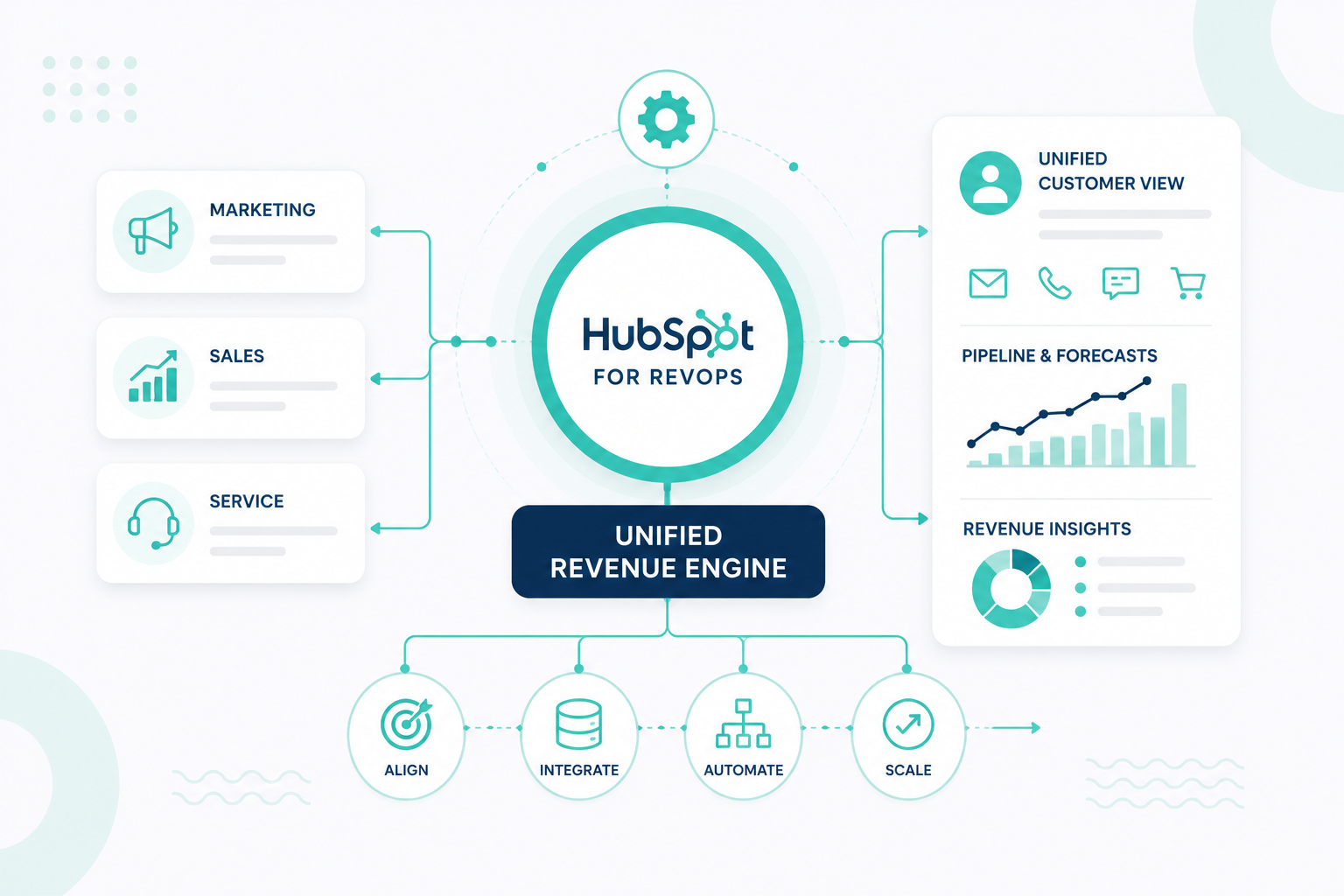
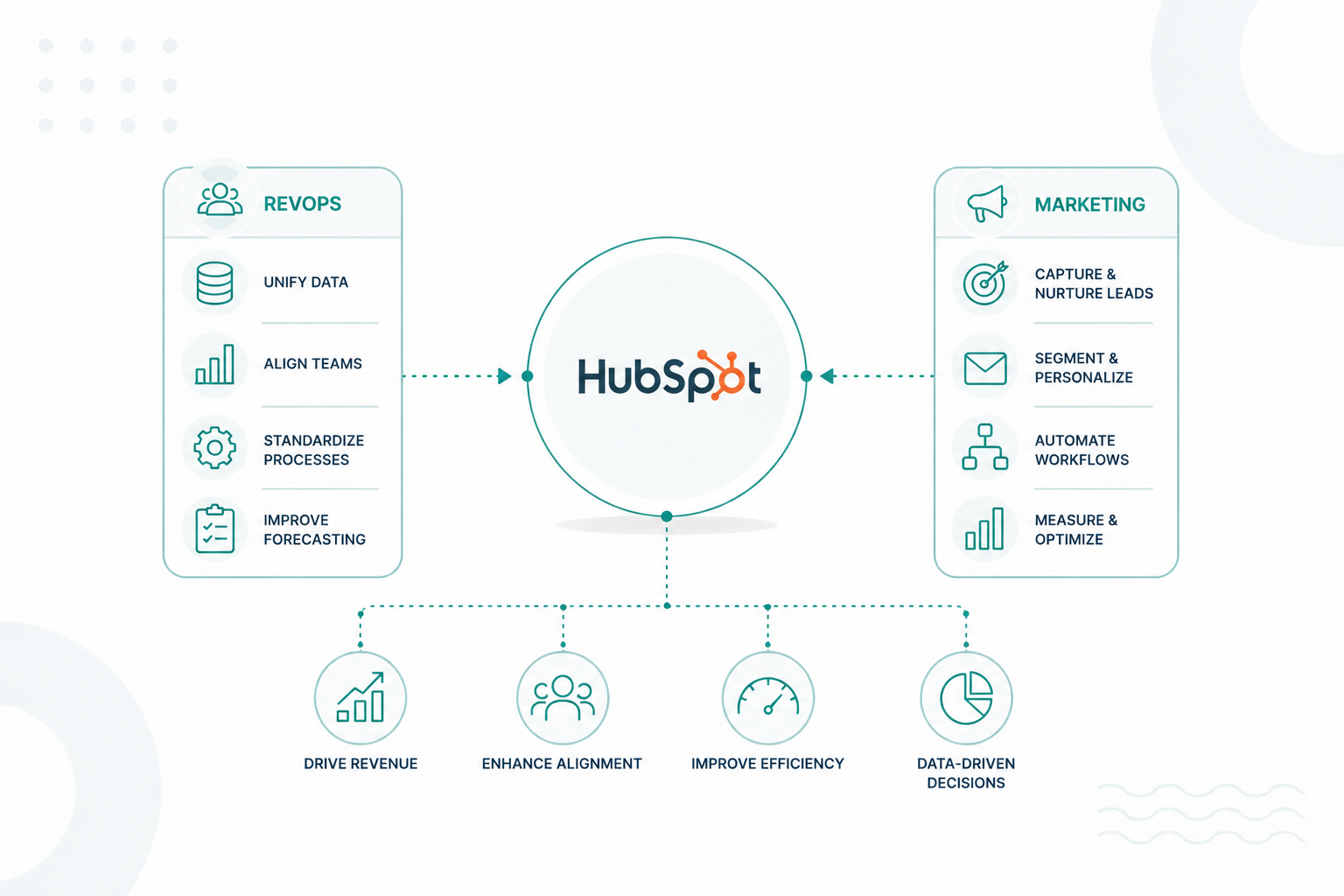
Growth is not the result of simply layering on more technology, but emerges from constructing a sustainable, unified system architecture within HubSpot—a foundation designed for long-term scalability and cross-functional impact. By intentionally integrating key elements such as marketing and sales data, automated workflows, and actionable dashboards, organizations create a centralized operational core that propels marketing, sales, and RevOps teams toward unified objectives.
This level of integration eliminates the silos and redundancy that persist in fragmented technology stacks, addressing the root causes of inconsistent reporting, limited attribution visibility, and recurring process inefficiencies. Without this foundation, companies struggle to establish clear accountability, often losing critical momentum and agility in today’s fast-moving digital landscape. For business leaders spearheading digital transformation, the mandate is unambiguous: drive competitiveness and sustainable growth by unifying technology, teams, and data—or risk falling behind in an environment where operational alignment now defines market winners.
Implementing a unified HubSpot environment means centralizing pipeline management, establishing comprehensive lifecycle mapping, and embracing modular integrations that provide flexibility and scalability. This structure allows every campaign, automated trigger, and follow-up to be directly linked to measurable business outcomes, ensuring that marketing operations are accountable and results are clearly tracked.
Industry evidence underscores the value of this approach. HubSpot’s 2025 State of Marketing reports that companies leveraging an integrated, unified system report a 30% increase in campaign ROI and a 40% reduction in wasted effort from duplicative work. These findings are reinforced by extensive industry audits and real-world data: unified digital architectures enable organizations to transform potential into predictable, scalable revenue growth, delivering clarity, efficiency, and sustained competitive advantage.
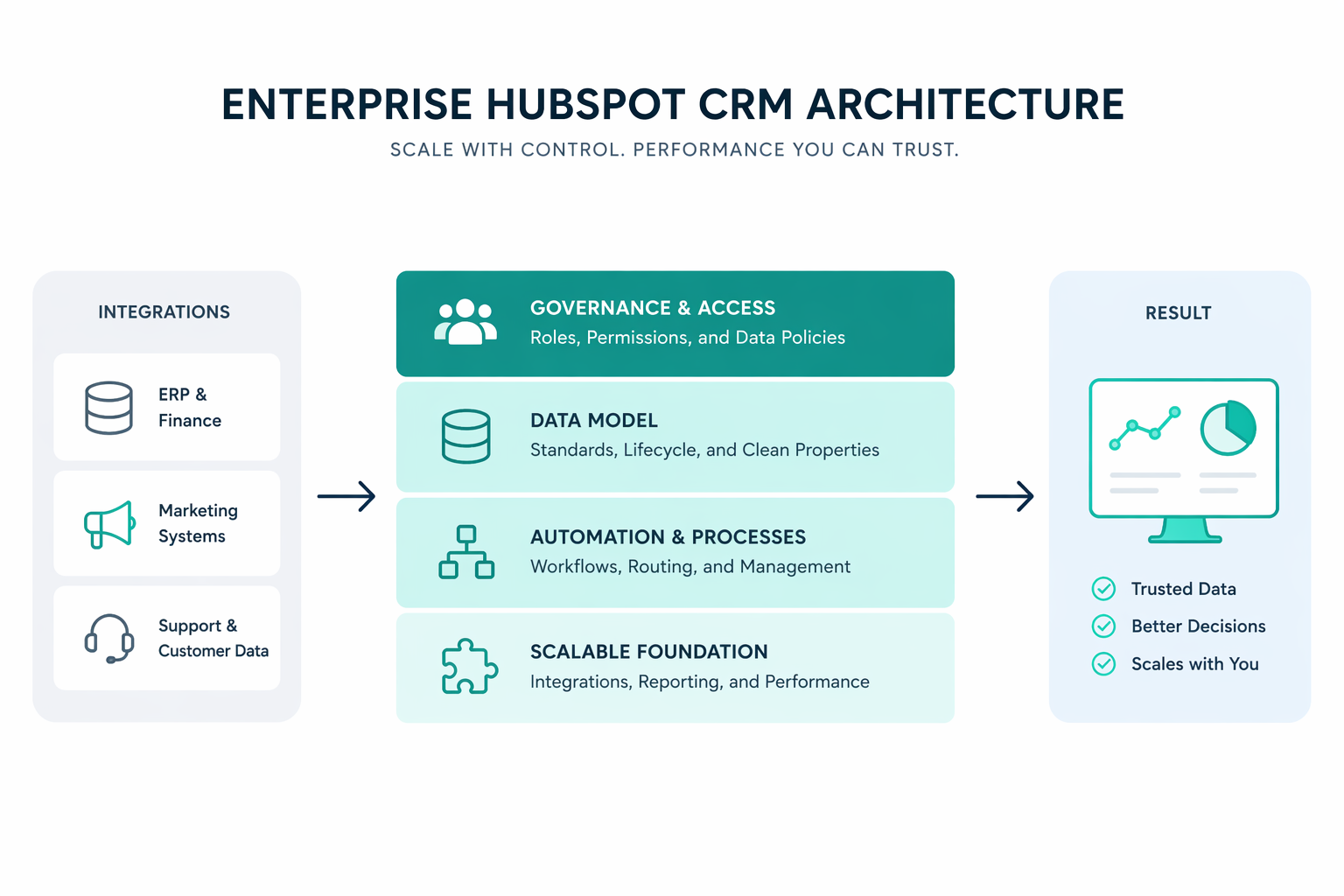
Internal structure is everything. High-performing organizations achieve continuous growth by adopting modular growth engines built through intentional, iterative sprints that span system audits, architecture design, phased integrations, dynamic performance dashboards, and ongoing optimization frameworks. Each foundational element is purpose-built to eliminate bottlenecks, facilitate seamless data flow, and support informed, real-time decision-making across all departments.
This strategic layering of interconnected processes creates an environment where marketing, sales, and RevOps work in lockstep, empowered by transparent goals and streamlined communications. Rather than relying on disconnected, ad hoc solutions that generate redundancies and obscure accountability, every function is methodically designed to align with a shared operational core—a unified source of truth. This minimizes operational friction, mitigates risk of data silos, and elevates the organization’s ability to deliver accurate, instantaneous reporting that drives smarter, faster business outcomes.
The modular approach empowers teams to upgrade, measure, and scale individual components independently, supporting both agile adjustments and strategic long-term development. Rather than binding growth to rigid structures, modular design allows organizations to quickly pivot, test new strategies, and reconfigure assets as the business environment evolves. This practicality is crucial for modern revenue teams facing increasing demands for speed and accountability. As organizational needs evolve, modular frameworks facilitate targeted innovations—such as the use of automation-driven segmentation for precise lifecycle targeting or the deployment of specialized sprint initiatives to accelerate campaign effectiveness. By enabling teams to focus resources where impact is highest, companies can adapt launch cycles, roll out new sales processes, or refine audience targeting without disrupting critical workflows.
This flexibility ensures that growth initiatives are both responsive and sustainable, enabling organizations not merely to adapt to marketplace shifts, but to set the pace. Modular systems provide the operational elasticity needed to capitalize on emerging opportunities—whether that means introducing AI-driven lead scoring, refining nurture sequences, or integrating next-generation analytics for sharper attribution. Well-structured internal systems provide a foundation for compounding results, ensuring that momentum is maintained and amplified as new opportunities arise. Ultimately, organizations that embrace modularity benefit from continuous optimization and an inherent readiness to seize growth, no matter how market conditions shift.
What matters most is demonstrable evidence. True attribution extends beyond campaign-level metrics—it establishes the bedrock for business transparency, accountability, and operational alignment. In a fully unified environment, every action that contributes to revenue—whether it’s a marketing conversion, a seamless lead transition from sales to service, or strategic process optimization—is automatically captured and mapped within a centralized analytics framework.
This comprehensive traceability transforms performance from abstract metrics into actionable intelligence. Leaders immediately gain granular visibility into the entire revenue lifecycle, empowering high-velocity decision-making, enhancing resource allocation, and enabling continuous process improvements at every level of the organization. By making these dynamics visible and measurable in real time, unified systems set a new standard for proactive management and continuous optimization across the enterprise.
Leading consultancies such as McKinsey have shown that organizations equipped with robust performance engines routinely realize 30% higher ROI across their revenue operations, affirming the direct financial impact of adopting these advanced strategies. Practitioners in the field consistently report not only significant financial gains, but also rapid operational transformation; for example, organizations frequently see a dramatic increase in pipeline visibility within just the first quarter after implementing unified systems. This enhanced transparency enables business leaders to proactively address bottlenecks, optimize resource allocation, and accelerate revenue generation with greater confidence.
For growth-focused organizations committed to operational excellence, leveraging proven, applied frameworks—such as Modular Retainer Services and industry best practices outlined in digital transformation thought leadership—unlocks the ability to convert latent organizational potential into sustained momentum. By systematically integrating and optimizing these frameworks, companies move beyond incremental improvements, instead generating sustained, measurable business outcomes that support their long-term growth and competitive advantage.
Complexity is expensive. Clarity compounds. If there is one principle guiding high-performing growth systems in 2025, it’s that lifecycle clarity is...
Let's paint a familiar picture: sales teams work tirelessly, chasing leads that may never convert. Meanwhile, the marketing team labors to deliver...
Automation has been a game-changer for marketing, sales, and operations for years, but we’re stepping into a new era. Enter HubSpot AI agents, the...